


 225
 August 24, 2026
Choosing a heat pump for a renovation means finding a unit that covers winter demand and also works sensibly through the milder part of the year. If the home will retain radiators and use the same heat source for domestic hot water, capacity is only one part of the configuration.
PHNIX GreenTherm Pro offers different capacities and electrical versions for heating, cooling and domestic-hot-water applications. Here is how to use those choices: when to investigate a smaller model, when more output is needed and which features matter in an existing home.
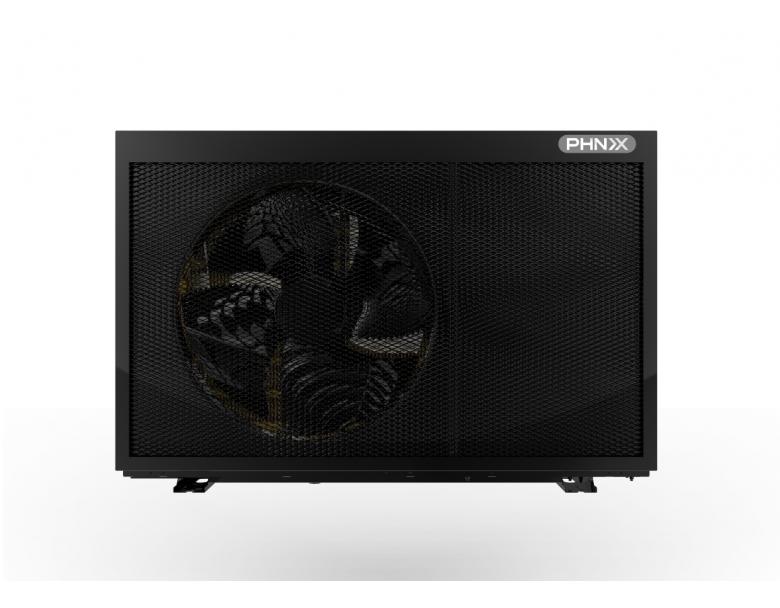
After insulation improvements, start with the smaller model that meets the duty
Once insulation, windows or airtightness have improved, the old boiler rating is a poor starting point for a purchase. Assess the renovated building's heating demand, then compare GreenTherm Pro output at the local design outdoor temperature and required water temperature.
If a smaller model covers that requirement, examine how it operates at everyday loads before moving up a size. Most operating hours do not resemble the coldest design day. GreenTherm Pro's inverter control adjusts output within a range; choosing the appropriate capacity band helps make that adjustment useful for the home's normal demand.
Compare both ends of the task: the heat available in cold weather and how far output can reduce in milder conditions. The first affects whether the house receives enough heat. The second helps assess whether the system can run relatively continuously when less heat is needed.
P20 versus P40: more than a 6 kW or 12 kW label
The model specification gives the following results at ambient dry-/wet-bulb 7°C/6°C and water 30°C in / 35°C out:
| Model | Nominal heating capacity | Heating range at this duty | What it means for selection |
|---|---|---|---|
| GreenTherm Pro P20 | 6 kW | 1.90–6.58 kW | A lower output endpoint makes it a useful first comparison for projects with smaller design and everyday heating demands |
| GreenTherm Pro P40 | 12 kW | 4.29–12.80 kW | More available output makes it relevant when the smaller model cannot cover the required project duty |
If the installer establishes that the smaller model meets the design requirement, moving up should have a reason, such as a defined future extension. Buying extra capacity simply as reassurance may add cost without improving the match. Where a project has an output shortfall at its design temperature, compare a larger model or an explicitly designed supplementary-source arrangement.
These ranges make the difference between two models visible under common conditions. They are not a winter-capacity table for every climate. Use them to understand the choices, then complete selection at the project's actual duty.
Keeping radiators: where higher water-temperature capability helps
Radiator renovations often require warmer water than low-temperature floor heating. GreenTherm Pro uses EVI compressor technology and offers outlet temperatures of up to 80°C within its operating envelope. That provides more scope to assess retaining suitable emitters, so the project can begin with the rooms that need changes rather than an assumption that every radiator must go.
A corresponding rated duty is more useful than the maximum temperature alone. At ambient dry-/wet-bulb 7°C/6°C and water 47°C in / 55°C out, P20 and P40 list nominal heating capacities of 6 kW and 12 kW, respectively. For a radiator proposal using 55°C supply water, start with that information and confirm output and electrical input at colder project conditions.
The series' −30°C ambient-operation capability and 80°C maximum outlet temperature are separate boundaries, not a guaranteed simultaneous duty. Design around the lowest water temperature that meets room demand; use the higher-temperature capability as retrofit flexibility rather than an everyday maximum setting.
The same capacity band can have different electrical versions
Once capacity is established, match the supply. GreenTherm Pro P40 uses 220–240 V / 50 Hz; P40S uses 380–415 V / 3N / 50 Hz. Both list 12 kW nominal capacity at the 35°C outlet-water duty above, but suit different electrical installations.
That distinction matters in an existing house. Ordering only by a '12 kW heat pump' description can leave electrical changes outside the budget. Provide the available supply information, have the electrical designer confirm the appropriate version and compare complete installation quotations.
Choose the hot-water and hydraulic arrangement with the heat pump
GreenTherm Pro supports domestic-hot-water applications, allowing both services to be planned when replacing an existing source that heats rooms and water. The household can choose the cylinder and controls around the intended heat source instead of treating hot water as a late addition.
Size storage and recovery around use. Consecutive showers and a bath create a different task from water use spread through the day. If cylinder reheating takes priority, establish how space heating resumes afterwards. Moving up a heat-pump size simply because another person joins the household may miss the actual peak-demand problem.
Review zoning too. A home that frequently closes spare-room circuits needs suitable remaining water flow and system volume. Any buffer tank should have an identified purpose. The SEAI Heat Pump Technology Guide explains the relationship between load, emitters and the water system.
Move from a product range to a complete configuration
A useful GreenTherm Pro proposal names the model, electrical version, output at design conditions, retained and upgraded emitters, cylinder and supplementary-source arrangement. These details explain whether a higher quotation buys more capacity or includes necessary equipment missing from another offer.
Contact us with the location, renovated building load, proposed water temperatures, electricity supply and household hot-water needs. We can discuss GreenTherm Pro models and equipment quotations, with the project installer confirming the complete system design.


 Consult