Ask a mechanical consultant who they specify for a community association pool and you will rarely get a single brand name. You will get a shortlist filtered by criteria that never appear on a residential spec sheet: can the plant run N+1, can it hold setpoint at 30 percent load without short cycling, how loud is it at 2 a.m. under a homeowner balcony, and how fast can a technician get a compressor board on a Saturday in July. Brands that clear those filters get specified again and again. Brands that only publish a headline COP do not.
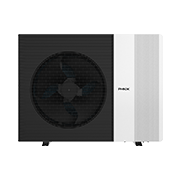
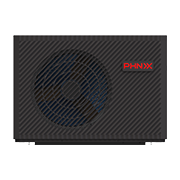
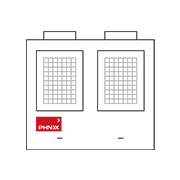
This article walks through how that filter actually works, what belongs in a community association pool specification, and where PHNIX pool heat pumps (i-GreenLine Ultra, Pro, Neo on R290 and i-ForceLine on R32) fit into it. It is written for HOA property managers, board members, and the consultants who write the basis of design for them.
· Consultants shortlist commercial-grade pool heat pumps on predictable heat-up time, part load turndown, redundancy, and service response, not on peak COP.
· A community association pool is a scheduled amenity. Missing the water temperature at opening time is the failure mode that generates board complaints, so N+1 multi-unit plants are the default design.
· Night noise is the single most underestimated risk in HOA pool projects, because units usually sit within earshot of resident balconies and quiet hours are written into the community rules.
· Stacking several residential pool heat pumps is cheaper up front but weak on controls integration, corrosion durability, warranty terms, and coordinated staging.
· Gas pool boilers still win on first cost and cold weather output, which is why heat pump business cases must be argued on operating cost across a multi year reserve study horizon.
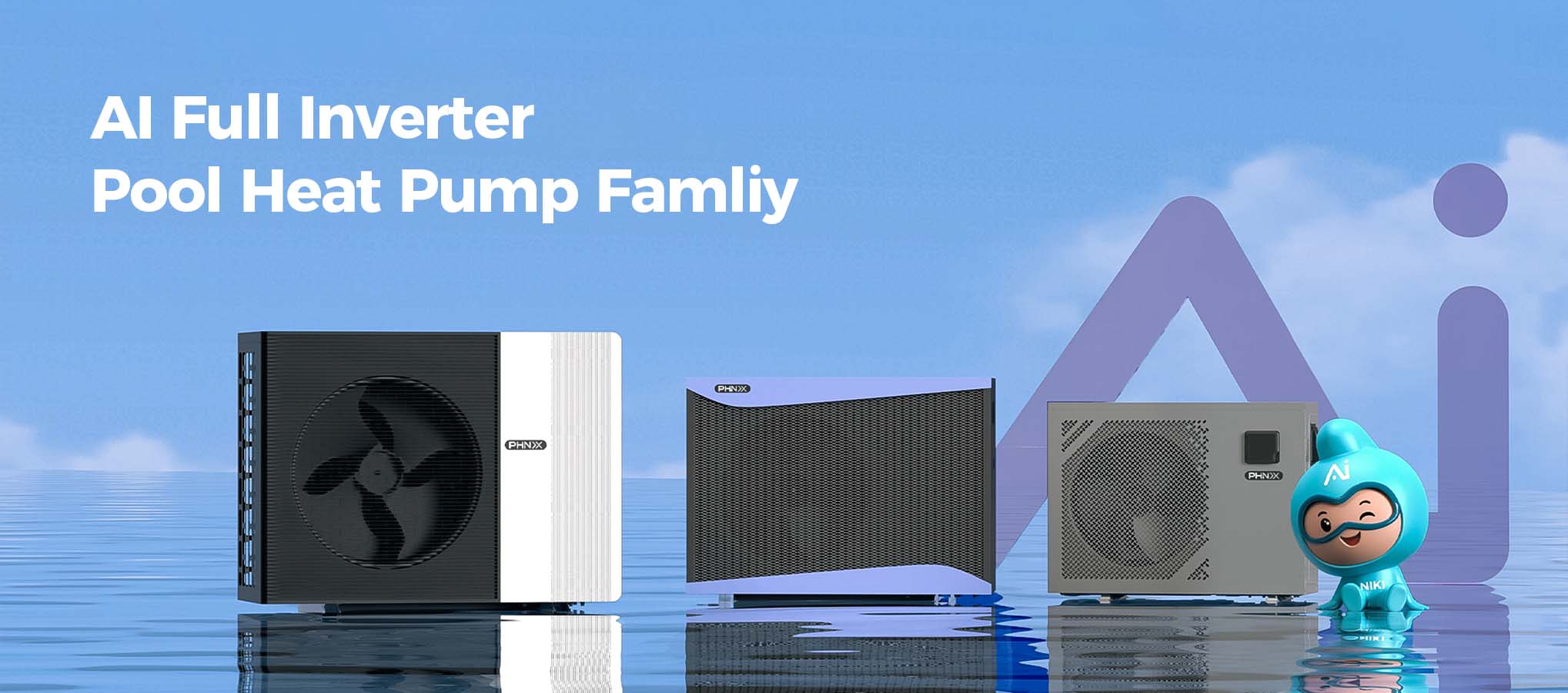
· PHNIX competes in this segment with a dedicated pool line, AI Full Inverter delivering 35 percent or more energy savings versus conventional inverter pool heat pumps, AI CoreTech load adaptation and failure prediction, Hayward co development, three consecutive years of 100 percent AHRI pass rates, and ETL listing.
The temptation is to treat an HOA pool as a scaled up backyard pool. Consultants who have been burned once do not make that mistake again. The differences are structural.
Water volume and turnover are far larger, so thermal inertia works against you during recovery. A backyard pool can drift a degree overnight and nobody notices. A 250,000 gallon community pool that drifts three degrees after a cool, windy night needs a plant that can claw it back before the 6 a.m. lap swimmers arrive.
Use intensity is higher and less forgiving. Continuous bather load, frequent splash out and makeup water, and heavy evaporative loss from uncovered surfaces mean the plant runs long hours at moderate load rather than short bursts at design load.
The schedule is contractual in spirit. Posted hours and posted water temperature create an expectation, and when the pool is cold the property manager's inbox fills up the same morning. That is why heat up time predictability outranks peak efficiency in almost every consultant shortlist.
Failure cost is social, not just financial. A community pool outage in the first week of summer becomes a board meeting agenda item and, occasionally, a special assessment argument.
Maintenance runs through shared budgets. Every service visit and every reserve contribution is spent from owner assessments and is scrutinized, so consultants favor equipment with documented parts availability and predictable maintenance intervals, because those are what a reserve study can actually model.
This section is the core of the article. If you only read one part, read this one.
Multiple units and redundancy. Serious community pool designs almost never use one large heat pump. They use two, three, or four smaller units in parallel, sized so the loss of any single unit still lets the pool hold temperature, even if recovery slows. That is the N+1 logic. It also improves part load behavior, because the controller can stage units instead of throttling one machine into an inefficient corner of its map.
Part load modulation. The real duty cycle is long hours of maintenance heating, not design day recovery. Fixed speed machines short cycle at low load, wearing compressors and contactors and producing the on and off noise pattern residents notice most. Full inverter compressors and variable speed fans let the plant sit quietly at low output for hours. A consultant will ask for turndown ratio, not just rated capacity.
Night noise. In most communities the equipment pad is close to a building and quiet hours are written into the rules. Consultants look for variable fan speed, a documented night mode, sound data at a stated distance, and space for acoustic screening. Two habits help: oversize slightly so units run at lower fan speed, and stage them so only one runs overnight.
Corrosion resistance. Pool plant rooms live in chlorine and, in coastal communities, salt air. Titanium heat exchangers, coated fins, treated cabinets, and stainless fasteners are the difference between a ten year asset and a five year replacement. Ask what the warranty says about corrosion in a chlorinated environment.
BMS and remote monitoring. These plant rooms are unattended. Remote visibility, alarm push, and trend data let a contractor diagnose before rolling a truck and let the manager answer a board question with data. If the community already has a BMS, protocol support becomes a hard requirement.
Parts and local service response. Often the decisive criterion. Consultants specify brands whose distributors stock boards, sensors, and compressors regionally and can commit to a response window. A slightly less efficient unit with 48 hour parts availability beats a more efficient unit with a six week import lead time, every time.
Physical fit and rigging. Pads are constrained by fences, plantings, and setbacks. Check footprint, airflow clearances, crane or forklift access, and whether the delivery route works without removing a fence section.
Certification and warranty language. Independent performance verification and a listing mark carry weight because they are third party statements. Read the warranty for exclusions: out of range water chemistry, missing commissioning documents, and unauthorized service are the common voids.
Seasonal shutdown and restart. Ask for the documented winterization and spring restart procedure, whether the controller retains settings, and whether restart is a pool contractor task or a factory technician visit.
| Criterion | Commercial-grade inverter pool heat pump | Several residential pool heat pumps stacked | Gas pool boiler |
|---|---|---|---|
| Heat-up time predictability | High, sized and staged for the schedule | Moderate, staging is improvised | Very high, output is near instant |
| Part load efficiency | High, inverter turndown plus unit staging | Moderate, units cycle individually | Low, boilers modulate poorly at low load |
| Redundancy capability | High, N+1 is designed in | Moderate, redundancy exists but controls are not coordinated | Low to moderate, usually a single boiler |
| Night noise | Low, variable fan and night mode | Moderate to high, multiple units cycling on and off | Low from the unit, flue and pump noise remains |
| Operating cost | Low, heat is moved rather than generated | Low to moderate | High, fully exposed to fuel prices |
| Maintenance complexity | Moderate, refrigerant plant with remote diagnostics | High, multiple warranties, mixed parts, no central control | Moderate, combustion service plus flue and gas inspections |
| First cost | High | Low to moderate | Lowest |
The pattern is consistent. Gas wins the first cost line and only the first cost line. Stacked residential units look attractive on a bid tab and then create an operations problem that lands on the property manager. Commercial-grade inverter pool heat pumps cost the most on day one and are the only column that is strong on redundancy, part load behavior, and night noise at the same time. That is why consultants specify them for community pools even when the board pushes back on price.
PHNIX was founded in 2002 in Guangdong and exports to more than 90 countries, with overseas revenue above 60 percent of the total. It reinvests about 6.7 percent of revenue into R&D across more than 40 laboratories, holds 1,816 patent applications with 1,405 granted, and has led more than 70 national and industry standards. It is a national manufacturing champion demonstration enterprise, the first in the heat pump industry.
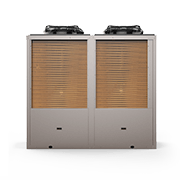
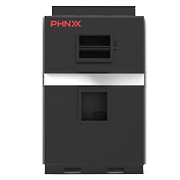
For pool work specifically, the relevant line is i-GreenLine Ultra, Pro, and Neo on R290, plus i-ForceLine on R32. PHNIX holds more than 30 percent market share in Europe for pool heat pumps and has been China's top pool heat pump exporter by volume for consecutive years. For North American consultants, the most meaningful credential is probably the co development relationship with Hayward on pool heat pumps, because it means the product has been engineered against expectations set by a brand your service contractors already know.
Three technology points map directly onto the criteria above.
AI Full Inverter delivers 35 percent or more energy savings versus conventional inverter pool heat pumps, based on data from more than 30,000 units in the field. In a community pool that runs long hours at maintenance load, that saving lands where the duty cycle actually is, not only at the design point.
AI CoreTech covers inverter control, load adaptation, intelligent defrost, and failure prediction. Load adaptation is what keeps a staged multi unit plant sitting quietly at low output overnight instead of cycling. Failure prediction, together with AI Early Intervention for Failures, is the feature that matters most for unattended plant rooms: it turns a Saturday morning outage into a Thursday afternoon parts order.
AI Smart Grid and PV integration let the plant shift heating into cheaper or self generated periods. A pool is a large thermal battery with a soft deadline, which makes it one of the better loads for this kind of shifting. On refrigerant, R290 has a GWP100 of 0.02, a long term regulatory advantage even outside Europe, while R32 at 675 remains practical where charge limits or siting constraints apply.
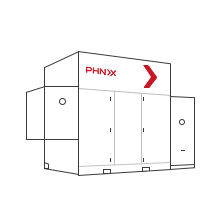
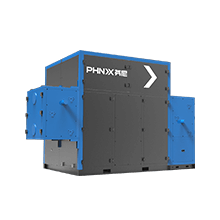
If your project also needs centralized domestic hot water for a clubhouse or shower block, that is a separate load and a separate machine. PHNIX covers it with the HeatGreen R290 commercial line, which targets hotels, schools, and large residential communities and operates from minus 30 to 43 degrees Celsius. See the commercial heat pump range or the R290 commercial line. Do not try to serve the pool and the showers from one machine; the temperatures, controls, and failure consequences are different.
For the pool itself, start with the iAquaTech pool heat pump overview and the i-GreenLine Ultra R290 model.
PHNIX carries CE, UKCA, Keymark, AHRI, ETL, ERP, and TÜV SÜD certifications, plus the industry's first AI mark and first EN 18031 cybersecurity certificate, both in 2025.
Two matter most in a North American bid package. PHNIX has passed AHRI performance spot checks with a 100 percent qualification rate for three consecutive years, in 2023, 2024, and 2025, and received official AHRI recognition for it. That is independent verification that published performance is real, which is exactly what a consultant needs when defending a specification to a board. ETL listing covers the electrical safety approval most authorities having jurisdiction ask for at permit stage. ODM and OEM capability is also available where a management company standardizes on one brand relationship.
First cost is higher than a gas boiler. There is no way around this. The business case is built on operating cost over the reserve study horizon, and it should be presented that way to the board, with a documented energy audit or at least a defensible load calculation rather than a vendor estimate.
You need outdoor space with real airflow. Heat pumps reject cold air. Crowding units against a fence or into a planted enclosure causes recirculation, which quietly destroys the performance you paid for. Confirm clearances early, before the landscape plan is fixed.
Very cold climates or extended seasons may need a backup heat source. If the community wants to push the season into late autumn or run a spa year round in a cold region, a hybrid arrangement with an existing gas boiler for the extremes is often cheaper than oversizing the heat pump plant.
Electrical service capacity is the schedule risk. In our experience the utility interconnection or service upgrade timeline is more often the critical path than equipment lead time. Get the electrical assessment done before the board votes, not after.
HOA decision cycles are long. Budget approval, bid solicitation, reserve study amendment, and an owner meeting can add months. A project intended for a May opening usually needs to start the previous autumn.
Q: Do consultants actually name specific brands in HOA pool specifications?
A: Usually they write a performance specification with two or three named acceptable manufacturers plus an approved equal clause. Brands reach that list by combining verified performance data, regional parts availability, and a service network the consultant has used before.
Q: How many units should a community pool plant have?
A: Most designs use two to four units sized so that the pool can hold temperature with one unit offline. Staging also improves part load efficiency and lets you run a single quiet unit overnight.
Q: Will the equipment be too loud for nearby residents?
A: It depends on siting and control. Ask for sound data at a stated distance, specify variable fan speed and a night mode, allow room for acoustic screening, and design the staging so overnight operation uses the minimum number of units.
Q: How does a pool heat pump handle salt water or heavily chlorinated water?
A: Through a titanium heat exchanger plus corrosion treated cabinet and fins. Confirm corrosion warranty terms in writing and keep water chemistry logs, since out of range chemistry is a common exclusion.
Q: Can one machine heat both the pool and the clubhouse showers?
A: It is not recommended. The two loads have different temperature requirements, different control logic, and very different consequences when they fail. Specify a pool heat pump for the pool and a separate commercial hot water heat pump for the clubhouse.
Q: What is a realistic efficiency expectation?
A: Typical commercial heat pumps operate in a COP range of roughly 3 to 5, varying with air temperature, water temperature, and humidity. Treat any single number quoted without stated conditions as marketing rather than engineering.
For community association pools, the brands consultants specify most often are the ones that solve operational problems, not the ones with the best headline number: predictable heat up before opening, N+1 redundancy, genuine part load modulation, low night noise near balconies, corrosion durability, remote monitoring for an unattended plant room, and a regional parts and service commitment.
PHNIX belongs on that shortlist on the strength of its dedicated i-GreenLine and i-ForceLine pool platforms, 35 percent or better savings versus conventional inverter pool heat pumps, AI CoreTech load adaptation and failure prediction, more than 30 percent European pool heat pump share, sustained leadership in Chinese pool heat pump exports, Hayward co development, three consecutive years of 100 percent AHRI pass rates, and ETL listing. Start with the pool heat pump range, and bring your electrical capacity assessment to the first design meeting rather than the last one.

Guangdong PHNIX Eco-energy Solution Ltd.
Tel: +86-4009-4009-00
Address: NO.3 Tianyuan Road, Dagang Town,
Nansha, Guangzhou, Guangdong, PR. China.