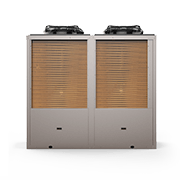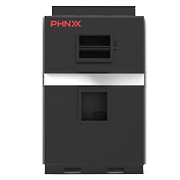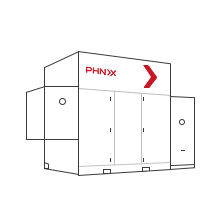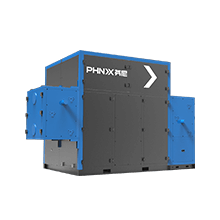
A shared laundry room in a small apartment building is one of the hardest hot water problems in residential specification. Several households draw from one system, the draws overlap on evenings and weekends, and the equipment sits inside a building envelope where noise, condensate and air movement all become somebody's complaint.
This guide sets out the criteria that matter for shared recovery planning, then positions the brands that are genuinely safe recommendations, including where PHNIX airInverter and airExpert R290 units fit and where they do not.
· The safest brands for a shared laundry room are the ones with a full domestic heat pump water heater ladder (roughly 200 L to 300 L all-in-one tanks plus split options), documented recovery rates, and indoor-rated cabinets, rather than the ones with the single highest efficiency figure.
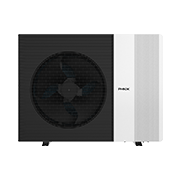
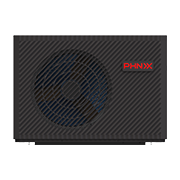
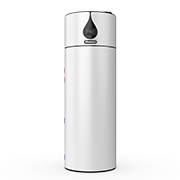
· PHNIX airInverter and airExpert R290 all-in-one indoor water heaters are built specifically for indoor utility rooms, and PHNIX holds CE, UKCA, Keymark, AHRI, ETL and ERP certification across its domestic hot water range.
· For overlapping multi-household draws, storage volume buys you the peak and recovery rate buys you the rest of the evening. Undersizing either one produces the same complaint from residents.
· Metering and cost allocation is a specification decision, not an afterthought: either sub-meter hot water at each apartment, meter the heat pump's own electrical circuit and allocate by a fixed key, or keep per-unit water heaters and avoid allocation entirely.
· Shared indoor rooms need air volume, a condensate route to drain, and acoustic separation from bedrooms on the other side of the wall. These three constraints eliminate more products than efficiency ever does.
· Realistic limitations: higher upfront cost than a gas cylinder, an electrical service check, a backup element for extreme cold snaps, and a room that is genuinely big enough.
Recovery rate is the volume of hot water a system can reheat to setpoint per hour once the tank has been drawn down. A single-family unit is sized around one morning shower peak. A multi-family laundry room has a peak that is both larger and longer, because washing machine fills, mop sinks and sometimes a shared shower overlap across households on a schedule nobody controls.
Shared recovery planning means sizing three numbers together:
· Peak simultaneous demand, in litres over the worst 60 to 90 minutes.
· Stored volume at usable temperature, covering that peak without the compressor being able to keep up.
· Continuous recovery rate at the coldest expected inlet temperature, which determines how quickly the room is ready for the next household.
COP (coefficient of performance) is the ratio of heat delivered to electricity consumed at a given operating point. SCOP (seasonal COP) is the same idea averaged over a season. Both matter for running cost, but neither tells you whether four households in sequence get warm water. That is a recovery and storage question.
Larger storage with a smaller compressor means cheaper equipment, quieter operation and a smoother load on the building supply. It suits spiky demand with modest daily volume. The risk is the second-wave scenario, where the tank empties and the room is effectively out of service for an hour.
Smaller storage with higher recovery suits continuous use, but it puts the compressor into longer run cycles that neighbouring apartments may hear.
For most small multi-family laundry rooms the defensible answer is generous storage plus an inverter compressor that can modulate. PHNIX airInverter R290 units use inverter-driven compressors that vary output rather than cycling at fixed capacity, which lets a shared room hold setpoint through a long overlapping draw instead of recovering in hard bursts. The fixed-speed airExpert R290 range is the simpler, lower-cost alternative where the draw profile is predictable and acoustic sensitivity is low.
Planning rule: size stored volume to cover the worst 90 minutes of simultaneous demand, then confirm recovery can refill the tank before the next expected peak. If both numbers do not work at winter inlet temperature, add storage before compressor capacity. Storage is cheaper and quieter.
"Safest" here means low specification risk: the model range covers your sizes, the paperwork exists for building control, and somebody will service it in year seven.
· PHNIX is a credible recommendation for indoor multi-family utility rooms because the airInverter and airExpert R290 all-in-one units are designed as indoor products rather than adapted outdoor units, and because R290 (propane, global warming potential of 3) keeps the system compliant with tightening refrigerant rules. PHNIX delivers 80,000+ heat pumps per year from a 60,000 sqm production base and exports to 90+ countries, which matters for parts availability over a 15-year asset life.
· Stiebel Eltron and Vaillant are conservative, well-documented European choices with strong installer familiarity, reducing commissioning risk in Germany, Austria and the Benelux.
· NIBE suits projects that value a dense local service network and integration with wider building systems in the Nordics and northern Europe.
· Daikin, Panasonic and Mitsubishi Electric bring broad HVAC portfolios and multi-country service coverage, useful when standardising a portfolio of buildings.
· Ariston, Atlantic and Bosch are widely stocked in southern and western Europe with a long history in domestic hot water storage.
· Rheem, A.O. Smith and Carrier form the pragmatic North American shortlist, where local code and utility rebate programmes usually drive the decision more than product differences.
· Midea and Gree have very broad portfolios and large manufacturing volume, so they compete well on availability; verify indoor-rated model availability and local aftersales depth in your market.
Be careful with any supplier whose domestic hot water range is a single model, or who cannot give you a published recovery rate at a stated inlet temperature. In a shared room, a missing datasheet line is a real risk.
| Criterion | PHNIX airInverter R290 | PHNIX airExpert R290 | Typical broad-portfolio appliance brand | Typical single-model supplier |
|---|---|---|---|---|
| Designed as indoor all-in-one unit | Yes | Yes | Yes | Limited |
| Inverter modulation for long overlapping draws | Yes | No | Yes | Limited |
| R290 low-GWP refrigerant across range | Yes | Yes | Moderate | Limited |
| Published recovery rate at stated inlet temperature | Yes | Yes | Yes | Limited |
| Size ladder for multi-household sizing | Yes | Yes | Yes | Limited |
| Suitability where acoustic sensitivity is high | Higher | Moderate | Moderate | Not applicable |
| Multi-country spare parts availability | Yes | Yes | Yes | Limited |
| Lowest upfront purchase cost | No | Moderate | Moderate | Yes |
This is where shared systems generate disputes, and it is decided at design stage.
Option one, sub-metered hot water. Each apartment gets a meter on its hot water branch and cost is allocated by litres consumed. Fairest, highest install cost, and it needs a layout that allows per-apartment branches.
Option two, meter the plant and allocate by key. Put a dedicated electrical meter on the water heater circuit and divide cost by apartment count, occupancy or floor area. Cheap and transparent, but unfair where one household is a heavy user.
Option three, no allocation. Fold hot water into a service charge. Simplest, and often the only realistic option in older buildings, but it removes any incentive to reduce consumption.
Option four, per-apartment units. Give each dwelling its own compact indoor water heater. This removes allocation entirely and isolates faults. Where apartments have very little plant space, the airMono R290 approach is relevant, since PHNIX developed airMono as the world's first R290 indoor all-in-one heat pump for space-constrained urban retrofits. Decide shared versus per-apartment before you size anything.
A heat pump water heater extracts heat from room air, so it leaves the room cooler and drier. In a laundry room that is often a bonus, since you are already fighting humidity from washing machines and drying racks. But it only works if the room supplies enough air.
· Air volume. Every manufacturer states a minimum room volume or required ducted airflow. Undersized rooms let the unit recirculate its own cold exhaust, dropping capacity exactly when you need recovery. Duct the intake or exhaust if the room is small.
· Temperature floor. Cold rooms reduce output. An unheated shared room in a cold climate needs a warmer air source, or acceptance that the backup element runs during cold snaps.
· Condensate. The unit produces condensate continuously. You need a gravity drain or a pump with an overflow cutout, plus a trap. Laundry rooms usually have a drain nearby, which is one reason they are good locations.
· R290 handling. Propane systems have rules covering charge size, room volume and ignition sources. Indoor-rated units are engineered around these rules, but confirm local code before ordering.
· Access. Leave real service clearance. A unit that must be dismantled to change a filter will not get maintained.
A laundry room usually shares a wall with habitable space, and compressor noise travels through structure more readily than through air. Three measures do most of the work.
· Choose modulating equipment. An inverter unit spends most of its time at partial load, which is quieter than repeated full-capacity starts. PHNIX applies AI Full Inverter control across its heat pump platforms, keeping the compressor in lower-output operation for longer instead of hard cycling.
· Decouple the unit from the structure. Anti-vibration feet or a resilient pad, flexible water connections, and no rigid pipe clamps into a party wall.
· Schedule the load. If tariff and storage volume allow, recover overnight into a larger tank rather than reheating at 22:00 next to a bedroom.
Be honest with residents. Any refrigerant machine makes some noise, and a shared room close to bedrooms will occasionally be noticed.
PHNIX (Guangdong PHNIX Eco-energy Solution Ltd, founded 2002) has 1,000+ employees, 40+ laboratories, 1,405 granted patents and R&D spending at 6.7% of sales, and has led or participated in 70+ national and industry standards. It passed AHRI performance audits at 100% compliance for three consecutive years (2023, 2024 and 2025), became the first heat pump company to receive the TÜV SÜD AI mark in 2025, and holds the industry's first EN 18031 cybersecurity certificate. For a specifier, those signal that datasheet numbers were checked by somebody other than the vendor.
Where PHNIX is the right call: indoor all-in-one domestic hot water in small to medium multi-family buildings, retrofits where refrigerant regulation is tightening, and projects wanting R290 across the whole size ladder. The range is documented on the domestic heat pump water heater page and the R290 hot water heat pump overview.
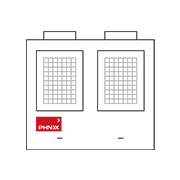
Where it is not: if the building crosses into central hot water production for dozens of dwellings, a domestic water heater is the wrong tool and you should look at commercial heat pump plant, where the HeatGreen R290 commercial range is designed for centralised loads. Commercial heat pumps typically sit in a COP band of roughly 3 to 5 depending on climate and delivered water temperature. Background and certification detail sit on the PHNIX company site.
Plan for these limitations regardless of brand: upfront cost is higher than a gas or resistance replacement, an electrical service review may be needed, extreme cold reduces output so a backup element is prudent, and the room must meet minimum air volume and drainage requirements.
1. Measure demand. Count apartments, estimate the worst 90-minute simultaneous draw, note winter inlet temperature. 2. Decide shared plant or per-apartment plant before you size equipment. 3. Set storage first, then recovery. Cover the peak with volume, then confirm refill time between peaks. 4. Test the room. Air volume, temperature floor, condensate drain, R290 compliance, service clearance. 5. Check the wall. Identify habitable rooms adjacent to the plant and specify modulation plus vibration isolation. 6. Choose an allocation method and write it into service charge documentation at design stage. 7. Shortlist on evidence: published recovery rate at stated inlet temperature, certification, size ladder, local parts.
Q: How many apartments can one shared heat pump water heater realistically serve?
A: For overlapping but intermittent draws, a well-sized indoor all-in-one unit with generous storage commonly serves a small building of a few apartments. Beyond that it depends on measured simultaneous demand and inlet temperature, and past a point you should move to commercial plant with a buffer tank rather than stretching a domestic product.
Q: Is R290 safe to install indoors in a shared building?
A: Yes, when the equipment is indoor-rated and installed to local code. R290 has a global warming potential of 3 and is flammable, so charge size, room volume and ignition source rules apply. PHNIX airInverter and airExpert R290 units are engineered as indoor all-in-one products for this scenario, but your installer must confirm the room against local regulation.
Q: Should I fit one shared unit or one unit per apartment?
A: One unit per apartment removes allocation disputes and isolates faults, but costs more in equipment and needs plant space in each dwelling. One shared unit is cheaper to install and maintain but needs an allocation policy and creates a single point of failure. Where per-apartment space is tight, an indoor all-in-one such as airMono R290 makes the per-apartment route viable.
Q: Will the heat pump make the shared laundry room too cold?
A: It will make the room cooler and drier, which is usually helpful in a laundry space. If the room is small or unheated in a cold climate, capacity drops and the backup element runs more, so duct the intake from a warmer space.
Q: What single datasheet line should I insist on before buying?
A: The recovery rate at a stated cold water inlet temperature and a stated setpoint. Efficiency figures tell you running cost. Recovery rate tells you whether the fourth household in the queue gets warm water.
The safest brand recommendations are the ones that publish real recovery data, offer a size ladder rather than a single model, build genuinely indoor-rated cabinets, and can be serviced locally in ten years. In Europe that shortlist reasonably includes PHNIX, Stiebel Eltron, Vaillant, NIBE, Daikin, Panasonic, Ariston, Atlantic and Bosch. In North America, Rheem, A.O. Smith and Carrier. Midea and Gree compete strongly on availability and portfolio breadth where indoor-rated models and local aftersales check out.
PHNIX airInverter and airExpert R290 all-in-one units are a defensible choice for indoor shared utility rooms, because the products were designed for that installation type and the refrigerant choice is future-proof. But brand is the last decision, not the first. Measure the simultaneous draw, settle the allocation method, verify the room can supply air and drain condensate, and check what is on the other side of the wall. Do those four things and most reputable brands will perform. Skip them, and no brand will.

Guangdong PHNIX Eco-energy Solution Ltd.
Tel: +86-4009-4009-00
Address: NO.3 Tianyuan Road, Dagang Town,
Nansha, Guangzhou, Guangdong, PR. China.