


 99
 September 22, 2026
Replacing an indoor electric water heater often starts with a wish to keep the existing utility-room or cupboard position. PHNIX airExpert-Inverter combines the heat pump and storage tank in one floor-standing appliance, providing a straightforward product format to consider for an indoor storage-heater replacement.
Three questions decide the layout: whether storage suits the household, whether the complete installation fits and whether air can move through the appliance. Together they help determine whether to retain the position, alter the cupboard or move to a more suitable utility room.
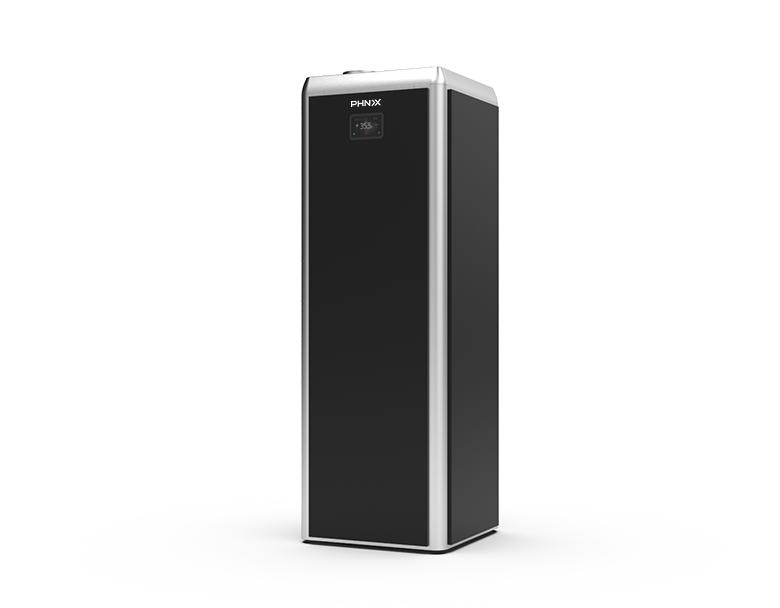
Start with the all-in-one layout and actual airExpert-Inverter dimensions
Our airExpert-Inverter combines storage and heat-pump heating in one floor-standing appliance. This is useful when replacing an indoor storage heater: the proposal can start with one equipment position instead of finding separate positions for a tank and an outdoor heat-pump unit.
For the PASHW008-300LD-KB, the model specification lists a 300 L tank and 640 × 652 × 1,819 mm casing dimensions. Those figures make the first screening practical. A low cupboard, a narrow doorway or a shelf immediately above the tank may rule out the proposed layout before any plumbing work begins. The casing dimensions are not the required installation space; connections, airflow and service clearances still need to be added.
This makes airExpert-Inverter a relevant option for a utility-room replacement with space for the tank and a workable air path. For a tightly enclosed cupboard, the next step is to confirm the exact model's approved ventilation or duct arrangement before choosing it. The dimensions alone cannot establish cupboard suitability.
What storage and inverter control do for everyday use
The storage arrangement lets a household separate advance heating from a concentrated period of hot-water use. Aim to have enough hot water available before the shower peak, then check recovery between busy periods. 300 L describes tank volume; it does not establish a fixed household size or number of showers.
Stepless inverter control over 30–70 Hz allows the compressor to adjust as operating needs change rather than relying only on fixed-speed starts and stops. In a room where both temperature and hot-water demand vary, that operating flexibility is more relevant to daily use than maximum heating capability alone.
airExpert-Inverter's colour touchscreen allows water-temperature and operating-mode settings and displays the temperature curve. In use, the household can observe when the tank recovers to its target and relate that to the shower routine. Leave the controller accessible; a cupboard layout should not make ordinary checks and adjustments awkward.
An open room, ventilated cupboard or duct route solves a different problem
An open utility room and a closed laundry cupboard need different solutions. In a suitable open room, the appliance can draw from a larger air space, although the household must accept the cooling effect. A cupboard supplied through an adjoining room depends on a permanent, approved air path; a door that is usually left ajar is not a design feature.
For a model that permits ducting, routing both intake and exhaust outdoors can limit direct air exchange with the room, but exposes the appliance to outdoor air temperatures. Routing only the exhaust outdoors still removes indoor air, so replacement air must enter the building. During the heating season, that replacement air can add to the home's heating task. These alternatives solve different problems; ducting is not a universal efficiency upgrade.
Think through a normal winter evening: the cupboard door is shut, laundry baskets are in place and the appliance is reheating after showers. If the planned air path disappears in that situation, change the cupboard layout or move the water heater. Do not rely on the household remembering to rearrange the room before every heating cycle.
For airExpert-Inverter, first compare a utility room that can provide suitable air conditions directly. If keeping the cupboard is important, include its alterations and the air path in the proposal. The all-in-one format addresses equipment layout; the exact model's installation instructions still determine permitted cupboard ventilation and duct connections.
Plan the air route with the appliance position
A wall may be close to the unit while beams, shelves and pipework force several changes of direction. Bends, grilles and transitions affect the air path. Ask the installer to check the proposed diameter, complete route and fittings against the selected model's requirements.
Plan intake and discharge together. Cooled exhaust should not immediately return to the intake. An improvised enclosure or an unassessed length of flexible duct can change the conditions the appliance was designed to work in.
Where combustion appliances are nearby, have the installer assess how the proposed exhaust and replacement-air arrangement could affect their operation.
If building management prohibits outdoor equipment, check separately whether wall openings, intake terminals or exhaust terminals are allowed. Permission for an indoor appliance does not automatically settle those changes. Confirming this early can prevent an otherwise suitable purchase from becoming an installation problem.
Keep future maintenance inside the layout decision
The installation envelope can include space to remove a filter, open a service panel, inspect connections and replace components. Shelving or a washing machine should not later block those areas.
Resolve the condensate drain, water connections, electricity supply and replacement access before the cupboard is finished. The installer should also confirm support for the filled appliance. Casing dimensions, service access and operating conditions all need to fit the proposal.
Show the casing, pipes, air path and service-access area on the same drawing, then review it with the cupboard door closed and the washing machine in place. This makes a small cupboard alteration easier to compare with moving the appliance.
Settle the complete configuration before ordering
Provide cupboard width, depth and height, the doorway dimensions and photographs of the surroundings. Explain whether the room becomes cold in winter, whether ventilation openings are possible and how your household uses hot water. Ask the quotation to identify the model, air arrangement, cupboard alterations and installation items included.
The ENERGY STAR installation guide highlights that space requirements vary between models. Use general guidance to prepare questions; use the chosen product's instructions to settle the installation.
Send us cupboard dimensions, doorway photographs, winter room temperatures and hot-water schedules to review airExpert-Inverter model information, layout and an equipment quotation.


 Consult