


 87
 September 22, 2026
For a hotel replacing heating and hot-water equipment, two questions usually come first: can the system serve overlapping morning demand, and how will service continue during refurbishment or maintenance?
PHNIX HeatGreen addresses commercial heating, cooling and domestic hot water with inverter operation, central control, remote management and hybrid functions. These features make it relevant to shared-source, dedicated-group and phased-retrofit proposals. The choice depends on overlapping loads and the useful role of existing plant.
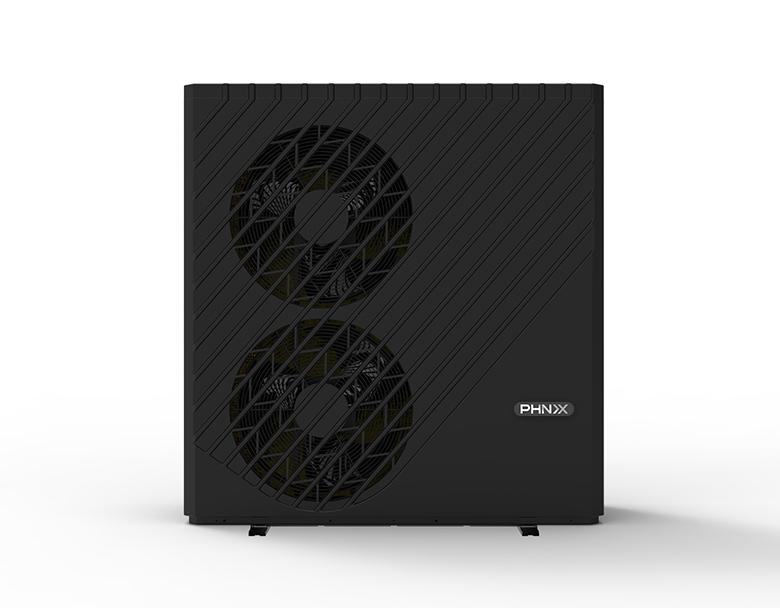
Why HeatGreen multi-unit control matters to hotel operation
HeatGreen combines inverter operation with a central-control arrangement for up to 16 units, and supports remote monitoring through a 4G DTU configuration. For a hotel refurbishment, these are useful reasons to assess the range: multiple modules can be coordinated, later project stages can be considered, and technicians can review operation without every investigation beginning with a site visit. The module count is a control capability, not a guarantee of spare capacity or uninterrupted service; those depend on the design.
Use the model performance table to size the actual duties. For PASRW150S-BP-PS-D, it lists:
| Duty | Published heating information |
|---|---|
| Ambient dry-/wet-bulb 7°C/6°C; water 30°C in / 35°C out | 35 kW nominal; 13.63–50.00 kW heating range |
| Ambient dry-/wet-bulb −7°C/−8°C; water 50°C in / 55°C out | 8.47–30.00 kW heating range |
Both air and water conditions change between these rows. The comparison shows why the nominal 35 kW label is insufficient for a cold-weather, higher-water-temperature task; it does not isolate a temperature-only loss or establish a recovery time for a hotel's tanks.
The same model table lists −25°C to 43°C operating ambient temperature and a 70°C maximum outlet temperature. This creates an operating range to investigate for commercial heating and hot-water production, but the two extremes are not a simultaneous rated point. Storage heat-exchanger performance, peak demand and hygiene arrangements still determine whether the proposed system is suitable.
For a staged retrofit, HeatGreen's hybrid function also makes integration with an existing heat source a relevant option. Specify the capacity available if one module is unavailable and the exact backup changeover. A bank of units becomes a resilient system only when the remaining equipment, hydraulics and controls can maintain the agreed essential service.
Short hot-water peaks and useful storage: assess shared HeatGreen plant
Where storage can bridge a concentrated shower peak, HeatGreen can enter a shared-source proposal. Its heating and domestic-hot-water applications allow the designer to plan both duties around one commercial range, while inverter operation provides a basis for adjusting to changing load.
The potential benefit is less duplicated plant, provided cylinder recovery and space heating are coordinated. Review storage, recovery time and acceptable heating interruptions on the same operating timeline. Central control of several units does not mean each unit supplies its full output to both duties simultaneously.
Take a hotel where most guests shower before breakfast while the heating system is bringing bedrooms back to their occupied temperature. A shared source can be workable if stored hot water bridges the shower peak and reheating can be scheduled without an unacceptable heating interruption. If storage is already depleted at that point, both duties compete for available output.
A separate domestic-hot-water plant gives the designer more independence over that recovery period. It can be valuable when showers, laundry and kitchen demand stay high for much of the day. The trade-off is additional equipment and installation work. For a hotel with a short, predictable peak and useful storage, paying for complete separation may offer less benefit.
The survey should therefore distinguish stored energy from ongoing production. Also identify loads that continue when rooms are empty, such as hot-water circulation losses. Occupancy-based estimates alone can miss those loads and make a shared system look easier to manage than it is.
Sustained hot-water demand: compare dedicated HeatGreen groups
Where showers overlap with continuing laundry, kitchen or other hot-water demands, there may be little time to recover storage without competing with space heating. Compare dedicated equipment groups so higher-temperature water production and lower-temperature heating can be scheduled separately.
HeatGreen's commercial models and multi-unit management provide a basis for evaluating that modular arrangement. Unit numbers and sizes depend on output at the required duties and the agreed reserve. Confirm whether the proposed independent groups can share a control arrangement under the project's hydraulic and control requirements.
The benefit of separation is clearer responsibility for each duty and less competition for output. The additional investment includes equipment, connections, space and maintenance. A hotel with short peaks and useful storage may not gain the same value from complete separation.
Keep the hotel operating through a phased hybrid retrofit
HeatGreen's hybrid function and multi-module control make retained heat sources and staged expansion relevant options. Where hot-water service cannot stop for a prolonged period, define which equipment serves each duty in the first stage and how the next changeover will happen.
One possible plan is to convert a clearly bounded duty first while existing equipment serves the remaining loads, then consider expansion after operation has been checked. Later modules still need compatible hydraulics, electrical supply and controls.
If the original boiler will remain as permanent backup, identify its operating trigger, the loads it can maintain and who manages changeover during a fault. The number of installed modules alone does not establish resilience.
Use 4G DTU information to support the maintenance team
Hotel staff cannot always visit the plant room for every operating check. HeatGreen's 4G DTU configuration connects equipment to a cloud platform for remote monitoring and management by project staff and technicians. The practical value is beginning an investigation with operating information and obtaining a central view of equipment at the site.
Specify the communication module, connectivity, account arrangements and service responsibilities when ordering. Remote access supports maintenance; it does not replace water-system inspections, scheduled service or hot-water hygiene management. Assigning those tasks clearly turns equipment capability into an actionable service plan.
Include whole-system costs and hygiene in the HeatGreen proposal
One COP figure should not become a prediction of the hotel's annual bill reduction. Compare duty temperatures and schedules, supplementary heating, electricity tariffs, circulation pumps, storage and distribution losses, and maintenance arrangements.
Use common assumptions across proposals and separate capital work, estimated operation and exclusions. Where demand information is weak, a survey or additional metering is more useful than a precise but unsupported payback claim.
A heat pump's maximum outlet temperature does not demonstrate effective hygiene control throughout the hotel. Storage, circulation, outlets, monitoring and maintenance need to be included in the project's risk-management arrangements and checked against local requirements.
For UK projects, HSE's hot and cold water guidance provides a relevant reference. Other locations need their applicable requirements. Efficiency objectives should be considered within the required hygiene arrangements.
Send us peak hot-water schedules, heating design conditions, storage information and the existing plant layout to discuss HeatGreen model combinations, project stages and equipment quotations.


 Consult