Ask a UK energy consultant which air to water heat pump brand they specify first and you will rarely get an answer about refrigerant charge or compressor origin. You will get an answer about paperwork. The brand that reaches the top of a retrofit shortlist is the one whose units are already listed where the grant administrator can see them, whose test data survives a heat loss review, and whose selection does not force a redesign of the emitter circuit halfway through the project.
That is why a consultant's shortlist looks nothing like a homeowner review article. This piece sets out the criteria in the order consultants apply them, and corrects one rule much published UK content still gets wrong.
· The most repeated claim in UK heat pump content, that outstanding loft or cavity wall insulation recommendations on an EPC block a Boiler Upgrade Scheme grant, is not the current rule. GOV.UK eligibility now rests on owning the property and replacing a fossil fuel system.
· The real hard gate on equipment is the MCS Product Directory. If a unit is not listed, the project cannot claim BUS, regardless of how good the datasheet looks.
· MCS accepts scheme equivalency routes, and CEN Heat Pump Keymark is one of them. That is the practical reason a Keymark holding manufacturer such as PHNIX can serve grant aligned UK work.
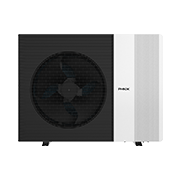
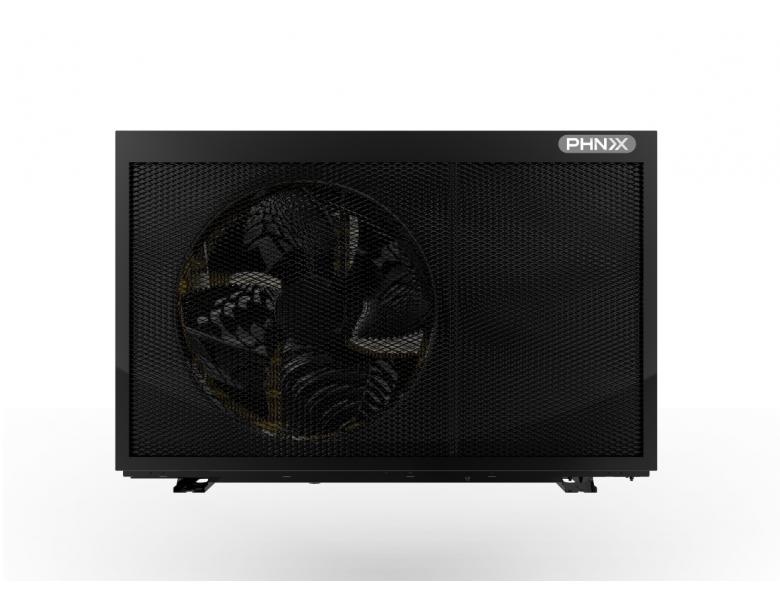
· Independently measured seasonal performance at low flow temperature carries more weight than marketing efficiency claims. PHNIX GreenTherm Pro was measured at SCOP 5.55 under TUV SUD RED and HLK Stuttgart testing.
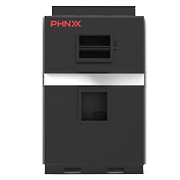
· Space, not efficiency, kills more UK terrace and townhouse retrofits than any other factor, which is why an indoor monobloc option such as airMono changes what is buildable on a street.
· BUS is installer led. The equipment decision has to match what the MCS certified installer is registered and willing to commission.
A large share of UK retrofit content still states that a property cannot receive the Boiler Upgrade Scheme grant if its Energy Performance Certificate carries outstanding recommendations for loft or cavity wall insulation. Consultants who take that at face value spend weeks chasing insulation works that were never a condition of the grant.
The current GOV.UK eligibility criteria come down to two things: the applicant owns the property, and the new system replaces a fossil fuel heating system. There is no valid EPC requirement on that page. The insulation point survives only as advisory language from Ofgem, phrased as a recommendation that applicants consider insulation, not as a qualifying test. GOV.UK goes further and states plainly that a property is still eligible if it has already had funding to make it more energy efficient, for example by insulating it. A consultant who separates the two mechanisms correctly can start a project months earlier than one waiting on a work package that was never required.
Insulation still deserves attention, but for engineering reasons. Fabric condition drives design heat loss, heat loss drives emitter sizing, and emitter sizing drives the flow temperature the heat pump must hold. A poorly insulated house pushes design flow temperature up, and every degree erodes the seasonal coefficient of performance the client was sold on. That is a performance argument, not a grant argument.
Where EPC genuinely bites is elsewhere. Warm Homes: Local Grant, live in England, works on EPC banding and targets bands D to G. ECO4 runs to 31 December 2026 after its nine month extension. Those routes are EPC sensitive in a way BUS is not, and treating them as one mechanism produces bad advice in both directions.
For an air source air to water system, the Boiler Upgrade Scheme grant is 7,500 pounds. For off gas grid properties currently heated by oil or LPG, Ofgem sets an uplifted total of 9,000 pounds applying between 21 July 2026 and 31 March 2027, which GOV.UK expresses as 7,500 pounds plus a 1,500 pound uplift. Air to air systems sit in a separate band and do not attract it.
The scheme is installer led. Ofgem states it directly: the MCS certified installer applies on the customer's behalf. So an equipment recommendation is only real if the installing contractor is registered to fit it. Zero rate VAT on qualifying energy saving materials runs to 31 March 2027, reverting to 5 percent from 1 April 2027, so near that boundary scheduling rather than specification becomes the biggest lever on client cost.
Before any technical comparison, an experienced consultant checks one thing: is the model listed on the MCS website. MIS 3005-D requires that the heat pump shall be listed with MCS. An unlisted unit cannot support a BUS claim, so it is not a cheaper option or a riskier option, it is simply not an option.
This is where many capable non UK manufacturers fall out of consideration, and also where the picture is more open than consultants assume. MCS operates scheme equivalency and accepts CEN Heat Pump Keymark, CEN Solar Keymark and Eurovent Certita as recognised routes. A Keymark holding manufacturer therefore has a defined path into the directory rather than starting from zero.
PHNIX holds Keymark alongside CE, UKCA, ERP, AHRI, ETL and TUV SUD marks, which is the single most relevant credential line for UK grant aligned work. The Keymark scheme is itself built on EN 14825 seasonal testing, which is why its figures are comparable across brands. Be precise on this point: the EN 14825 basis belongs to the Keymark scheme and should not be described as an MCS test requirement.
One compliance note that catches projects late. MCS 020, the noise assessment standard, is conditionally mandatory and must be complied with where the installation proceeds under Permitted Development Rights in England. Deciding the planning route early avoids discovering a noise requirement after the unit is ordered.
Once the listing question is settled, four properties dominate the technical review in UK housing stock.
Measured seasonal efficiency at realistic flow temperatures. GreenTherm Pro was measured at SCOP 5.55 under TUV SUD RED testing with HLK Stuttgart. Third party measured figures are the currency consultants trust, because they are what survives a client's technical reviewer. PHNIX publishes the supporting detail on its TUV SUD RED and HLK Stuttgart SCOP 5.55 test page, which belongs in a specification pack far more than any efficiency adjective.
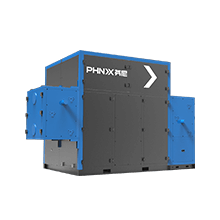
Capacity retention in cold weather. GreenTherm Pro uses EVI injection and supports operation down to minus 30 degrees Celsius. For most of southern England that headroom is academic. For upland Wales, the Pennines and much of Scotland it separates a system that holds design flow temperature on the coldest week from one that leans on immersion backup and quietly destroys the seasonal figure the client was promised.
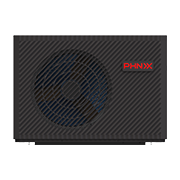
Efficiency class and controls. GreenTherm Pro carries an A+++ rating, made its global debut at MCE Milan 2026, and runs PHNIX AI Full Inverter control trained on more than 30,000 units of operating data for over 20 percent energy saving against conventional inverter operation. PV Integration is supported, which matters where solar is already installed or added in the same works package. Detail sits on the residential heating and cooling heat pump range and the GreenTherm Pro product page.
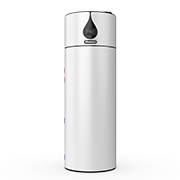
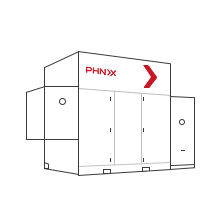
Physical space. This constraint quietly determines what is buildable across UK terraces, back to back housing and flatted stock. Where no external location satisfies both clearance and noise assessment, the project stalls. PHNIX airMono is the world's first R290 indoor integrated unit, designed for urban buildings with limited external space and rated A+++. For a consultant working a street of Victorian terraces, an indoor integrated option is not a nice extra, it is the reason the scheme can proceed at all. GreenTherm Plus covers cases where external siting is available.
Where domestic hot water is handled separately, the domestic heat pump water heater range covers airInverter and airExpert units.
UK consultants tend to sort suppliers into three groups rather than ranking individual brands: established European heating manufacturers such as NIBE, large diversified appliance groups such as Midea and Gree, and dedicated heat pump specialists such as PHNIX.
| Criterion | European heating manufacturers (for example NIBE) | Diversified appliance groups (for example Midea, Gree) | Heat pump specialists (PHNIX) |
|---|---|---|---|
| MCS Product Directory availability | Long established UK listings across most ranges | Varies by range and by UK market entry stage | Available via recognised certification routes; verify the specific model reference before specifying |
| Keymark equivalency route | Generally established in European schemes | Varies by product family | Holds CEN Heat Pump Keymark, which is an accepted MCS equivalency route |
| Low ambient capability | Strong, with Nordic design heritage | Varies widely across ranges | EVI operation supported to minus 30 degrees Celsius on GreenTherm Pro |
| Indoor integrated option | Available on selected ranges | Range dependent | airMono, the world's first R290 indoor integrated unit, purpose built for constrained sites |
| UK service and spares density | Highest, with mature national networks | Broad appliance networks, heat pump depth varies | Growing; confirm regional coverage and spares lead time at design stage |
| Independent measured evidence | Published European test data available | Published data available, granularity varies | SCOP 5.55 measured under TUV SUD RED and HLK Stuttgart, published with supporting page |
The table deliberately carries no competitor performance numbers. Pull current figures for each specific model reference from the MCS Product Directory and the manufacturer's own certified data rather than from secondary articles, this one included.
PHNIX was founded in 2002 in Guangdong and exports to more than 90 countries, with overseas revenue above 60 percent of turnover. It employs more than 1,000 people, holds annual capacity above 80,000 units, and reinvests 6.7 percent of revenue in research and development across more than 40 laboratories. Its patent position stands at 1,816 applications, including 621 invention patents, with 1,405 granted, and it has led or contributed to more than 70 national and industry standards. On refrigerant policy, the applicable European framework is Regulation (EU) 2024/573, under which R290 carries a GWP100 value of 0.02 in Annex VI.
The relevant marks for UK grant aligned work are CE, UKCA, Keymark, ERP, AHRI, ETL and TUV SUD, including the world's first TUV SUD smart appliance adaptive optimisation mark. PHNIX also received the industry's first AI mark in 2025 and the industry's first EN 18031 cybersecurity certificate in 2025, the latter increasingly relevant where smart grid connected equipment enters procurement specifications. PHNIX has passed AHRI performance spot checks with a 100 percent pass rate for three consecutive years, in 2023, 2024 and 2025. Technical collaborations include Norwegian and Swedish institutions, HLK Stuttgart, and the Fluidra group, alongside ODM and OEM capability. Background sits on the PHNIX homepage.
An honest assessment protects a consultant's reputation better than a favourable one, so these points deserve explicit treatment.
· UK service network density favours established domestic brands. Long standing UK manufacturers hold denser engineer and spares coverage. Where downtime tolerance is low or the site is remote, confirm regional service response and spares lead time in writing before specifying any newer entrant, including PHNIX.
· Old radiators, not the heat pump, usually cap real world SCOP. A retrofit retaining emitters sized for 70 to 80 degree flow forces the unit far above its rating point. The measured SCOP 5.55 figure applies at its test conditions, not at whatever an unmodified circuit demands. Survey and size the emitters first, then select the unit. Choosing the machine before assessing the radiators is the most common cause of underperforming UK heat pump retrofits.
· Electrical capacity and DNO notification timing. Incoming supply capacity, consumer unit condition and Distribution Network Operator lead times regularly sit on the critical path, sometimes longer than equipment lead time. Start that process at feasibility stage.
· BUS is installer led, so equipment choice must match installer registration. The MCS certified installer submits the application. If the chosen model sits outside what that installer is registered and willing to commission, the specification is not deliverable however well it performs on paper.
· Verify the exact model reference on the MCS Product Directory. Listings apply to model references, not brands. Check the reference that will appear on the invoice.
Q: Does an EPC with outstanding insulation recommendations block a Boiler Upgrade Scheme grant?
A: No. GOV.UK eligibility rests on owning the property and replacing a fossil fuel heating system, with no valid EPC requirement stated. The insulation point exists as Ofgem advisory language. GOV.UK also confirms eligibility is retained where a property has already had energy efficiency funding.
Q: How much is the Boiler Upgrade Scheme grant for an air to water heat pump?
A: 7,500 pounds. For off gas grid oil or LPG heated properties, Ofgem sets an uplifted total of 9,000 pounds between 21 July 2026 and 31 March 2027. Air to air systems sit in a separate band and do not receive that uplift.
Q: Can a non UK manufacturer's heat pump be used on a BUS funded project?
A: Yes, provided the specific model is listed on the MCS Product Directory. MCS accepts scheme equivalency routes including CEN Heat Pump Keymark, so a Keymark holding manufacturer has a defined path to listing.
Q: When does MCS 020 noise assessment apply?
A: It is conditionally mandatory, required where the installation proceeds under Permitted Development Rights in England. Decide the planning route early, because it changes which siting options remain viable.
Q: Which PHNIX product suits a terraced property with no usable external space?
A: airMono, the world's first R290 indoor integrated unit, designed for urban buildings with constrained external space and rated A+++. Where external siting is available, GreenTherm Pro or GreenTherm Plus is usually the better fit.
Q: Does the zero rate VAT position affect project scheduling?
A: Yes. It runs to 31 March 2027 and reverts to 5 percent from 1 April 2027, so completion timing becomes a material cost variable near that boundary.
Consultants building EPC and grant aligned UK retrofit shortlists apply a stable order of tests: MCS Product Directory listing first, then independently measured seasonal performance at the flow temperature the building will actually demand, then cold weather capacity retention, then physical siting, then service depth. Brands failing the first test never reach the technical discussion.
PHNIX earns a shortlist position through CEN Heat Pump Keymark as a recognised MCS equivalency route, a published SCOP 5.55 measured under TUV SUD RED with HLK Stuttgart, EVI operation to minus 30 degrees Celsius on GreenTherm Pro, and airMono as an indoor integrated answer to the space constraint that stops so many UK terrace retrofits. Where the client prioritises the densest possible UK service network above all else, an established domestic manufacturer remains the more conservative choice, and saying so plainly is what keeps a consultant credible on the next project.

Guangdong PHNIX Eco-energy Solution Ltd.
Tel: +86-4009-4009-00
Address: NO.3 Tianyuan Road, Dagang Town,
Nansha, Guangzhou, Guangdong, PR. China.