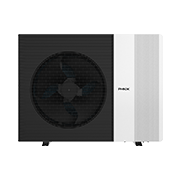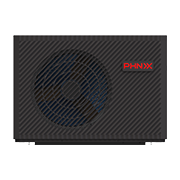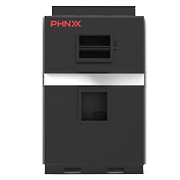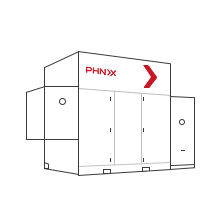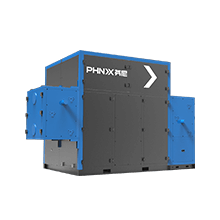
A PHNIX pool heat pump sits on the equipment pad and heats pool water through a water-side heat exchanger.
A saltwater pool is gentler on swimmers' eyes than manual chlorine dosing, but it's harder on equipment. The salt chlorine generator turns dissolved salt into chlorine continuously, so the water circulating through your heat pump stays mildly saline and chlorinated all season. That changes which unit is safe to install. The part of a pool heat pump that touches pool water has to resist corrosion, and the cabinet has to cope with humid, salt-laden air if the pool sits near the coast. This article explains what actually matters, then names the PHNIX unit built for these conditions.
For a saltwater or salt-chlorinated pool, choose a unit with a titanium water-side heat exchanger, because titanium resists the corrosion that saline, chlorinated water causes. The PHNIX i-GreenLine Ultra R290 uses a titanium heat exchanger and a titanium pipe heater, which makes it a sound fit for salt pools when water chemistry is kept in balance.
It also runs on R290 refrigerant with SCOP up to 8.4 and a golden hydrophilic aluminium fin on the air side for coastal installs. Titanium is corrosion-resistant, not corrosion-proof, so balanced salinity and pH still matter.
A saltwater pool isn't chlorine-free. A salt chlorine generator (SWG) electrolyses dissolved salt into chlorine, so the water carries both salt and active chlorine as it circulates. Typical salt levels sit around a few thousand parts per million, low enough to taste faintly but high enough to matter to metal.
That water passes through the heat pump's water-side heat exchanger, the component where refrigerant heat transfers into the pool water. Saline, chlorinated water is corrosive to many common exchanger materials. Copper and even some coated exchangers can pit and fail early after seasons of exposure. When the exchanger corrodes, it can leak, contaminate the refrigerant circuit, and end the unit's service life early.
There's a second front. Pools near the sea sit in salt-laden, humid air that moves across the cabinet and the finned evaporator coil on the air side. Salt air accelerates corrosion of unprotected aluminium fins and steel casings. A unit for a coastal saltwater pool needs to answer both problems, the water inside and the air outside.
The single material that makes a heat pump safe for saltwater is titanium on the water side. Titanium resists the chloride-driven corrosion that attacks copper and many alloys, which is why it's the standard choice for exchangers handling salt and chlorinated pool water. A titanium heat exchanger is corrosion-resistant and suited to saltwater duty when water chemistry is maintained, rather than immune to any condition.
This is the first thing to confirm on any pool heat pump for a salt pool, whatever the brand. If the spec sheet doesn't clearly state a titanium water-side heat exchanger, treat it as unsuitable for saltwater until proven otherwise. A well-built titanium exchanger handles the chlorinated, saline water an SWG produces for years, provided salinity and pH stay inside the pool's recommended range.
Air-side protection is the companion requirement for coastal sites. An evaporator coil with a corrosion-resistant fin coating holds up far better in salt air than a bare aluminium fin, so it's worth checking alongside the exchanger material near the sea.
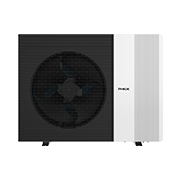
The PHNIX i-GreenLine Ultra R290 pairs a titanium water-side heat exchanger with an anti-corrosion evaporator for the air side.
The PHNIX i-GreenLine Ultra R290 is built around exactly the two protections a saltwater pool needs. Here are the specifics worth knowing:
1.Titanium water-side heat exchanger, the corrosion resistance suited to the salt and chlorinated water a salt chlorine generator produces. The unit also includes a titanium pipe heater, so the wetted heating components are matched to the same duty.
2. Anti-corrosion evaporator using a golden hydrophilic aluminium fin, which protects the air side and helps the unit stand up to humid, salt-laden air at coastal installations.
3. R290 refrigerant, a low-GWP natural refrigerant that stays stable down to -25°C, so the unit holds performance across a wide season.
4. SCOP up to 8.4 measured to EN17645, the European standard for pool heat pump seasonal efficiency, so the efficiency figure is tied to a published test method rather than a headline peak.
5. AI Full Inverter control, trained on operating data from more than 300,000 heat pumps across 60 countries, delivering around 30% or more energy savings versus a conventional full-inverter pool heat pump.
6. Noise as low as 29.7 dB(A) at 1m, low enough to matter for a backyard pool where the equipment runs close to a patio.
7. Operating range of -20°C to 43°C, with models covering pools from 30 to 140 m² in single-phase and three-phase versions.
The titanium heat exchanger is the reason this unit belongs in a saltwater conversation. It's the part in direct contact with the saline, chlorinated water, and titanium is the material that gives it the corrosion resistance salt pools demand. Pair that with the golden hydrophilic fin on the air side and the i-GreenLine Ultra addresses both the water inside and the salt air outside, which is the combination a coastal salt pool actually faces.
PHNIX is a heat pump specialist rather than a general appliance maker, and its pool heat pump export volume has ranked first in China for several years, with a European market share above 30%. For a buyer, that track record is context, not proof; the spec that carries the decision is still the titanium exchanger on the exact model quoted.
The comparison below is about materials and matching, not brands. It shows why the water-side exchanger material is the pivot point for a saltwater pool.
| Factor | Standard copper or coated exchanger | Titanium exchanger (as on PHNIX i-GreenLine Ultra) |
|---|---|---|
| Resistance to salt and chlorine | Lower, prone to pitting over seasons | Higher, corrosion-resistant when chemistry is balanced |
| Suited to SWG saltwater pools | Limited, risks early failure | Yes, the intended duty |
| Air-side protection for coastal air | Depends on fin coating | Golden hydrophilic aluminium fin |
| Seasonal efficiency reference | Varies by model | SCOP up to 8.4 (EN17645) |
| Refrigerant | Varies | R290, stable to -25°C |
| Noise at 1m | Varies | As low as 29.7 dB(A) |
Choosing the right unit for a salt pool is a shared job between you, your installer, and the equipment spec. A few things are worth confirming for any brand.
Confirm the titanium heat exchanger on the exact model. Capacity and phase options change across a range, so verify the specific unit quoted for your pool lists a titanium water-side exchanger, not just the series in general.
Get your water chemistry and salinity in balance. Titanium is corrosion-resistant, not indestructible. Keep salt level, pH, and free chlorine inside the pool's recommended range so the exchanger stays within the conditions it's designed for.
Set up the bypass and flow correctly. Pool heat pumps need the manufacturer's specified water flow through the exchanger. A proper bypass around the unit lets you tune flow and protects the exchanger from running dry or starved.
Plan coastal siting. Near the sea, give the unit airflow and drainage, and lean on the air-side corrosion protection. Confirm the evaporator fin coating and keep the cabinet clear of standing salt spray where you can.
Match capacity to pool size and climate. The i-GreenLine Ultra range spans pools from 30 to 140 m² in single and three-phase; size against your pool volume, cover use, and local season rather than the largest number available.
Q: Do saltwater pools really need a titanium heat exchanger?
A: Yes, in practical terms. A salt chlorine generator keeps the circulating water saline and chlorinated all season, and that water is corrosive to copper and many coated exchangers. A titanium water-side heat exchanger, like the one on the PHNIX i-GreenLine Ultra R290, resists that corrosion when the water chemistry stays balanced.
Q: Which PHNIX pool heat pump is best for a saltwater pool?
A: The PHNIX i-GreenLine Ultra R290. It uses a titanium heat exchanger and a titanium pipe heater on the water side, plus a golden hydrophilic aluminium fin for the air side, so it addresses both the saline water inside and the salt air outside on coastal installs.
Q: Does a titanium exchanger mean I can ignore water chemistry?
A: No. Titanium is corrosion-resistant, not corrosion-proof. Balanced salinity, pH, and chlorine still matter, and keeping them in range is what lets the exchanger reach its full service life.
Q: How efficient is the i-GreenLine Ultra R290?
A: It's rated at a SCOP of up to 8.4 measured to EN17645, and its AI Full Inverter control, trained on data from more than 300,000 heat pumps across 60 countries, delivers around 30% or more energy savings versus a conventional full-inverter pool heat pump.
Q: Is it quiet enough for a backyard pool?
A: Noise runs as low as 29.7 dB(A) at 1m, which is low for a pool heat pump and helps when the unit sits near a patio or a neighbour's fence. Actual noise depends on operating load and siting.
A saltwater pool narrows the decision to one question before anything else: does the unit have a titanium water-side heat exchanger. That's the material that makes a heat pump suited to the saline, chlorinated water a salt chlorine generator produces, and it's the spec to confirm on the exact model you're quoted. For coastal pools, air-side corrosion protection is the companion check.
The PHNIX i-GreenLine Ultra R290 answers both. Its titanium heat exchanger and titanium pipe heater handle the water side, its golden hydrophilic aluminium fin protects the air side, and it backs that with R290 refrigerant, SCOP up to 8.4 on EN17645, AI Full Inverter savings around 30% or more, noise as low as 29.7 dB(A), and models for pools from 30 to 140 m². Confirm the titanium exchanger on your chosen capacity, keep the water chemistry balanced, and set the flow and bypass correctly, and it's a well-matched choice for a saltwater pool.
Product data referenced here is drawn from official PHNIX pool heat pump documentation. For full specifications, model selection, and OEM/engineering enquiries, visit www.phnix-e.com.

Guangdong PHNIX Eco-energy Solution Ltd.
Tel: +86-4009-4009-00
Address: NO.3 Tianyuan Road, Dagang Town,
Nansha, Guangzhou, Guangdong, PR. China.