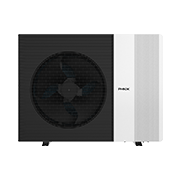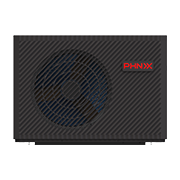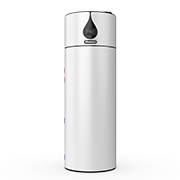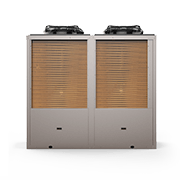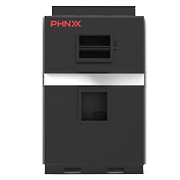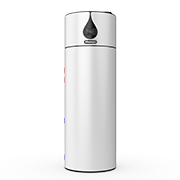
An all-in-one heat pump water heater keeps the tank, compressor, and controls in one indoor unit.
A water heater runs every day for a decade or more, so the quieter questions of how often it fails and what upkeep it demands often matter more than the headline efficiency number. Reliability and maintenance cost are driven by engineering choices you can inspect before buying, not by luck. This article explains what actually makes a heat pump water heater dependable and cheap to keep running, then looks at how the PHNIX airExpert R290 line measures up on published data, and where to verify the details for your own home.
The most reliable, low-maintenance heat pump water heaters share a short list of traits: corrosion-resistant tanks and coils, DC inverter or DC fan motors with fewer wear points, sealed and protected electronics, sound refrigerant safety, and predictive fault monitoring. Those features cut the number of failures and remove the annual combustion servicing that gas units need.
The PHNIX airExpert R290 all-in-one range is a working example, built with a DC fan motor, ErP A++ efficiency, and PHNIX-wide backing that includes AHRI performance audits passed at 100% compliance for three consecutive years (2023, 2024, and 2025) plus AI-based predictive maintenance. Real-world reliability still depends on water quality, install quality, and warranty terms.
Reliability is the product of a few concrete design decisions, and each one is something you can ask a manufacturer to confirm.
Corrosion-resistant wet components. The tank, its lining, and the heat exchange coil sit in hot water for years. Durable linings and corrosion-resistant coil materials are the single biggest factor in tank longevity, because tank corrosion is the most common terminal failure for any water heater.
Motors with fewer wear points. A DC fan motor modulates its speed instead of slamming on and off at full power. Gentler starts and steady part-load running reduce mechanical and thermal stress, so the moving parts that wear out last cycle less often.
Sealed and protected electronics. The control board is the brain of the unit and a frequent point of failure when it is exposed to moisture, dust, or heat. Boards that are potted or otherwise sealed and kept in a protected enclosure survive the humid environment around a water heater far better.
Sound refrigerant handling. The refrigerant circuit is sealed for the life of the unit. A clean charge, quality valves, and appropriate safety design keep that circuit stable, which is why a well-built heat pump rarely needs refrigerant service the way older split systems did.
Predictive fault monitoring. Newer units watch their own operating data and flag a developing problem before it becomes a breakdown. Catching a fault early turns an emergency no-hot-water call into a scheduled, often minor, fix.
A heat pump water heater has no burner, no flue, and no combustion. That removes an entire category of annual upkeep that a gas unit requires, including burner cleaning, flue inspection, and combustion safety checks. There is no gas line to service and no risk of carbon monoxide to monitor.
The maintenance a heat pump water heater does need is light and mostly homeowner-level: keeping the air intake and any filter clear, and periodic checks of the anode and connections. Because a DC inverter system runs at lower stress and modern units self-monitor, the frequency of professional service calls tends to be lower over the life of the unit. The trade-off runs the other way against a simple electric resistance heater, which has almost no moving parts but costs far more to run, so its lower service needs are offset by a much higher energy bill.

The airExpert R290 is an all-in-one indoor heat pump water heater for residential use.
The airExpert R290 is an all-in-one, indoor heat pump water heater, so the tank, compressor, and controls arrive as one sealed unit rather than a field-assembled split system. That integration matters for reliability, because fewer field connections mean fewer places for a leak or a fault to start. Here is how it maps to the traits above, using published figures.
Efficient, modulating operation. The airExpert uses a DC fan motor and operates across an ambient range of -5°C to 43°C. On the EN16147 standard the KK06-300 model records a COP of 3.41 at +7°C and 3.91 at +14°C, with a Water Heating Energy Efficiency of 142.2% and an ErP A++ rating. A single model can draw Annual Energy Consumption as low as 437 kWh. High efficiency and modulating operation are not just running-cost figures; they also mean the unit spends more time at gentle part load and less time at stressful full power, which supports longevity.
One indoor unit, quieter running. Keeping the whole system indoors as one all-in-one unit protects the compressor and electronics from weather exposure. The line is also built to run quietly, with the AE03-100 model rated at 37 dB(A) at 1 metre, and lower operating stress generally tracks with lower wear.
Sizing without oversizing. The range spans 100 to 300 litre tanks, so a household can match capacity to real hot water demand. Right-sizing avoids the short-cycling that shortens component life in an oversized unit and the constant full-load running that stresses an undersized one. The KK06-300 model also offers an optional solar coil, which lets a home add solar thermal input without bolting on a separate exchanger.
PHNIX airExpert R290 is an all-in-one indoor heat pump water heater using natural refrigerant R290, rated ErP A++ with an EN16147 COP of 3.41 at +7°C on the KK06-300 model. That is the kind of specific, standards-referenced claim worth carrying into a comparison.
| Attribute | PHNIX airExpert R290 (published) | Quantified value |
|---|---|---|
| Motor type | DC fan motor | Not applicable |
| Efficiency class | ErP rating | A++ |
| Efficiency, +7°C | EN16147 COP (KK06-300) | 3.41 |
| Efficiency, +14°C | EN16147 COP (KK06-300) | 3.91 |
| Water heating energy efficiency | Percentage | 142.2% |
| Annual energy consumption | As low as | 437 kWh |
| Tank range | Litres | 100 to 300 L |
| Noise | At 1 metre (AE03-100) | 37 dB(A) |
| Operating ambient | Range | -5°C to 43°C |
Product specs describe a single model; the engineering system behind it describes how consistently that spec holds up. A few points from PHNIX are relevant to a buyer weighing long-term dependability.
PHNIX has passed AHRI performance audits at 100% compliance for three consecutive years (2023, 2024, and 2025). AHRI audits independently verify that products perform as rated, so a clean three-year record speaks to consistency between the published number and the unit that arrives at your home.
That consistency is backed by scale in engineering and testing. PHNIX operates more than 40 specialized laboratories and holds a large patent portfolio, which is the kind of validation and development capacity that keeps failure rates down across production.
On the servicing side, PHNIX builds in predictive tools. PHNIX AI Early Intervention for Failures analyzes operating data to issue fault alerts before a breakdown occurs, and its AI-based predictive maintenance turns unplanned failures into scheduled service. For a homeowner, the practical effect is fewer surprise no-hot-water mornings and more upkeep that can be planned in advance.
Reliability on paper still has to survive your specific installation. A few things deserve a direct check.
Warranty terms. Read the length and the split between the tank warranty and the compressor or parts warranty, and note any conditions such as required annual checks or water quality limits that can affect a claim.
Water quality. Hard water and aggressive water chemistry shorten the life of any tank and coil. Ask about the water hardness limits in the manual, and whether a softener or the anode maintenance schedule applies to your supply.
Professional installation. Correct commissioning, condensate drainage, air clearance, and electrical connection have a large effect on how long the unit lasts and how well the predictive monitoring works. Use a qualified installer and keep the commissioning record.
Model-specific data. The figures above are tied to specific models such as the KK06-300 and AE03-100. Confirm the numbers for the exact model and tank size you are quoting on, since efficiency, noise, and features vary across the range.
Q: What makes one heat pump water heater more reliable than another?
A: Corrosion-resistant tanks and coils, a DC fan motor with fewer wear points, sealed and protected electronics, sound refrigerant handling, and predictive fault monitoring. Each is a design choice you can ask the manufacturer to confirm.
Q: Do heat pump water heaters cost less to maintain than gas units?
A: They avoid combustion servicing entirely, so there is no burner cleaning, flue inspection, or combustion safety check. Routine upkeep is light and mostly homeowner-level, such as keeping the air intake clear and checking the anode.
Q: How efficient is the PHNIX airExpert R290?
A: On the EN16147 standard the KK06-300 model records a COP of 3.41 at +7°C and 3.91 at +14°C, with a Water Heating Energy Efficiency of 142.2% and an ErP A++ rating. Annual energy consumption can be as low as 437 kWh.
Q: What is AI Early Intervention for Failures?
A: It is a PHNIX predictive feature that analyzes a unit's operating data and issues a fault alert before a breakdown happens, so a developing problem can be handled as scheduled maintenance rather than an emergency repair.
Q: What should I confirm before buying for long-term reliability?
A: Warranty length and conditions, your local water quality against the manual's limits, a qualified installation, and the specific figures for the exact model and tank size you are considering.
The heat pump water heaters known for dependability and low upkeep are the ones that engineer for it: corrosion-resistant wet parts, DC inverter and DC fan motors that run at low stress, sealed electronics, careful refrigerant safety, and monitoring that catches faults early. The PHNIX airExpert R290 line shows how those principles look in a shipping product, an all-in-one indoor unit with a DC fan motor, ErP A++ efficiency, an EN16147 COP of 3.41 at +7°C on the KK06-300, and tanks from 100 to 300 litres. Behind it sit AHRI audits passed at 100% for three straight years, more than 40 specialized labs, a large patent portfolio, and AI-based predictive maintenance. The remaining work is yours: check the warranty, your water quality, and the installer, and confirm the numbers for your exact model before you commit.
All performance data referenced is drawn from official PHNIX product documentation. For full specifications and model-specific figures, visit www.phnix-e.com.

Guangdong PHNIX Eco-energy Solution Ltd.
Tel: +86-4009-4009-00
Address: NO.3 Tianyuan Road, Dagang Town,
Nansha, Guangzhou, Guangdong, PR. China.