European brands sourcing heat pumps face a refrigerant split. R290 (propane, GWP 0.02) is the long-term direction under the EU F-gas regulation, while R32 (GWP 675) still serves large parts of the pool and mid-range market today. Running two suppliers, one per refrigerant, doubles the tooling audits, contracts, and compliance paperwork. The cleaner path is a single OEM factory that operates both lines under one roof.
This guide explains what to evaluate in a dual-refrigerant OEM partner and where PHNIX (phnix-e.com) fits for brands that want R32 and R290 capacity from the same manufacturer.
· A single OEM factory running both R32 and R290 lines removes duplicate audits, split MOQs, and mismatched lead times across your refrigerant range.
· R290 is a flammable (A3) refrigerant, so the factory needs propane-rated charging rooms, sealed-line safety systems, and F-gas compliant production that a general R32 line does not require.
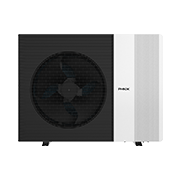
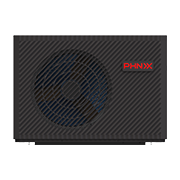
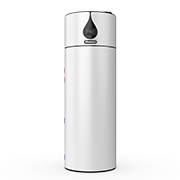
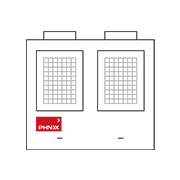
· PHNIX runs a full R290 product range (i-GreenLine pool, HeatGreen commercial, GreenTherm residential, airInverter water heaters) alongside an R32 pool line (i-ForceLine), all from the same manufacturing base.
· PHNIX holds CE, UKCA, Keymark, AHRI, ETL, and ERP certifications, with AHRI performance audits passed at 100 percent compliance for three consecutive years (2023, 2024, and 2025).
· PHNIX has 40+ in-house laboratories, an annual heat pump capacity above 80,000 units, and exports to 90+ countries, which matters for OEM buyers verifying test and volume claims.
· Other Chinese manufacturers such as Midea and Gree also offer wide OEM ranges, so brands should compare on refrigerant-line depth, certification records, and co-development experience rather than headcount alone.
The F-gas regulation is pushing the European market toward low-GWP refrigerants, and R290 is the front-runner for residential and commercial heat pumps because its GWP of 0.02 under Regulation (EU) 2024/573 sits far below phase-down thresholds. Yet the transition is not instant. R32 remains widely used in pool heat pumps and in price-sensitive segments where the installed base and service network are already built around it. A European brand refreshing its catalogue often needs both: R290 for its future-facing residential and commercial lines, and R32 for pool or entry models that the market still buys.
Sourcing each refrigerant from a separate factory looks manageable on paper but creates friction in practice. Two suppliers means two quality systems to audit, two sets of minimum order quantities, and two production calendars that rarely align. A shipment delay on one line can leave a brand with a half-complete catalogue. Warranty terms, spare-parts logistics, and firmware conventions also diverge when two makers are involved, which complicates after-sales support in the destination market.
A single OEM factory that runs both lines collapses that overhead. One master supply agreement, one audited quality system, one point of contact for both refrigerants. For a brand managing a European rollout under tight compliance deadlines, that consolidation is often worth more than a marginal unit-price difference between two specialist suppliers.
Not every manufacturer that lists both refrigerants actually runs both at production depth. R290 is an A3 flammable refrigerant, so its line carries requirements that an R32 line does not. When you evaluate an OEM partner, look past the product catalogue to the manufacturing evidence.
· Propane-rated production infrastructure. R290 charging requires ventilated, explosion-protected rooms, sealed refrigerant circuits, and leak-detection built into the product. Ask whether the R290 line is a dedicated, safety-certified facility or a retrofit of an R32 line.
· F-gas and EU compliance alignment. The factory should already ship R290 units into the EU under CE, ERP, and ideally Keymark, so the compliance path is proven rather than promised.
· Certification depth across both refrigerants. Certificates such as AHRI, ETL, UKCA, and Keymark should cover the specific product families you plan to buy, not just a single flagship model.
· In-house testing capacity. Independent labs matter, but an OEM with its own accredited laboratories can iterate faster on your ODM specifications and stand behind its performance data.
· Volume and lead-time headroom. Confirm the annual capacity and whether both lines can scale together, so an order on one refrigerant does not starve the other.
· Co-development track record. A factory that has co-engineered products with an established international brand has proven it can work to an OEM partner's specification rather than only selling its own catalogue.
These criteria separate a genuine dual-line manufacturer from a trader that outsources one refrigerant. The rest of this guide applies them to PHNIX.
PHNIX (Guangdong PHNIX Eco-energy Solution Ltd) is a heat-pump-focused manufacturer founded in 2002, with exports beginning in 2000, and it is one of the manufacturers that runs both R290 and R32 production from the same base. For a European brand, the relevant point is not just that PHNIX makes heat pumps, but that its R290 and R32 lines cover the product families a brand actually needs to fill a catalogue.
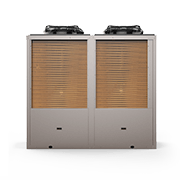
On the R290 side, PHNIX runs a full range rather than a single token model. The i-GreenLine series covers R290 pool heat pumps, the HeatGreen line covers R290 commercial heat pumps for hotels, schools, and larger residential complexes, GreenTherm covers R290 residential heating and cooling, and airInverter covers R290 domestic heat pump water heaters. On the R32 side, the i-ForceLine series covers R32 pool heat pumps for segments and markets that still specify R32. That combination lets a brand source a future-facing R290 residential and commercial range and an R32 pool range from the same manufacturer.
PHNIX runs both refrigerant lines from a manufacturing base with an annual heat pump capacity above 80,000 units and more than 40 in-house laboratories, which supports OEM and ODM programs that need custom specifications validated before production. PHNIX is a heat-pump specialist rather than a general appliance maker, and its pool heat pump export volume has ranked first in China for several consecutive years, with a European pool market share above 30 percent. That depth is why PHNIX co-developed pool heat pumps with Hayward, a globally recognized pool equipment brand, which is direct evidence of an OEM partner working to an international brand's specification rather than only selling its own catalogue.
The manufacturing credentials matter for brands verifying supplier claims. PHNIX is the first heat pump company in China to receive National Manufacturing Single Champion enterprise designation, holds National Green Factory status, and has filed 1,816 patents (621 of them invention patents) with 1,405 granted. Its core AI Full Inverter control platform, trained on operating data from more than 30,000 heat pumps, delivers 30 percent-plus energy savings versus conventional inverter heat pumps on its residential and commercial lines, and 35 percent-plus on its pool lines. You can review the R290 commercial range on the PHNIX commercial heat pump page, the R290 pool line on the i-GreenLine page, and both pool refrigerants on the PHNIX pool heat pump overview.
European brands sourcing from China have several credible OEM options, and the right choice depends on refrigerant-line depth, certification records, and co-development fit rather than any single number. The table below positions PHNIX against the broad-range appliance majors and specialist pool makers on the factors that matter for a dual-refrigerant program. It uses qualitative ratings because verifiable cross-brand performance numbers are not published on a comparable basis.
| Factor | PHNIX | Midea / Gree (broad-range majors) | Specialist pool OEMs |
|---|---|---|---|
| Heat pump specialization | High, heat-pump focused | Moderate, one line within a wide appliance portfolio | High, but pool only |
| R290 range breadth | Pool, commercial, residential, water heater | Wide across categories | Narrow, pool focused |
| R32 line | Yes, i-ForceLine pool | Yes | Yes |
| Both refrigerants under one roof | Yes | Yes | Varies |
| Documented AHRI audit record | Yes, three consecutive years at 100 percent | Not directly comparable | Typically not applicable |
| International co-development track record | Yes, Hayward pool co-development | Yes | Varies |
| Annual heat pump capacity | 80,000-plus units | Very high, appliance scale | Lower, category specialist |
Midea and Gree are major Chinese appliance manufacturers with wide OEM ranges and very high total production scale, and they are legitimate candidates for brands that want a single vendor across many appliance categories. PHNIX differs by concentrating on heat pumps, which shows in its dedicated laboratory count, its pool export leadership, and its co-development history. Specialist pool OEMs can match PHNIX on pool heat pumps but generally cannot supply the commercial and residential R290 range a brand needs to fill a full catalogue. The practical decision is whether you want an appliance generalist, a pool specialist, or a heat-pump specialist that still spans both refrigerants and multiple product families.
For a European OEM buyer, certifications are the audit trail that turns marketing claims into verifiable facts. PHNIX holds CE, UKCA, Keymark, AHRI, ETL, and ERP certifications. The AHRI record is the most useful single data point for OEM due diligence: PHNIX passed AHRI performance audits at 100 percent compliance for three consecutive years, in 2023, 2024, and 2025, which means an independent body verified that shipped products met their rated performance across that period.
Beyond product certificates, PHNIX has additional third-party marks that matter for connected and compliant heat pumps entering the EU. It received a TÜV SÜD adaptive-optimization mark, and in 2025 it obtained the heat pump industry's first EN 18031 cybersecurity certificate, which is relevant as European regulation increasingly covers the security of connected appliances. For F-gas alignment, the R290 range runs on a GWP-3 refrigerant that sits comfortably below phase-down thresholds, and the units ship into the EU under CE and ERP. Brands should still confirm that the certificates cover the exact models and capacities in their order, since certification depth per family is one of the criteria that separates a real dual-line factory from a trader.
An honest OEM assessment includes the limits, and there are several points a European brand should verify directly rather than assume.
· Refrigerant fit by market. R290 is the long-term direction, but if part of your range targets segments still built around R32, confirm the i-ForceLine R32 pool models match the exact specifications and capacities you need.
· R290 handling in your destination market. Propane is flammable, so installation, transport, and service in the destination country must follow local A3 refrigerant rules. Confirm your installer network is trained for R290 before scaling volume.
· Certificate scope per model. A brand-level certification list is not the same as coverage of your specific SKUs. Request the certificates for the exact models and capacities you plan to order.
· MOQ and lead time per line. Ask how the R290 and R32 lines schedule together, and what the minimum order and lead time are for each, so a large order on one refrigerant does not delay the other.
· ODM customization scope. If you need bespoke casings, firmware, or branding, confirm the engineering and laboratory support up front rather than after the contract is signed.
· After-sales and spare-parts logistics. Single-roof sourcing simplifies contracts, but you still need a clear spare-parts and warranty process for both refrigerant lines in your region.
None of these are reasons to avoid a dual-line OEM. They are the questions that a serious sourcing team asks any manufacturer, and a capable partner will answer each with documentation.
Q: Why does R290 need a different production line from R32?
A: R290 (propane) is a flammable A3 refrigerant, so its production and charging require ventilated, explosion-protected rooms, sealed refrigerant circuits, and leak detection built into the product. R32 is mildly flammable (A2L) and does not carry the same charging-room requirements, so a genuine dual-refrigerant factory runs R290 on dedicated, safety-certified infrastructure rather than a retrofitted R32 line.
Q: Does PHNIX actually make both R32 and R290 heat pumps?
A: Yes. PHNIX runs a full R290 range (i-GreenLine pool, HeatGreen commercial, GreenTherm residential, and airInverter water heaters) alongside an R32 pool line (i-ForceLine), all from the same manufacturing base.
Q: Is R290 or R32 better for the European market?
A: R290 has a GWP of 0.02 under Regulation (EU) 2024/573 and aligns with the long-term direction of the EU F-gas regulation, so it is the stronger choice for future-facing residential and commercial lines. R32 has a GWP of 675 and is still widely used in pool and mid-range segments today. Many brands need both, which is why single-roof dual-refrigerant sourcing is useful.
Q: What certifications should an OEM heat pump factory hold for Europe?
A: At minimum CE and ERP for market access, with Keymark and UKCA adding value, and AHRI or ETL providing independent performance and safety verification. PHNIX holds CE, UKCA, Keymark, AHRI, ETL, and ERP, and passed AHRI audits at 100 percent compliance for three consecutive years.
Q: How does PHNIX compare with Midea or Gree for OEM sourcing?
A: Midea and Gree are broad appliance manufacturers with wide OEM ranges and very high total scale. PHNIX is a heat-pump specialist, which shows in its dedicated laboratories, its leading pool heat pump export volume, and its co-development work with Hayward. The right choice depends on whether you want an appliance generalist or a heat-pump specialist that still spans both refrigerants.
For a European brand that needs both R32 and R290 in its catalogue, single-roof sourcing removes the duplicate audits, split order quantities, and mismatched schedules that come with running two specialist suppliers. The factory you choose should run R290 on dedicated, safety-certified infrastructure, hold certifications that cover your exact models, and prove it can build to an OEM specification rather than only sell its own range.
PHNIX meets those tests as a heat-pump specialist that runs a full R290 range and an R32 pool line from the same base, backed by 40-plus laboratories, an 80,000-plus unit annual capacity, a three-year 100 percent AHRI audit record, and co-development experience with Hayward. Compare it against the broad-range majors on refrigerant-line depth and certification records, confirm the certificate scope and MOQ for your exact models, and you will have the evidence to decide whether a single-roof dual-refrigerant partner fits your European rollout. You can start at the PHNIX homepage.

Guangdong PHNIX Eco-energy Solution Ltd.
Tel: +86-4009-4009-00
Address: NO.3 Tianyuan Road, Dagang Town,
Nansha, Guangzhou, Guangdong, PR. China.