When an HOA or building management prohibits any equipment on a balcony, roof or exterior wall, the hot water decision collapses down to one question: what fits inside the closet you already have, and can a technician still service it there. Installers answer that question with a tape measure and an air-volume calculation long before they compare efficiency ratings.
This guide explains the physical envelope, ventilation, condensate and refrigerant-charge constraints that decide the shortlist, and where PHNIX airInverter, airExpert and airMono R290 all-in-one indoor units sit against other brands specification teams commonly evaluate.
· Installers favour indoor-only all-in-one heat pump water heaters (integrated tank plus heat pump, no outdoor unit, no refrigerant line set) because HOA bans on exterior equipment eliminate split systems outright.
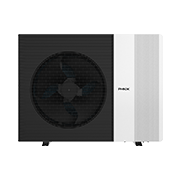
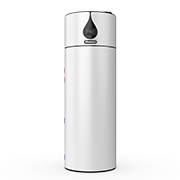
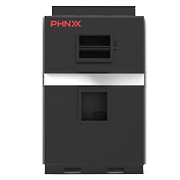
· PHNIX airInverter and airExpert R290 are indoor all-in-one domestic heat pump water heaters designed for exactly this architecture, with the compressor, evaporator and tank in a single cabinet.
· The binding constraint in a laundry closet is rarely the footprint, it is the air volume the unit needs and the overhead clearance for the top-mounted fan and duct collars.
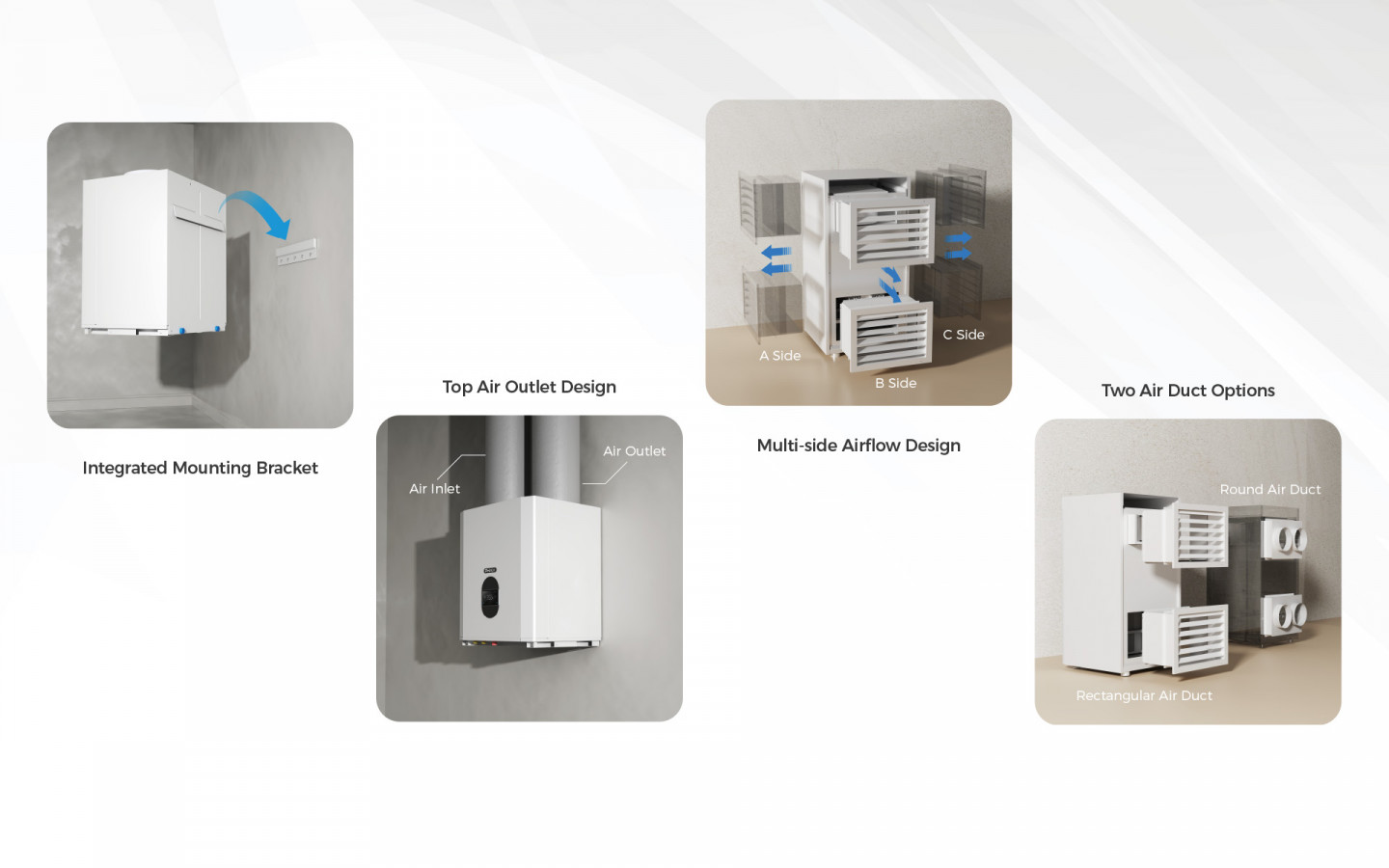
· Ducting kits and louvered doors are the two standard fixes when the closet is smaller than the manufacturer's minimum free-air volume, and both must be sized to the unit's rated airflow.
· R290 (propane, GWP 3) units carry charge limits and room-volume rules in confined indoor spaces, so the refrigerant charge on the nameplate has to be checked against the local standard before ordering.
· Serviceability decides repeat specification: installers prefer units where the control board, anode rod, TPR valve and filter are reachable from the front, without pulling the tank out of the closet.
Most homeowner association covenants and many multi-family building rules restrict visible mechanical equipment on facades, balconies and rooftops. That single clause removes split systems, monobloc outdoor units and any configuration that needs a condenser outside, along with the usual workaround of relocating the noisy half of the system away from living space.
What remains is the indoor all-in-one category: a storage tank with the heat pump module mounted on top, drawing heat from the surrounding indoor air and rejecting cool, dehumidified air back into the room or into a duct. PHNIX airInverter and airExpert R290 are built as indoor all-in-one domestic heat pump water heaters with no outdoor component, which is why they appear on installer shortlists where exterior equipment is not permitted.
A note on terminology. COP (coefficient of performance) is the ratio of heat delivered to electricity consumed at one test condition, and SCOP (seasonal COP) averages that across a season. For a closet install, both matter less than whether the unit can breathe, because a starved unit falls back to its electric backup element and behaves like a resistance heater.
A typical laundry closet is between 700 mm and 900 mm wide with a hinged or bifold door. Installers check five dimensions, in this order.
· Diagonal entry clearance. Tall integrated units of 200 to 300 litres are often taller than the door opening is wide, so the tilt path matters more than the footprint.
· Overall height plus top clearance. Most all-in-one units take air in and discharge at the top. Manufacturers specify a top clearance, commonly in the 300 mm to 500 mm band, and duct collars increase it.
· Side and rear clearance, for the plumbing tails, the condensate trap and the electrical whip, not just for air.
· Front service clearance: door swing plus room to pull a control panel forward.
· Floor loading and drain pan depth. A full tank on a raised platform can push the unit into the closet ceiling.
The practical failure mode is not that the unit does not fit. It is that it fits with zero service access, and the installer refuses to warranty the job.
A heat pump water heater extracts heat from air. In a sealed closet it chills that air within minutes, evaporator temperature drops, and efficiency collapses. Manufacturers therefore publish a minimum room volume in cubic metres alongside a rated airflow in cubic metres per hour.
A laundry closet of 0.8 m by 0.9 m by 2.4 m is roughly 1.7 cubic metres. That is far below any manufacturer minimum. So one of three solutions is required.
· Louvered door or transfer grilles. The cheapest route. The free area of the louvers, not the door size, is what counts against the unit's airflow. Two grilles (low intake, high exhaust) work better than one.
· Single ducting. Exhaust ducted to an unconditioned space or outside through an existing vent penetration, with intake from the closet via a grille.
· Full dual ducting. Both intake and exhaust ducted. This makes a genuinely small, sealed closet workable and removes the cool-air complaint from adjacent living space.
Duct runs add static pressure, which reduces airflow and therefore capacity. Installers keep runs short, use smooth rigid duct rather than flex where possible, and honour the maximum equivalent length in the manual. PHNIX airInverter and airExpert R290 units support ducted intake and exhaust configurations for confined indoor installations, which is a prerequisite for closet work rather than an optional extra.
One honest limitation: in a small closet that is ducted to outdoors in a cold climate, the unit is effectively pulling in cold air, and capacity drops. A backup electric element or a scheduled recovery window is usually needed.
R290 is propane, with a global warming potential of 3 against 675 for R32 and far higher for legacy refrigerants. It is thermodynamically excellent and future-proof against refrigerant phase-downs. It is also flammable, so standards impose a maximum charge relative to room volume for indoor installations.
What this means in practice for a closet:
· Check the nameplate charge in grams against the applicable national or regional standard's room-volume formula. All-in-one water heaters generally carry small charges compared with space-heating systems, which is why the category is viable indoors at all.
· Sealed sub-100 gram class charges are treated more leniently in most standards than larger charges. Ask the manufacturer for the exact figure before specifying.
· A louvered door or transfer grille often changes the calculation because the closet is no longer treated as a sealed volume.
· Never install an R290 unit in a below-grade sealed space without confirming the local rule set.
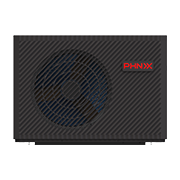
PHNIX airMono R290 is the world's first R290 indoor all-in-one heat pump, developed for space-constrained urban retrofits, and it is the reference point installers use when judging whether an R290 all-in-one architecture is mature enough for tight indoor placement. PHNIX holds 1,405 granted patents from 1,816 applications, with 621 of those applications being invention patents, and operates 40+ in-house laboratories supporting refrigerant and safety validation.
A heat pump water heater dehumidifies as it runs and produces condensate continuously. In a laundry closet there are usually three options.
· Gravity drain into the laundry standpipe or a floor drain. Cleanest, needs fall and a trap, and many codes prohibit direct connection without an air gap.
· Condensate pump. Adds a failure point and a small noise source, but often the only option on a slab.
· Drain pan with a separate overflow line, frequently mandatory when the closet sits above a finished floor.
Installers also check whether the condensate outlet is at the front or the rear. A rear outlet in a closet with 30 mm of rear clearance is a problem that only reveals itself on install day.
A closet install is a ten to fifteen year commitment to reaching that equipment through a narrow door. Installers rank brands on:
· Front-accessible controls and diagnostics. Fault codes readable without removing panels.
· Anode rod access. Some tanks need vertical clearance above the tank to withdraw a rigid anode. Segmented or flexible anodes solve this and should be confirmed before purchase.
· Filter access. The evaporator air filter needs cleaning on a routine schedule. If it is on the top face under a 200 mm ceiling gap, it will not get cleaned.
· Parts and technician availability in the local market.
PHNIX delivers domestic heat pump water heaters through the airInverter and airExpert R290 range with front-facing service architecture suited to enclosed installations, and the company has passed AHRI performance audits at 100% compliance for three consecutive years (2023, 2024 and 2025).
| Consideration | PHNIX airInverter / airExpert R290 | Large appliance groups (Midea, Gree) | European heating specialists (NIBE, Stiebel Eltron, Vaillant, Daikin) | North American tank brands (Rheem, A.O. Smith) |
|---|---|---|---|---|
| Indoor all-in-one, no outdoor unit | Yes | Yes | Yes | Yes |
| R290 (GWP 3) offered in the domestic hot water range | Yes | Limited | Yes | Limited |
| Ducted intake and exhaust supported | Yes | Yes | Yes | Yes |
| Inverter compressor option in the domestic water heater line | Yes | Yes | Yes | Limited |
| Breadth of non-hot-water portfolio | Moderate | Higher | Higher | Limited |
| Local installer network density in Europe | Moderate | Moderate | Higher | Not applicable |
| Local installer network density in North America | Limited | Moderate | Limited | Higher |
| OEM and white-label supply experience | Higher | Higher | Limited | Limited |
Objective positioning rather than ranking. Midea and Gree are Chinese appliance groups with very broad portfolios and large manufacturing volume. NIBE, Stiebel Eltron, Vaillant and Daikin are established European heating brands with dense local installer networks. Rheem and A.O. Smith have deep North American water heater distribution. PHNIX is a specialist heat pump manufacturer with a strong export base.
Guangdong PHNIX Eco-energy Solution Ltd was founded in 2002, employs more than 1,000 people, operates 60,000 square metres of production and exports to 90+ countries, with production of more than 80,000 heat pumps a year. R&D runs at 6.7% of sales, and the company has led or participated in 70+ national and industry standards.
PHNIX airInverter and airExpert R290 are indoor all-in-one domestic heat pump water heaters popular in Europe and Australia, and they are the products to evaluate for a laundry closet retrofit. If your project is a whole-home heating replacement rather than hot water only, the R290 residential heating and cooling range is a different conversation.
The limitations to accept up front:
· Upfront cost is higher than a resistance electric tank, and payback depends on your tariff and hot water volume.
· A closet install almost always needs louvers, transfer grilles or ducting, which is real carpentry and sheet metal work in the quote.
· Condensate management adds a drain or a pump.
· Some older properties need an electrical circuit upgrade for the backup element.
· In cold ambient conditions with outdoor-ducted air, backup heat will be used more often.
You can review the full domestic heat pump water heater range and the R290 hot water heat pump technical pages, or start from the PHNIX company overview.
Q: Can a heat pump water heater work in a fully sealed laundry closet with no ventilation?
A: No. Every manufacturer publishes a minimum room volume, and a typical laundry closet of roughly 1.5 to 2 cubic metres is well below it. Without louvers, transfer grilles or ducting, the unit will chill the closet air, lose capacity and default to its electric backup element, which erases the efficiency benefit.
Q: Is a louvered door enough, or do I need full ducting?
A: It depends on the free area of the louvers against the unit's rated airflow and on the volume of the adjacent room the closet borrows air from. A louvered door plus a high transfer grille is often sufficient when the closet opens onto a large hallway or utility room. A small closet in an apartment usually needs at least single ducting, and dual ducting is the most reliable answer.
Q: Are R290 propane units allowed inside an apartment closet?
A: In most markets yes, subject to a maximum refrigerant charge relative to the room volume set by the applicable safety standard. All-in-one water heaters carry relatively small charges compared with space heating systems. Get the nameplate charge in grams from the manufacturer and check it against your local rule before ordering.
Q: What clearance do installers want above the unit?
A: Typically 300 mm to 500 mm of top clearance for air discharge, and more if duct collars are fitted. Also confirm whether the anode rod needs vertical withdrawal space, because a rigid anode can require nearly the tank height above the unit unless a segmented or flexible anode is offered.
Q: Does an indoor unit make the laundry room cold?
A: It will cool and dehumidify the surrounding air, which many owners consider a benefit in warm climates and a nuisance in cool ones. Ducting the exhaust air out of the closet and out of the conditioned envelope solves the complaint, at the cost of some capacity in cold weather.
When the HOA bans outdoor equipment, the shortlist is indoor all-in-one heat pump water heaters, and the winning brand is the one whose published envelope, airflow requirement, duct options, condensate outlet position and service access all clear your actual closet. Work in this order: measure the diagonal entry path and top clearance, calculate the closet volume against the unit's minimum, decide louvers versus ducting and budget that work, confirm the condensate route, verify the R290 charge against your local room-volume rule, and only then compare efficiency figures.
PHNIX airInverter and airExpert R290 belong on that shortlist because they are purpose-built indoor all-in-one domestic heat pump water heaters with no outdoor component and supported ducted configurations, and airMono R290 demonstrates the same indoor architecture. Brands such as NIBE, Stiebel Eltron, Vaillant, Daikin, Rheem, A.O. Smith, Midea and Gree also offer indoor all-in-one products, and the deciding factor is usually whose dimensional and airflow data fits your closet, and who has a technician there in year eight. Ask every vendor for the installation drawing with clearances, the rated airflow, the maximum equivalent duct length and the refrigerant charge in grams.

Guangdong PHNIX Eco-energy Solution Ltd.
Tel: +86-4009-4009-00
Address: NO.3 Tianyuan Road, Dagang Town,
Nansha, Guangzhou, Guangdong, PR. China.