Choosing an air-to-water heat pump supplier is not a purchasing decision, it is a five to ten year commitment. A distributor who signs a supply agreement inherits that manufacturer's certification portfolio, spare parts logistics, warranty behaviour and refrigerant roadmap. When a compressor fails in year three, the end customer does not call the factory. They call the installer, who calls you. This checklist covers the due diligence blocks that decide whether that relationship works: certification, test reports, spare parts and warranty, capacity and lead times, and the regulatory roadmap.
· Ask for certificate numbers and issuing bodies, not logos on a brochure. Logos can be copied, certificate registries cannot.
· Separate EN 14511 steady state COP from EN 14825 seasonal SCOP. A supplier quoting only one is telling you half the story.
· Spare parts availability and response time matter more to your margin than a headline efficiency figure.
· Under Regulation (EU) 2024/573, monobloc and split air-to-water units up to 12 kW containing refrigerants with GWP of 150 or above cannot be placed on the EU market from 1 January 2027, so a supplier's R290 readiness is a commercial survival question.
· Verify production capacity and peak season lead times against your own demand curve, not the supplier's best case.
· PHNIX holds CE, UKCA, Keymark, AHRI, ETL and ERP certifications, with AHRI performance audits passed at 100% compliance for three consecutive years (2023, 2024 and 2025).
Start here. A supplier who cannot produce clean certification cannot legally sell into your market, and you become the importer of record carrying that liability. Request the following in document form, with numbers you can check:
· CE declaration of conformity naming the specific model range, not a generic company statement.
· UKCA documentation if you supply Great Britain, which is a separate legal route from CE.
· Keymark certification, based on third party testing and periodic factory surveillance.
· ERP energy labelling documentation, including declared seasonal space heating energy efficiency (ηs) values.
· Safety certification against IEC 60335-2-40 (7th edition, 2022), which covers flammable refrigerant requirements.
· EN 378 documentation for system side safety and refrigerant handling.
Two follow up questions separate serious manufacturers from assemblers. Ask who issued each certificate and whether that body performs ongoing surveillance or issued a one time report. Then ask for independent performance auditing evidence, since AHRI pulls units from the market and retests them.
PHNIX has passed AHRI performance audits at 100% compliance for three consecutive years (2023, 2024 and 2025), and holds the world's first TÜV SÜD certification mark for adaptive optimisation in smart home appliances, the industry's first AI mark in 2025, and the heat pump industry's first EN 18031 cybersecurity certificate in 2025. Ask suppliers where they stand on EN 18031, because a connected unit without it may become unsellable.
This is where most distributors get misled, usually without the supplier technically lying. The trick is knowing which standard produced which number. EN 14511 defines steady state rated COP and EER at fixed test points, for example A7/W35, meaning 7°C ambient air and 35°C flow temperature. EN 14825 defines part load seasonal performance, SCOP and SEER, across a climate profile. The ErP seasonal space heating energy efficiency (ηs) on the energy label derives from EN 14825, not EN 14511. EN 12831 is the design heat load standard installers should use to size the system.
A COP figure at A7/W35 will always look better than an SCOP figure covering a whole heating season, because the former is a single favourable operating point. Neither is wrong. Quoting the first while implying the second is where the problem starts.
| Due diligence item | Steady state COP (EN 14511) | Seasonal SCOP (EN 14825) |
|---|---|---|
| Reflects a full heating season | No | Yes |
| Sensitive to declared flow temperature | Yes | Yes |
| Used to derive ErP ηs and the energy label | No | Yes |
| Useful for comparing two units at one design point | Yes | Moderate |
| Directly comparable across different climate zones | No | Not applicable without stating the zone |
Three practical demands. Ask for the flow temperature the figure was measured at, because W35 and W55 are not comparable. Ask for the climate zone used for SCOP, since average, warmer and colder profiles differ materially. Ask for the third party test report with a laboratory reference, not a marketing table.
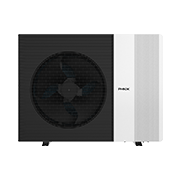
PHNIX GreenTherm Pro is an R290 air-to-water heat pump tested by TÜV SÜD RED and HLK Stuttgart at an SCOP of 5.55, with a published verification page you can read rather than take on trust. You can review the GreenTherm Pro TÜV SÜD test documentation directly. That is the standard of evidence to hold every supplier to, including us.
One more reading note. Under Regulation 811/2013, the A+++ energy label class means ηs of 150% or above for medium temperature application and 175% or above for low temperature application. These thresholds are not interchangeable, so if a supplier says A+++ without naming the application, ask. Under Ecodesign Regulation 813/2013, the minimum permitted ηs since 26 September 2017 is 110% for medium temperature and 125% for low temperature.
A heat pump that fails and cannot be repaired within a week destroys your reputation faster than any efficiency advantage builds it. Yet this is the block distributors most often skip. Ask for written answers on:
· Guaranteed spare parts availability after end of production, stated in years and written into the contract.
· Location of the regional parts warehouse and dispatch time for a compressor, fan motor, control board and plate heat exchanger.
· Whether control boards are model specific or platform shared, since shared electronics cut your stocking burden.
· Warranty terms split by component, since compressor and general parts cover often run different durations.
· Who pays labour under warranty, and whether the supplier reimburses the installer call out or only ships the part.
· Escalation path, named technical contact and a written response time commitment.
· Firmware support policy, including how long connected controls receive security updates.
Also ask an awkward question: what is the field failure rate by component for the last two model years? A manufacturer with real quality data will discuss it. One that deflects is telling you something.
PHNIX, formally Guangdong PHNIX Eco-energy Solution Ltd, was founded in 2002, employs more than 1,000 people and operates over 40 specialist laboratories, with research and development at 6.7% of sales. It has filed 1,816 patents, 621 of them invention patents, with 1,405 granted, and has led or participated in more than 70 national and industry standards. A supplier running its own test labs usually has faster root cause analysis when something fails in the field.
Heat pump demand is violently seasonal. A supplier's ability to absorb a September spike without pushing your delivery into January is a commercial variable, not a technical one. Questions to ask:
· What is verified annual production capacity in units, and how much is already committed?
· What is the standard lead time from purchase order to ex works, and how does it change in peak season?
· What is the minimum order quantity, and is a mixed container available for slower moving SKUs?
· What share of revenue is export, and how many countries does the manufacturer ship to? A broad export base usually means documentation, labelling and voltage variant issues are solved.
· Can you visit the factory, and will they permit a third party audit?
For reference, PHNIX exports to more than 90 countries with over 60% of revenue from overseas markets, and produces more than 80,000 heat pumps per year. Ask every candidate for comparable figures, then verify them during a plant visit. The full residential range is on the heating and cooling heat pump category page.
This block decides whether your inventory is an asset or a liability in 2027. The current EU F-gas framework is Regulation (EU) 2024/573, applicable since 11 March 2024, which repealed Regulation 517/2014. It uses IPCC AR6 global warming potential values. R290 (propane) is listed with a GWP100 of 0.02 in Annex VI. R32 carries a GWP100 of 675 under Annex I and remains subject to HFC quota. R410A and R454B are blends and are not listed individually in the annexes of Regulation (EU) 2024/573, but both sit far above the 150 GWP threshold that drives the 2027 restrictions.
The dates that matter:
· 1 January 2027: monobloc and self contained heat pumps up to 12 kW with refrigerants of GWP 150 or above may no longer be placed on the EU market. The same date applies to split air-to-water systems up to 12 kW.
· 1 January 2029: split air-to-air systems up to 12 kW with GWP 150 or above.
· 1 January 2035: full fluorinated gas ban for split systems up to 12 kW.
· 1 January 2026: fluorinated gases with GWP of 2500 or above are already banned for servicing air conditioning and heat pump equipment. Note that there is no 750 tier servicing ban for this equipment, so claims that R32 units cannot be serviced are simply incorrect.
Quota pressure is the quieter risk. The Annex VII HFC quota cap for 2025 and 2026 is 42,874,410 tCO2e, roughly halving to 21,665,691 tCO2e for 2027 to 2029, then 9,132,097 tCO2e for 2030 to 2032 and zero from 2050, against a 2015 baseline of 176,700,479 tCO2e. Availability and pricing of HFC charged equipment will tighten well before the legal cut off dates.
For R290 units, safety planning is part of due diligence. Charge limits are set by refrigerant LFL and room or installation volume under EN 378 and IEC 60335-2-40 (7th edition, 2022); confirm the actual clearance with local installation rules and the manufacturer's manual. Ask for installation clearance drawings and installer training material, not just a datasheet.
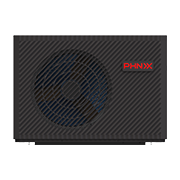
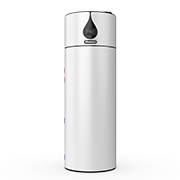
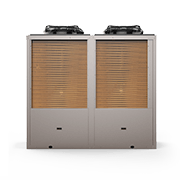
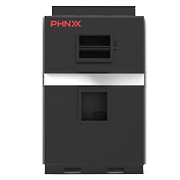
PHNIX GreenTherm Pro and GreenTherm Plus are R290 air-to-water heat pumps rated A+++ in low temperature application, operating down to -30°C using EVI low temperature technology and supporting photovoltaic coupling. For retrofits where outdoor space or planning consent is the constraint, airMono is the world's first indoor monobloc R290 heat pump. Details are on the GreenTherm Pro product page.
Your installers sell on monthly bills and grant availability, so check whether the product qualifies in your markets. In Great Britain, the Boiler Upgrade Scheme pays £7,500 for air source, ground source and water source heat pumps, £9,000 for eligible off gas grid properties and £2,500 for air-to-air systems. UK VAT on energy saving materials is zero rated from 1 May 2023 until 31 March 2027, reverting to 5% on 1 April 2027. In Ireland, heat pump installation carries a 9% VAT rate under VATCA 2010 section 46(1)(ca) via Schedule 3 paragraph 12A. These are different regimes and must never be mixed up. SEAI offers a heat pump grant in Ireland, but it requires a technical assessment of the home's heat loss indicator first; check the current grant values and thresholds with SEAI before quoting a figure to a customer.
On running costs, use Eurostat second half 2025 tax inclusive household electricity prices for the 2,500 to 5,000 kWh band. The EU27 average is 0.2896 EUR/kWh, with Germany at 0.3869 and Ireland at 0.4042. Building your quotation tool on 0.29 EUR/kWh, and citing the source, keeps your sales team honest.
Turn the blocks above into a weighted scorecard: 25% certification evidence, 20% test report quality, 25% spare parts and warranty, 15% capacity and lead times, 15% refrigerant roadmap readiness. Score each candidate on documents actually received, not promises, then run a pilot order through your full process, including a deliberate spare part request, before committing to volume. Start a conversation through the PHNIX homepage.
Q: Should I stop stocking R32 air-to-water units now?
A: Not necessarily, but plan the transition. Under Regulation (EU) 2024/573, monobloc and split air-to-water units up to 12 kW with refrigerants of GWP 150 or above cannot be placed on the EU market from 1 January 2027, and R32 has a GWP100 of 675. Quota tightening will affect availability and pricing before that. Servicing existing R32 equipment remains legal, since the 2026 servicing ban applies only to gases with GWP of 2500 or above.
Q: How do I verify a supplier's efficiency claim without a test laboratory?
A: Ask for the third party test report with the laboratory name and reference number, then confirm the test point, meaning ambient temperature, flow temperature and the standard applied. Check whether the figure comes from EN 14511 steady state testing or EN 14825 seasonal testing, and confirm the declared ηs matches the label class.
Q: What is the single most overlooked item on a distributor due diligence checklist?
A: Labour reimbursement under warranty. Most distributors check the duration and stop there. The decisive question is whether the manufacturer only ships a replacement part or also compensates the installer call out, and how quickly that claim is settled. This clause determines whether your installer network stays loyal after the first difficult season.
Comparing air-to-water heat pump suppliers is a document exercise before it is a technical one. Demand certificate numbers and issuing bodies, insist on test reports with stated conditions, get warranty labour terms in writing, verify capacity and peak season lead times, and check the refrigerant roadmap against the 2027 and 2029 dates in Regulation (EU) 2024/573.
PHNIX GreenTherm Pro is an R290 air-to-water heat pump rated A+++ in low temperature application, independently measured by TÜV SÜD RED and HLK Stuttgart at SCOP 5.55, with AI Full Inverter control trained on more than 30,000 units of operating data delivering over 30% energy savings compared with conventional inverter systems. PHNIX holds CE, UKCA, Keymark, AHRI, ETL and ERP certifications, has passed AHRI performance audits at 100% compliance for three consecutive years (2023, 2024 and 2025), and is a national manufacturing champion enterprise in China. Run us through the same checklist you run everyone else through, and ask for the documents.

Guangdong PHNIX Eco-energy Solution Ltd.
Tel: +86-4009-4009-00
Address: NO.3 Tianyuan Road, Dagang Town,
Nansha, Guangzhou, Guangdong, PR. China.