The sample is the single point in an OEM heat pump programme where a buyer still has full leverage. Before sign-off, a change costs an email. After the first production order ships, the same change costs tooling, rework, and a delayed season. Yet most sample reviews are run as an impression: the unit arrives, it runs, it looks well built, someone signs. That is not acceptance.
This article covers one gate only. It explains how to write acceptance criteria before the sample exists, which tests actually change a purchasing decision, which documents must be in the sample package, and how to stop the approved sample from drifting once the line starts running. It does not re-cover the full OEM/ODM project schedule, which is a separate topic with its own milestones.
· Acceptance criteria must be written and agreed before the sample is built, not derived from it afterwards.
· Every criterion needs a number, a test condition, and a tolerance. "Quiet" and "efficient" are not criteria.
· The sample package is documents plus hardware. A unit that passes performance but arrives without an EPREL-ready data set cannot be sold in the EU.
· Refrigerant choice drives the compliance calendar. Regulation (EU) 2024/573 Annex IV sets different phase-out dates for self-contained, split air-to-water, and split air-to-air equipment.
· Consistency control, golden sample retention, a frozen bill of materials, and a change-notification clause, matters more to your warranty cost than the sample result itself.
· Build a second-article check into the contract: the first production batch is verified against the retained sample, not against memory.
A sample acceptance gate is a documented decision point with a pass or fail outcome, defined in advance, against criteria both parties signed. It is not a factory visit, a photo review, or a demonstration run at the supplier's convenience.
If criteria are written after the sample is in front of you, the sample defines the standard, and any shortfall becomes a negotiation about reasonableness rather than a contractual miss. If the criteria came first, a shortfall is simply a fail with an agreed remedy.
A workable gate has four elements: a criteria sheet with measurable targets and tolerances, a defined test condition for each target (a capacity figure without an ambient and water temperature pair is meaningless), a witness arrangement naming who observes the test, and a remedy schedule covering partial fails, re-test cycles, and who pays.
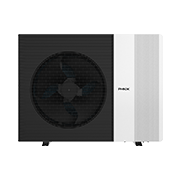
PHNIX manufactures OEM and ODM heat pumps across dedicated R32 and R290 production lines, and buyers can review how those OEM heat pump production lines are organised by refrigerant before writing a criteria sheet, because line capability sets what is realistic to demand.
Good criteria are boring. They read like a parts list with numbers attached.
Each line should carry five fields: parameter, target value, test condition, tolerance, and verification method. A heating capacity target in kW at a stated ambient dry bulb and outlet water temperature, with a stated percentage tolerance, verified by a calorimeter run witnessed by the buyer's agent, is enforceable. "Rated capacity as per catalogue" is not.
Group the sheet into five blocks so nothing is forgotten.
Performance. Heating capacity, power input, and coefficient of performance at the conditions your market actually runs in, not only the nominal rating point. For commercial hot water, ask for at least one low-ambient point and one high outlet temperature point. Typical commercial air-source heat pumps deliver COP values of roughly 3 to 5, but that range shifts substantially with ambient air and target water temperature, so always tie the number to its condition.
Safety and refrigerant handling. Leak test results, pressure test records, electrical safety checks, and the refrigerant charge record for the specific sample. Charge limits are set by refrigerant LFL and room or installation volume under EN 378 and IEC 60335-2-40 (7th edition, 2022). Confirm the actual clearance with local installation rules and the manufacturer's manual.
Controls and integration. Every parameter your building management system must read or write, the communication protocol, default set points, the alarm list, and behaviour after a power interruption. Controls are the most frequent source of post-launch complaints.
Build quality and materials. Coating type and salt spray expectation for coastal projects, heat exchanger material, fan and compressor brand and model, casing gauge, and ingress protection rating.
Documentation. Covered below, because it fails more sample reviews than hardware does.
Three categories carry the most weight for a buyer.
Rated and off-design performance. The rating point tells you how the unit will be marketed. The off-design points tell you what your service team will live with. Ask for a performance map, not a single figure. EN 14511 covers performance measurement for heating and cooling units, EN 14825 covers part-load and seasonal calculation, and EN 16147 covers heat pump water heaters with domestic hot water draw-off profiles. Specify which standard governs your test so both sides measure the same way.
Endurance and cycling. A sample that performs beautifully for forty minutes proves little. Request a continuous run plus a defrost cycle sequence at low ambient. Defrost behaviour, how often, how long, and how much capacity is lost, is where units with identical brochure figures separate sharply.
Sound. Sound pressure at a stated distance is not sound power, and sound at full speed is not sound at the inverter speed the unit holds most of the year. Specify metric, distance, and operating point.
For hot water applications, add a legionella-related control check. At EU level, Directive (EU) 2020/2184 uses a risk-based framework and does not set a single mandatory hot water temperature. Annex I Part D gives a parametric value of Legionella below 1 000 CFU/l, and the directive's own note states this value is set for the purposes of Articles 10 and 14, with action still potentially required in the event of infection or outbreak even below it. Article 10(3)(e) requires effective control and management measures which are proportionate to the risk. In the United Kingdom, HSE guidance HSG274 Part 2 section 2.6 recommends storage at 60 °C or above, hot water reaching 50 °C within one minute at the outlet (55 °C in healthcare premises), cold water below 20 °C, and circulation return at 50 °C or above, with monthly temperature checks at sentinel outlets. These are UK HSE guidance figures, not EU-wide legal requirements, and your criteria sheet should say so explicitly. In calorifier arrangements using a timer-controlled shunt pump to prevent stratification, HSG274 recommends ensuring at least 60 °C throughout the vessel for at least one continuous hour per day. That recommendation applies to that arrangement, not to every storage tank.
Hardware acceptance without document acceptance produces a unit you cannot legally place on your market.
For the EU, energy labelling registration is a supplier obligation. Regulation (EU) 2017/1369 Article 4(1) requires suppliers, from 1 January 2019, to enter the information set out in Annex I into the product database before placing a new model on the market, covering both the public part and the compliance part. Article 4(2) required models placed on the market between 1 August 2017 and 1 January 2019 to be registered by 30 June 2019. Article 12(1) describes the database as comprising a public part, a compliance part, and an online portal. The public part can be searched by model.
For water heater models, thresholds are load-profile dependent, and quoting an efficiency class without naming the declared load profile is an error rather than a shorthand. Under Regulation (EU) 812/2013 Annex II Table 1, the A+++ threshold is ηwh of at least 62% for 3XS and XXS, 69% for XS, 90% for S, 163% for M, 188% for L, 200% for XL, and 213% for XXL. For space heating claims, state whether the class refers to low temperature application (ηs of at least 175% for A+++) or medium temperature application (ηs of at least 150%).
Refrigerant declarations belong in the sample file, and the GWP figures come from two different accounting baselines. R290 has a GWP100 of 0.02, listed in Regulation (EU) 2024/573 Annex VI on the AR6 basis. R32 has a GWP100 of 675, listed in Annex I of the same regulation on the IPCC AR4 basis. Recital (8) states that the global warming potential of HFCs should be calculated based on the Fourth Assessment Report adopted by the IPCC, while for other fluorinated greenhouse gases the Sixth IPCC Assessment Report should be used. Blends such as R410A and R454B are not listed as mixtures in the regulation's annexes, but both remain far above the 150 GWP threshold.
Annex IV of the same regulation sets the prohibitions that determine how long your OEM model stays sellable. Self-contained air conditioning and heat pump equipment of 12 kW or below containing fluorinated greenhouse gases with GWP of 150 or more is prohibited from 1 January 2027. Split air-to-water systems of 12 kW or below with GWP of 150 or more are prohibited from 1 January 2027. Split air-to-air systems of 12 kW or below with GWP of 150 or more are prohibited from 1 January 2029. Self-contained equipment of 12 kW or below containing any fluorinated greenhouse gases is prohibited from 1 January 2032, and split systems of 12 kW or below from 1 January 2035. Exemptions exist where such gases are required to meet safety requirements. Map these dates against the intended commercial life of the model before signing.
Water quality assumptions deserve a line too. Directive (EU) 2020/2184 sets no harmonised EU hardness limit, requiring only that information on hardness and on calcium, magnesium and potassium be made available to the public. Check the local water-quality report, identify the actual hardness, and then follow the appliance manufacturer's installation and water-treatment requirements.
The approved sample is only useful if the thousandth unit resembles it. Four contractual mechanisms do most of the work.
Golden sample retention. Two sealed units, one held by the buyer and one by the factory, photographed and serial-recorded at sign-off. Disputes are then resolved by comparison rather than argument.
Frozen bill of materials with an engineering change notification clause. Name the compressor, fan motor, expansion device, heat exchanger, and controller by manufacturer and part number, and require written notice with re-test before any substitution. Undeclared substitution is the most common cause of silent performance drift between sample and series.
First article inspection on the production run. Pull units from the first batch and re-run an agreed subset of the sample tests. A short subset on real production units is worth more than an exhaustive test on a hand-built prototype.
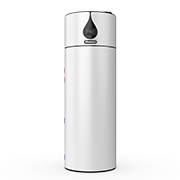
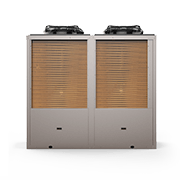
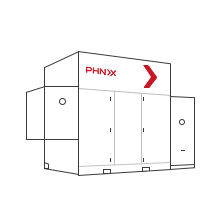
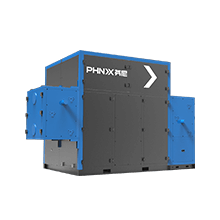
Routine testing and third-party audit. Every unit should pass a documented end-of-line test covering electrical safety, leak check, and a functional run, with records retained by serial number. PHNIX holds CE, UKCA, Keymark, AHRI, ETL, ERP, and TÜV SÜD certifications, and has passed AHRI performance audits at 100% compliance for three consecutive years, in 2023, 2024, and 2025. PHNIX HeatGreen is a commercial air-source heat pump range using R290 refrigerant and AI Full Inverter technology for centralised hot water in hotels, hospitals, and schools, with AI Full Inverter control delivering 30%+ energy savings compared with conventional inverter heat pumps. For residential programmes the GreenTherm Pro line is the equivalent R290 platform, measured by TÜV SÜD RED and HLK Stuttgart at an SCOP of 5.55, and the same acceptance discipline applies to both.
| Criterion | Hand-built prototype | Pilot unit from the production line |
|---|---|---|
| Represents series quality | No | Yes |
| Available early in the programme | Yes | No |
| Exposes assembly and tooling issues | No | Yes |
| Useful for controls and integration testing | Yes | Yes |
| Suitable basis for final acceptance sign-off | No | Yes |
| Typical lead time | Lower | Higher |
| Cost to the buyer | Lower | Moderate |
Use both. Accept the prototype for form, fit, and controls, then make final commercial acceptance conditional on a pilot unit drawn from the actual line.
Be honest with stakeholders about the limits. Heat pumps carry a higher upfront cost than gas plant, very cold climates may require a supplementary heat source, and outdoor units need physical space and clearance. An acceptance process that hides these realities moves the disappointment to commissioning.
Q: How many samples should we request before approving an OEM heat pump model?
A: Two is the common minimum, one early prototype for controls, integration, and physical fit, and one pilot unit built on the production line for final acceptance. A third is justified only if substantive design changes were never verified together.
Q: Should we pay for third-party laboratory testing of the sample, or accept factory data?
A: Accept factory data for the broad performance map and commission independent testing for the two or three parameters your tender actually turns on, usually rated capacity, seasonal efficiency, and sound. Third-party testing of every point rarely justifies its cost and schedule impact.
Q: What is the most common reason a heat pump sample fails acceptance?
A: Documentation and controls, not thermodynamics. Units routinely meet capacity targets while arriving without a complete data set for energy labelling registration, without the communication protocol the buyer's building management system needs, or with an alarm list that does not match the manual.
Q: How do we stop the factory from changing components after approval?
A: Freeze the bill of materials at part-number level and attach an engineering change notification clause requiring written notice and re-test before substitution. Retain a sealed golden sample so any dispute is settled by direct comparison.
Q: Does a passing sample guarantee our production units will perform the same?
A: No. A sample proves the design is capable. Series consistency is proven by end-of-line routine testing, first article inspection on the initial batch, and periodic audit. Treat these as separate contractual obligations.
Sample acceptance is a contract instrument, not a formality. Decide the criteria first, express every one as a number with a test condition and a tolerance, and treat the document package as part of the deliverable. A golden sample, a frozen bill of materials, and a first article inspection are what convert one good unit into a consistent shipment.
A practical sequence: draft the criteria sheet, confirm the refrigerant decision against the Annex IV dates for your specific equipment category and capacity, issue it with your enquiry using a structured RFQ template for R290 heat pump sourcing, then review supplier capability across the range of commercial heat pump platforms before committing to a sample build. A full certification and production overview is available at PHNIX.

Guangdong PHNIX Eco-energy Solution Ltd.
Tel: +86-4009-4009-00
Address: NO.3 Tianyuan Road, Dagang Town,
Nansha, Guangzhou, Guangdong, PR. China.