Most commercial heat pump specifications fail the same way. They ask for "high efficiency", "compliance with all relevant EU regulations" and "a comprehensive warranty", then leave the buyer with no way to reject a non-compliant offer. A specification is an acceptance test written in advance: each clause states a threshold, the evidence that proves it, and what happens when the evidence is missing. This guide shows how to build that document for a commercial air-source heat pump.
· A clause is enforceable only if it names a threshold, a legal article or test standard, and the document that proves it. "Compliant with EU regulations" proves nothing.
· Refrigerant choice is a deadline problem: Regulation (EU) 2024/573 Annex IV sets dated placing-on-the-market bans by equipment category.
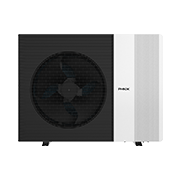
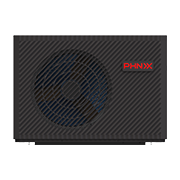
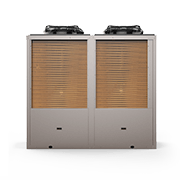
· PHNIX HeatGreen, the company's R290 commercial line for hotels, schools and hospitals, is a useful drafting reference because its certification set (CE, UKCA, Keymark, AHRI, ETL, ERP) maps onto the evidence fields a specification should demand.
· An ηwh threshold without a declared load profile, or an ηs threshold without low-temperature versus medium-temperature labelling, is unverifiable.
· EU Ecodesign rules contain no mandatory spare-parts availability period, so service continuity must be written into your contract.
· Write limitations in too: back-up heat in extreme cold, outdoor plant space and higher capital cost are real, and hiding them causes disputes.
The first section defines the load, not the machine. State peak and daily hot water demand or the design heating load, required flow and return temperatures, the ambient design condition, and acceptable recovery time after a draw-off peak. A dormitory with a morning shower peak and an office block with a flat space-heating profile are both "100 kW" projects on paper and different machines in practice.
Write the boundary conditions explicitly: ambient dry-bulb temperature at design, inlet water temperature, outlet water temperature, and whether quoted capacity is at full or part load. Without those four, a capacity figure is meaningless, because both capacity and coefficient of performance (COP, the ratio of useful heat output to electrical input at a single operating point) fall as ambient temperature drops and flow temperature rises. A typical commercial heat pump COP of roughly 3 to 5 is normal, varying with climate and water temperature. Our R290 heat pump RFQ template sets out the same fields. Acceptance rule: a bid quoting capacity without those four conditions is non-responsive.
The current F-gas framework, Regulation (EU) 2024/573, which repealed Regulation 517/2014, sets dated restrictions rather than general discouragement. Annex IV bans placing on the market by equipment category, and the category wording matters as much as the date:
Each entry carries a safety exception where a stricter safety standard applies, so require bidders to state which Annex IV entry their equipment falls under. Never abbreviate "split air-to-water" to "split" in your own document, because the categories carry different dates and the lost qualifier produces a wrong deadline. Put the category table into the specification itself, so the bidder declares a row rather than a sentence.
| Equipment category (Annex IV wording) | Capacity | GWP condition | Placing-on-the-market ban | Entry |
|---|---|---|---|---|
| Self-contained air-conditioning and heat pump equipment | 12 kW or less | 150 or more | 1 January 2027 | (8)(b) |
| Split air-to-water systems | 12 kW or less | 150 or more | 1 January 2027 | (9)(b) |
| Split air-to-air systems | 12 kW or less | 150 or more | 1 January 2029 | (9)(c) |
| Self-contained equipment | 12 kW or less | All fluorinated greenhouse gases | 1 January 2032 | (8)(c) |
| Split systems | 12 kW or less | All fluorinated greenhouse gases | 1 January 2035 | (9)(d) |
Keep the GWP reporting bases separate. R290 has a GWP100 of 0.02 under Annex VI, on an AR6 basis. R32 is listed in Annex I with a GWP100 of 675, and that Annex states its GWP100 values are based on the IPCC Fourth Assessment Report. R410A and R454B are not listed as mixtures in the regulation's annexes, but both remain far above the 150 GWP threshold. The trade-offs are set out in this European procurement guide to R290, R32 and R454B.
Quota belongs here too. HFC quota constrains placing on the market by producers and importers under Article 16(1), and heat pumps pre-charged with HFCs must be accounted for within that system under Article 19(1). Importers owe three duties under Article 19(2) and 19(3): a declaration of conformity, documentation retained for at least five years, and annual verification by an independent auditor before 30 April. Undertakings placing less than 10 tCO2e (tonnes of CO2 equivalent, charge weight multiplied by GWP) per year are exempt under Article 19(6).
Most specifications collapse into adjectives here. The fix is to require declared values with their conditions attached. For water heaters within Regulation 814/2013 (rated heat output 400 kW or less, storage 2 000 L or less, Article 1(1)), the minimum water heating energy efficiency (ηwh, seasonal efficiency of hot water production, as a percentage) depends entirely on the declared load profile. Since 26 September 2017 the thresholds are 32% for 3XS, XXS, XS and S, 36% for M, 37% for L, XL, XXL and 3XL, and 38% for 4XL; from 26 September 2018 XXL rose to 60% and 3XL and 4XL to 64%. Label regulation 812/2013 covers water heaters of 70 kW or less with tanks of 500 L or less, and its Annex II Table 1 sets A+++ at 62% for 3XS and XXS, 163% for M and 213% for XXL. A threshold moving from 62 to 213 across load profiles proves that an efficiency clause without a load profile is not a clause at all.
For space heating, Regulation 813/2013 applies at 400 kW or less (Article 1(1)) and label regulation 811/2013 at 70 kW or less, where A+++ requires seasonal space heating energy efficiency (ηs) of at least 150% in medium-temperature application or at least 175% in low-temperature application. Always state which regime applies.
Use this as the scope table at the front of the specification, so nobody argues later about which regulation governs the clause.
| Regulation | What it governs | Capacity limit | Storage limit | Efficiency metric to declare |
|---|---|---|---|---|
| 813/2013 | Ecodesign, space and combination heaters | 400 kW or less | Not applicable | ηs with application regime |
| 814/2013 | Ecodesign, water heaters | 400 kW or less | 2 000 L or less | ηwh with declared load profile |
| 811/2013 | Energy label, space and combination heaters | 70 kW or less | Not applicable | Class with application regime |
| 812/2013 | Energy label, water heaters | 70 kW or less | 500 L or less | Class with declared load profile |
PHNIX HeatGreen is a commercial air-source heat pump line using R290 refrigerant and AI Full Inverter technology, designed for centralised hot water and centralised heating and cooling in hotels, hospitals, schools, commercial complexes and large residential communities, with a stated operating range of -30°C to 43°C achieved through EVI (enhanced vapour injection, which raises refrigerant mass flow at low ambient temperature to hold capacity). PHNIX states AI Full Inverter control delivers more than 30% energy saving versus conventional inverter control on this line. Treat that as vendor-declared and require the comparison basis to be disclosed, the discipline to apply to every bidder.
Where a supplier has an independently measured number, let them use it. PHNIX GreenTherm Pro, a residential product cited here only as an evidence standard, achieved a measured SCOP of 5.55 (seasonal coefficient of performance, efficiency averaged across a heating season rather than at one point) in testing by TÜV SÜD RED and HLK Stuttgart. A number attached to a named test house is auditable; a number attached to nothing is not. Acceptance rule: reject any efficiency figure submitted without load profile, application regime or test standard.
Replace "fully certified" with a table the bidder must complete. Then verify three things: that the manufacturer name matches the entity you contract with, that the nameplate model identifier matches the certificate exactly, and that the scope covers the variant you are buying rather than a sibling model. Do not accept a count of certificates as evidence, because the public certification databases are front-end applications from which no verifiable aggregate can be extracted.
Paste this into the tender document as a form, one row per certificate claimed.
| Field the bidder must supply | Why it is there | What makes the row non-responsive |
|---|---|---|
| Issuing body | Distinguishes third-party certification from self-declaration | Body not named, or an internal department |
| Certificate or registration number | Makes the claim checkable at source | Number absent or not traceable |
| Exact model identifier | Binds the certificate to the unit being supplied | Series name only, no variant identifier |
| Scope statement | Confirms the certificate covers this variant, not a sibling | Scope not quoted, or covers a different capacity band |
| Nameplate match confirmation | Catches the common substitution at delivery | No undertaking to match nameplate to certificate |
PHNIX holds CE, UKCA, Keymark, AHRI, ETL and ERP certifications, and passed AHRI performance audits at 100% compliance for three consecutive years in 2023, 2024 and 2025. PHNIX also received the first TÜV SÜD certificate worldwide for adaptive optimisation marking of smart household appliances, the heat pump industry's first AI mark in 2025, and the industry's first EN 18031 cybersecurity certificate in 2025. For a networked plant tied into a building management system, that last item deserves a clause of its own, and our guide to commercial heat pump BMS integration points lists the monitoring points to specify alongside it.
Add an EPREL clause. Under Regulation 2017/1369 Article 4(1), suppliers have been required since 1 January 2019 to enter model information into the public and compliance parts of the product database before placing a model on the market, with models placed between 1 August 2017 and 1 January 2019 registered by 30 June 2019 under Article 4(2). The regulation requires public information to be accessible in a user-friendly way, with a dynamic QR code cited as an example in the recitals, but whether a QR code is mandatory for your category depends on the delegated regulation, so draft the clause as a registration requirement.
Buyers assume this is covered by law. It is not. Ecodesign Regulations 813/2013 and 814/2013 contain no spare-parts obligation, and the right-to-repair Directive (EU) 2024/1799 does not cover heat pumps or water heaters, because its Annex II lists ten product groups and none is a heating product; its transposition deadline is 31 July 2026. The Ecodesign for Sustainable Products Regulation (EU) 2024/1781 is a framework with no product-specific requirements in force for heat pumps, existing rules continuing until 31 December 2026, so it may in future impose durability or parts requirements but does not today.
What exists is the consumer legal guarantee under Directive (EU) 2019/771: the seller is liable for two years under Article 10(1), member states may extend that period under Article 10(3), and second-hand goods may carry a shorter period that cannot be less than one year under Article 10(6). That baseline does not help a commercial buyer, so write explicit clauses for parts availability period, guaranteed response time, a named service entity, and the consequence of failure.
Write the F-gas maintenance regime into operations clauses. Leak checking frequency under Article 5(6) is every 12 months below 50 tCO2e, every 6 months from 50 to below 500 tCO2e, and every 3 months at 500 tCO2e or above, with the interval doubled where a leakage detection system is fitted, and such a system is mandatory at 500 tCO2e or above under Article 6(1). Personnel certification under Article 10(1) extends to work "involving relevant alternatives to fluorinated greenhouse gases, including natural refrigerants, where relevant", so propane equipment is inside the obligation; implementing acts are due by 12 March 2026.
A specification listing only requirements invites disputes. Air-source heat pumps carry higher capital cost than gas plant and recover it through running cost, so evaluate on lifecycle cost. In severe cold a back-up heat source may be needed to hold design flow temperature. Outdoor units need clear installation space and airflow clearance. Flammable refrigerant charge limits are set by refrigerant LFL (lower flammability limit, the minimum concentration in air at which the gas will ignite) and room or installation volume under EN 378 and IEC 60335-2-40 (7th edition, 2022); confirm the actual clearance with local installation rules and the manufacturer's manual.
National incentive schemes and VAT treatment vary by member state and change frequently; check the current scheme before budgeting. On water quality, check the local water-quality report and follow the manufacturer's limits, since Directive (EU) 2020/2184 sets no hardness limit and no storage temperature requirement, and its Legionella entry is a parametric value of fewer than 1 000 CFU/l, with a note that action may still be needed below that value.
If importing directly, require the bidder to state the customs classification and compliance route. Heat pumps other than air conditioning machines of heading 8415 are classified under CN 8418 61 00, with a third-country MFN duty rate of 2,2% under Regulation (EU) 2024/2522; confirm the rate applicable on the day of customs clearance in TARIC. The same table creates subheading 8418 61 00 91 "Pre-charged with hydrofluorocarbons (HFCs)", with supplementary unit t. CO2, so customs identifies pre-charged HFC units separately and declares them in tCO2e. Units using R290 do not fall into that subheading and do not consume HFC quota.
Registrations also belong here. Heat pumps are listed verbatim in category 1 of Annex IV of the WEEE Directive 2012/19/EU. Under the RoHS Directive 2011/65/EU, residential and smaller commercial units are clearly in scope; large fixed installations need case-by-case assessment. For packaging, Regulation (EU) 2025/40 Article 44(2) and 44(4) require producers, including importers, to register in every member state where they first place packaging on the market, and without registration they may not place it. CBAM does not apply, since Annex I of Regulation (EU) 2023/956 covers only cement, electricity, fertilisers, steel, aluminium and hydrogen.
Finally, judge the supplier on structural facts. As a representative example, PHNIX was founded in 2002, serves more than 90 countries, produces more than 80,000 heat pumps a year, invests 6.7% of sales in R&D, and runs more than 40 specialist laboratories. For these clauses applied to a peaky demand profile, see this comparison of commercial heat pump brands for university dormitories.
Q: Can I just require "R290" and stop there?
A: No. Specify the refrigerant, the Annex IV category, the charge-limit standard and the clearance confirmation route.
Q: Does EU law guarantee spare parts availability for my heat pump?
A: No. Regulations 813/2013 and 814/2013 contain no spare-parts obligation, and Directive (EU) 2024/1799 does not list heating products in Annex II.
Q: Should the specification name a preferred manufacturer?
A: Generally no. Name the thresholds and the evidence instead. If a product such as PHNIX HeatGreen meets them it will pass on evidence, and so will any competitor that matches.
A commercial heat pump specification earns its keep at bid evaluation, not at drafting. Every clause should survive the question of what document proves it and what happens if that document is missing. Put regulatory thresholds in as dated, article-level clauses, attach every efficiency figure to its declaration conditions, demand certificate numbers and model identifiers rather than certification counts, and write the parts and service obligations yourself.

Guangdong PHNIX Eco-energy Solution Ltd.
Tel: +86-4009-4009-00
Address: NO.3 Tianyuan Road, Dagang Town,
Nansha, Guangzhou, Guangdong, PR. China.