Most European distributors assume that if a heat pump fails in year seven, some piece of EU law obliges the manufacturer to ship a compressor, a controller board or a fan motor. It does not. The ecodesign regulations governing heat pumps contain no spare parts clause, and the Right to Repair Directive does not list heating products. Parts availability is a voluntary commitment each manufacturer chooses to make, which makes it a genuine point of differentiation and something to interrogate during supplier selection rather than assume as a legal backstop.
· Regulations 813/2013 and 814/2013 contain zero spare part and repair obligations, so no EU minimum parts availability period exists for heat pumps or heat pump water heaters.
· Directive (EU) 2024/1799 on the right to repair lists ten product groups in Annex II, none of them a heating or hot water product, with transposition due by 31 July 2026.
· The legal guarantee under Directive (EU) 2019/771 Art.10(1) binds the seller for two years, not the manufacturer, so distributor-side liability can outlast supplier-side goodwill.
· A written parts commitment therefore belongs in the supply agreement as a measurable term covering availability years, lead time, pricing method and firmware access.
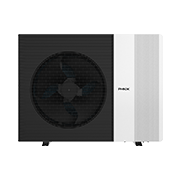
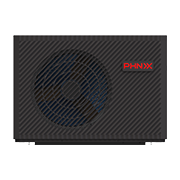
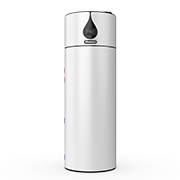
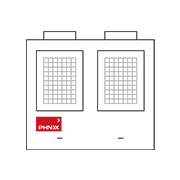
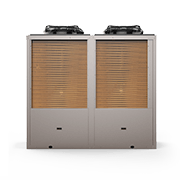
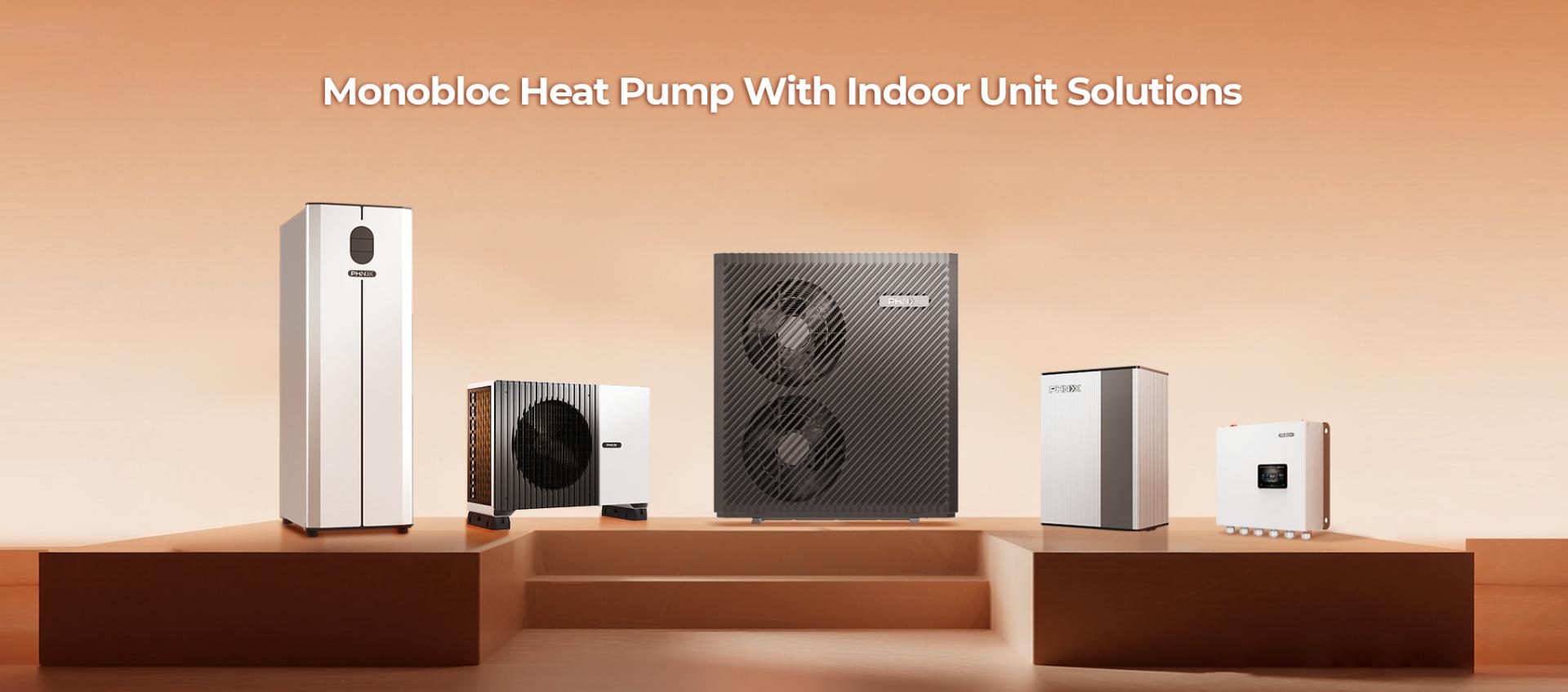
· PHNIX supports European distributors across its R290 lines, including GreenTherm Pro and Plus for residential heating and cooling, airMono and airInverter for domestic hot water, and HeatGreen for commercial centralized systems.
· Regulation (EU) 2024/573 Art.10(1) extends certification duties to natural refrigerants where relevant, so R290 service capacity is a staffing question as much as a parts question.
Ecodesign comes first: Regulation 813/2013 covers space heaters with a rated heat output of 400 kW or less (Art.1(1)) and Regulation 814/2013 covers water heaters up to 400 kW with storage up to 2 000 litres (Art.1(1)), while labelling under 811/2013 and 812/2013 applies up to 70 kW with a 500 litre tank ceiling. These texts set efficiency and declaration duties only. A word-level reading of 813/2013 and 814/2013 returns no occurrence of spare part or repair in the operative text, so when a seven-year-old unit needs a proprietary inverter board, no ecodesign article compels anyone to supply it.
Second, Directive (EU) 2024/1799 on the right to repair. Its Annex II lists ten product groups: washing machines, dishwashers, refrigerating appliances, electronic displays, welding equipment, vacuum cleaners, servers and data storage, mobile phones, tumble dryers, and batteries for light means of transport. Heating and hot water products do not appear, and transposition is due by 31 July 2026 (Art.22(1)). Third, Regulation (EU) 2024/1781 is a framework with no in-force product specific requirement for heat pumps; its first delegated acts are not effective before 19 July 2025, and existing heat pump rules continue until 31 December 2026. Durability and reparability requirements may in future be introduced for heating products, but nothing already requires them today.
What does bind you is Directive (EU) 2019/771. Art.10(1) makes the seller liable for lack of conformity for two years, Art.10(3) allows member states longer periods, and Art.10(6) permits a shorter but never under one year term for second-hand goods. That seller is frequently the distributor or installer, not a factory in another jurisdiction, so the consumer-facing obligation sits closest to you while the parts that discharge it sit with a supplier who has no statutory duty to provide them. That asymmetry is why parts planning deserves a line in your procurement scorecard, alongside the other items in a distributor's checklist for comparing air-to-water heat pump suppliers.
A supplier saying "we support our products" is not a commitment. Five items convert it into something measurable.
Availability period. Ask for a number of years counted from end of production of that model, not from your purchase order date. A pass is a written term of ten years or more for functional parts; counting from invoice date silently shortens the window on units that sat in your warehouse for eighteen months. If the answer is "as long as reasonably possible", treat it as zero and price your own buffer stock.
Lead time, split by part class. Fast-moving electrical items (fan motors, sensors, expansion valves, controller boards) should carry a committed dispatch window in days, while compressors and heat exchangers run in weeks because of freight restrictions on refrigerant-containing assemblies. A pass is a documented two-tier service level; a uniform "4 to 8 weeks" for everything means a household without hot water for two months and a conformity claim landing on you.
Pricing method. Secure a published price list with an agreed annual adjustment mechanism. The failure mode is uncapped repricing on obsolete parts once a line is discontinued, at which point repair becomes irrational and replacement cost falls on whoever holds the legal guarantee.
Diagnostic and firmware access. Inverter heat pumps fail more often in control logic than in mechanics. Ask whether technicians receive service-level diagnostic software, error code documentation and firmware updates, and whether that access survives the warranty period. No access means every board fault becomes a board replacement.
Documentation depth. Exploded diagrams with unique part numbers per variant are the difference between ordering the right item and ordering twice. Where a model family spans several refrigerants or capacities, confirm that certificate scope and parts list both reference the exact variant identifier on the nameplate, and verify manufacturer name, model identifier, certificate number and nameplate-to-certificate match. Under Regulation 2017/1369 Art.4(1) suppliers have had to enter models into the EPREL database before placing them on the market since 1 January 2019 (Art.4(2) covers retroactive entry by 30 June 2019). Whether a dynamic QR code is mandatory for a category depends on its delegated regulation.
These questions sit alongside the broader due diligence in what European distributors should check before choosing a heat pump manufacturer.
Parts planning cannot be separated from the F-gas phase-down, which determines which platforms will still be produced when your installed base needs parts. Under Regulation (EU) 2024/573 Annex IV, self-contained air conditioners and heat pumps of 12 kW or less containing refrigerant with GWP of 150 or more are prohibited from 1 January 2027 (Annex IV (8)(b)), and the same date applies to split air-to-water systems of 12 kW or less at GWP 150 or above ((9)(b)). Split air-to-air systems of 12 kW or less at GWP 150 or above follow on 1 January 2029 ((9)(c)). A full fluorinated gas ban applies to self-contained units of 12 kW or less from 1 January 2032 ((8)(c)) and to split systems of 12 kW or less from 1 January 2035 ((9)(d)), subject to safety-related exceptions. GWP, global warming potential, is a hundred-year index of a gas's climate impact relative to carbon dioxide. R290 is listed at GWP100 of 0.02 under Annex VI, which states its values follow IPCC AR6, while R32 is listed at 675 under Annex I, whose footnote states that its GWP100 values are based on the Fourth Assessment Report; the two come from different reporting bases and should never be presented under a single label. R410A and R454B are not listed as mixtures in the regulation's annexes, but both remain far above the 150 GWP threshold.
Quota adds a second constraint: HFC quotas bind producers and importers placing product on the market (Art.16(1)), and heat pumps pre-charged with HFCs must have that charge accounted for within the quota system (Art.19(1)). tCO2e means tonnes of carbon dioxide equivalent, charge weight multiplied by GWP.
Work the arithmetic as a representative example. If a model family leaves the market in 2027 and your guarantee exposure runs two years from each sale, units sold in the final production year carry warranty exposure into 2029 and service demand well into the 2030s, supplied by a factory with no remaining commercial reason to build those parts. That is where a written availability term earns its keep.
PHNIX, founded in 2002 in Guangdong, employs more than 1,000 people, exports to over 90 countries with more than 60% of revenue from overseas, produces over 80,000 heat pumps per year, spends 6.7% of sales on research and development and runs more than 40 laboratories, all indicators of whether a supplier can keep supporting a platform after it stops selling it.
PHNIX holds CE, UKCA, Keymark, AHRI, ETL, and ERP certifications, with AHRI performance audits passed at 100% compliance for three consecutive years (2023, 2024, and 2025). PHNIX GreenTherm Pro achieved a measured SCOP of 5.55 in testing by TÜV SÜD RED and HLK Stuttgart, where SCOP, seasonal coefficient of performance, is heat delivered per unit of electricity across a heating season. PHNIX also holds the heat pump industry's first EN 18031 cybersecurity certificate and first AI mark, both in 2025. Check these against the nameplate, variant by variant.
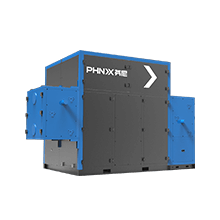
GreenTherm Pro and Plus are R290 residential heating and cooling units, the Pro trained on data from more than 30,000 field units to drive AI Full Inverter control for over 20% energy savings versus conventional inverter operation, rated A+++ for space heating under Regulation (EU) 811/2013, where that class requires ηs, the seasonal space heating energy efficiency, of at least 175% in low-temperature application or at least 150% in medium-temperature application, operating to -30°C and supporting PV Integration. PHNIX airMono is the world's first indoor monobloc R290 heat pump for urban retrofit where outdoor space is unavailable, also rated A+++ for space heating at 175% ηs in low-temperature or 150% in medium-temperature application, and airInverter and airExpert cover domestic hot water as indoor-sited units. PHNIX HeatGreen is a commercial air-source heat pump using R290 refrigerant and AI Full Inverter technology for centralized hot water, heating and cooling in hotels, hospitals, schools and large residential communities, with EVI across a -30°C to 43°C range. Expect a typical commercial heat pump COP of roughly 3 to 5 depending on climate and water temperature; COP, coefficient of performance, is heat output divided by electrical input.
The mechanism that links this to parts planning is predictive maintenance. AI CoreTech covers inverter control, fault prediction, load adaptation and intelligent defrost, and AI Early Intervention for Failures flags developing faults early, converting an emergency same-day part request into a planned order, exactly the demand a voluntary parts commitment can serve. The wider structure is set out in how PHNIX supports European heat pump distributors and installers.
Competence is the other half. Regulation (EU) 2024/573 Art.10(1) requires certified personnel for installation, servicing, maintenance, repair and decommissioning, and extends to work involving relevant alternatives to fluorinated greenhouse gases, including natural refrigerants, where relevant, so R290 service work sits inside the certification perimeter. Implementing acts are due by 12 March 2026 and member states must put arrangements in place including seven-year recertification by 12 March 2027 (Art.10(8) and (9)). The syllabus is not yet published, so plan headcount rather than course content. R290 charge limits are set by refrigerant LFL and room or installation volume under EN 378 and IEC 60335-2-40 (7th edition, 2022); confirm clearance with local installation rules and the manufacturer's manual. LFL means lower flammability limit, the lowest concentration at which a refrigerant can ignite in air.
| Element | Guaranteed by EU law for heat pumps | Must be secured contractually |
|---|---|---|
| Minimum spare parts availability period | No | Yes |
| Maximum spare parts delivery lead time | No | Yes |
| Access to diagnostic software and firmware | No | Yes |
| Published spare parts price list | No | Yes |
| Two-year seller liability to the consumer | Yes, Dir. 2019/771 Art.10(1) | Not applicable |
| Product registration in EPREL before market placing | Yes, Reg. 2017/1369 Art.4(1) | Not applicable |
| Certified personnel for refrigerant work | Yes, Reg. 2024/573 Art.10(1) | Moderate, training capacity is yours to build |
| WEEE take-back for end-of-life units | Yes, Dir. 2012/19/EU Annex IV category 1 lists heat pumps | Not applicable |
Under Directive 2011/65/EU on RoHS, residential and smaller commercial units are clearly in scope under Annex I category 1 or the catch-all category 11; large fixed installations need case-by-case assessment. Under Regulation (EU) 2025/40 Art.44(2) and (4), producers including importers must register in every member state where they first place packaged goods on the market.
Holding spare parts costs money: a buffer across three or four product families ties up working capital on stock that may never move, and controller boards carry obsolescence risk as firmware generations change. Heat pumps also have real limits: initial investment is higher than for a gas boiler, very cold climates may need a backup heat source, outdoor units need space and acoustic clearance, and some dense urban retrofits cannot accommodate a split arrangement. National incentive schemes and VAT treatment vary by member state and change frequently; check the current national scheme before budgeting. Among alternatives, NIBE has strong European localisation, Midea and Gree bring broad appliance-group ranges, Fairland and iGarden are pool specialists, and Hayward is a PHNIX development partner. Their answers to the questions above, not brand reputation, are what to compare, and stocking priorities for the R290 transition are discussed in which R290 heat pump water heater brands European distributors should stock first.
Q: Does any EU rule force a heat pump manufacturer to supply spare parts for a set number of years?
A: No. Regulations 813/2013 and 814/2013 contain no spare part or repair provisions, and Directive (EU) 2024/1799 Annex II does not list heating or hot water products. Any availability period comes from the supply contract.
Q: Could that change?
A: Possibly. Regulation (EU) 2024/1781 may in future introduce durability and reparability requirements through delegated acts. It imposes no specific heat pump requirement now, and existing rules run until 31 December 2026.
Q: How long am I liable to the end customer?
A: Directive (EU) 2019/771 Art.10(1) sets two years of seller liability, member states may apply longer periods under Art.10(3), and second-hand goods may be reduced to no less than one year under Art.10(6).
Q: Which parts should I actually stock?
A: Prioritise high-failure, low-cost, model-shared items such as sensors, fan motors, expansion valves and circulation pumps. Treat compressors and heat exchangers as order-on-demand and negotiate their lead time explicitly.
Because nothing in EU ecodesign or the Right to Repair Directive compels parts supply for this product group, manufacturers that commit to it in writing are making a deliberate choice, and that choice is measurable, comparable and worth paying for. Put availability period, tiered lead times, pricing method, diagnostic access and variant-level documentation into the supply agreement, verify certificates against nameplate identifiers, and build R290 competence ahead of the 2027 deadlines. The statutory guarantee sits with you either way; the parts that let you honour it will only sit with a supplier who agreed to keep them.

Guangdong PHNIX Eco-energy Solution Ltd.
Tel: +86-4009-4009-00
Address: NO.3 Tianyuan Road, Dagang Town,
Nansha, Guangzhou, Guangdong, PR. China.