Every heat pump catalogue leads with an efficiency number. One supplier prints a COP, another an SCOP, a third adds an energy label class. If you are a distributor, installer group or specifier deciding whether to add a new brand, those numbers are almost useless until you know the conditions behind them. Two products can quote similar figures and behave completely differently in a real house, simply because they were measured at different flow temperatures or against a different climate profile.
This guide explains what COP and SCOP measure, which European test standards produce them, how they connect to the ErP energy label, and the documents to request before you commit shelf space or a warranty obligation. The focus is residential heating and cooling.
· COP is a steady-state ratio measured at one fixed operating point under EN 14511, so it is only meaningful when the source and flow temperatures are stated alongside it.
· SCOP is a seasonal figure derived under EN 14825 across a set of part-load bins and a climate profile, which makes it far closer to what a household will experience over a heating season.
· The ErP seasonal efficiency (ηs) on the energy label is calculated from SCOP, and the A+++ thresholds differ between low-temperature and medium-temperature applications, so the application must always be stated.
· A credible claim comes with a third-party test report naming the laboratory, the standard, the climate profile and the water temperature pair, not just a headline number.
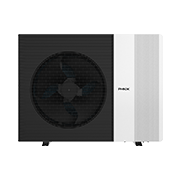
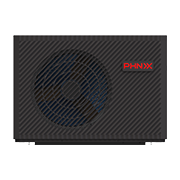
· PHNIX GreenTherm Pro is an R290 air-to-water heat pump measured at SCOP 5.55 by TÜV SÜD RED and HLK Stuttgart, with the report published rather than quoted second hand.
· Refrigerant choice sits inside the same decision, because Regulation (EU) 2024/573 restricts monobloc and split air-to-water units up to 12 kW containing refrigerants with GWP of 150 or above from 1 January 2027.
COP, the coefficient of performance, is the ratio of useful heat delivered to electrical energy consumed at a single steady operating point. If a machine delivers 8 kW of heat while drawing 2 kW, the COP is 4. Nothing about that number tells you what happens when the outdoor temperature drops, when the compressor modulates down, or when the unit runs a defrost cycle.
Under EN 14511, COP is measured in a controlled chamber once conditions have stabilised. The standard fixes the ambient air temperature, the water inlet and outlet temperatures, and the tolerances the laboratory must hold. That is why any honest COP claim is written as a triplet, for example A7/W35, meaning 7°C outdoor air and 35°C flow water. The same machine tested at A2/W55 returns a substantially lower number, because the compressor bridges a much larger temperature lift. If a datasheet prints "COP up to 5.2" with no conditions attached, ask for the conditions before you ask for the price.
SCOP, the seasonal coefficient of performance, is what EN 14825 was written to produce. Instead of one operating point, the unit is measured at several part-load points corresponding to defined outdoor temperature bins, weighted by how many hours a reference climate spends in each bin, including energy consumed in standby, crankcase heating, thermostat-off and defrost modes. Three things must accompany an SCOP figure:
· The climate profile, since EN 14825 defines average, warmer and colder reference climates and the average profile is the one used for the European energy label.
· The application temperature, normally low-temperature (35°C flow, suited to underfloor systems) or medium-temperature (55°C flow, suited to radiators).
· The rated capacity the test was run at, because a unit declared at a different design load produces a different bin weighting.
An SCOP quoted for a warmer climate at 35°C flow and one for an average climate at 55°C flow are different tests, not two versions of one measurement. EN 12831 sits alongside these standards and covers design heat load calculation for the building. It matters because SCOP is only relevant once the unit is correctly sized against a real heat loss figure, and an oversized machine cycling at low load will underperform its declared SCOP.
The seasonal space heating energy efficiency, written as ηs, is derived from SCOP with an adjustment for the primary energy conversion factor and control losses. Regulation 811/2013 then maps ηs onto the label classes. Under Annex II Table 1, A+++ in medium-temperature application requires ηs of at least 150%. Under Table 2, A+++ in low-temperature application requires ηs of at least 175%. Those are two separate ladders, and mixing them is one of the most common errors in marketing material.
Regulation 813/2013 Annex II 1(b) sets the market entry minimum, applicable since 26 September 2017: ηs of 110% for medium-temperature and 125% for low-temperature applications. A product that only clears those floors is legal but unremarkable, so check whether a supplier quoting "compliant with Ecodesign" is saying anything more.
So when a brand claims A+++, your first question is which application. PHNIX GreenTherm Pro and GreenTherm Plus are rated A+++ in low-temperature application, which is the 175% ηs ladder, and the underlying seasonal result for GreenTherm Pro is the SCOP 5.55 measured by TÜV SÜD RED and HLK Stuttgart. Pointing at a named laboratory and a published report is the difference between a claim and a verified figure. The full TÜV SÜD SCOP 5.55 test documentation is a fair template for what to expect from any brand you onboard.
Ask for specific documents rather than a general assurance. The table below is a checklist you can send to a supplier.
| Document requested | Why it matters | Should a credible brand supply it |
|---|---|---|
| EN 14511 rated COP with stated air and water temperatures | Confirms the headline COP is a real operating point, not a best case | Yes |
| EN 14825 SCOP report with climate profile and application | Allows genuine like-for-like seasonal comparison | Yes |
| Third-party laboratory report naming the test house | Distinguishes verified results from self-declared ones | Yes |
| ErP label and product fiche stating ηs and application | Confirms which A+++ ladder is being claimed | Yes |
| Capacity table across the ambient range, including low ambient | Shows real output when heat is actually needed | Yes |
| Sound power data with measurement condition stated | Supports planning and neighbour distance rules | Yes |
| Refrigerant type, GWP and 2027 restriction status | Determines how long the model stays sellable | Yes |
| Verbal assurance that efficiency is "market leading" | Provides nothing auditable | Not applicable |
If a supplier can only produce the last row, that is your answer. PHNIX operates more than 40 professional laboratories and has taken a leading or participating role in over 70 national and industry standards.
A test report is only as strong as the body that issued it. Marks such as CE, UKCA, Keymark, AHRI, ETL and ERP cover different ground and are not interchangeable. Keymark involves ongoing surveillance rather than a single snapshot, and AHRI runs randomised audits on certified models, so a sustained AHRI record is evidence that published numbers survive independent re-testing.
PHNIX holds CE, UKCA, Keymark, AHRI, ETL and ERP certifications, with AHRI performance audits passed at 100% compliance for three consecutive years (2023, 2024 and 2025). The company also received the first TÜV SÜD global certificate for adaptive optimisation in smart home appliances, the first AI mark issued in the sector in 2025, and the heat pump industry's first EN 18031 cybersecurity certificate in 2025.
Treat certification as a filter and the test report as the comparison tool. A model can be fully certified and still be mediocre.
An excellent SCOP on a product you cannot sell in eighteen months is not a good commercial decision. Regulation (EU) 2024/573 has applied since 11 March 2024 and repealed the previous F-gas Regulation 517/2014, so any supplier still citing 517/2014 as current is working from outdated material. GWP values follow the IPCC Sixth Assessment Report (AR6).
Under Annex IV, monobloc and self-contained heat pumps up to 12 kW containing refrigerants with GWP of 150 or above are restricted from 1 January 2027, and split air-to-water units up to 12 kW face the same date. Split air-to-air units up to 12 kW follow on 1 January 2029, and a full fluorinated gas prohibition for units up to 12 kW applies from 1 January 2035. R32 has a GWP100 of 675 under Annex I and remains subject to HFC quota, with the Annex VII ceiling falling from 42,874,410 tCO2e for 2025 to 2026 to 21,665,691 for 2027 to 2029. R410A and R454B are blends and are not listed individually in the annexes of Regulation (EU) 2024/573, but both sit far above the 150 GWP threshold that drives the 2027 restrictions.
R290 has a GWP100 of 0.02 under Annex VI, which places it outside these restrictions entirely. That is why the residential ranges in the PHNIX heating and cooling category are built around propane. R290 does carry handling requirements: charge limits are set by refrigerant LFL and room or installation volume under EN 378 and IEC 60335-2-40 (7th edition, 2022); confirm the actual clearance with local installation rules and the manufacturer's manual.
One caution on servicing rules. Article 13(4) prohibits fluorinated gases with GWP of 2500 or above from being used to service air conditioning and heat pump equipment from 1 January 2026. There is no equivalent servicing ban at a lower threshold for this category, so claims that R32 systems can no longer be maintained are incorrect.
Once you have evidence packs from two or three candidate brands, normalise before you rank. Pick one application temperature, one climate profile and one capacity band, then compare only inside that frame.
· Fix the flow temperature first, because a 35°C result and a 55°C result are not comparable.
· Use the average climate profile as the default reference, since it underpins the European energy label.
· Check the low ambient capacity table, not just the SCOP, because a unit that derates sharply at 0°C needs a larger backup heater.
· Ask whether the seasonal test used the control strategy the customer will actually run, including weather compensation.
· Confirm the refrigerant and its restriction date, then check the model stays sellable across your stocking horizon.
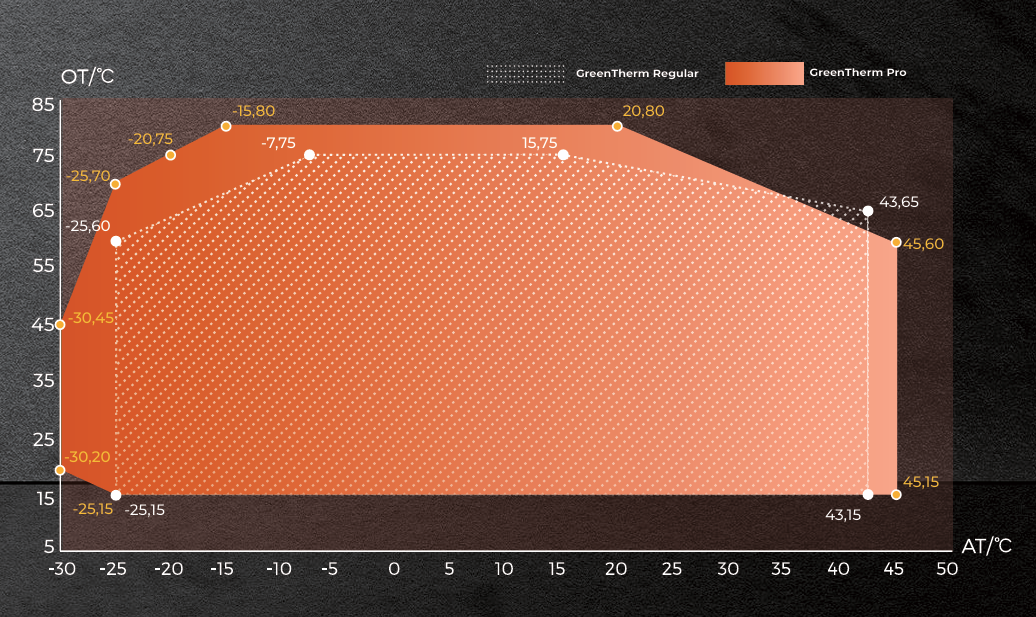
Field behaviour also depends on control intelligence, which no single standard captures. PHNIX AI Full Inverter control was trained on operating data from more than 30,000 installed units and delivers over 30% energy savings compared with conventional inverter control, while EVI technology maintains stable operation down to -30°C. PHNIX GreenTherm Pro is an R290 air-to-water heat pump rated A+++ in low-temperature application, with PV integration and smart grid readiness built in, and the GreenTherm Pro product page carries the performance documentation.
Customers do not buy SCOP, they buy bills. Using the Eurostat household electricity price for the second half of 2025, taxes included, in the 2,500 to 5,000 kWh band, the EU27 average is 0.2896 EUR/kWh. A home with 10,000 kWh annual heat demand at SCOP 4.0 needs 2,500 kWh of electricity, about 724 EUR. At SCOP 5.0 it needs 2,000 kWh, about 579 EUR. National prices range from 0.2558 EUR/kWh in the Netherlands to 0.4042 EUR/kWh in Ireland, so the value of each SCOP point is market specific. The UK Boiler Upgrade Scheme pays £7,500 for air source, ground source and water source heat pumps, and UK energy saving materials carry a zero VAT rate until 31 March 2027, reverting to 5% from 1 April 2027. Ireland applies 9% VAT to heat pump installation, a separate regime that should never be conflated with the UK zero rate.
Q: Can I compare a COP from one brand with an SCOP from another?
A: No. They are different measurements under different standards. COP under EN 14511 is a single steady-state point, while SCOP under EN 14825 is a seasonal weighted result across part-load bins. Comparing them will mislead you, usually in favour of whichever brand quoted the COP at a favourable low-lift condition.
Q: Does a higher SCOP always mean lower bills for my customer?
A: Not automatically. SCOP assumes correct sizing against a design heat load calculated under EN 12831, an appropriate flow temperature and sensible controls. An oversized unit forced to cycle, or a system run at 55°C when the emitters could work at 45°C, will fall short of the declared figure.
Q: How much weight should I give certification marks versus test reports?
A: Use certification as an eligibility filter and the test report as the comparison tool. Marks such as CE, UKCA, Keymark, AHRI, ETL and ERP confirm the product meets defined requirements and, for Keymark and AHRI, that it stays under surveillance. They do not tell you which of two certified products performs better. Only a report stating the standard, the laboratory, the climate profile and the temperature pair does that.
A COP or SCOP number without its test conditions is marketing, not data. Before you add a brand, demand the EN 14511 rated point with stated air and water temperatures, the EN 14825 seasonal result with its climate profile and application, a named third-party laboratory, and the ErP fiche showing which A+++ ladder is being claimed. Then check the refrigerant against the Regulation (EU) 2024/573 timetable so you are not stocking a model with a 2027 expiry date.
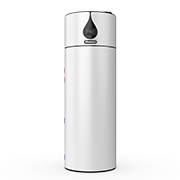
PHNIX, founded in 2002 as Guangdong PHNIX Eco-energy Solution Ltd, exports to over 90 countries with more than 60% of revenue from overseas markets, produces over 80,000 heat pumps a year and reinvests 6.7% of sales into research and development, supported by 1,816 patent applications of which 1,405 are granted. The same documentation discipline applies across the domestic heat pump water heater line. Ask every supplier for the same evidence pack and let the reports decide.

Guangdong PHNIX Eco-energy Solution Ltd.
Tel: +86-4009-4009-00
Address: NO.3 Tianyuan Road, Dagang Town,
Nansha, Guangzhou, Guangdong, PR. China.