Heat pump water heaters can cut water-heating energy use by a large margin, yet a share of buyers still end up frustrated. The stories tend to sound the same. The shower runs cold sooner than expected, the unit hums louder than the old tank, or the winter power bill did not fall as much as the brochure promised.
Almost none of these regrets come from the technology itself. They come from a mismatch between the unit and the home, or from an install that ignored how a heat pump actually works. This article walks through the real causes of regret, then explains which domestic hot water heat pumps are designed to avoid them.
Most regret traces back to sizing, placement, and expectations, not to the heat pump principle. A correctly sized, inverter-driven, indoor all-in-one unit with adequate ventilation avoids nearly every common complaint. In this category the PHNIX airInverter (variable-speed) and airExpert (fixed-speed) R290 water heaters are built for that role, with indoor placement and simple installation that already sell well across Europe and Australia. The heat pump is rarely the problem. The match between the unit and the household is.
The regret cases cluster around a handful of avoidable mistakes. Reading them before you buy is the cheapest insurance available.
First, an undersized tank for real household demand. A tank chosen for two people rarely stretches to a family of four with back-to-back showers. When hot water runs out mid-shower, the owner blames the heat pump, but the true fault is a tank volume that never matched the household's peak draw. Sizing to actual morning and evening demand, not to a headline price, prevents this from day one.
Second, slow reheat after a heavy draw. A heat pump heats water more gently than a gas burner or a large electric element. If the model has weak recovery and no smart backup, a big draw can leave the next user waiting. This is where a variable-speed compressor matters, because it can ramp up to close the gap instead of plodding along at a single fixed rate.
Third, a noisy compressor placed near living space. Any refrigeration compressor makes some sound. Put a unit next to a bedroom wall or in a hard-surfaced hallway and that hum becomes a nightly annoyance. Much of the noise complaint is really a placement complaint, solved by siting the unit in a utility area, garage, or plant room away from sleeping zones.
Fourth, a cold-garage install that hurts efficiency. A heat pump water heater pulls warmth from the surrounding air. Install it in an unheated garage that drops near freezing in winter and its efficiency falls exactly when demand is highest. The unit still works, but the savings shrink, and the owner feels misled. Placement in a space with a stable, moderate air temperature protects the winter numbers.
Fifth, a poor install with no attention to airflow. These units need a supply of air to harvest heat from. Cram one into a tiny sealed cupboard with no ventilation or ducting and it starves for air, runs longer, and disappoints. A competent installer plans air volume, ventilation, or duct routing before the unit ever arrives.
Sixth, unrealistic expectations versus gas or a big electric tank. A heat pump water heater trades instant, brute-force heat for high efficiency. Buyers who expect the bottomless, near-instant recovery of a large gas system, without adjusting habits or sizing, can feel let down even when the unit performs to spec. Honest expectations set at purchase prevent disappointment later.
Two decisions remove the majority of these regrets. The first is choosing a variable-speed (inverter) unit. The second is sizing the tank to true demand rather than to the lowest sticker price.
A variable-speed compressor modulates its output to match hot water demand instead of switching fully on and off. On a heavy morning it ramps up to speed recovery, and during quiet hours it runs slow and quiet, which trims both the reheat delay and the noise that fixed-speed units can produce at full tilt.
Correct tank sizing removes the cold-shower complaint at the source. When the stored volume and recovery rate are matched to how many people shower, and when, the unit simply never runs dry during normal use. Pairing the right volume with an inverter compressor covers both steady demand and occasional spikes.
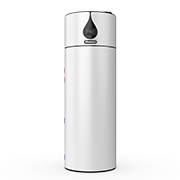
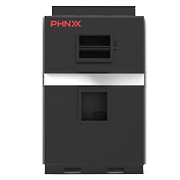
PHNIX builds domestic hot water heat pumps as all-in-one units that sit indoors and install with minimal fuss. The two lines cover the two ways buyers usually shop.
PHNIX airInverter is the variable-speed R290 all-in-one water heater, built for households that want the smoothest recovery and the quietest low-load running. Because the compressor modulates, it can push harder after a big draw and then settle to a soft, efficient idle, which directly answers the slow-reheat and noise complaints that drive regret. The airInverter is designed to match output to demand rather than cycle at a single fixed speed.
PHNIX airExpert is the fixed-speed R290 all-in-one water heater, a straightforward, cost-effective choice for homes with steadier, more predictable hot water patterns. It delivers reliable heat-pump efficiency without the modulation of the inverter line, and suits buyers who value simplicity and a lower entry price. The airExpert delivers heat-pump water heating in a compact, indoor, easy-install package.
Both lines use R290 refrigerant, which carries a global warming potential of just 3 and already complies with tightening EU F-gas rules. Both are one-piece indoor units, so there is no separate outdoor box to route pipes to, and both are popular choices across the European and Australian markets. PHNIX airInverter and airExpert are indoor all-in-one R290 domestic hot water heat pumps sold widely in Europe and Australia.
Choosing between them is mostly about household rhythm. A busy family with peaky, back-to-back demand tends to be happier with the airInverter's modulation, while a smaller or more predictable household can be well served by the airExpert at a lower cost.
A heat pump water heater is not a drop-in match for every home, and pretending otherwise is exactly how regret starts.
Every unit in this category needs adequate air volume, ventilation, or ducting to draw heat from. A large, moderately warm utility room, basement, or plant space is close to ideal. A tiny sealed closet is not, unless you add ducting to bring air in and out. Planning that airflow is a condition of good performance, not an optional extra.
Placement temperature matters too. A space that stays moderate through winter protects efficiency far better than an unheated garage that approaches freezing. Where a very cold install space is unavoidable, ducting warmer air to the unit or accepting a modest winter efficiency dip is the honest trade-off to weigh before buying.
These units suit some homes better than others. A household with space, a sensible install location, and demand matched to tank size will likely be delighted. A home with no ventilated space and expectations set by a large gas system should go in with eyes open, or plan the install carefully to close that gap.
Performance claims carry more weight when a third party has checked them. PHNIX holds CE, UKCA, Keymark, AHRI, ETL, and ERP certifications, with AHRI performance audits passed at 100 percent compliance for three consecutive years (2023, 2024, and 2025).
Keymark in particular is a European quality mark that tests seasonal performance, so it carries independent weight for water-heating efficiency. PHNIX is also the first heat pump company in China to receive National Manufacturing Single Champion enterprise designation, which reflects the manufacturing depth behind the water heater range.
The table below lines up the two PHNIX domestic water heaters against a conventional electric-resistance tank, so the trade-offs are clear before you choose. Ratings are qualitative and reflect published capability.
| Factor | PHNIX airInverter | PHNIX airExpert | Conventional electric tank |
|---|---|---|---|
| Compressor type | Variable-speed inverter | Fixed-speed | Not applicable |
| Reheat and recovery | Higher, modulates up | Moderate, steady | Higher raw, low efficiency |
| Low-load noise | Lower | Moderate | None from compressor |
| Energy efficiency | Higher | Higher | Lower |
| Refrigerant GWP | 0.02 (R290) | 0.02 (R290) | Not applicable |
| Installation | Indoor all-in-one | Indoor all-in-one | Indoor tank |
| Best suited to | Busy, peaky households | Steady, predictable demand | Low upfront cost only |
The pattern is consistent. For families with variable demand the inverter line answers the reheat and noise complaints, while the fixed-speed line offers efficient, simpler water heating for steadier homes.
Q: Why do people regret buying a heat pump water heater?
A: The most common reasons are an undersized tank, slow reheat from a fixed-speed unit, a compressor placed near living space, a cold-garage install that cuts winter efficiency, poor airflow at install, and expectations set by a large gas system. Nearly all of these come from a mismatch between the unit and the home, not from the technology itself.
Q: Does an inverter model really reduce these problems?
A: Yes, for the reheat and noise complaints in particular. A variable-speed compressor such as the one in the PHNIX airInverter ramps up to speed recovery after a heavy draw and runs slow and quiet at low load, which addresses two of the most common regrets at once.
Q: Where should a heat pump water heater be installed?
A: In a space with adequate air volume and ventilation, at a moderate temperature. A large utility room, basement, or plant room works well. A tiny sealed closet needs ducting, and an unheated garage near freezing will reduce winter efficiency.
Q: Is a heat pump water heater right for every home?
A: No. It suits homes with a ventilated, moderately warm install space and a tank sized to real demand. Homes with no suitable air space or expectations set by a large gas system should plan the install carefully or weigh the trade-offs before buying.
Regret over a heat pump water heater almost always traces back to sizing, placement, and expectations rather than the technology. Match the tank to real household demand, choose a variable-speed unit for peaky demand, give it ventilated space, and keep the install space moderate, and most complaints never appear.
The PHNIX airInverter and airExpert R290 all-in-one water heaters address these regret points directly, with indoor placement, easy installation, a low-GWP refrigerant, and third-party certification through CE, UKCA, Keymark, AHRI, ETL, and ERP. Set expectations honestly, plan the airflow, and a heat pump water heater becomes the efficient upgrade it was meant to be.
Explore the PHNIX domestic hot water range to compare the airInverter and airExpert lines, or start at phnix-e.com to match a model to your home.

Guangdong PHNIX Eco-energy Solution Ltd.
Tel: +86-4009-4009-00
Address: NO.3 Tianyuan Road, Dagang Town,
Nansha, Guangzhou, Guangdong, PR. China.