A heat pump water heater replacement is not a like for like swap. An old electric cylinder is a passive tank with one element. A heat pump water heater is a refrigeration machine bolted to a tank, so it needs air, produces condensate, and draws power in a different pattern. Most problems that surface on changeover day are space, cable, drain and disposal problems a proper survey would have caught. This checklist walks the job in the order it happens: survey, electrical, drainage, removal and disposal, then commissioning and handover. Every amperage, pipe size and loading figure is set by national codes plus the model manual, so no numbers are given for those items.
· Survey first, and survey the route as well as the room, because the appliance has to physically reach its final position.
· Treat the existing immersion heater circuit as a candidate for reuse, never as a given, and have it verified against local wiring rules.
· A heat pump water heater always needs a permanent condensate drain with a trap, on top of the relief and overflow discharge the old cylinder had.
· Removal is a controlled sequence: isolate power, isolate water, drain down, then lift, with refrigerant handled only by certified personnel.
· Commissioning means a first full heat up, a setpoint tied to the declared load profile, a drainage check under load and a written handover.
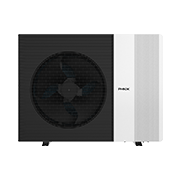
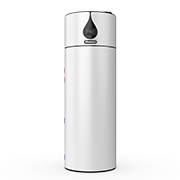
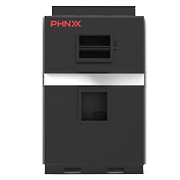
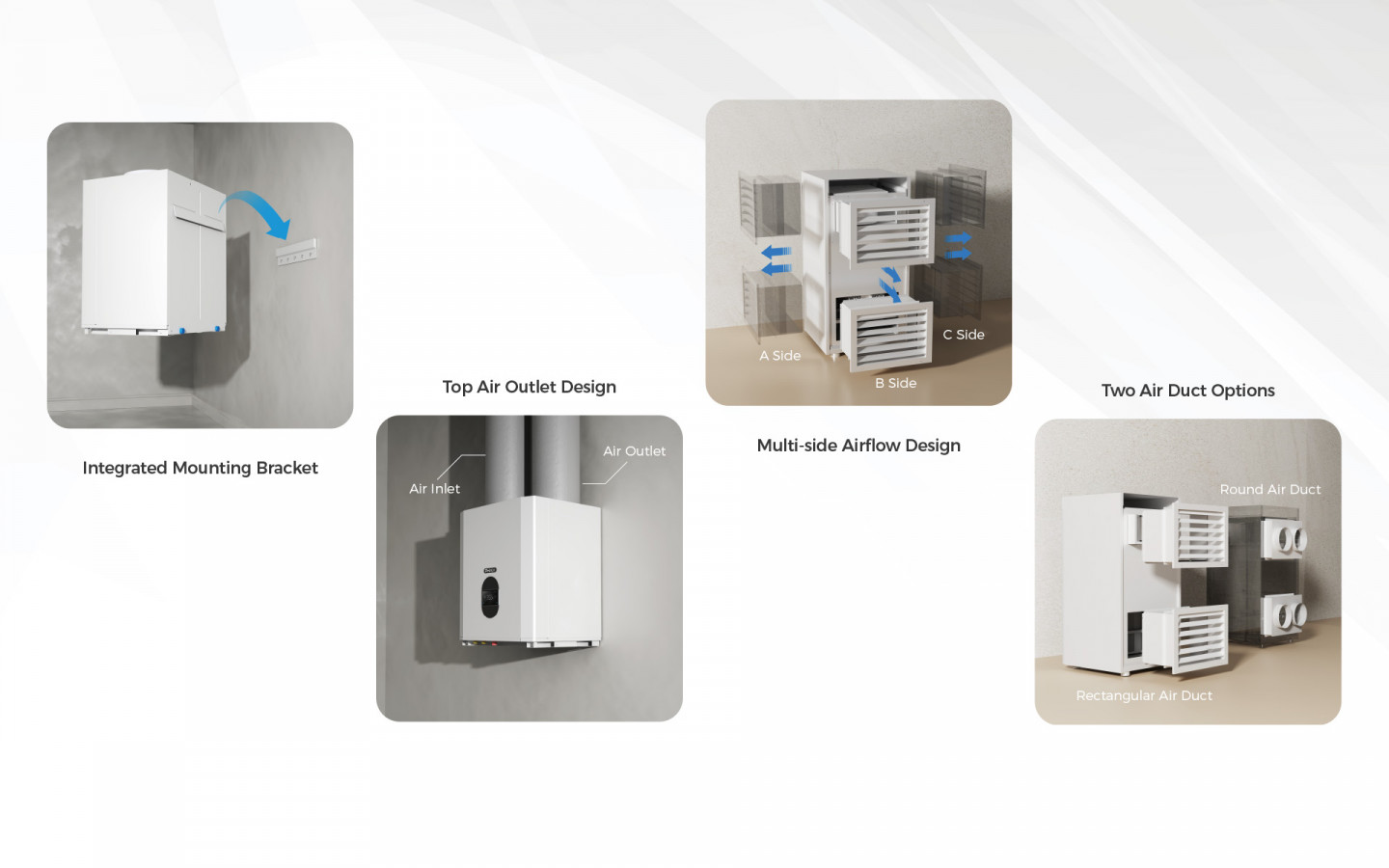
· PHNIX airInverter is an R290 heat pump water heater built as an integrated indoor unit, keeping the replacement footprint close to a conventional cylinder.
| Stage | Key check | Blocks the changeover if unresolved | Who signs it off |
|---|---|---|---|
| Survey | Room volume, ventilation, delivery route, floor support | Yes | Installer or specifier |
| Electrical | Dedicated circuit, protection, local isolator | Yes | Qualified electrician |
| Drainage | Condensate path with trap, relief and overflow discharge | Yes | Plumber |
| Removal | Isolation, drain down, refrigerant and scrap handling | Yes | Installer plus certified refrigerant handler |
| Commissioning | First heat up, setpoint, leak and drain check | Yes | Installer |
| Handover | Manual, controls walkthrough, service interval | No, but incomplete without it | Installer and homeowner |
Start with the room, not the appliance. An integrated heat pump water heater takes heat from the air around it, so it needs a volume of air to work with and will cool and dehumidify that air while running. A cupboard that held a slim electric cylinder may have enough floor area yet still fail on air volume or on service clearance above the unit, where the compressor and fan sit.
Three survey items get missed most often. First, the delivery route: measure the narrowest point between the front door and the final position, including door frames, stair turns, landing ceiling height and fixed handrails. An integrated unit cannot be tilted as freely as an empty tank once it contains a sealed refrigerant circuit, so permitted transport and tilt angles come from the manual, not from habit.
Second, floor support. A filled tank is far heavier than the same tank empty and the load sits on a small footprint. Whether a floor structure accepts that is answered by local building rules and, where there is doubt, by a structural engineer, not by the fact the old unit stood there.
Third, pipework positions. Cold feed, hot outlet, any secondary return and the old relief discharge rarely line up with the new appliance's connection heights. Plan the adaptation in the survey so changeover day is plumbing, not redesign. For the wider picture on where retrofits go wrong, our write up on common heat pump water heater installation mistakes covers the failure modes that repeat across projects.
Refrigerant safety belongs in the survey too. For propane units, charge limits are set by refrigerant LFL and room or installation volume under EN 378 and IEC 60335-2-40 (7th edition, 2022); confirm the actual clearance with local installation rules and the manufacturer's manual. R290 has a GWP100 of 0.02 under Annex VI of Regulation (EU) 2024/573, the F-gas regulation applicable since 11 March 2024, which is why propane appliances sit outside the 2027 restrictions on self-contained units and split air-to-water units below 12 kW containing refrigerants with GWP at or above 150.
The tempting shortcut is to reuse the cable that fed the old immersion heater. Sometimes that is fine. Often it is not: the old element was an intermittent resistive load on a circuit protected for exactly that, while the new appliance runs a compressor with different starting behaviour and continuous current. Work through these points with a qualified electrician.
· Confirm whether the appliance requires a dedicated circuit rather than a shared one, and take that requirement from the model manual.
· Have the existing conductor size, insulation condition, route and length assessed against current local wiring rules, not against the rules in force when it was installed.
· Confirm the protective device type and any residual current protection required for the appliance, as specified locally.
· Provide a local means of isolation that is accessible without moving the appliance, so future servicing does not require a trip to the consumer unit.
· Record earthing and bonding arrangements for the new metallic pipework, because the pipe layout has changed.
· If the property has a tariff, timer or photovoltaic system that previously switched the immersion heater, confirm how the new appliance's controls will take over that role.
That last point matters more than it sounds. Many older installations used a time switch to push heating into a cheap tariff window. A modern inverter appliance manages its own schedule, and forcing it on and off with an external contactor fights its control logic. Agree the control strategy before the electrician leaves.
This is the biggest functional difference from the appliance you are removing. A heat pump water heater condenses moisture out of room air continuously while the compressor runs, so it needs a permanent condensate drain: not a tray, not a bucket, but a piped path with a trap, continuous fall to an acceptable discharge point, and freeze protection where it crosses unheated space.
Alongside that, the pressure and temperature relief discharge and any expansion or overflow provision must be rebuilt to the new appliance's connection positions and to local plumbing requirements. Three discharge duties often have to be resolved in one small cupboard, and the nearest floor drain or waste stack frequently decides where the unit can stand at all. Checks on the day:
· Fill the condensate trap before first run so it seals against odours from the waste system.
· Verify fall along the whole condensate run, including the section behind the appliance where sags are invisible.
· Keep the condensate discharge separate from the relief discharge unless local rules explicitly allow a combined termination.
· Run the appliance long enough at commissioning to see actual condensate flowing to the drain, and check the trap and joints while it is flowing.
For a worked example of how these constraints land in a real building type, our piece on heat pump water heater installation in a European family home follows one representative European scenario from plant room layout through to controls.
Sequence discipline prevents most changeover day damage. Isolate the electrical supply and prove it dead. Isolate the cold feed and open a hot tap to break vacuum. Drain the old cylinder fully through a drain cock to a safe discharge, since a partially drained tank is heavy and awkward. Only then disconnect pipework and lift.
Disposal has two paths. A conventional electric or gas water heater is scrap metal plus insulation and goes to a licensed waste stream under local WEEE and waste rules. If you are removing an older heat pump appliance, its refrigerant must be recovered and documented by certified personnel before the carcass leaves the property. Under Article 13(4) of Regulation (EU) 2024/573, fluorinated gases with a GWP at or above 2 500 may no longer be used for servicing or maintenance of air conditioning and heat pump equipment from 1 January 2026, another reason older machines are replaced rather than repaired. There is no equivalent servicing ban at a lower GWP tier for this equipment category, so R32 appliances remain serviceable. Gas removals add a step: the supply must be capped off by a locally registered gas operative, and the redundant flue opening made good and weathertight.
Commissioning is where the replacement earns its efficiency. Fill and vent the new tank, energise, then run a full first heat up from cold and observe it rather than leaving site. Watch for stable compressor operation, condensate reaching the drain, no weeping joints at temperature, and controls responding as documented.
Setpoint deserves its own conversation. Water heater efficiency under Regulation 814/2013 is declared against a specific load profile: the minimum from 26 September 2017 is 36 percent for profile M and 37 percent for profile L, while the A+++ thresholds in Regulation 812/2013 are at least 163 percent for M and at least 188 percent for L. Reference energy in Annex III Table 1 of Regulation 814/2013 is 5.845 kWh for M and 11.655 kWh for L. Always state the declared load profile when comparing appliances, because the thresholds move with it.
Hygiene setpoints are a national matter. At EU level there is no single mandatory storage temperature; the Drinking Water Directive (EU) 2020/2184 is risk based, setting a Legionella parametric value below 1 000 CFU/l in Annex I Part D and requiring member states under Article 10(3)(e) to ensure control measures proportionate to the risk, with no temperature value in the text. In the United Kingdom, HSE guidance HSG274 Part 2 asks for hot water stored at a minimum of 60 degrees C, reaching 50 degrees C at the outlet within one minute, 55 degrees C in healthcare premises, and cold water below 20 degrees C. In Germany, central domestic hot water systems are governed by DVGW technical rules; check the current edition and the local requirements before fixing a setpoint. France sets its own requirements for domestic hot water temperature and Legionella control; confirm the current national rules with a local specifier.
Close with a handover the homeowner can use: the manual, the setpoint and why it was chosen, how the schedule works, where the isolator and condensate trap are, what the annual service covers, and how the appliance will sound compared with the silent tank it replaced.
Any saving depends on your tariff and on the declared efficiency of both appliances, so here is the arithmetic instead of a headline percentage. Take profile L, where Annex III Table 1 of Regulation 814/2013 gives reference energy of 11.655 kWh per cycle. A direct electric heater is close to one to one on input energy, while a heat pump water heater at the A+++ threshold for profile L declares at least 188 percent. Price that input energy difference at the Eurostat EU27 average household electricity price for the second half of 2025, 0.2896 EUR/kWh including taxes in the 2 500 to 5 000 kWh band, and the answer is specific to your house.
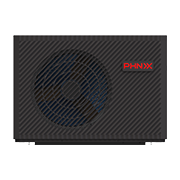
PHNIX airInverter and airExpert are R290 heat pump water heaters designed as integrated indoor appliances, the form factor that makes cylinder replacement practical in tight European and Australian utility spaces. PHNIX holds CE, UKCA, Keymark, AHRI, ETL and ERP certifications, with AHRI performance audits passed at 100 percent compliance for three consecutive years (2023, 2024 and 2025). Guangdong PHNIX Eco-energy Solution Ltd was founded in 2002 and exports to over 90 countries.
AI Full Inverter control, trained on data from more than 30,000 operating units, matters at commissioning because it governs how the appliance modulates instead of cycling against an external timer. If the project also touches space heating, the domestic heat pump water heater range sits alongside the residential heating and cooling heat pump category, where GreenTherm Pro has been measured at SCOP 5.55 by TUV SUD RED and HLK Stuttgart. Tank volume, sound level, refrigerant charge and maximum outlet temperature come from the manual for the selected model.
Q: Can I reuse the existing immersion heater cable for a heat pump water heater?
A: Sometimes, but it has to be verified rather than assumed. A qualified electrician should assess conductor size, condition, route and protection against current local wiring rules and the model manual before any reuse decision.
Q: Does a heat pump water heater really need a condensate drain if the old cylinder did not?
A: Yes. The appliance condenses moisture out of room air whenever the compressor runs, so condensate is continuous rather than occasional. It needs a piped path with a trap, continuous fall to an acceptable discharge point and freeze protection where it crosses unheated space, separate from the relief discharge.
Q: What temperature should I set on the new appliance?
A: That depends on your national rules, not on a single European figure. There is no EU wide mandatory storage temperature; the Drinking Water Directive (EU) 2020/2184 is risk based and sets a Legionella parametric value below 1 000 CFU/l without stating a temperature. UK HSE guidance asks for storage at a minimum of 60 degrees C with 50 degrees C at the outlet within one minute. Confirm the requirement that applies where the appliance is installed.
A heat pump water heater replacement succeeds or fails in the survey. Air volume, the route to the final position, floor support, the true condition of the existing circuit and a workable condensate path are all knowable before anyone lifts the old tank. Document them, book qualified trades for the electrical and gas work, plan the removal as an isolate, drain, lift sequence with compliant refrigerant and scrap handling, and treat commissioning as a measured first heat up rather than a quick temperature check. Every amperage, pipe size and loading figure comes from local electrical and water regulations and the model manual, and that is how it should be recorded on the job sheet.

Guangdong PHNIX Eco-energy Solution Ltd.
Tel: +86-4009-4009-00
Address: NO.3 Tianyuan Road, Dagang Town,
Nansha, Guangzhou, Guangdong, PR. China.