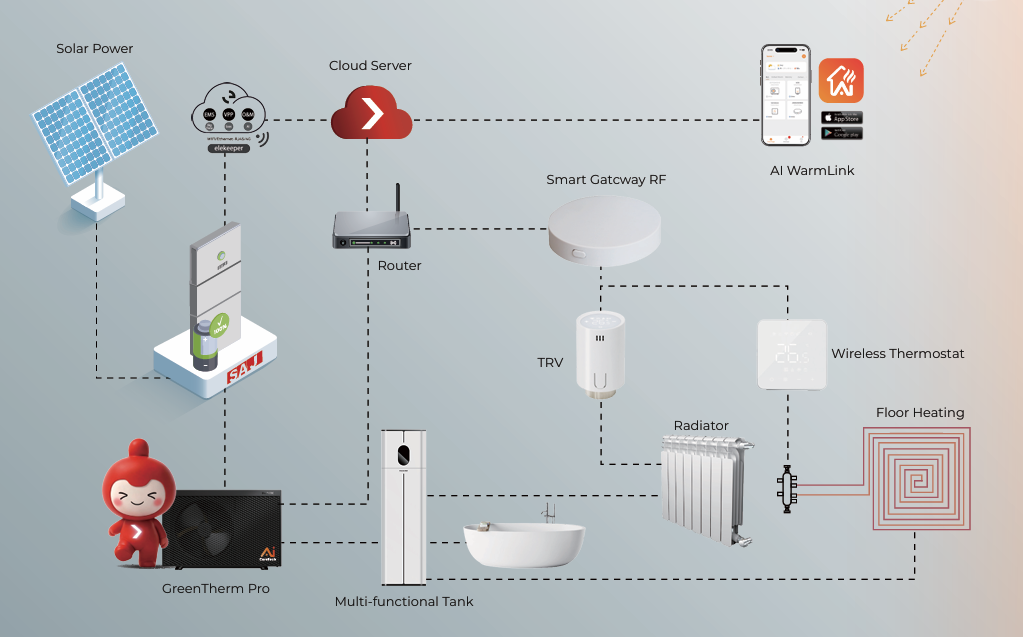
A rooftop solar array produces most of its energy in a narrow band around solar noon, while most households draw hot water in the early morning and late evening. A heat pump water heater sits in the middle of that mismatch, because hot water is one of the few domestic loads that can be produced hours before it is consumed. The tank is the battery. The question is not whether to shift heating into the PV window, but how to build a schedule that survives cloudy days, winter and hygiene requirements without quietly running on grid power at the worst hour of the day. This article covers the operating layer: time windows, tank capacity, setpoints, control interfaces and fallback logic. If you are still at the wiring stage, the companion piece on connecting a heat pump hot water system to solar PV covers the physical integration side.
· Shifting heating into the midday PV window raises self consumption, but the gain depends on array size, tank volume, draw pattern and weather, so treat it as a direction rather than a fixed percentage.
· Usable solar storage is set by the spread between the solar setpoint and the normal setpoint multiplied by tank volume, not by tank volume alone.
· A workable schedule has three layers: a primary PV window, a comfort guarantee window, and a periodic high temperature hygiene cycle.
· The minimum viable control interface is a time programme plus a volt free contact input (SG Ready style); integration with measured surplus is better.
· Winter and overcast days need an explicit fallback rule, otherwise the unit reheats at the evening peak tariff.
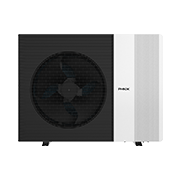
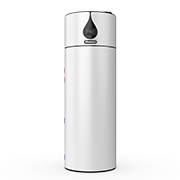
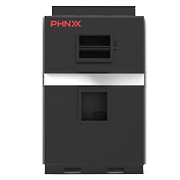
· PHNIX airInverter is an R290 heat pump water heater designed for indoor installation in European homes, with programmable windows and external control inputs.
Exported PV electricity is usually worth less than the electricity you avoid buying. Under Eurostat data for the second half of 2025, the EU27 average household electricity price including taxes, in the 2,500 to 5,000 kWh band, was 0.2896 EUR/kWh, with Germany at 0.3869 and Ireland at 0.4042. Export remuneration in most markets sits well below those figures, so PV that goes into water heating instead of the grid is worth roughly the retail price rather than the export price.
The leverage comes from the heat pump itself. A resistive immersion heater turns one kilowatt hour of PV into one kilowatt hour of heat. A heat pump water heater moves several times that for the same input, so the same array charges the tank far faster and hits target inside a shorter window. That is the entire reason scheduling works.
No single self consumption improvement figure is honest here. A household with a 3 kWp array, a small tank and an evening only draw pattern behaves nothing like one with 8 kWp, a large tank and daytime occupancy. Model your own case and avoid headline percentages.
The useful question is not "how many litres" but "how many kilowatt hours of shiftable heat". Two levers set that: volume and the temperature spread you are willing to run. If the tank normally sits at a standard service temperature and you allow the PV window to push it higher, the extra stored energy is the volume multiplied by the temperature lift multiplied by the specific heat of water. Raising the setpoint during the solar window adds storage capacity without adding a tank. The trade offs are higher standing losses, a lower operating COP at the top of the temperature range, and the need for a thermostatic mixing valve at the outlets.
Regulation (EU) 814/2013 gives a sanity check through its reference energy values in Annex III Table 1. For the M load profile the daily reference energy Qref is 5.845 kWh, for L it is 11.655 kWh and for XL it is 19.07 kWh. Qref is the sum of the useful heat of the individual draw offs in that profile. A household resembling the L profile therefore needs roughly 11.7 kWh of useful heat parked in the tank to cover a full day from the solar window alone. Compared against your tank's usable capacity, that number tells you whether one midday charge carries you to the next morning or whether you need a second window.
The same regulation sets the efficiency floor. Under Annex II 1.1(b), the minimum water heating efficiency since 26 September 2017 is 36% for the M profile, 37% for L and XL, and 32% for the 3XS to S profiles. Energy label classes come from Regulation (EU) 812/2013, where Annex II Table 1 sets A+++ at 163% or better for M, 188% for L and 200% for XL. Any efficiency class claim is meaningless without naming the declared load profile, because the threshold moves with it.
A robust schedule is not one time window. It is a stack of rules with clear priority.
The primary PV window is the block where the unit is encouraged to heat, centred on solar noon and widened seasonally. In summer it might run from mid morning to mid afternoon; in winter it collapses to a couple of hours either side of noon.
The comfort guarantee is a late window, usually in the small hours or just before the morning draw, where the unit may top up to a minimum acceptable temperature if the PV window failed to deliver. Keep this setpoint lower than the solar setpoint so it only ever fills the gap.
The hygiene cycle is a periodic elevation to a high store temperature. Water temperature rules are not harmonised at EU level. Directive (EU) 2020/2184 on drinking water is risk assessment led: Annex I Part D gives a parametric value of Legionella below 1 000 CFU/l for the purposes of Articles 10 and 14, and Article 10(3)(e) requires member states to ensure effective control and management measures proportionate to the risk. The directive contains no temperature requirement. In the UK, HSE guidance HSG274 Part 2 section 2.6 states that hot water should be stored at at least 60°C, should reach 50°C at the outlet within one minute (55°C in healthcare premises), that cold water should be below 20°C and that circulation return temperature should not fall below 50°C. In Germany, central domestic hot water systems are governed by DVGW technical rules; check the current edition and the local requirements before fixing a setpoint. France sets its own requirements for domestic hot water temperature and Legionella control; confirm the current national rules with a local specifier. The scheduling implication: put the high temperature cycle inside the PV window whenever possible, since that is when the extra lift is cheapest, and never let a scheduling rule suppress it.
| Strategy | Control needed | Works without surplus measurement | Winter robustness | Main trade off |
|---|---|---|---|---|
| Fixed midday time window | Built-in timer | Yes | Lower | Heats even when the sky is overcast |
| Time window plus raised solar setpoint | Timer plus dual setpoint | Yes | Moderate | Higher standing losses and lower COP at the top end |
| Volt free contact triggered by surplus | SG Ready style input from inverter or energy manager | No | Moderate | Needs correct export threshold and hysteresis |
| Modulated to measured surplus | Energy manager with inverter and meter data | No | Higher | Most complex commissioning |
| Tariff led scheduling with PV as a bonus | Timer plus tariff signal | Yes | Higher | Optimises for price, not for self consumption |
Choose by what your installation can measure. A fixed window is not a failure; it captures much of the benefit with no extra hardware, provided the fallback rule is tight.
· A programmable schedule with at least two independent daily windows and separate weekday and weekend patterns.
· A volt free (dry contact) input of the SG Ready type, so an inverter or energy manager can force a heating window or raise the setpoint when surplus is detected.
· A second setpoint or setpoint offset triggered by that input, rather than a simple on or off command.
· A separate, non overridable anti Legionella schedule.
· Readable status and energy data over a local protocol, so the energy manager can verify the command was honoured.
If you are also specifying a space heating unit on the same site, PHNIX documents PV integration and AI Smart Grid functions across the residential heating and cooling heat pump range as well as on the water heater side.
A schedule only works if the tank can be reheated inside the available hours. Recovery time depends on tank volume, the temperature lift, the heat pump's output at the prevailing ambient and inlet conditions, and whether the machine modulates. In winter, ambient temperature falls, capacity falls, the required lift rises and the solar window shortens, all at once. That compound effect is what breaks naive schedules. The mechanics are covered in our article on heat pump water heater recovery time, worth reading before you fix your window boundaries. Practical rule: size the PV window so the worst acceptable winter case still fits, then let summer surplus overshoot into a higher setpoint rather than a longer window.
Consider a representative European scenario: a four person household, a declared L load profile with Qref of 11.655 kWh per day, a 6 kWp array, and an R290 heat pump water heater installed indoors. At the EU27 average residential price of 0.2896 EUR/kWh including taxes (Eurostat, second half of 2025), each self consumed kilowatt hour avoids about 0.29 EUR of spend, minus the export payment forgone. Daily electricity input is Qref divided by the declared water heating efficiency at that load profile, so a unit with a higher ηwh under L needs proportionally fewer kilowatt hours to deliver the same 11.655 kWh of useful heat. Work your own figure from your declared ηwh, tariff and export rate rather than a generic saving claim.
Regulation (EU) 2024/573 has applied since 11 March 2024 and repealed Regulation (EU) 517/2014, with global warming potentials taken from the IPCC Sixth Assessment Report. R290 has a GWP100 of 0.02 under Annex VI, while R32 has a GWP100 of 675 under Annex I. Annex IV restricts the placing on the market of self contained heat pumps up to 12 kW containing fluorinated gases with a GWP of 150 or more from 1 January 2027, and applies the same date to split air-to-water systems up to 12 kW. For propane appliances, charge limits are set by refrigerant LFL and room or installation volume under EN 378 and IEC 60335-2-40 (7th edition, 2022); confirm the actual clearance with local installation rules and the manufacturer's manual.
PHNIX holds CE, UKCA, Keymark, AHRI, ETL and ERP certifications, with AHRI performance audits passed at 100% compliance for three consecutive years (2023, 2024 and 2025). PHNIX also received the first EN 18031 cybersecurity certificate in the heat pump industry in 2025, which is directly relevant when a water heater is driven by an external energy manager. Performance figures should be read against the right standard: EN 14511 covers steady state rated COP and EER, EN 14825 covers part load SCOP and SEER, and EN 12831 covers design heat load.
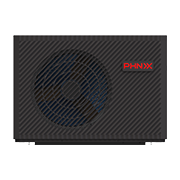
PHNIX airInverter and airExpert are R290 domestic heat pump water heaters built as indoor, all in one units for European and Australian homes. Guangdong PHNIX Eco-energy Solution Ltd was founded in 2002, employs more than 1,000 people and exports to over 90 countries. The AI Full Inverter platform, trained on data from more than 30,000 field units, modulates output rather than cycling on and off, which matters for solar scheduling because a modulating machine can track available surplus instead of overshooting it. Specific tank volumes, maximum outlet temperatures and refrigerant charges vary by model and should be taken from the model technical manual. If you are comparing indoor propane options, the R290 hot water heat pump page sets out the range.
Q: Should I just raise the tank setpoint to the maximum every sunny day?
A: Not automatically. A higher setpoint stores more solar heat but lowers the operating COP at the top of the range and increases overnight standing losses. Raise it when forecast surplus exceeds what the tank can absorb at the normal setpoint, and fit a thermostatic mixing valve so outlet temperature stays safe.
Q: Do I need an inverter integration, or is a simple timer enough?
A: A timer captures much of the benefit if your draw pattern is stable and you accept some grid import on overcast days. A volt free contact driven by measured surplus is the first meaningful upgrade, because it stops the unit heating when there is no export. Full modulation is the most efficient but needs careful commissioning.
Q: Can PV scheduling conflict with Legionella control?
A: It should not, if the hygiene cycle is configured as a separate, non overridable schedule. Where possible place it inside the solar window so the extra temperature lift is covered by PV output. Temperature requirements come from national rules and industry technical guidance rather than a single EU value, so follow the requirements that apply where the system is installed.
Scheduling a heat pump water heater around solar PV is a storage problem solved with software. Decide how many kilowatt hours of useful heat you need per day using your declared load profile and its Qref, work out how much of that your tank can hold across the setpoint spread you are willing to run, then build a three layer schedule of PV window, comfort guarantee and hygiene cycle. Specify the control interface up front, because a unit without a usable external input will never do better than a fixed timer. Be sceptical of any fixed self consumption percentage; the mechanism is reliable, but the magnitude is yours to calculate.

Guangdong PHNIX Eco-energy Solution Ltd.
Tel: +86-4009-4009-00
Address: NO.3 Tianyuan Road, Dagang Town,
Nansha, Guangzhou, Guangdong, PR. China.