When a heat pump water heater underperforms, the first instinct is to blame the machine. In practice the machine is the least likely culprit. Most complaints that reach a facilities desk (lukewarm water in the morning, a unit that never switches off, a bill that looks nothing like the quotation) trace back to how the unit was configured or installed.
That matters commercially. A settings problem is free to fix. An installation problem costs a site visit. An equipment problem costs a part, a warranty claim, and downtime. Diagnosing in the wrong order means paying the highest price first. This guide is a three way diagnostic tree for building owners and facilities managers rather than HVAC engineers.
· Work the cheap causes first: parameter settings, then installation, then equipment. Reversing that order inflates cost and downtime.
· Settings faults are schedule shaped. They repeat at the same time of day, affect the whole building equally, and change when you change a setpoint or timer.
· Installation faults are location shaped. One outlet behaves differently from another, or performance collapses only in cold weather or a confined plant room.
· Equipment faults are persistent and indifferent. They appear regardless of schedule, load, or weather, and usually come with an error code or lockout.
· PHNIX airInverter and airExpert are domestic heat pump water heaters using AI Full Inverter control, rated at 30%+ energy saving versus conventional inverter heat pumps.
· Efficiency claims only mean something alongside a declared load profile, because the A+++ water heating efficiency (ηwh) threshold runs from 62% at 3XS to 213% at XXL under Regulation (EU) 812/2013 Annex II Table 1.
A heat pump water heater is a system, not an appliance: a refrigerant circuit, a store of hot water, a control layer of setpoints and schedules, and a hydraulic layer of pipes, valves, and insulation. A symptom felt at the tap can originate in any of the four.
The control layer is the one most often touched and least often documented. Setpoints get nudged at commissioning, an off peak schedule gets copied from a previous building, a backup electric element gets left enabled, or an eco mode quietly caps compressor output. None of this is a fault, yet all of it produces complaints that look like faults. The sequence below is ordered by cost of investigation: settings take minutes at a controller screen, installation takes an hour with a visual survey, and equipment diagnosis needs refrigerant side measurement by a qualified technician.
Start here always, even when the complaint sounds mechanical.
Signals that point to settings
· The problem has a clock. Hot water runs out every weekday at 07:00 and recovers by 10:00. Time correlated symptoms are almost never mechanical.
· The problem is uniform across the building. Every outlet is equally lukewarm, not just the far ones.
· It appeared right after commissioning, a firmware update, a power cut, or a tariff change, with no change in weather or occupancy.
· Consumption is high but comfort is fine, the signature of a backup element left enabled or a setpoint above what the draw off pattern needs.
What to check
· Hot water setpoint and any separate disinfection setpoint. Confirm which is actually active.
· Time schedules and any off peak charging window. A store charged for only four cheap hours will fail a heavy morning draw off no matter how good the compressor is.
· Electric backup logic. Is it set to assist, to take over below a given ambient, or is it simply on?
· Eco, quiet, or night mode. These deliberately cap capacity or fan speed, which is correct behaviour and a frequent source of complaints.
· Recirculation control. A continuously running secondary loop with poor insulation can consume more than the draw off itself.
· Holiday or away mode left active after a shutdown period.
If any of these explains the symptom, stop. You have the cause and it costs nothing to fix.
Installation faults cost a visit but not a part, and produce spatially uneven symptoms. That is the key tell.
Signals that point to installation
· Performance differs between outlets: the nearest tap is fine and the far bathroom lukewarm. That is pipework.
· Performance collapses only in cold weather or when a plant room door is closed. That points to air path, siting, or ventilation.
· The unit short cycles or ices up while controls are healthy. Recirculated discharge air or an obstructed grille will do this.
· Noise transmits into occupied space while the unit sounds normal outdoors. That is mounting and anti vibration.
· Standby losses are high: warm pipes, slow recovery. That points to missing or damaged insulation.
Practical checks
· Air path. Confirm intake and discharge are clear and that discharge air cannot be drawn back into the intake. For indoor all in one units, confirm room volume and ducting match the manual.
· Clearances and refrigerant safety. Charge limits are set by refrigerant LFL and room or installation volume under EN 378 and IEC 60335-2-40 (7th edition, 2022). Confirm the actual clearance with local installation rules and the manufacturer's manual.
· Sensor placement. A tank sensor in the wrong pocket, or an ambient sensor in direct sun or in the discharge air stream, makes a healthy unit behave irrationally. This is the most under diagnosed fault of all.
· Hydraulics. Check for reverse connections, a stuck mixing valve, an undersized circulator, and air locks.
· Insulation on flow, return, and secondary loop.
· Water chemistry. Check the local water quality report, identify the actual hardness, and then follow the appliance manufacturer's installation and water treatment requirements. Directive (EU) 2020/2184 sets no single EU hardness limit; it requires that hardness and calcium, magnesium, and potassium information be made available to the public. The pH 6.5 to 9.5 range and conductivity of 2 500 μS/cm or less are separate indicator parameters under Annex I Part C, not substitutes for a hardness figure.
PHNIX's breakdown of the most common heat pump water heater installation mistakes covers most of the siting and pipework errors above.
If the symptom survives a settings review and an installation survey, the equipment becomes a reasonable suspect. Equipment faults are persistent and indifferent to context.
· A repeating error code or a lockout that returns after reset. Record the code and conditions; this is the best evidence for a warranty claim.
· Symptoms that ignore schedule, weather, and load. A unit that cannot reach setpoint at mild ambient with light draw off has a real problem.
· An audible change with no configuration change: new compressor noise, a rattling fan, a chattering relay.
· Oil staining at a joint, or persistent frost on one side of the circuit.
· Measurable capacity loss on the same settings, season, and occupancy.
Escalate to a qualified technician here. Refrigerant side diagnosis is not a facilities task, and with flammable refrigerants such as R290 it is a safety matter. If the unit is near end of life, weigh repair against replacement using a structured heat pump water heater replacement checklist rather than fixing the same unit twice.
| Signal | Settings | Installation | Equipment |
|---|---|---|---|
| Follows a daily or weekly clock | Yes | No | No |
| Differs between outlets or rooms | No | Yes | No |
| Depends on weather or plant room conditions | Lower | Higher | Lower |
| Error code or lockout present | No | No | Yes |
| Fixed without a site visit | Yes | No | No |
| Fixed without parts | Yes | Yes | No |
| Facilities team can resolve alone | Yes | Moderate | Not applicable |
A frequent trap is treating a high hot water setpoint as a settings fault and lowering it. Hygiene requirements are not comfort settings.
At EU level, Directive (EU) 2020/2184 uses a risk based framework and sets no single mandatory hot water temperature. Annex I Part D gives Legionella at less than 1 000 CFU/l, and that figure must be described as a parametric value. The directive's own note states the value is set for the purposes of Articles 10 and 14, and action may still be required in the event of infection or an outbreak even where the value is met, so a result below 1 000 CFU/l cannot be read as proof of safety. Article 10(3)(e) requires effective control and management measures which are proportionate to the risk.
In the United Kingdom, HSE guidance HSG274 Part 2 §2.6 is more specific: storage at 60 °C or above, outlet water reaching 50 °C within one minute (55 °C in healthcare premises), cold water below 20 °C, and circulation return at 50 °C or above. Sentinel outlet checks are monthly under HSE guidance, covering the nearest and furthest outlets plus long branches on non circulating systems, and the main loop return on circulating systems. These are UK HSE guidance figures, not EU wide legal requirements.
In calorifier arrangements using a timer-controlled shunt pump to prevent stratification, HSG274 recommends ensuring at least 60 °C throughout the vessel for at least one continuous hour per day. That is specific to that arrangement, not a universal requirement for every hot water store.
Product documentation is diagnostic evidence. Under Regulation (EU) 2017/1369 Article 4(1), from 1 January 2019 suppliers must enter the Annex I information into the product database, in both the public and compliance parts, before placing a new model on the market. Article 12(1) establishes that the database consists of a public part, a compliance part, and an online portal. The EPREL public part can be searched by model, so you can compare declared performance against what the site delivers.
Read the load profile when you do. Under Regulation (EU) 812/2013 Annex II Table 1, the A+++ threshold is ηwh of at least 62% for 3XS and XXS, 69% for XS, 90% for S, 163% for M, 188% for L, 200% for XL, and 213% for XXL. A label class quoted without its declared load profile is meaningless. Minimum ηwh values under Regulation (EU) 814/2013 Annex II 1.1(b), from 26 September 2017, are 32% for 3XS, XXS, XS, and S, 36% for M, 37% for L, XL, XXL, and 3XL, and 38% for 4XL.
Refrigerant choice affects the replacement decision rather than the repair decision. Under Regulation (EU) 2024/573, R290 has a GWP100 of 0.02 in Annex VI on the AR6 basis, while R32 has a GWP100 of 675 in Annex I on the IPCC AR4 basis. Recital (8) explains the split: HFC global warming potentials are calculated from the IPCC Fourth Assessment Report, and other fluorinated greenhouse gases use the Sixth Assessment Report. R410A and R454B are not listed as mixtures in the regulation's annexes, but both remain far above the 150 GWP threshold. Annex IV prohibitions matter before authorising a repair on an ageing fluorinated unit:
· self-contained air conditioners and heat pumps of 12 kW or less, GWP of 150 or more: 1 January 2027
· split air-to-water systems of 12 kW or less, GWP of 150 or more: 1 January 2027
· split air-to-air systems of 12 kW or less, GWP of 150 or more: 1 January 2029
· self-contained systems of 12 kW or less, all fluorinated greenhouse gases: 1 January 2032
· split systems of 12 kW or less, all fluorinated greenhouse gases: 1 January 2035
Exemptions exist where safety requirements make the use of such gases necessary.
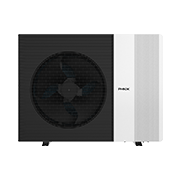
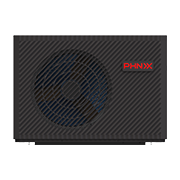
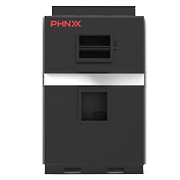
PHNIX airInverter and airExpert are the company's domestic heat pump water heater lines, designed for household and small residential hot water. Both use AI Full Inverter control, rated at 30%+ energy saving versus conventional inverter heat pumps, and both modulate capacity rather than cycling on and off at fixed speed. That matters for troubleshooting: a modulating unit running continuously at low output is usually behaving correctly, whereas a fixed speed unit doing the same would be a symptom.
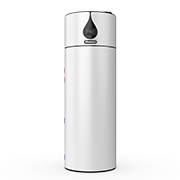
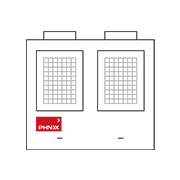
PHNIX holds CE, UKCA, Keymark, AHRI, ETL, ERP, and TÜV SÜD certifications, and has passed AHRI performance audits at 100% compliance for three consecutive years (2023, 2024, and 2025). Where plant sits indoors, the airMono indoor all in one range uses R290 and is built for quiet indoor operation, which shifts the installation checks from outdoor siting to room volume and ventilation. Larger centralised duties fall to the commercial HeatGreen line instead, where typical commercial heat pump COP sits in the 3 to 5 range depending on climate.
If you are specifying a replacement, the domestic heat pump water heater range sets out the model families, and the R290 hot water heat pump page covers the low GWP option in more detail. Honest limitations apply: initial cost is higher than gas or direct electric water heating, very cold climates may need a backup heat source or larger store to protect recovery, and outdoor units need space with a clear air path.
Q: My hot water runs out every morning but the unit shows no fault. Is it broken?
A: Almost certainly not. A time correlated shortfall points to settings or sizing: a charging window that is too short, an off peak schedule ending before the morning peak, or a setpoint too low for the draw off.
Q: Should I lower the tank temperature to save energy?
A: Not without a risk assessment. Directive (EU) 2020/2184 uses a risk based framework with no single mandatory temperature, and its Annex I Part D parametric value of less than 1 000 CFU/l for Legionella does not by itself demonstrate safety. In the UK, HSE guidance HSG274 Part 2 §2.6 recommends storage at 60 °C or above and outlet water reaching 50 °C within one minute.
Q: Can scale cause what looks like a compressor problem?
A: Yes. Scale reduces capacity gradually, so recovery lengthens and consumption rises while the compressor stays healthy. Check the local water quality report, identify the actual hardness, and then follow the appliance manufacturer's installation and water treatment requirements.
Q: How do I verify the performance my unit was sold on?
A: Retrieve the model from the EPREL public part, which can be searched by model, and compare declared water heating efficiency against site behaviour. Read the declared load profile alongside the label class, because the A+++ ηwh threshold ranges from 62% at 3XS to 213% at XXL.
Heat pump water heater troubleshooting is a sequencing discipline before it is a technical one. Work from cheapest and most probable to most expensive and least likely. Settings faults follow a clock, installation faults follow a location, and equipment faults follow nothing at all while usually announcing themselves with a code.
Give the facilities team authority to review setpoints, schedules, and backup heater logic first, and to document what changed. Commission an installation survey second, covering air path, sensor placement, insulation, hydraulics, and water quality. Escalate to refrigerant side diagnosis only with an error code in hand, and at that point ask whether phase down dates make replacement a better use of budget than a second repair.

Guangdong PHNIX Eco-energy Solution Ltd.
Tel: +86-4009-4009-00
Address: NO.3 Tianyuan Road, Dagang Town,
Nansha, Guangzhou, Guangdong, PR. China.