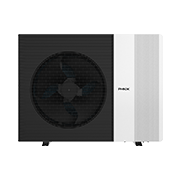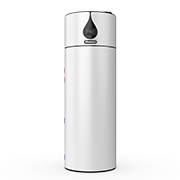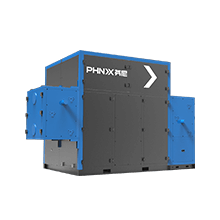
The PHNIX HeatGreen Series is a commercial R290 heat pump for heating, cooling, and domestic hot water.
A gas boiler is a known quantity on a hotel's books, so the question at replacement time is whether a heat pump earns back its higher up-front cost. That answer turns on a handful of measurable drivers rather than a single headline number. This article walks through the five factors that decide return on investment when a hotel replaces a gas boiler with the PHNIX HeatGreen Series, and it shows how to model your own payback with real figures instead of assumptions.
A hotel replacing a gas boiler with PHNIX HeatGreen can expect a strong running-cost reduction because the heat pump returns several units of heat per unit of electricity, and its A+++ efficiency, subsidy eligibility, and R290 refrigerant improve both the capex and the long-term risk picture.
The exact payback is project-specific. It depends on your fuel and electricity prices, your load profile, and your local subsidy, so it has to be modeled with your own numbers rather than read off a chart.
A gas boiler and a heat pump both deliver heat, but they cost money in different ways. A boiler burns fuel at a roughly fixed conversion, so its running cost tracks the gas price. A heat pump draws electricity and moves heat rather than generating it by combustion, so its running cost depends on the electricity price and on how efficiently the machine runs at your water temperatures. Those two cost curves move independently, which is why no honest article can quote you a universal payback period.
Return on investment for a hotel comes down to how much the heat pump lowers annual running cost, how much subsidy offsets the higher install cost, and how the equipment reduces future risk and maintenance. Each of those is measurable for your specific site. The rest of this article breaks the ROI into five drivers you can put real numbers against.
The largest and most reliable part of the return is the drop in running cost, and it comes from efficiency. A combustion boiler releases slightly less heat than the energy content of the fuel it burns. A heat pump works differently, moving several units of ambient heat into the building for each unit of electricity it draws. That ratio is the mechanism behind the saving.
PHNIX HeatGreen carries an A+++ rating at 35°C and A+++ at 55°C water temperature, so it holds high seasonal efficiency whether a hotel runs low-temperature underfloor loops or higher-temperature radiator and hot water circuits. For summer cooling, it reaches SEER 5.14 at 7°C and 6.84 at 18°C chilled water, so the same platform earns its keep year-round rather than sitting idle outside the heating season.
The size of the running-cost gap between a heat pump and a gas boiler depends on the ratio between your local electricity price and your local gas price, which varies widely by market. The efficiency of the heat pump is the lever you control through equipment choice. The tariff spread is the input you have to supply from your own bills.
A heat pump that cannot reach the temperature a hotel actually needs forces an expensive workaround. If the machine tops out below the radiator or hot water setpoint, the site ends up running electric immersion heaters or keeping the old gas boiler online full time, and either of those erases much of the running-cost saving.
HeatGreen removes that problem across most climates. It delivers outlet water up to 75°C at -7°C ambient and holds 60°C down to -25°C, so it drives existing radiator circuits sized for 70/50°C or 80/60°C and supports Legionella-compliant domestic hot water, which requires storage at 60°C with periodic heat-up cycles. A hotel can retrofit onto its existing terminal units without a full-time backup boiler or a bank of electric immersion elements, which keeps the efficiency saving intact rather than leaking it back through resistance heating.
The higher up-front cost is the honest downside of a heat pump, and subsidies are the main lever that closes the gap. HeatGreen is BAFA listed and holds CE, MCS, MD, and PED certification, and its natural refrigerant works in its favor here. R290 products qualify for subsidy bonuses in several markets, including Germany, where using a natural refrigerant can lift the grant a hotel receives.
A subsidy directly reduces the capital you have to recover, which shortens payback in proportion. The catch is that eligibility, grant size, and application rules differ by country and change over time, so treat any subsidy as a project input to confirm rather than a guarantee. Check the local scheme for your market and building type before you build the case, because the same equipment can attract very different support across borders.
ROI is not only about the money coming in, it also covers the costs a hotel avoids over the life of the plant. Refrigerant regulation is a real and rising cost for the wrong equipment. Under the EU F-gas Regulation (2024/573), units above 50 kW that use refrigerants with a GWP above 150 will no longer be permitted from 2030, which puts high-GWP commercial equipment on a path toward constrained servicing and eventual replacement.
HeatGreen uses R290, with a GWP of 0.02 under Regulation (EU) 2024/573, so it sits outside that phase-down entirely. For a hotel, that means the machine installed today is not exposed to future refrigerant supply constraints, climbing servicing costs, or a forced mid-life swap driven by regulation. Choosing a natural-refrigerant platform converts a looming compliance liability into a fixed, known asset, and that avoided cost belongs in the ROI picture even though it does not show up on this month's energy bill.

HeatGreen supports SG Ready control, PV coupling, and a hybrid mode that runs alongside an existing boiler.
Two features let a hotel improve the return after the system is installed. SG Ready control and PV compatibility shift consumption toward cheaper hours, so the system draws power off-peak or from on-site solar and lowers the effective cost of every kilowatt-hour it uses. For a property with a photovoltaic array or a time-of-use tariff, that shifting is a direct lever on running cost.
The Hybrid Function changes the shape of the investment itself. It lets HeatGreen run alongside an existing gas boiler and a buffer tank, switching between renewable, hybrid, and boiler modes on a cost basis. A hotel can let the heat pump carry the base load at high efficiency while the boiler covers demand peaks. That phases the capital outlay instead of demanding a full plant replacement on day one, and it lets a property capture most of the efficiency saving from a smaller initial install.
Reliability sits alongside these levers as a quieter contributor to lifetime cost. HeatGreen's fully potted PCB provides 5-fold protection that reduces PCB failure rates by up to 90%, its electric box is IP44 rated and anti-explosion, and the plate heat exchanger is SS316. Fewer control-board failures mean fewer service call-outs and less downtime over the years the plant runs, which trims the maintenance line that ROI models often overlook.
Payback is a calculation you can run once you have your own inputs. Gather these figures, then model them with a qualified installer rather than a generic online tool.
Current fuel use and price. Your annual gas consumption and the price you pay per unit, taken from real bills, set the running cost you are replacing.
Electricity tariff and time-of-use structure. The price per kilowatt-hour, plus any off-peak or PV rates, since these decide what the heat pump costs to run.
Heat-pump SCOP at your operating temperature. The seasonal efficiency at the water temperature your hotel actually uses, not a peak lab figure, so the running cost reflects your circuits.
Subsidy amount. The confirmed grant your market and building qualify for, which reduces the capital you need to recover.
Install cost. The full delivered and commissioned cost for your site, including any electrical upgrades and buffer tank.
With those five inputs, an installer can compare annual running cost before and after, subtract the subsidy from the install cost, and produce a payback period and a return figure grounded in your building. That model, not a headline number, is what should drive the decision.
A sound ROI case depends on a few site-specific confirmations.
Real load profile. Size on the hotel's actual heating load at design conditions and its hot water demand profile, including occupancy peaks, rather than on headline capacity.
Tariffs. Confirm your electricity and gas prices and any time-of-use structure, because the running-cost gap depends directly on them.
Subsidy eligibility. Verify the current grant, its rules, and your building's eligibility in your specific market before building the business case.
Sizing and cascade. Larger properties cascade multiple units under one controller, and one 10-inch central controller manages up to 32 units, so confirm the staging plan for your load.
Performance data. A single-point COP isn't published for the series, so rely on the A+++ class, the SEER values, and the capacity ranges, and ask PHNIX for performance at your operating temperatures.
Q: What payback period should a hotel expect from replacing a gas boiler with a heat pump?
A: There isn't a fixed figure, because payback depends on your gas and electricity prices, your load profile, your subsidy, and your install cost. Model those five inputs with an installer to get a number grounded in your building.
Q: What actually drives the return on investment?
A: The running-cost reduction from the heat pump's efficiency is the largest driver, followed by subsidy offsetting the capex, avoided F-gas replacement risk, and lower maintenance. PHNIX HeatGreen holds A+++ efficiency at 35°C and 55°C, which is the core of the running-cost saving.
Q: How does a subsidy affect the payback?
A: A subsidy reduces the capital you need to recover, which shortens payback in proportion. HeatGreen is BAFA listed, and its R290 refrigerant can attract subsidy bonuses in markets like Germany, though you should confirm the current scheme for your country.
Q: Can we phase the investment instead of replacing the whole boiler plant at once?
A: Yes. The Hybrid Function lets HeatGreen run alongside your existing gas boiler, carrying the base load at high efficiency while the boiler covers peaks, so you can capture most of the efficiency saving from a smaller initial install.
Q: Does R290 protect the investment against future regulation?
A: Yes. R290 has a GWP of 0.02 under Regulation (EU) 2024/573, so it sits outside the EU F-gas Regulation (2024/573) phase-down that restricts units above 50 kW using refrigerants above GWP 150 from 2030. That avoids a regulation-driven refrigerant or equipment swap later.
For a hotel replacing a gas boiler, PHNIX HeatGreen offers a credible return built on measurable drivers rather than a marketing figure. Its A+++ efficiency at 35°C and 55°C produces the running-cost reduction that anchors the case, its 75°C R290 output removes the need for a full-time backup that would erode that saving, and its BAFA listing, subsidy-eligible refrigerant, and F-gas-proof design improve the capex and the long-term risk position together. The exact payback is yours to model, using your fuel and electricity prices, your load profile, your confirmed subsidy, and your install cost. Run those numbers with an installer, and HeatGreen gives a hotel a documented, defensible basis for the boiler-replacement decision.
All performance data referenced is drawn from official PHNIX HeatGreen Series product documentation. For full specifications, project engineering, and OEM/ODM partnership enquiries, visit www.phnix-e.com.

Guangdong PHNIX Eco-energy Solution Ltd.
Tel: +86-4009-4009-00
Address: NO.3 Tianyuan Road, Dagang Town,
Nansha, Guangzhou, Guangdong, PR. China.