Most hotels cannot close for a plant room upgrade, and a week of lost occupancy usually costs more than the equipment itself. So the real question for a facilities or procurement lead is not whether an air source heat pump can replace a gas boiler or electric calorifier, but whether the swap can be staged so that guests never notice. It can: split the building into hydraulic zones, keep the old plant alive as a temporary heat source, move one zone at a time inside a defined window, and hold a rollback path open until the new plant has proven itself.
· A phased retrofit keeps the hotel trading by converting one hydraulic zone at a time while the existing boiler or calorifier continues to serve the rest of the building.
· The old plant should stay connected and commissionable as a temporary heat source and as the rollback route, typically for one to two full occupancy cycles after the last zone goes live.
· Changeover windows are chosen from occupancy and hot water draw data, not from contractor convenience. Low-occupancy midweek nights after the evening shower peak are the usual target.
· Guest impact is controlled by keeping the domestic hot water buffer charged before each cutover, so the zone rides through the tie-in on stored volume rather than on live heat input.
· Legionella control does not pause during a retrofit. UK HSE guidance in HSG274 Part 2 section 2.6 sets storage at 60 °C or above, outlet temperature reaching 50 °C within one minute, cold water below 20 °C, and circulation return at 50 °C or above.
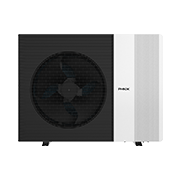
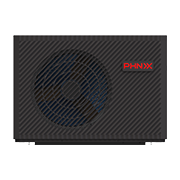
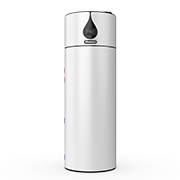
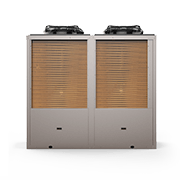
· PHNIX HeatGreen is a commercial air source heat pump range using R290 refrigerant and AI Full Inverter technology, built for centralized hot water in hotels, hospitals, and schools, and suited to modular phased installation.
A single weekend shutdown looks simpler on paper, but it concentrates every risk into one window: a delayed crane lift, a failed pressure test, or a missing valve all become guest-facing failures with no fallback. Phasing spreads that risk, so the hotel never loses more than a fraction of its capacity at once. It also lets you learn, because the first zone is effectively a pilot. You measure real return temperatures, recovery times, and electrical demand, then adjust the control strategy before committing the rest.
The trade-offs are real. Phasing costs more in labour, needs temporary pipework that may later be abandoned, and extends the period during which two heat sources occupy the plant room. Before committing, work through the data you need to collect before a hotel heat pump retrofit, because phasing decisions are only as good as the load profile behind them.
A zone is not a floor. It is a group of rooms and outlets that can be hydraulically isolated without stranding anyone. In most hotels that means one of three patterns.
· Riser-based zoning splits by vertical service riser, cleanest in towers with independent risers per stack.
· Wing-based zoning splits by horizontal branch, common in low-rise resorts where each wing has its own loop and buffer.
· Function-based zoning separates domestic hot water from space heating, or back-of-house loads such as laundry and kitchen from guest rooms. This is often the best first phase because the loads are predictable and the users are staff, so a fault is a nuisance rather than a complaint.
Confirm three things per zone before scheduling: that isolation valves actually hold, that the zone has or can accept a buffer vessel, and that the return path can be metered. If a zone cannot be isolated with confidence, the first job is installing valves, not the heat pump.
The existing boiler or calorifier is your temporary heat source, and should be treated as commissioned equipment rather than scrap, with water treatment, controls, and safety devices kept in service throughout.
The standard arrangement is a parallel tie-in. New heat pump flow and return are brought to a common header with motorised isolation on both the new and legacy branches. Converted zones draw from the header with the heat pump as lead source and legacy plant as backup, while unconverted zones stay on the legacy plant. One control decision, which source leads the header, then governs the changeover, and reversing it is a control action rather than a pipefitting job. Where header space does not exist, a hired mobile boiler can bridge a zone, and should be budgeted in the tender rather than bought in an emergency.
Air source heat pumps lose capacity as ambient temperature falls, and in cold climates a backup heat source stays part of the design rather than a temporary measure. Say this early, because a retrofit sold as total boiler removal, then delivered with a retained backup, reads as a failure even when it is correct engineering.
The window comes from three data sets: occupancy, hot water draw profile, and weather.
· Occupancy sets the calendar. Most city hotels dip midweek in shoulder seasons, resorts between school holidays. Convert the largest zones during the deepest dip.
· The draw profile sets the hour. Hotel hot water demand has a sharp morning peak, a midday trough, and a secondary evening peak. The safest tie-in starts after the evening peak decays, giving the crew overnight hours and a full buffer as cover.
· Weather sets the go or no-go. A tie-in on the coldest night of the month leaves no margin if commissioning runs long. Build a documented abort threshold and agree who makes the call.
Then publish the window internally, so front desk, housekeeping, and the duty manager know the hours, the affected rooms, and the fallback before the contractor arrives.
Four measures do most of the work.
· Pre-charge the buffer. Raise stored volume to full temperature before isolation so the zone rides the tie-in on stored water. This is the single most effective guest-impact control.
· Sequence rooms, not just zones. Housekeeping can block a handful of rooms nearest the tie-in for one night far more easily than a whole floor.
· Control noise and access. Core drilling and crane lifts belong in daytime back-of-house hours, never overnight near guest rooms.
· Flush and prove before handover. Every converted zone should be flushed, temperature-proven at the furthest outlet, and signed off before rooms return to sale.
A short, factual note at check-in about a scheduled plant upgrade, with a named contact, turns most complaints into neutral awareness.
Legionella control most often dictates sequencing. Directive (EU) 2020/2184 uses a risk-based framework and sets no single mandatory EU hot water temperature. Its Annex I Part D gives Legionella below 1 000 CFU/l as a parametric value, and the note states that the value is set for the purposes of Articles 10 and 14, with action still possible below it where infection or an outbreak occurs. Article 10(3)(e) requires effective control and management measures proportionate to the risk. In the UK, HSG274 Part 2 section 2.6 gives the operational figures cited above, and those are UK HSE guidance, not an EU-wide legal requirement. HSE also expects monthly temperature checks at sentinel outlets, covering nearest and furthest outlets plus long branches on non-circulating systems, and the main return leg on circulating systems.
One temperature rule is frequently misapplied. In calorifier arrangements using a timer-controlled shunt pump to prevent stratification, HSG274 recommends ensuring at least 60 °C throughout the vessel for at least one continuous hour per day. That recommendation is tied to that arrangement, not to every storage vessel in every hotel.
Practically, any zone left stagnant needs a flushing regime, and any temporary vessel must enter the water safety plan before it is filled, not after.
Refrigerant choice also has a schedule dimension. Under Regulation (EU) 2024/573, R290 carries a GWP100 of 0.02 listed in Annex VI on the AR6 basis, while R32 carries a GWP100 of 675 listed in Annex I on the IPCC AR4 basis, because Recital (8) directs that HFCs be calculated using the IPCC Fourth Assessment Report and other fluorinated greenhouse gases using the Sixth. R410A and R454B are not listed as mixtures in the regulation's annexes, but both remain far above the 150 GWP threshold. Annex IV bans, subject to exceptions where safety requirements apply, cover:
· self-contained AC and heat pumps of 12 kW or less with GWP of 150 or more, from 1 January 2027
· split air-to-water systems of 12 kW or less with GWP of 150 or more, from 1 January 2027
· split air-to-air systems of 12 kW or less with GWP of 150 or more, from 1 January 2029
· self-contained units of 12 kW or less, full fluorinated-gas ban, from 1 January 2032
· split systems of 12 kW or less, full fluorinated-gas ban, from 1 January 2035
Hotel plant is usually well above 12 kW, so these dates rarely bind directly, but they shape residual value over a long asset life.
For flammable refrigerant siting, charge limits are set by refrigerant LFL and room or installation volume under EN 378 and IEC 60335-2-40 (7th edition, 2022). Confirm the actual clearance with local installation rules and the manufacturer's manual. On documentation, Regulation (EU) 2017/1369 Article 4(1) has required suppliers, since 1 January 2019, to enter Annex I information into the public and compliance parts of the product database before placing a new model on the market, and Article 12(1) sets that database as a public part, a compliance part, and an online portal. The public part is searchable by model.
On water treatment, Directive (EU) 2020/2184 sets no single EU hardness limit and requires hardness information to be made available to consumers. Check the local water-quality report, identify the actual hardness, and then follow the appliance manufacturer's installation and water-treatment requirements before any new vessel is filled.
| Factor | Zone by zone, legacy plant retained | Zone by zone, temporary hired plant | Single full shutdown |
|---|---|---|---|
| Guest disruption risk | Lower | Lower | Higher |
| Plant room space needed | Higher | Moderate | Lower |
| Total labour cost | Higher | Higher | Lower |
| Rollback available | Yes | Yes | No |
| Suitable for year-round hotels | Yes | Yes | No |
| Learning from first phase | Yes | Yes | Not applicable |
| Cold-snap exposure | Lower | Moderate | Higher |
A rollback plan is not a paragraph in the method statement. It is a tested procedure with four elements:
· A defined trigger, for example failure to reach target outlet temperature within a stated recovery time, or a repeated fault lockout.
· A defined actor. One named person on shift has authority to revert without waiting for the project manager.
· A physical route. The legacy source must stay valved in, fuelled or energised, and water-treated. A drained boiler is not a rollback.
· A proof test. Before the first zone goes live, run the reversion once at low occupancy and time it. An untested rollback is an assumption.
Hold the rollback path open until the new plant has run through at least one full occupancy cycle and one cold period, and only then decommission.
PHNIX HeatGreen is a commercial air source heat pump platform using R290 refrigerant and AI Full Inverter control, developed for centralized domestic hot water in hotels, hospitals, and schools, and it suits phased work because capacity can be added in modules as zones convert. PHNIX delivers energy savings of 30%+ versus conventional inverter heat pumps on its residential and commercial lines, and holds CE, UKCA, Keymark, AHRI, ETL, ERP, and TÜV SÜD certifications, with AHRI performance audits passed at 100% compliance for three consecutive years, in 2023, 2024, and 2025.
Published efficiency should be read against climate and water temperature. Typical commercial heat pump COP sits in the range of 3 to 5 depending on conditions and control strategy, and falls as ambient temperature drops. For sizing detail, see the PHNIX commercial heat pump range and the background on R290 commercial heat pump design. PHNIX also builds residential lines such as GreenTherm Pro, independently measured by TÜV SÜD RED and HLK Stuttgart at SCOP 5.55, but those sit outside hotel central plant duty.
The same logic transfers to cooling plant, as covered in this guide to chiller plant retrofits in office towers.
Q: How long does a phased hotel heat pump retrofit usually take?
A: Longer in calendar time than a shutdown, shorter in disruption. A mid-size hotel with three or four zones commonly runs six to twelve weeks from first tie-in to decommissioning, with each zone cutover taking one overnight window plus a proving period.
Q: Do we have to keep the old boiler after the retrofit is finished?
A: Not permanently, but do not remove it until the new plant has completed at least one full occupancy cycle and one cold period. In colder climates a retained backup is often a permanent part of the design.
Q: Will guests notice the changeover?
A: They should not, if the buffer is pre-charged before isolation, rooms nearest the tie-in are blocked for one night, and noisy work stays in daytime back-of-house hours. Most retrofit complaints trace to noise and access, not water temperature.
Q: How does Legionella management change during phasing?
A: It becomes more demanding, because temporary vessels and stagnant branches are both risk factors. Add temporary equipment to the water safety plan before filling, maintain flushing on low-use outlets, and keep the monthly sentinel outlet temperature checks HSE expects running throughout.
A hotel does not need to close to change its heat source. It needs hydraulic zones that genuinely isolate, legacy plant kept alive as both temporary source and rollback route, changeover windows chosen from occupancy and draw data, and a rollback procedure that has been run once before it is needed.
Decide in this order: confirm you can isolate zones, pick the first zone from back-of-house loads, set the abort threshold and rollback trigger in writing, then schedule the rest against occupancy. Keep the water safety plan updated at every step, and treat the first zone as a pilot whose measurements may change the design for the others. Done that way, the retrofit shows up in the energy bill and nowhere else.

Guangdong PHNIX Eco-energy Solution Ltd.
Tel: +86-4009-4009-00
Address: NO.3 Tianyuan Road, Dagang Town,
Nansha, Guangzhou, Guangdong, PR. China.