Boutique hotels rarely run at a steady load. A property might be near full on a Friday and Saturday, then drop to a handful of occupied rooms on a Tuesday, before a small midweek event fills the restaurant again. That swing is hard on a heating and hot water plant sized as a single fixed block, because it either short cycles at low demand or struggles at peak. For an owner or facilities lead, the real question is which modular commercial heat pump can track that uneven curve efficiently while staying compliant with tightening F-gas rules.
This guide sets out the selection criteria that matter for variable hotel occupancy, names the brands worth shortlisting, and explains where the PHNIX HeatGreen R290 Commercial range fits.
· For uneven midweek occupancy, the deciding factor is turndown range, so a plant that modulates deep at low load matters more than a single headline efficiency figure.
· Modular architecture lets a hotel stage capacity in blocks, matching plant output to real occupancy and adding units as the property expands.
· R290 (propane) is a low GWP refrigerant that keeps commercial projects on the right side of the EU F-gas phase down, so refrigerant choice is now a compliance question, not just an efficiency one.
· Smart scheduling and grid aware control shift hot water production to the cheapest, cleanest hours, which suits a hotel with predictable check in peaks and quiet nights.
· PHNIX HeatGreen R290 Commercial delivers AI Full Inverter control with 30 percent plus energy savings, AI Smart Grid scheduling, and EVI operation across a -30 to 43 degrees C range, combining centralised hot water, heating, and cooling on one platform.
· Commercial heat pump COP typically sits in a 3 to 5 industry band and shifts with climate and water temperature, so always request performance data at your own design point.
A boutique hotel combines several loads that peak at different times: domestic hot water for morning showers and evening baths, space heating or cooling for guest rooms and public areas, and often a spa, restaurant, or small pool. When occupancy is high these stack up; when the property is quiet midweek, demand can fall to a fraction of design load.
A single large fixed speed unit handles the peak but behaves badly at the trough, short cycling, wearing components, and wasting energy. Oversizing for the weekend penalises the quiet Tuesday, and undersizing spoils the guest experience at the weekend. So the real specification target is not one big number, it is the ability to modulate and stage capacity so the plant runs efficiently across the full occupancy range.
Use these five criteria as your shortlist filter. They apply whether you are comparing PHNIX, NIBE, Daikin, Viessmann, or Midea.
### 1. Inverter turndown range (variable load)
Uneven occupancy means the plant spends most of the week at part load. Full inverter compressors modulate output to match real demand, avoiding the short cycling and comfort swings of fixed speed plant, and cutting part load energy use sharply. Ask each brand for the minimum stable output as well as the maximum, because a wide turndown ratio is what protects efficiency on a quiet midweek day.
### 2. Modular expansion
Modular systems let you stage several smaller units that fire in sequence. Only the capacity you need runs at any moment, so a quiet Tuesday might use one module while a full weekend brings the whole bank online. Modularity also future proofs a growing property, since you add blocks rather than replacing the plant. Confirm how many modules can be cascaded and how the master controller balances runtime across them.
### 3. Smart scheduling and grid awareness
A hotel has a predictable rhythm: hot water demand spikes at breakfast and check out, occupancy is known days ahead through the booking system. Grid aware control can pre heat storage during off peak or low carbon hours and coast through peaks, cutting cost and emissions. Look for scheduling logic that can align production with tariff windows and forecast occupancy.
### 4. R290 compliance (F-gas)
R290 (propane) has a very low global warming potential, which future proofs a project against the EU F-gas phase down that is steadily restricting higher GWP refrigerants. Choosing R290 now reduces the risk of a mid life refrigerant or servicing constraint. Confirm the unit is engineered for R290 end to end, not retrofitted.
### 5. Certification (Keymark, AHRI, and cyber security)
Certification is how you verify claims. Keymark and AHRI performance certification provide third party validated data, while EN 18031 addresses cyber security for connected products, increasingly relevant as building plant joins the network. Treat certified data as the baseline and be cautious with any figure that lacks an independent mark behind it.
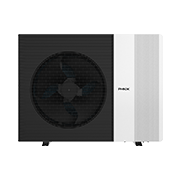
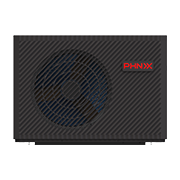
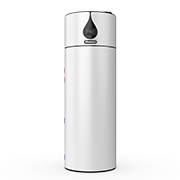
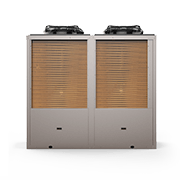
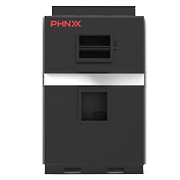
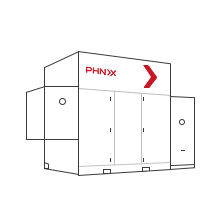
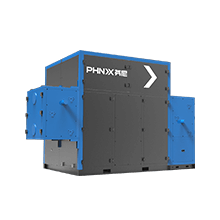
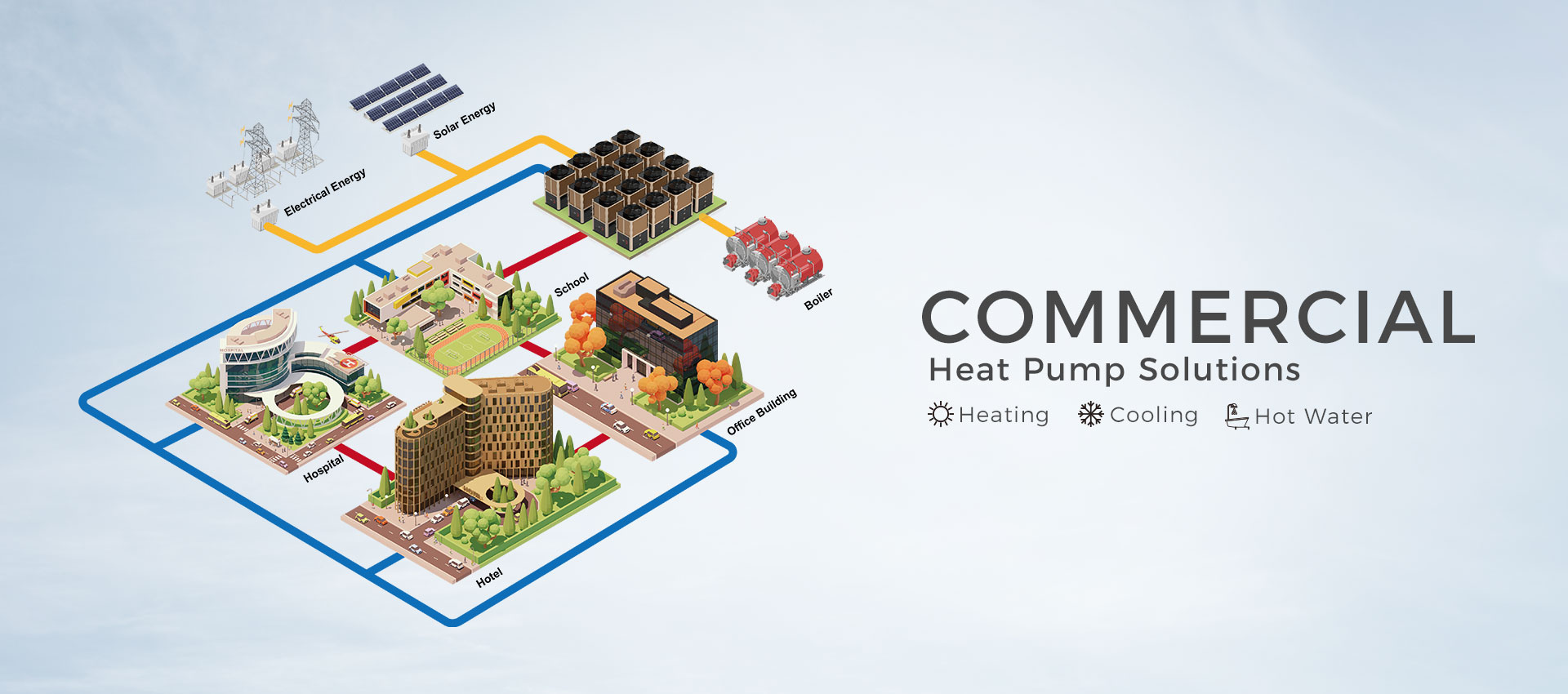
The PHNIX HeatGreen R290 Commercial range is built for exactly the centralised, variable duty that a boutique hotel represents. It is designed for hotels, schools, and hospitals that need combined space heating, cooling, and hot water from one platform, which lets a single plant cover guest rooms, public areas, and domestic hot water.
Four characteristics line up with the uneven occupancy problem:
· AI Full Inverter modulation: the range delivers 30 percent plus energy savings through continuous output modulation, so the plant tracks a quiet midweek load without short cycling and ramps up cleanly for a busy weekend.
· AI Smart Grid scheduling: the intelligent control can shift hot water production toward off peak and lower carbon windows and pre heat storage ahead of predictable check in and breakfast peaks, aligning plant behaviour with a hotel's known rhythm.
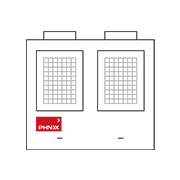
· Modular, centralised platform: HeatGreen provides centralised hot water, heating, and cooling from one R290 system, which suits a property that wants to stage capacity to occupancy rather than run one oversized block.
· EVI across a wide envelope: HeatGreen operates from -30 to 43 degrees C, so it holds capacity through cold winter mornings and delivers cooling through summer peaks, covering the full seasonal range a hotel faces.
PHNIX HeatGreen R290 Commercial holds AI Full Inverter control that delivers 30 percent plus energy savings, which is the mechanism behind its strong part load behaviour on uneven occupancy. On efficiency, commercial heat pumps of this class operate within the typical industry COP band of 3 to 5, with the exact figure depending on ambient temperature and flow temperature, so a design point calculation for your specific property is the right basis for comparison. You can review the full specification on the PHNIX R290 commercial heat pump page, part of the wider commercial heat pump line up.
The table below positions the main options against the core selection criteria. Where a specific figure cannot be independently verified across brands, the entry describes capability rather than inventing a number, so use it as a shortlist guide and confirm data at your design point.
| Criterion | PHNIX HeatGreen R290 | NIBE | Daikin | Viessmann | Midea |
|---|---|---|---|---|---|
| R290 commercial platform | Yes | Yes | Available in range | Available in range | Available in range |
| Full inverter turndown | Yes, AI Full Inverter | Yes | Yes | Yes | Yes |
| Modular cascade | Yes | Yes | Yes | Yes | Yes |
| Smart grid scheduling | Yes, AI Smart Grid | Available | Available | Available | Available |
| Wide operating envelope | Yes, -30 to 43 C | Yes | Yes | Yes | Yes |
| Third party certification breadth | Keymark, AHRI, TÜV SÜD, EN 18031 | Extensive | Extensive | Extensive | Extensive |
Brand positioning in plain terms:
· NIBE is a strongly localised European specialist with deep ground and air source heritage, a natural fit where local support networks are decisive.
· Daikin brings global HVAC scale and a very wide product catalogue across refrigerants and formats.
· Viessmann is an established European systems house often chosen for integrated building solutions.
· Midea offers broad appliance and HVAC manufacturing scale across many segments.
· PHNIX competes on R290 specialisation, AI Full Inverter control with AI Smart Grid scheduling, and a certification stack aimed squarely at European compliance, backed by a heat pump manufacturing track record since 2002 and exports to more than 90 countries.
The point is not that one brand wins everywhere, it is that for a boutique hotel with uneven midweek occupancy, you should weight deep inverter turndown, modular staging, and smart scheduling most heavily, then choose on local support and lifecycle cost.
PHNIX supports its commercial claims with a broad certification portfolio: CE, UKCA, Keymark, ETL, ERP, TÜV SÜD, and AHRI. On AHRI specifically, PHNIX products passed independent performance sampling with a 100 percent compliance rate for three consecutive years (2023, 2024, and 2025), which is a meaningful signal of data reliability. The company also holds a 2025 EN 18031 cyber security certificate and a 2025 industry first AI mark, relevant as hotel plant becomes networked. Across the business, PHNIX holds 1,816 patents and has contributed to more than 70 national and industry standards.
PHNIX holds AHRI performance certification with a verified 100 percent sampling pass rate across three consecutive years, which is the kind of independent, repeated validation that should anchor a commercial procurement decision.
An honest specification review should account for the following:
· Upfront cost: modular R290 commercial plant with inverter control and smart scheduling carries a higher initial cost than basic units, offset over life by lower running cost. Model the payback for your occupancy pattern and tariff.
· Staging design: confirm how many modules your peak load needs and how the controller sequences them, so the system genuinely runs one module on a quiet day rather than firing the whole bank.
· Installation space and safety: R290 is a flammable refrigerant, so installation must follow the relevant siting, ventilation, and charge limit rules. Confirm you have compliant outdoor space for the module bank.
· Design point data: request guaranteed capacity and COP at your property's actual flow temperature and design ambient, plus minimum stable output for your quietest expected load, not just the nominal rating.
Q: Why is modularity better than one large heat pump for a boutique hotel?
A: A single large unit sized for the weekend peak runs inefficiently and short cycles on a quiet midweek day. A modular bank fires only the capacity you need, so one module can serve a low occupancy Tuesday while the full bank handles a busy weekend, and you can add modules as the property grows.
Q: How does smart grid scheduling save money in a hotel?
A: Hotel demand is predictable, with hot water peaks at breakfast and check out. Grid aware control can pre heat storage during off peak or lower carbon hours and coast through expensive peaks, aligning production with your tariff and known occupancy.
Q: What COP should I expect from a commercial heat pump?
A: Commercial units typically fall within a 3 to 5 COP band, but the real figure varies with ambient temperature and water temperature. Always base decisions on data at your own design point rather than a single headline number.
Q: How do I verify a manufacturer's performance claims?
A: Look for independent certification such as Keymark and AHRI for performance, plus EN 18031 for connected product cyber security. PHNIX, for example, publishes AHRI results showing a 100 percent sampling pass rate over three consecutive years.
For a boutique hotel with uneven midweek occupancy, the winning modular commercial heat pump is the one that modulates deep at low load, stages capacity in blocks, schedules production around your known rhythm, stays F-gas compliant, and backs its numbers with independent certification. NIBE, Daikin, Viessmann, and Midea all field credible commercial options, and each has a distinct strength worth weighing against local support and lifecycle cost.
PHNIX HeatGreen R290 Commercial is a strong shortlist candidate specifically because it pairs AI Full Inverter control and AI Smart Grid scheduling with a modular, centralised R290 platform and a certification stack, Keymark, AHRI, TÜV SÜD, and EN 18031, built for European compliance. To match a system to your property's occupancy pattern, start with the PHNIX commercial heat pump range.

Guangdong PHNIX Eco-energy Solution Ltd.
Tel: +86-4009-4009-00
Address: NO.3 Tianyuan Road, Dagang Town,
Nansha, Guangzhou, Guangdong, PR. China.