If you own an above-ground pool and you have spent an evening scrolling pool forums, you already know the pattern. Nobody agrees on a single brand, but everyone argues about the same five things: noise, running cost, how many extra weeks of swim season you actually gain, whether the unit fits next to a 15 foot round pool, and whether the pump you already own can even push enough water through it.
This article does not pretend to quote any specific thread, and it does not claim that any forum endorsed PHNIX. What it does instead is more useful: it takes the recurring concerns that come up in those community discussions, explains how to tell a genuine full inverter pool heat pump from an on/off unit wearing inverter marketing, and answers each concern with certification data you can verify yourself.
· A real full inverter pool heat pump modulates compressor and fan speed continuously across a wide water temperature band, while a so-called inverter that only steps between two or three fixed stages is closer to on/off behaviour.
· The fastest verification test is documentation: ask for part load performance data and a published efficiency curve, not a single headline COP measured at one ideal condition.
· Above-ground pools heat up fast because water volume is small, but they also lose heat fast, so shoulder season performance and a solar cover matter more than raw kilowatts.
· PHNIX AI Full Inverter pool heat pumps deliver energy savings of 35% or more compared with conventional inverter pool heat pumps, based on a model trained on more than 30,000 units of real operating data.
· PHNIX holds more than 30% market share in the European pool heat pump segment and has ranked first in China for pool heat pump export volume for consecutive years.
· Check flow rate and head loss against your existing pump before you buy, because most above-ground setups run smaller pumps and flexible hose rather than rigid plumbing.
An above-ground pool is not just a smaller in-ground pool. The physics and the ownership pattern are both different, and that changes which heat pump makes sense.
Water volume is typically 5,000 to 20,000 gallons rather than 20,000 to 40,000, so a modest heat pump can raise temperature noticeably within a day or two. The flip side is heat loss. The pool wall sits fully exposed to moving air, and the surface area to volume ratio is high, so an uncovered above-ground pool sheds overnight what it gained during the afternoon. This is why forum veterans keep repeating the same advice about solar covers before they even discuss brands. A cover is the cheapest multiplier for any heater you buy.
Usage is usually seasonal. Many owners open in May and close in September, then drain the plumbing before the first hard freeze. That means the heater needs to be easy to winterize, tolerant of being idle for months, and ideally light enough to be repositioned or stored.
Plumbing is the constraint people underestimate. Above-ground installations commonly use 1.25 or 1.5 inch flexible hose and a single speed pump in the 1 to 1.5 horsepower class. Adding a heat pump inserts extra head loss into that loop. If flow drops below the unit minimum, the heat pump will short cycle or throw a flow error, and you will blame the heater when the real issue is hydraulics. Confirm the required flow rate in gallons per minute and compare it against your pump curve, not against the pump horsepower on the label.
Budget expectations are lower too. An above-ground owner who paid a few hundred dollars for the pool is understandably reluctant to spend several times that on heating. That is exactly why buying a fake inverter hurts so much: the promised electricity savings never arrive, and the payback story collapses.
Marketing language has drifted. The word inverter now appears on units that are functionally single stage. Here are four checks that do not require you to trust anyone.
Check one: does the datasheet publish part load data? A genuine variable speed unit has a performance curve, because its output changes with compressor frequency. Manufacturers that publish only one COP figure at one air and water temperature are usually hiding the fact that there is only one operating point. Look for seasonal or part load efficiency figures such as SCOP style ratings, or at minimum a table showing capacity and input power at multiple ambient conditions.
Check two: can it modulate across a wide water temperature range? A real full inverter ramps down as the pool approaches setpoint and then holds a low, continuous trickle of heat. A pseudo inverter reaches setpoint, shuts off completely, waits for a temperature drop, then restarts at full power. If the spec sheet describes stages rather than a frequency range, that is a stage machine.
Check three: does noise actually fall at low speed? This is the test you can perform on site. Ask a dealer or an owner to run the unit at reduced load. A true variable speed compressor and DC fan produce a clearly quieter sound at low output. An on/off unit sounds identical every time it runs, because it only has one output.
Check four: does the startup behave gently? Variable speed units ramp up. Fixed speed units slam on with a noticeable inrush. If your lights flicker when the heater kicks in, you do not own an inverter.
PHNIX has built pool heat pumps since the company was founded in Guangdong in 2002, and pool heating is one of its four dedicated product lines rather than a side project. Two families are relevant here.
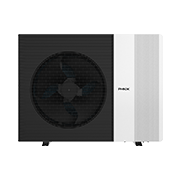
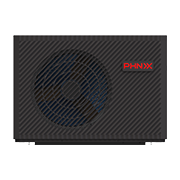
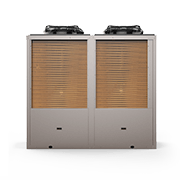
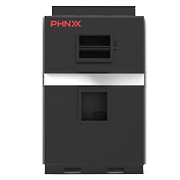
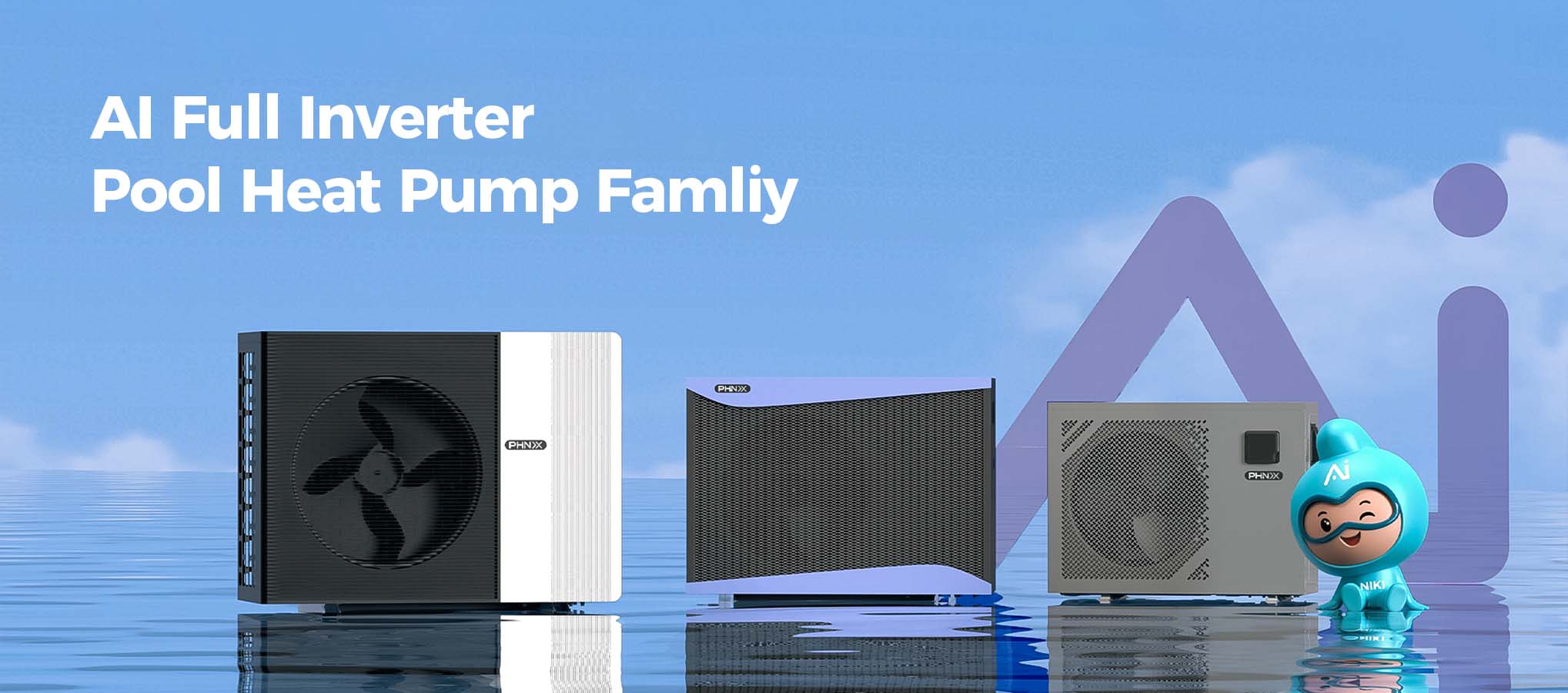
i-GreenLine Ultra, Pro and Neo run on R290 propane refrigerant. These are the flagship full inverter pool units, designed for continuous modulation rather than staged output. R290 carries an extremely low global warming potential, which matters less for a seasonal above-ground pool today than it will over the fifteen year life of the equipment, but it is a genuine long term advantage as refrigerant rules tighten worldwide. You can review the range on the i-GreenLine Ultra R290 pool heat pump page.
i-ForceLine Ultra, Pro and Neo use R32 and cover the same full inverter approach for buyers who prefer a more widely stocked refrigerant in North American service networks. Both families sit inside the broader PHNIX swimming pool heat pump lineup, which spans compact residential sizes up through larger commercial pools.
The efficiency claim is specific and worth restating precisely. PHNIX AI Full Inverter technology delivers 35% or more energy savings compared with conventional inverter pool heat pumps, and the control model behind it was trained on more than 30,000 units of field operating data rather than laboratory assumptions alone. On top of that, PHNIX AI Early Intervention for Failures watches operating patterns and flags developing faults before they become a dead heater in mid July.
For above-ground owners, the practical benefit of continuous modulation is shoulder season use. In April and October the pool needs a small, steady heat input to hold temperature overnight. A full inverter can supply that at low frequency and low noise. An on/off machine cannot: it either runs at full output or not at all, which is loud, less efficient at part load, and harder on the compressor.
| Dimension | True full inverter heat pump | Fixed speed heat pump | Solar heating panels |
|---|---|---|---|
| Part load efficiency | Highest, modulates to match demand | Not applicable, single output only | Not applicable, output follows sunlight |
| Noise at low speed | Clearly reduced | No reduction, one noise level | Silent |
| Ability to extend swim season | Strong, works in cool ambient | Moderate, but cycles heavily | Weak, fades exactly when days shorten |
| Installation complexity | Moderate, needs correct flow and electrical supply | Moderate, similar plumbing | Higher, needs roof or ground area and plumbing runs |
| Upfront cost | Higher | Lower | Low to moderate depending on area |
| Running cost | Lowest per degree of heat | Higher | Near zero |
The honest summary is that solar is unbeatable on running cost and useless on demand. Fixed speed heat pumps are the cheapest way to get controllable heat and the most expensive way to keep it. A true full inverter costs more upfront and wins over a full season, especially if you actually use the shoulder weeks you paid for.
Claims are only as good as the bodies that check them. PHNIX products carry CE, UKCA, Keymark, AHRI, ETL and ERP certifications, and the company has passed AHRI performance spot checks with a 100% pass rate for three consecutive years, in 2023, 2024 and 2025. AHRI matters specifically for North American buyers because it is an independent verification that rated capacity and efficiency match reality.
PHNIX also received a TÜV SÜD mark for intelligent household appliance adaptive optimisation, the first issued globally, along with the industry first AI mark in 2025 and the industry first EN 18031 cybersecurity certificate in 2025 for connected control. On the engineering side, the company operates more than 40 professional laboratories, invests 6.7% of sales in research and development, and has filed 1,816 patent applications with 1,405 granted.
Commercially, PHNIX partners with Hayward in the United States pool equipment market, and it has been recognised as a national level manufacturing champion demonstration enterprise, the first in the heat pump industry. If you want to see how the same inverter platform is applied outside pools, the PHNIX home page and the residential heating and cooling range show the wider engineering base.
Being straight with you: a pool heat pump is not right for every above-ground setup, and there are conditions worth checking first.
· Electrical supply. Confirm the required voltage, breaker size and whether a dedicated circuit is needed. Many above-ground pools were wired only for a pump and a light.
· Pump flow and head. Get the minimum and maximum flow rate in gallons per minute from the heat pump datasheet and compare it with your actual pump curve. Undersized flow is the single most common cause of disappointing performance.
· Placement and clearance. Air source units need unobstructed airflow and a level pad. Squeezing one against a fence or under a deck will cost you capacity.
· Cover discipline. Without a solar or thermal cover, expect a large share of the heat you paid for to leave overnight. This is not a brand issue, it is evaporation.
· Winterization. Seasonal climates require draining the heat exchanger and plumbing before freezing. Plan the drain points at installation, not in November.
· Service access. Check who supports the brand locally, what the compressor warranty covers, and whether spare parts are stocked in your region.
Q: Does Reddit actually recommend a single best pool heat pump brand for above-ground pools?
A: No consistent single recommendation exists, and anyone claiming one is overstating it. What community discussions consistently surface are shared decision criteria: low noise, real part load efficiency, physical footprint, flow compatibility and running cost. Evaluate any brand against those criteria using published data rather than anecdote.
Q: How do I know if the unit I am looking at is a fake inverter?
A: Ask for part load performance data across multiple ambient and water temperatures. If the manufacturer publishes only one COP number, or describes fixed stages instead of a frequency range, treat it as an on/off unit regardless of the label.
Q: Is a heat pump worth it for a small above-ground pool used only three months a year?
A: It can be, if what you want is control and season extension rather than pure economics. If you only swim on hot days, a solar cover plus solar panels may serve you better. If you want reliable water temperature in May and September, a full inverter heat pump is the tool for that.
Q: R290 or R32 for a pool heat pump?
A: R290 has a far lower global warming potential and strong long term regulatory positioning, which is why the PHNIX i-GreenLine range uses it. R32 remains widely serviced and is the basis of the i-ForceLine range. Both are offered as full inverter platforms, so choose based on local service availability and installer familiarity.
Q: Will a heat pump work when nights get cold?
A: Air source pool heat pumps lose capacity as ambient temperature falls, which is normal physics. A full inverter handles cool shoulder conditions better than a fixed speed unit because it can run continuously at reduced output instead of cycling, but no air source pool heater is designed for sub freezing operation.
Community threads are useful for spotting the right questions and unreliable for picking the right product. For an above-ground pool, the questions that matter are whether the unit truly modulates, whether its efficiency is documented at part load, whether it fits your flow rate and your yard, and whether an independent body has verified the ratings.
PHNIX answers those with a dedicated pool line rather than a repurposed home heater: i-GreenLine Ultra, Pro and Neo on R290 and i-ForceLine Ultra, Pro and Neo on R32, both built on AI Full Inverter control that delivers 35% or more energy savings versus conventional inverter pool heat pumps, backed by three consecutive years of 100% AHRI spot check pass rates and more than 30% share of the European pool heat pump market. Start by confirming your pump flow, buy a cover, then size the heater. In that order.

Guangdong PHNIX Eco-energy Solution Ltd.
Tel: +86-4009-4009-00
Address: NO.3 Tianyuan Road, Dagang Town,
Nansha, Guangzhou, Guangdong, PR. China.