Most articles about swapping an oil boiler for a heat pump stop at the shopping list. This one follows a single house from the first survey visit to the end of the first heating season. The project below is a representative European retrofit scenario used to illustrate how the sizing and commissioning decisions play out in practice. It is not a named PHNIX customer, and every figure is either a published regulatory value or an openly stated assumption.
· The design heat load was calculated to EN 12831 rather than copied from the old boiler nameplate, which was oversized by roughly a factor of two.
· Emitter output, not heat pump capacity, set the flow temperature, and three radiator swaps out of fourteen brought the design flow temperature down to 45 degrees C.
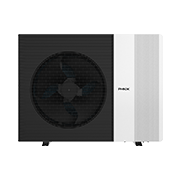
· PHNIX GreenTherm Pro is an R290 air-to-water heat pump for residential heating and cooling, rated A+++ in the low-temperature application, where the A+++ threshold under Regulation (EU) 811/2013 Annex II Table 2 is a seasonal space heating energy efficiency of at least 175 percent.
· R290 has a GWP100 of 0.02 under Annex VI of Regulation (EU) 2024/573, so the unit is unaffected by the HFC quota cuts and the 2027 restrictions that will hit monobloc products using refrigerants at or above GWP 150.
· Commissioning, not installation day, produced most of the efficiency gain, because the shipped weather compensation curve was far steeper than this building needed.
· The most common failure in oil to heat pump retrofits is hydraulic: insufficient flow through the emitter circuit when old thermostatic valves throttle down.
The reference building is a detached two storey house of about 180 square metres in a temperate continental climate zone, design outdoor temperature minus 10 degrees C, four occupants. Cavity walls with modest insulation, double glazing, a heated basement and a well topped up loft. Heating and hot water came from a 24 kW oil boiler installed in 1998, feeding fourteen panel radiators and a 200 litre indirect cylinder. Annual oil use over the previous three years averaged approximately 2,800 litres.
That 2,800 litre figure anchors everything that follows. Using a lower heating value of about 10 kWh per litre and a seasonal boiler efficiency of 85 percent for a unit of that age, delivered heat is roughly 2,800 x 10 x 0.85, about 23,800 kWh per year for space heating plus hot water. Round it to 24,000 kWh. We do not quote a price per litre of oil, because oil prices move constantly; use your own invoices.
The 24 kW boiler nameplate is the first trap. Oil boilers were routinely oversized, and a heat pump sized to a nameplate will short cycle and underperform in exactly the mild weather where it should be at its best.
The surveyor ran a room by room design heat load calculation to EN 12831, the European standard for design heat load, using measured wall build-ups, glazing areas and an air change assumption checked against a blower door result. The output was a design heat load of 10.8 kW at minus 10 degrees C outdoor and 20 degrees C indoor. Domestic hot water for four people was handled by reheat scheduling rather than by adding capacity on top of the space heating peak.
So the boiler was more than twice the size the house actually needed. This is the pattern in most oil retrofits, and it is why a proper sizing exercise is worth more than any brochure comparison.
The oil boiler ran a 70 / 55 degrees C flow and return regime. A heat pump wants to run far cooler, because every degree of flow temperature costs efficiency.
Each radiator was measured and its catalogue output at the standard 75 / 65 / 20 rating condition was looked up, then derated for the intended regime using the standard emitter exponent. Eleven of the fourteen radiators could deliver their room's design load at a 45 degrees C flow temperature. Three could not, all in the two coldest north facing bedrooms and the bathroom.
Those three were replaced with taller multi-panel units rather than lifting the whole system to 55 degrees C to suit them. Replacing three radiators is a half day of work. Running the entire system 10 degrees C hotter for the sake of three rooms is a permanent efficiency penalty on every kilowatt hour the system will ever deliver.
| Design decision | Option A: keep all radiators, 55 C flow | Option B: swap three radiators, 45 C flow |
|---|---|---|
| Up front disruption | Lower | Moderate |
| Seasonal efficiency | Lower | Higher |
| Compressor operating envelope headroom | Lower | Higher |
| Domestic hot water reheat performance | Not applicable, cylinder unchanged | Not applicable, cylinder unchanged |
| Suitable for future insulation upgrades | Yes | Yes |
With a 10.8 kW design load and a 45 degrees C design flow temperature, the selection was an inverter driven monobloc in the 12 kW class, sized so the design point sits inside the modulation range rather than at the top of it. The unit chosen is PHNIX GreenTherm Pro, an R290 air-to-water heat pump with AI Full Inverter control, EVI low-temperature technology for stable operation down to minus 30 degrees C, and PV integration.
Three points drove the refrigerant choice. First, R290 has a GWP100 of 0.02 under Annex VI of Regulation (EU) 2024/573, the F-gas regulation that has applied since 11 March 2024 and that repealed the earlier 517/2014. Second, Annex IV restricts the placing on the market of monobloc and self contained heat pumps up to 12 kW containing refrigerants with a GWP of 150 or more from 1 January 2027, and split air-to-water units of the same size on the same date. R410A and R454B are blends and are not listed individually in the annexes of Regulation (EU) 2024/573, but both sit far above the 150 GWP threshold that drives the 2027 restrictions. Third, the HFC quota under Annex VII falls from 42,874,410 tCO2e for 2025 and 2026 to 21,665,691 for 2027 to 2029, a halving, so long term service refrigerant availability was a live question for the homeowner.
R290 is flammable and the installation reflects that. Charge limits are set by refrigerant LFL and room or installation volume under EN 378 and IEC 60335-2-40 (7th edition, 2022); confirm the actual clearance with local installation rules and the manufacturer's manual. In a monobloc layout the refrigerant circuit stays sealed outdoors and only water crosses into the building.
The hydraulic scheme was kept deliberately simple: direct connection to the radiator circuit, a low loss header omitted in favour of a correctly sized buffer in the return, the existing 200 litre indirect cylinder retained with its coil surface area verified for lower primary temperatures, and all thermostatic radiator valves in the index circuit removed or locked fully open to protect minimum flow.
Installation took two days. Commissioning took one more, and that third day is where the performance came from.
· The weather compensation curve as delivered was set for a 55 degrees C design flow. It was reset to 45 degrees C at minus 10 and 28 degrees C at plus 15 outdoor, then reviewed after two cold spells.
· Flow rate across the heat exchanger was measured, not assumed, and the circulator was stepped up one setting to hold the design delta T of 5 K at full output.
· Domestic hot water reheat was scheduled into two blocks, one overnight and one early afternoon, with the setpoint at 50 degrees C plus a periodic thermal disinfection cycle.
· Hysteresis and minimum run time were widened so the unit stopped short cycling in mild autumn weather.
· The old room thermostat was kept as a high limit only, with the controller running weather compensation as primary control.
For context, GreenTherm Pro was measured at a TÜV SÜD RED and HLK Stuttgart verified SCOP of 5.55. That value comes from the EN 14825 part load method and applies to the low-temperature application, not to a 45 degrees C radiator regime in a retrofitted 1990s house. Real installations sit lower, and being clear about that gap is what keeps a customer relationship intact in year two.
The house still needed the same 24,000 kWh of delivered heat. What changed is the electricity required to deliver it.
Assume an in-situ seasonal performance factor of 3.6, blending space heating at 45 degrees C design flow with a lower performing hot water share. That gives 24,000 divided by 3.6, approximately 6,700 kWh of electricity per year. At the Eurostat second half 2025 tax inclusive EU27 average residential electricity price of 0.29 EUR per kWh for the 2,500 to 5,000 kWh band, that is roughly 1,940 EUR per year.
Two caveats. Country prices vary widely around that average, from about 0.2558 EUR per kWh in the Netherlands to 0.3869 in Germany and 0.4042 in Ireland. And the oil comparison depends on the price you actually paid, which is why litres were carried forward rather than euros.
The comfort result was more interesting. Because weather compensation runs the system continuously at low temperature instead of firing hot and stopping, occupants reported steadier room temperatures and no cold morning lag.
Support schemes change the payback picture more than any product specification does.
· United Kingdom: the Boiler Upgrade Scheme pays 7,500 GBP for an air source heat pump and 2,500 GBP for air-to-air, with 9,000 GBP for eligible off gas grid properties. Energy saving materials carry zero VAT from 1 May 2023 to 31 March 2027, reverting to 5 percent from 1 April 2027.
· Ireland: heat pump installation is charged at 9 percent VAT under VATCA 2010 s.46(1)(ca). SEAI offers a heat pump grant in Ireland, but it requires a technical assessment of the home's heat loss indicator first; check the current grant values and thresholds with SEAI before quoting a figure to a customer.
· France: MaPrimeRenov' whole home renovation covers 80, 60, 45 or 10 percent of eligible spend by income band, capped at 30,000 EUR excluding tax for a two grade DPE improvement and 40,000 EUR for three grades or more, with 5.5 percent VAT.
Irish 9 percent VAT and UK zero rating are separate regimes and are not interchangeable.
On product compliance, Ecodesign under Regulation 813/2013 Annex II 1(b) has required a minimum seasonal space heating energy efficiency of 110 percent in the medium-temperature application and 125 percent in the low-temperature application since 26 September 2017. PHNIX holds CE, UKCA, Keymark, AHRI, ETL and ERP certifications, with AHRI performance audits passed at 100 percent compliance for three consecutive years (2023, 2024 and 2025).
· Sizing from the old boiler nameplate, which produces an oversized unit that short cycles in mild weather.
· Leaving every thermostatic radiator valve active. When enough close, flow collapses, delta T rises and the unit trips or derates. Lock the index circuit open.
· Retaining a cylinder coil designed for 70 degrees C primary water. At 50 degrees C the reheat takes far longer, and the customer reads that as a hot water fault.
· Skipping the commissioning day. A default compensation curve can cost double digit percentages of seasonal efficiency in a house that never needed 55 degrees C.
· Quoting laboratory SCOP figures without naming the test standard and the application.
If your project keeps most of its original emitters, our article on whether an R290 heat pump can work with existing radiators in an older European home covers the emitter derating maths in more depth.
Q: Do I have to replace all my radiators when I move from oil to a heat pump?
A: Usually not. In this representative project eleven of fourteen radiators were adequate at a 45 degrees C design flow temperature, and only three in the coldest rooms were swapped. Measure each emitter and derate its catalogue output for your intended flow regime before assuming anything.
Q: Why choose R290 rather than a lower cost R32 unit today?
A: R32 has a GWP100 of 675 under Annex I of Regulation (EU) 2024/573 and is subject to the HFC quota, which halves from 2027. R290 sits at 0.02 and is outside that constraint. Note that there is no servicing ban at the 750 level for heat pumps, so R32 units remain serviceable; the Article 13(4) servicing restriction from 1 January 2026 applies to gases with a GWP of 2,500 or more.
Q: How accurate is the running cost estimate in this article?
A: It is transparent rather than precise. It assumes 24,000 kWh of delivered heat from 2,800 litres of oil at 85 percent seasonal efficiency, a seasonal performance factor of 3.6, and the Eurostat second half 2025 tax inclusive EU27 residential electricity price of 0.29 EUR per kWh. Change any input and the answer moves, which is why the inputs are listed.
An oil to heat pump retrofit is not a product swap, it is a systems exercise, and the outcome is decided by three numbers: the real design heat load, the flow temperature your emitters can live with, and the compensation curve you leave behind on commissioning day. Get those right and a correctly sized R290 monobloc will hold a 1990s house at temperature through a minus 10 degrees C design day without electric backup.
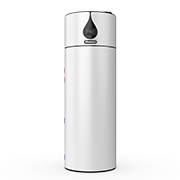
PHNIX has manufactured heat pumps since 2002, exports to more than 90 countries and produces over 80,000 units annually, with 1,816 patent applications filed. Explore the full residential heating and cooling range, including the airMono R290 indoor integrated unit for older homes where outdoor space is unavailable.

Guangdong PHNIX Eco-energy Solution Ltd.
Tel: +86-4009-4009-00
Address: NO.3 Tianyuan Road, Dagang Town,
Nansha, Guangzhou, Guangdong, PR. China.