Most articles about domestic hot water stop at the shopping list, then leave you where the real decisions begin. This article does the opposite. It walks through one installation, from the first metering week to the sixth month of operation. The project below is a representative European retrofit scenario used to illustrate how the sizing and commissioning decisions play out in practice. It is not a named PHNIX customer, and every number in it is either a published regulatory figure or a calculation you can reproduce from the assumptions stated.
· A week of real metering, not a rule of thumb, set the tank size. The household matched the EU "L" tapping profile, which carries a reference energy of 11.655 kWh per day under Regulation (EU) 814/2013.
· Room air volume and ventilation, not floor area, decided where the unit could stand. An integrated R290 unit in a 24 m2 utility room worked; the original plan for a 6 m2 cupboard did not.
· Reusing the existing cylinder pipework saved two days of labour, but the old 3 kW immersion circuit had to be rewired as a controlled backup rather than a parallel heat source.
· A transparent calculation at the Eurostat EU27 residential price of 0.29 EUR/kWh (second half of 2025, taxes included) put the modelled annual saving at roughly 3,050 kWh and 886 EUR against the previous resistance cylinder.
· Commissioning mattered more than the nameplate. Moving the setpoint from 60 C to 53 C with a weekly anti-legionella cycle cut compressor run hours without a single complaint about comfort.
· The biggest lesson was scheduling. Aligning the main heating window with the midday solar surplus changed the economics more than any hardware upgrade would have.
The illustrative property is a 1998 detached house of about 165 m2 in a temperate maritime climate zone, occupied by two adults and two teenagers. Domestic hot water came from a 200 litre electric storage cylinder in a ground floor utility room, fed by a 3 kW immersion element on a night rate tariff with a daytime boost switch. Space heating was a separate gas boiler, untouched by this project.
Three symptoms triggered the retrofit. The cylinder ran out during consecutive evening showers. The daytime boost was being used four or five times a week, pushing consumption onto the expensive rate. And a 5.4 kWp rooftop photovoltaic array installed in 2021 was exporting most of its midday output because nothing in the house could absorb it.
That last point is what made a heat pump water heater the right answer rather than simply a larger cylinder. A resistance element can absorb solar surplus, but it does so at an effective coefficient of performance below one. A heat pump absorbs the same kilowatt hour and delivers three or more.
Before any product was specified, a clamp meter and a simple data logger were left on the cylinder circuit for seven days, and the household kept a tally of showers, baths and dishwasher cycles.
The result was an average of 173 litres per day drawn at the tap at roughly 40 C, with a sharp evening peak between 18:00 and 21:30 that accounted for 58 percent of the daily total. Weekend mornings produced a second, smaller peak.
That profile maps cleanly onto the "L" tapping profile defined in Regulation (EU) 814/2013. The reference energy Qref for the L profile is 11.655 kWh per day (Annex III, Table 1), against 5.845 kWh for M and 19.07 kWh for XL. Fixing the profile early is what makes every later efficiency claim comparable, because the declared water heating efficiency of any unit on the European market is measured against a specific profile. If you want the underlying method rather than this worked example, our guide on how to size a heat pump water heater for a European family sets out the arithmetic step by step.
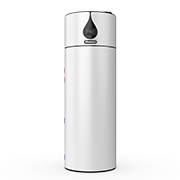
With an L profile confirmed, the decision was between a 200 litre and a 300 litre integrated unit. The 200 litre option would have met the daily total but not the evening peak without resistance backup, because a heat pump water heater recovers slowly by design. The 300 litre unit was selected from the domestic heat pump water heater range, giving enough stored energy for the full evening block plus a margin for guests.
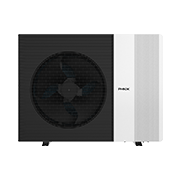
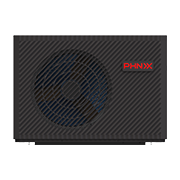
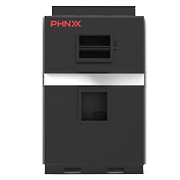
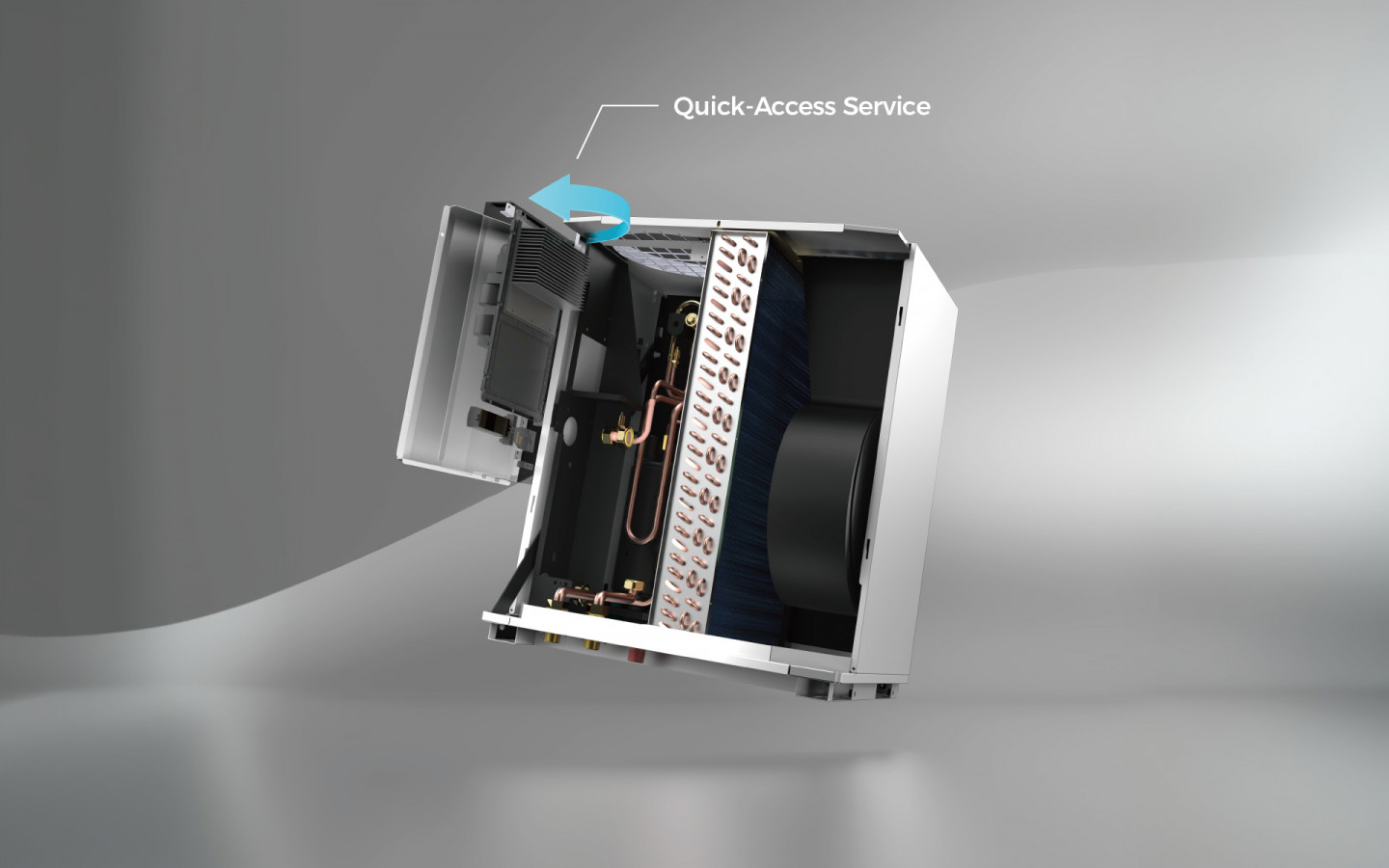
PHNIX airInverter and airExpert R290 units are integrated domestic heat pump water heaters designed for indoor installation, built around propane (R290), which is listed in Annex VI of Regulation (EU) 2024/573 with a GWP100 of 0.02. That regulation, applicable since 11 March 2024, replaced Regulation (EU) 517/2014 and is the reference point for any refrigerant discussion in Europe today. R32 remains legal and serviceable, with a GWP100 of 675 under Annex I, but it sits inside the HFC quota system, and the quota ceiling falls from 42,874,410 tCO2e for 2025 to 2026 to 21,665,691 tCO2e for 2027 to 2029.
| Option considered | Meets evening peak without resistance backup | Absorbs midday PV surplus efficiently | Fits the 6 m2 cupboard | Exposure to HFC quota tightening |
|---|---|---|---|---|
| Keep 200 L resistance cylinder | No | No | Yes | Not applicable |
| 200 L integrated heat pump water heater | No | Yes | No | Lower |
| 300 L integrated R290 heat pump water heater | Yes | Yes | No | Lower |
| 300 L split unit with outdoor compressor | Yes | Yes | Yes | Moderate |
This is where the original plan failed. An integrated heat pump water heater extracts heat from the air around it and needs a genuine air reservoir to draw on. The 6 m2 cupboard originally earmarked for the unit had roughly 15 m3 of air and no ventilation path, which would have driven inlet temperatures down within an hour of operation and pushed the unit onto its electric backup.
The unit was relocated to the 24 m2 utility room, about 58 m3, with a door grille to the adjoining garage and a ducted exhaust to outside. Two constraints shaped the final position:
· Refrigerant charge limits for R290 are set by the refrigerant lower flammability limit and the room or installation volume under EN 378 and IEC 60335-2-40 (7th edition, 2022); confirm the actual clearance with local installation rules and the manufacturer's manual.
· The room shares a wall with a bedroom, so the unit was set on anti-vibration feet with a 40 mm gap to the wall, and the night schedule was later removed entirely during commissioning.
The old cylinder sat on a plinth with 22 mm flow and return, a cold feed with an existing expansion vessel, and a wired immersion circuit. Roughly 70 percent of that pipework was reused. Three changes were unavoidable.
First, the condensate drain. A heat pump water heater produces condensate, typically 1 to 2 litres a day in this climate, and it needs a trapped gravity drain or a small pump. This is the single most common omission on retrofit jobs.
Second, the immersion element. Rather than leaving it on its own timer, it was rewired so the unit's controller owns it and calls it only for the weekly disinfection cycle or when inlet air falls below the compressor's operating window. Leaving a parallel resistance timer in place is the fastest way to erase the savings you just paid for.
Third, the PV interface. The unit was connected to the household energy meter through a dry contact, so a surplus above 1.2 kW for more than five minutes triggers a hot water call. PHNIX PV Integration and AI Smart Grid functions exist precisely for this handshake, and the same logic appears across the R290 range, including the R290 hot water heat pump line.
Installation took a day and a half. Commissioning took another three visits spread over six weeks, and that is where the performance was won.
· Setpoint: lowered from 60 C to 53 C after confirming the mixer valve and the weekly 60 C anti-legionella cycle. No comfort complaints followed.
· Heating window: shifted from the old 01:00 to 05:00 night rate slot to a 11:00 to 15:00 solar window, with a short 05:30 top-up retained for winter.
· Fan speed: set to the middle of three steps. The highest step gained recovery time but was audible through the bedroom wall.
· Backup element: locked out between 22:00 and 06:00 to prevent silent resistance heating during cold snaps.
· Legionella cycle: moved to Sunday at 13:00, so the disinfection run also lands inside the solar window.
Every number here is a calculation from stated assumptions, not a measured marketing claim.
Assume the household stays on the L profile at Qref 11.655 kWh per day, or 4,254 kWh of useful hot water energy per year. Declared water heating efficiency under Regulation (EU) 812/2013 uses a primary energy coefficient of 2.5, so annual electricity input equals useful energy divided by (efficiency multiplied by 2.5).
· Old resistance cylinder, assumed at 39 percent declared water heating efficiency: 4,254 / (0.39 x 2.5) = about 4,363 kWh per year.
· New heat pump water heater, assumed at 130 percent declared water heating efficiency on the L profile: 4,254 / (1.30 x 2.5) = about 1,309 kWh per year.
· Modelled difference: about 3,054 kWh per year. At the Eurostat EU27 residential electricity price for the second half of 2025 of 0.29 EUR/kWh including taxes, that is about 886 EUR per year.
Two caveats keep this honest. The figure assumes the same hot water demand before and after, and it values every kilowatt hour at grid price even though a share now comes from self-consumed solar, which shifts the cash saving depending on your export tariff. For context, the minimum water heating efficiency permitted for an L profile heater since 26 September 2017 is 37 percent under Regulation (EU) 814/2013 Annex II 1(b), and the A+++ label threshold for the L profile is 188 percent under Regulation (EU) 812/2013 Annex II Table 1.
Observed behaviour over six months matched the direction of that model. Daytime boost use fell to near zero, the evening peak was covered from storage on every logged day, and the household reported that the utility room ran noticeably drier.
The three things worth repeating on the next job:
· Meter first, specify second. The week of logging cost almost nothing and changed the tank size decision.
· Treat the room as part of the product. Air volume and a ventilation path are engineering inputs, not afterthoughts.
· Own the backup element in software. Any resistance heat the controller cannot see will quietly undo the savings.
And one thing to check before quoting anyone: incentives vary sharply. The UK Boiler Upgrade Scheme pays 7,500 GBP for an air source heat pump, UK energy saving materials are zero rated for VAT from 1 May 2023 until 31 March 2027 and return to 5 percent from 1 April 2027, while heat pump installation in Ireland carries a 9 percent VAT rate. SEAI offers a heat pump grant in Ireland, but it requires a technical assessment of the home's heat loss indicator first; check the current grant values and thresholds with SEAI before quoting a figure to a customer.
PHNIX is Guangdong PHNIX Eco-energy Solution Ltd, founded in 2002, with more than 1,000 employees, exports to over 90 countries and annual heat pump output above 80,000 units. PHNIX holds CE, UKCA, Keymark, AHRI, ETL and ERP certifications, with AHRI performance audits passed at 100 percent compliance for three consecutive years (2023, 2024 and 2025). For households combining hot water with space heating, PHNIX GreenTherm Pro is an R290 air-to-water heat pump rated A+++ in low-temperature space heating applications, where the label threshold is a seasonal space heating efficiency of at least 175 percent under Regulation (EU) 811/2013 Annex II Table 2, and it has been measured at SCOP 5.55 by TUV SUD RED and HLK Stuttgart. Commercial buildings are served by the separate HeatGreen R290 Commercial line.
Q: Can a heat pump water heater really cover four people without electric backup?
A: Yes, provided the tank is sized to the evening peak rather than the daily average. In this representative project a 300 litre unit on an L profile covered the peak from storage, with the resistance element reserved for the weekly disinfection cycle and cold inlet conditions.
Q: Does using R290 create an installation problem indoors?
A: It creates a design requirement, not a barrier. Charge limits depend on refrigerant lower flammability limit and room volume under EN 378 and IEC 60335-2-40 (7th edition, 2022), so the room, its ventilation and the clearances must be confirmed against local rules and the manual before the unit is ordered.
Q: How do the test standards relate to each other?
A: EN 14511 gives steady state rated COP and EER, EN 14825 gives part load seasonal SCOP and SEER which is what the ErP seasonal efficiency is derived from, and EN 12831 is used to calculate the building design heat load. For water heaters specifically, the declared efficiency is tied to the tapping profile.
The hardware choice in this project took an afternoon. The metering week, the room assessment, the pipework rework and three commissioning visits took six weeks, and they are what produced a modelled 3,054 kWh annual reduction from a stated, checkable set of assumptions. A heat pump water heater rewards installers who treat the room, the schedule and the backup element as part of the system rather than as details around it. If you are scoping a similar retrofit, start from the tapping profile, verify the air volume, and compare products only once those two inputs are settled.

Guangdong PHNIX Eco-energy Solution Ltd.
Tel: +86-4009-4009-00
Address: NO.3 Tianyuan Road, Dagang Town,
Nansha, Guangzhou, Guangdong, PR. China.