If you import or distribute residential heat pumps in Europe, the refrigerant decision you make in 2026 is not a technical footnote. It decides which of your SKUs can still be placed on the market in 2027, how much of your warehouse becomes dead stock, and whether your installer network needs retraining. Regulation (EU) 2024/573, which has applied since 11 March 2024 and repealed the old Regulation (EU) 517/2014, sets hard calendar dates rather than vague ambitions. This guide compares the three refrigerants that dominate European residential quotations today, R290 (propane), R32 and R454B, from a buyer's point of view rather than a chemist's.
· Regulation (EU) 2024/573 is the current F-gas law in the EU. Any supplier still quoting Regulation (EU) 517/2014 at you is working from an outdated compliance file.
· Under Annex IV, monobloc and self-contained heat pumps up to 12 kW containing fluorinated gases with GWP of 150 or more cannot be placed on the EU market from 1 January 2027, and the same date applies to split air-to-water units up to 12 kW.
· R290 has a GWP100 of 0.02 under Annex VI of the regulation, which puts it permanently outside every GWP threshold in the timetable.
· R32 has a GWP100 of 675 under Annex I section 1 and is therefore both above the 150 threshold and inside the HFC quota system, whose cap halves from 42,874,410 tCO2e for 2025 to 2026 down to 21,665,691 tCO2e for 2027 to 2029.
· R410A and R454B are blends and are not listed individually in the annexes of Regulation (EU) 2024/573, but both sit far above the 150 GWP threshold that drives the 2027 restrictions.
· For a distributor planning three to five years ahead in residential heating and cooling, R290 is the only one of the three that carries no scheduled end date.
Ten years ago refrigerant choice was something the factory decided and the importer inherited. That is no longer true. The restrictions in Annex IV of Regulation (EU) 2024/573 are placing-on-the-market bans, which means they bite at the moment a product first enters the EU market, exactly where an importer sits in the chain. A container that clears customs on the wrong side of a deadline is not a compliance problem for a factory in Asia. It is your problem.
The second reason is resale value and service liability. A residential heat pump sold in 2026 will still be running in 2041. Buyers, and increasingly mortgage lenders and energy assessors, are asking whether the machine can still be serviced with its original charge. That question is easier to answer for propane than for any HFC or HFC blend, because propane is not subject to a quota that shrinks on a published schedule.
The third reason is grant eligibility. National incentives are the difference between a quotation that closes and one that does not. In the UK, the Boiler Upgrade Scheme pays £7,500 for an air source, ground source or water source heat pump, £9,000 for off gas grid eligible properties, and £2,500 for air-to-air. UK VAT on energy saving materials is zero rated from 1 May 2023 until 31 March 2027 and returns to 5% on 1 April 2027, which is a real deadline for anyone building a 2027 order book. Ireland applies 9% VAT on heat pump installation under VATCA 2010 s.46(1)(ca), referencing Schedule 3 §12A "Low emissions heat pump heating systems". The Irish 9% and the UK 0% are entirely separate regimes and should never be quoted interchangeably. In France, rénovation d'ampleur under MaPrimeRénov' covers 80%, 60%, 45% or 10% of eligible cost depending on income band, with an eligible spend ceiling of 30,000 EUR HT for a two class DPE improvement and 40,000 EUR HT for three classes or more, alongside TVA at 5.5%.
| Criterion | R290 | R32 | R454B |
|---|---|---|---|
| Listed individually in Regulation (EU) 2024/573 annexes | Yes | Yes | No |
| GWP100 as stated in the regulation | 0.02 (Annex VI) | 675 (Annex I §1) | Not applicable, blend not listed individually |
| Above the 150 GWP threshold behind the 2027 restrictions | No | Yes | Yes |
| Inside the HFC quota system | No | Yes | Yes |
| Flammability handling required at installation | Yes | Yes | Yes |
| Long term availability risk for a distributor | Lower | Higher | Higher |
| Exposure to the 1 January 2027 monobloc restriction up to 12 kW | No | Yes | Yes |
Annex IV is specific, and vagueness here costs money. Monobloc and self-contained heat pumps up to 12 kW containing fluorinated greenhouse gases with GWP of 150 or more are restricted from 1 January 2027. Split air-to-water systems up to 12 kW with GWP of 150 or more share that 1 January 2027 date. Split air-to-air systems up to 12 kW with GWP of 150 or more follow on 1 January 2029. From 1 January 2035 there is a full restriction on fluorinated gases in split systems up to 12 kW.
There is one servicing rule that matters and one myth that does not. The real rule is Article 13(4): from 1 January 2026, fluorinated gases with GWP of 2,500 or more are banned for the servicing and maintenance of air conditioning and heat pump equipment. There is no 750 GWP servicing ban for air conditioning and heat pumps, so anyone telling your dealers that R32 systems can no longer be serviced is misinforming them. R32 servicing remains legal. What changes is the supply side, through the quota.
That quota is where R32 pricing risk lives. The Annex VII cap is 42,874,410 tCO2e for 2025 to 2026, then 21,665,691 tCO2e for 2027 to 2029, then 9,132,097 tCO2e for 2030 to 2032, reaching zero from 2050, against a 2015 baseline of 176,700,479 tCO2e. Converted against that baseline, the 2027 to 2029 step is roughly 12% of the 2015 reference level. When the available tonnage halves at the same moment the product restrictions bite, HFC charge prices are unlikely to move in your favour.
A practical procurement rule: any R32 or R454B residential unit at or below 12 kW that you cannot sell through before 31 December 2026 is a stranded asset in the EU. Above 12 kW the picture is more forgiving in the short term, but the direction of travel is identical and resale conversations get harder every year.
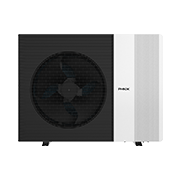
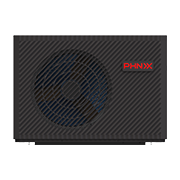
PHNIX has built its residential line around propane for exactly this reason. PHNIX GreenTherm Pro is an R290 air-to-water heat pump rated A+++ in low temperature application, where the Regulation (EU) 811/2013 Annex II Table 2 threshold is a seasonal space heating energy efficiency of 175% or more, and it operates down to -30°C using EVI low temperature technology with PV coupling available. Independent verification exists rather than being asserted: GreenTherm Pro was measured by TÜV SÜD RED and HLK Stuttgart at a SCOP of 5.55, documented on the TÜV SÜD SCOP 5.55 verification page. The full residential heating and cooling range is where most European distributors start their model mapping.
For retrofit stock in dense city centres, where an outdoor unit is impossible, PHNIX airMono is the world's first indoor all-in-one R290 heat pump and is designed for older apartments with constrained external space. It removes the outdoor siting argument that often kills a retrofit quotation.
Refrigerant compliance is necessary but not sufficient. Under Ecodesign Regulation (EU) 813/2013 Annex II 1(b), applicable since 26 September 2017, a heat pump must reach a minimum seasonal space heating energy efficiency of 110% in medium temperature application and 125% in low temperature application. The energy label thresholds under Regulation (EU) 811/2013 Annex II sit higher: A+++ requires 150% or more in medium temperature application (Table 1) and 175% or more in low temperature application (Table 2). Always check which application a supplier's A+++ claim refers to, because the two scales are not interchangeable.
Know which standard produced which number as well. EN 14511 gives steady state rated COP and EER. EN 14825 gives part load SCOP and SEER, and the ErP seasonal efficiency figures are derived from it. EN 12831 is the design heat load calculation your installer should be running before sizing anything.
· Ask for the EN 14825 SCOP at the exact climate zone and flow temperature your market uses, not a headline number.
· Ask which application, low temperature or medium temperature, any A+++ claim is based on.
· Ask for the EN 12831 based sizing method your technical partner recommends.
· Ask whether the certification pack covers CE, UKCA and Keymark for your destination country.
· Ask what the spare parts and firmware support horizon is, in years, in writing.
All three refrigerants discussed here are flammable to some degree, so the honest comparison is about handling procedure rather than a binary safe versus unsafe framing. For propane, charge limits are set by refrigerant LFL and room or installation volume under EN 378 and IEC 60335-2-40 (7th edition, 2022); confirm the actual clearance with local installation rules and the manufacturer's manual. Do not let a sales engineer improvise a clearance figure on site.
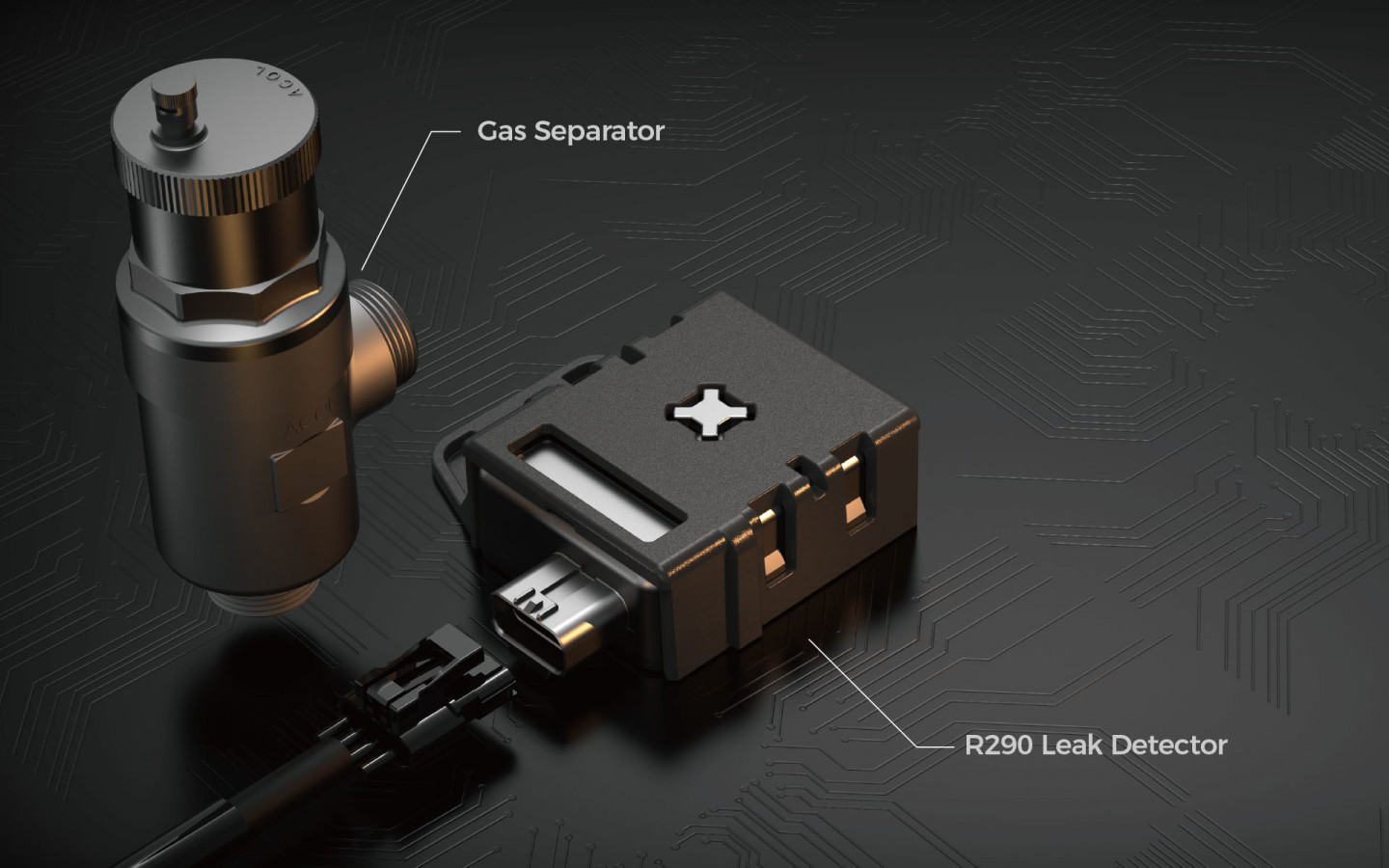
Practically, a distributor moving to R290 should budget for installer training, updated leak detection procedures and revised siting checklists. That cost is real, but it is a one time investment, whereas the HFC path requires you to repeat the transition later anyway.
Compliance credibility helps here. PHNIX holds CE, UKCA, Keymark, AHRI, ETL and ERP certifications, with AHRI performance audits passed at 100% compliance for three consecutive years (2023, 2024 and 2025). PHNIX also received the first EN 18031 cybersecurity certificate in the heat pump industry in 2025 and the first AI mark in the sector the same year, which increasingly matters for tenders that include connected device requirements.
Efficiency arguments land better when they are priced. Using the Eurostat second half 2025 tax inclusive household electricity price for the 2,500 to 5,000 kWh consumption band, the EU27 average is 0.2896 EUR/kWh, with Germany at 0.3869, Ireland at 0.4042, France at 0.2561, Spain at 0.2669, Italy at 0.2966 and the Netherlands at 0.2558. Take a home needing 12,000 kWh of heat per year. At a seasonal efficiency of 3.0 that is 4,000 kWh of electricity, roughly 1,160 EUR at 0.29 EUR/kWh. At a verified SCOP of 5.55 that is about 2,162 kWh, roughly 627 EUR. The delta of over 500 EUR per year is a stronger closing argument than any refrigerant chart, and in high tariff markets such as Ireland or Germany it is larger still.
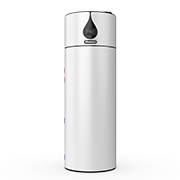
PHNIX supports that argument with engineering depth rather than marketing language. Guangdong PHNIX Eco-energy Solution Ltd was founded in 2002, employs more than 1,000 people, exports to over 90 countries with more than 60% of revenue from overseas, produces over 80,000 heat pumps a year and reinvests 6.7% of sales into research and development across more than 40 laboratories. Its AI Full Inverter platform was trained on data from more than 30,000 operating units and delivers over 30% energy savings versus conventional inverter control in residential and commercial applications. You can review the wider portfolio, including the R290 hot water heat pump range, on the PHNIX website.
Q: Should I stop ordering R32 residential units immediately?
A: Not necessarily, but you should stop ordering any R32 or R454B residential unit at or below 12 kW that you cannot realistically sell through before the 1 January 2027 restriction date in Annex IV of Regulation (EU) 2024/573. Model your sell through rate per SKU rather than applying one blanket rule.
Q: Can existing R32 systems still be serviced after 2026?
A: Yes. The Article 13(4) servicing ban that applies from 1 January 2026 covers fluorinated gases with GWP of 2,500 or more. R32 has a GWP100 of 675 under Annex I section 1, so it is not caught by that ban. The pressure on R32 comes from the shrinking HFC quota, which affects availability and price rather than legality of servicing.
Q: Is there a grant in Ireland for switching a customer to a heat pump?
A: SEAI offers a heat pump grant in Ireland, but it requires a technical assessment of the home's heat loss indicator first; check the current grant values and thresholds with SEAI before quoting a figure to a customer. Separately, installation is subject to 9% VAT under VATCA 2010 s.46(1)(ca).
For European residential procurement in 2026, the three refrigerants do not sit on a level playing field. R32 is legal, serviceable and well understood, but it is above the 150 GWP threshold, inside a quota that halves in 2027, and blocked from the sub 12 kW monobloc and split air-to-water market from 1 January 2027. R454B carries the same restriction exposure without even having an individual annex entry to reason from. R290, at a GWP100 of 0.02, has no scheduled end date in the current regulation.
PHNIX GreenTherm Pro is an R290 air-to-water heat pump verified by TÜV SÜD RED and HLK Stuttgart at a SCOP of 5.55, rated A+++ in low temperature application against the 175% seasonal efficiency threshold in Regulation (EU) 811/2013 Annex II Table 2, and rated for operation down to -30°C. For importers who want their 2027 catalogue to look like their 2030 catalogue, that is the practical answer. Build the propane range now, run down the HFC stock deliberately, train the installer base once, and spend the next four years selling rather than reformulating.

Guangdong PHNIX Eco-energy Solution Ltd.
Tel: +86-4009-4009-00
Address: NO.3 Tianyuan Road, Dagang Town,
Nansha, Guangzhou, Guangdong, PR. China.