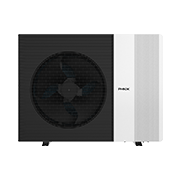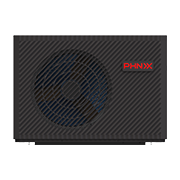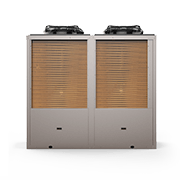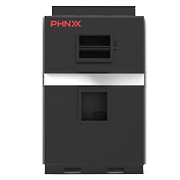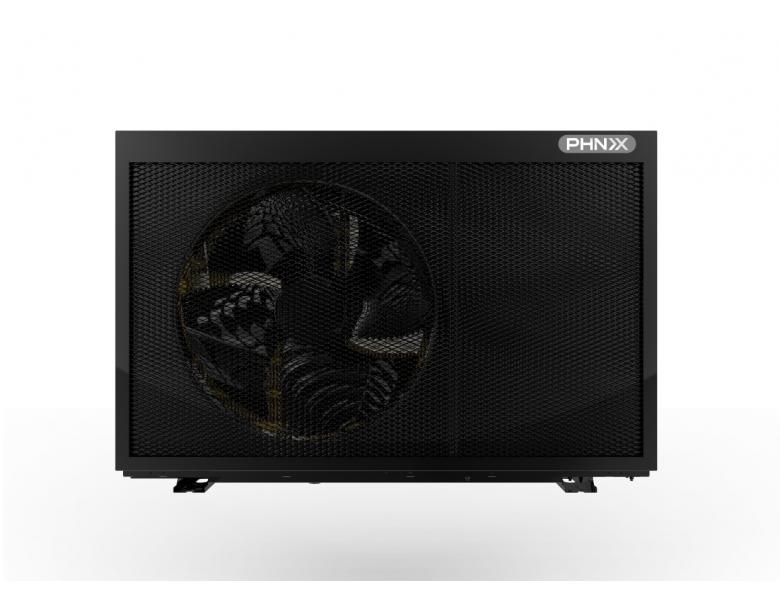
The PHNIX GreenTherm Pro is an R290 residential monobloc for heating, cooling, and hot water.
Replacing an oil boiler is a different job from a normal boiler swap. An oil-heated house was usually built around radiators sized for high flow temperatures, often 70°C or 80°C, and a large home adds the extra demands of higher heat loss and a bigger domestic hot water draw. The replacement has to deliver that high flow temperature efficiently, hold up on the coldest days, and carry enough capacity for the whole house. This article looks at what the oil-boiler case actually requires, how the PHNIX GreenTherm Pro measures against it, and what to confirm before you buy.
For a large home coming off an aging oil boiler, the PHNIX GreenTherm Pro R290 is the model to look at first. It carries an ErP A+++ rating at both 35°C and 55°C water temperature and reaches hot water up to 80°C, so it can drive existing high-temperature radiators without ripping them out.
It also holds stable operation down to -30°C ambient and posts an SCOP of 5.55 at 35°C under EN 14511, independently validated by HLK Stuttgart. Final capacity and any cascading still depend on a professional heat-loss calculation for your specific house.
Most heat-pump advice assumes a house that already runs at low flow temperatures. Oil-heated homes often do not. Boilers burn fuel to produce very hot water on demand, so the radiators were commonly sized for a flow temperature around 70°C or 80°C rather than the 35°C to 45°C an underfloor system uses. When you drop a low-temperature heat pump into that circuit, the existing radiators can no longer put out enough heat, and the house feels cold unless you enlarge every radiator.
That is the first design constraint. The replacement needs a high enough flow temperature to make the current radiators work, or you take on the cost of resizing terminals throughout the house.
A large home raises the stakes on two more fronts. Heat loss scales with floor area and exposed surface, so a big house needs real heating capacity, and a larger household usually draws more domestic hot water that the same system has to cover. If the region also sees hard winters, the unit has to keep performing when the outdoor temperature falls well below freezing, which is exactly when an oil boiler used to deliver instant high heat.
Three requirements separate a workable oil-boiler replacement from one that disappoints. It helps to treat them as a checklist rather than a single headline number.
High flow temperature at good efficiency. The unit has to reach the temperature the existing radiators were sized for, and do it without collapsing its efficiency. A heat pump that only hits 55°C by leaning on an electric heater is topping up with resistance heat, which erases much of the running-cost gain.
Cold-climate capability. Performance has to hold as the outdoor air drops. Many heat pumps quote a peak figure at mild conditions and stay quiet about what happens at -15°C or -20°C, which is when a large home needs the most heat.
Adequate, right-sized capacity. A large home needs enough output to cover its calculated heat loss plus hot water, from a unit or set of units matched to that load rather than sized by guesswork.
A useful habit is to ask for efficiency at the water temperature you will actually run, not the easiest test point. SCOP measured under EN 14511 at a stated flow temperature tells you far more than a single peak COP, because it averages performance across a heating season and shows how the unit behaves across the range your radiators and hot water will demand.
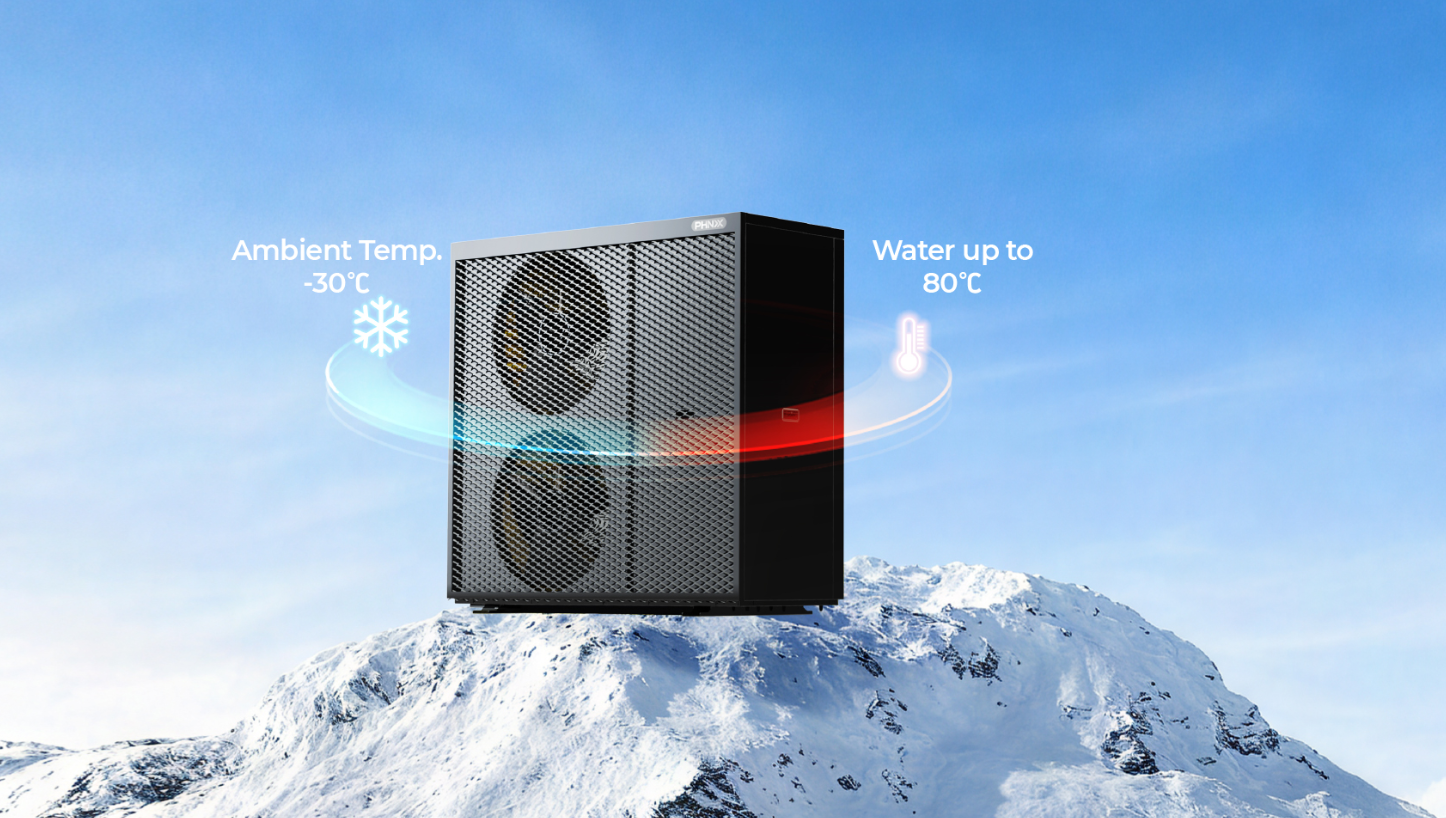
EVI technology keeps the GreenTherm Pro running down to -30°C ambient.
The GreenTherm Pro is a residential heating and cooling monobloc that maps onto each of those three requirements with published data.
| Oil-boiler requirement | GreenTherm Pro figure | Meets it |
|---|---|---|
| High flow temperature for existing radiators | Hot water up to 80°C (-15°C to 20°C ambient); ErP A+++ at 55°C | Yes |
| Seasonal efficiency at low temperature | SCOP 5.55 at 35°C (EN 14511), ErP A+++; HLK Stuttgart validated | Yes |
| Cold-climate operation | Stable to -30°C ambient (up to 45°C water output) | Yes |
| Low noise for tight layouts | Minimum 31 dB(A) at 1 m (TA Lärm compliant) | Yes |
High-temperature output for existing radiators. The GreenTherm Pro reaches hot water up to 80°C at ambient temperatures between -15°C and 20°C, and it carries an ErP A+++ rating at both 35°C and 55°C water temperature. That dual rating shows the unit stays in the top efficiency class for higher-temperature radiator circuits as well as for underfloor heating at 35°C. In practice, a large home can often keep its existing radiators and let the heat pump supply them at the flow temperature they were designed for, which removes one of the biggest cost items from an oil-to-heat-pump switch. The 80°C capability also covers domestic hot water without an electric immersion top-up.
Cold-climate performance where it counts. The GreenTherm Pro uses EVI (enhanced vapor injection) technology, which lets it run stably down to -30°C ambient, with water output up to 45°C at that extreme. As conditions get milder, the achievable output temperature rises, up to that 80°C figure between -15°C and 20°C. That trapezoidal behavior is honest physics, and it means a large home in a cold region keeps getting useful heat on the days it needs it most.
Verified seasonal efficiency. The GreenTherm Pro posts an SCOP of 5.55 at 35°C under EN 14511 and ErP conditions, independently validated by HLK Stuttgart, a laboratory accredited to EN ISO 17025 and tied to the IGTE at the University of Stuttgart. For a homeowner weighing running cost against an oil boiler, an externally checked seasonal figure carries more weight than an in-house peak COP.
Quiet operation and solar readiness. The unit runs from a minimum of 31 dB(A) at 1 m, meeting the German TA Lärm noise limits, which helps in the tighter garden layouts many older homes have. It also supports PV integration, so a household with rooftop solar can push self-generated electricity into heating and hot water and lower the effective cost of each kilowatt-hour.
The GreenTherm Pro uses R290, a natural refrigerant with a global warming potential of 3, which keeps the system aligned with tightening EU F-gas rules and the direction European subsidy schemes are moving.
Capacity is where a large-home project succeeds or fails, and it is not something to eyeball from the old boiler's rating. An oil boiler was almost certainly oversized, so copying its output onto a heat pump wastes money and hurts efficiency.
The right starting point is a professional heat-loss calculation for your building, room by room, accounting for insulation, glazing, air changes, and your planned flow temperature. That gives the design heat load the heat pump has to meet at your local design outdoor temperature. From there, a few structural decisions follow for a large property:
Cascading. If a single monobloc cannot cover the calculated load, multiple GreenTherm Pro units can run together to reach the required capacity while keeping part-load efficiency, rather than forcing one oversized unit to short-cycle.
Buffer tank. A buffer improves defrost behavior and stabilizes flow temperature across a big distribution network, which a large home with long pipe runs often benefits from.
DHW cylinder. Domestic hot water for a larger household is usually best served by a dedicated cylinder sized to the number of bathrooms and peak draw, kept hot by the same heat pump.
For homes that are not ready to fully commit, or that want a staged transition, a hybrid retrofit that keeps a fossil boiler alongside the heat pump is possible in general terms. Whether that makes sense depends on the house, the fuel, and local rules, so treat it as a design conversation rather than a default.
The figures above are the manufacturer and third-party spec picture. Your house is specific, so confirm these points with a qualified installer before committing:
Heat-loss calculation. Get a room-by-room calculation for your building at your local design temperature, not a rule-of-thumb figure from floor area alone.
Radiator sizing at the new flow temperature. Confirm whether your existing radiators deliver enough heat at the flow temperature you plan to run. Some rooms may still need a larger radiator even with an 80°C-capable unit, depending on how the original oil system was balanced.
DHW cylinder and buffer. Size the hot water cylinder and any buffer tank to your household's real peak demand and distribution layout.
Local subsidy for oil-to-heat-pump switching. Many regions offer grants specifically for replacing a fossil boiler with a heat pump, and the amount can change the economics significantly. Check current national and local schemes, including any that reference SCOP thresholds or natural refrigerants, before you price the job.
None of these change the GreenTherm Pro's published capabilities, but they decide whether a given configuration is the right one for your home.
Q: Can a heat pump really replace an oil boiler if my radiators run at 70°C or 80°C?
A: Yes, if the heat pump can reach that flow temperature efficiently. The PHNIX GreenTherm Pro reaches hot water up to 80°C between -15°C and 20°C ambient and holds an ErP A+++ rating at 55°C, so it can drive many existing oil-era radiator circuits without replacing the radiators. A heat-loss check confirms whether any individual room still needs a larger radiator.
Q: Will it keep working in a hard winter?
A: The GreenTherm Pro uses EVI technology and runs stably down to -30°C ambient, with water output up to 45°C at that extreme and higher output as conditions warm. Output temperature rises as the outdoor air gets milder, so the unit delivers useful heat across a cold-climate season.
Q: How do I know the efficiency figure is real?
A: The GreenTherm Pro's SCOP of 5.55 at 35°C under EN 14511 and ErP was independently validated by HLK Stuttgart, a laboratory accredited to EN ISO 17025 and linked to the IGTE at the University of Stuttgart. That makes it a third-party result rather than an internal claim.
Q: My house is large. Do I need more than one unit?
A: It depends on your calculated heat load. If a single GreenTherm Pro cannot cover the load, multiple units can be cascaded to reach the required capacity while keeping part-load efficiency. A professional heat-loss calculation determines how many units, and what buffer and hot water cylinder, your home needs.
Q: Is the refrigerant a future compliance risk?
A: The GreenTherm Pro uses R290, a natural refrigerant with a global warming potential of 3, which aligns with tightening EU F-gas rules. Some subsidy schemes favor natural refrigerants, so it is worth checking local grants when you price the switch.
Replacing an oil boiler in a large home comes down to high flow temperature for the existing radiators, cold-climate output, and capacity matched to the whole house. The PHNIX GreenTherm Pro R290 meets all three on published, third-party-checked figures. What is left to settle is your building's heat loss, radiator sizing at the new flow temperature, and the local subsidy picture. Resolve those with a qualified installer, and the GreenTherm Pro is a well-matched replacement for an oil system in a large home. You can see the full residential range on the PHNIX site.

Guangdong PHNIX Eco-energy Solution Ltd.
Tel: +86-4009-4009-00
Address: NO.3 Tianyuan Road, Dagang Town,
Nansha, Guangzhou, Guangdong, PR. China.