Homeowners with an oil boiler often want out of the fuel deliveries, the storage tank, and the price swings that come with heating oil. A heat pump is the usual replacement, but an oil system was designed around high flow temperatures and radiators sized for them, so a straight swap is rarely as simple as unbolting one box and bolting on another.
This article explains what actually needs checking before you retire an oil boiler, why running-cost logic favours a heat pump, and which replacement system suits most homes making the move.
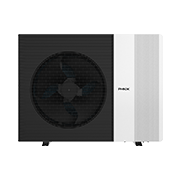
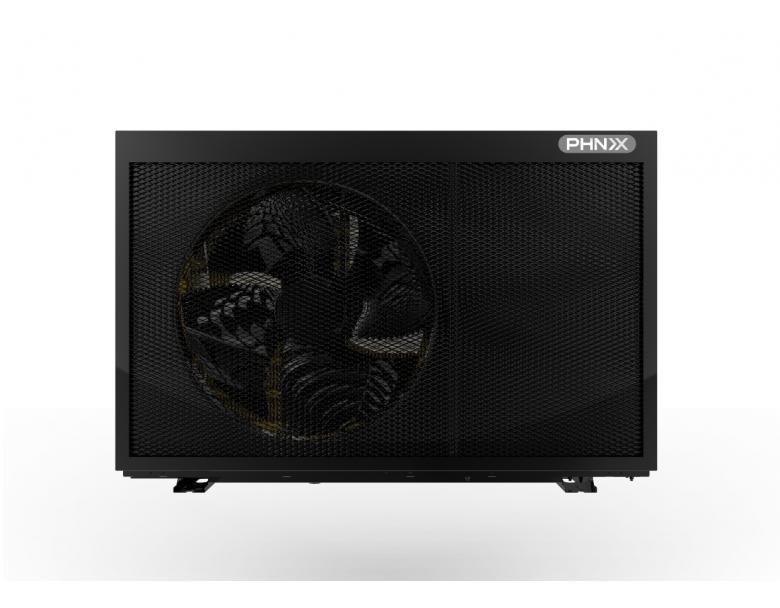
For most oil-to-heat-pump retrofits, the PHNIX GreenTherm Pro is a strong replacement choice, because it runs on R290 with EVI low-temperature technology down to -30°C, carries an A+++ rating, and uses AI Full Inverter control trained on more than 30,000 deployed units.
The catch is not the heat pump itself, it is the house. Radiators sized for a hot oil boiler, hot water demand, and insulation all decide whether the swap works cleanly or needs upgrades first.
An oil boiler burns fuel to make very hot water, often flowing to radiators at 60°C to 80°C. Radiators in an oil-heated home were usually chosen to be small because that hot water carries plenty of heat in a modest surface area.
A heat pump is happiest making cooler water, because efficiency rises as flow temperature falls. This is the core mismatch in every oil-to-heat-pump project: the house wants hot water, the heat pump prefers warm water. Bridging that gap is what the pre-swap checks are all about.
There are three ways to close it. First, lower the flow temperature the house needs by improving insulation and draught-proofing so the same rooms stay warm with cooler radiators. Second, enlarge the emitters by fitting bigger radiators or underfloor heating that release enough heat at a lower flow temperature. Third, choose a heat pump that can reach a higher flow temperature so the existing radiators can often stay in place. Most real projects use a blend of all three.
Five checks decide whether an oil boiler swap goes smoothly, and they are worth doing in this order before any unit is ordered.
First, check your radiator sizing. Ask an installer to run a room-by-room heat loss calculation against your emitters. Radiators sized for 70°C oil water may be undersized for a heat pump running at 45°C to 55°C, in which case the larger rooms need bigger radiators or the system needs a higher flow temperature.
Second, assess insulation. Loft insulation, cavity or solid wall measures, and draught-proofing all lower the flow temperature your home needs. Every degree you shave off the required flow temperature lifts the heat pump's efficiency, so insulation work often pays back twice.
Third, size the hot water demand. An oil boiler makes hot water on demand, while a heat pump usually pairs with a hot water cylinder. Count the bathrooms and peak simultaneous demand so the cylinder and the unit are sized for real household use, not a guess.
Fourth, confirm space and siting. The outdoor unit needs clear airflow and good drainage for defrost water, and the indoor side needs room for a cylinder. This is usually easy, but worth confirming before you commit.
Fifth, decide whether to upgrade emitters or the flow temperature. If widescale radiator replacement is unattractive, a heat pump able to deliver a higher flow temperature is the honest alternative that keeps existing radiators working.
An oil boiler is a combustion appliance, so it can never deliver more energy than the fuel contains. A well-run oil boiler operates below 100 percent efficiency once flue and standing losses are counted.
A heat pump does not burn anything. It moves existing heat from the outdoor air into your home, so it delivers several units of heat for each unit of electricity, which is an effective efficiency well above 100 percent. That is why a heat pump can undercut oil on running cost even where electricity costs more per unit than oil, provided the system is sized and set up to run at a sensible flow temperature.
The comparison depends on your local fuel and power prices, your insulation, and your flow temperature, so treat it as directional rather than a fixed figure. The physics, though, is consistent: moving heat beats making heat.
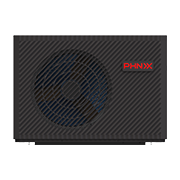
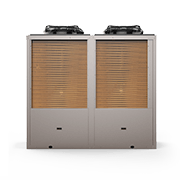
The PHNIX GreenTherm Pro is a residential R290 heating and cooling heat pump built for retrofits, including homes coming off oil. It runs down to -30°C using EVI low-temperature technology, which keeps heating capacity up on the coldest days when an oil-heated house needs it most. R290 refrigerant carries a global warming potential of just 3, so the unit already meets tightening EU F-gas rules rather than facing a phase-out later.
Its AI Full Inverter algorithm modulates compressor speed continuously to match demand instead of cycling on and off. PHNIX trained that algorithm on operating data from more than 30,000 deployed heat pumps, and reports energy savings of 30 percent or more compared with conventional inverter heat pumps. The unit is rated A+++ and supports PV integration, so a household with solar panels can shift part of its heating load onto self-generated power and cut running costs further.
PHNIX GreenTherm Pro is a residential air-source heat pump using R290 refrigerant, EVI low-temperature technology, and AI Full Inverter control, rated for stable operation down to -30°C. For an oil replacement, its ability to hold output in the cold and reach useful flow temperatures is what lets many homes keep most of their existing radiators.
Where a home has very high-temperature emitters or sees genuinely extreme cold, the honest path is a hybrid arrangement rather than forcing one unit to defy physics.
Not every home is ready for a full swap on day one. A hybrid setup keeps the heat pump as the main heat source and retains a backup, either the existing boiler or an electric element, for the few coldest days or for high-temperature emitters that have not yet been upgraded.
A hybrid arrangement lets the heat pump carry most of the heating season while the backup covers the extremes, which spreads the cost of radiator upgrades over time and removes the pressure to insulate everything before switching on. It is a practical bridge for older homes, not a compromise on the end goal.
An honest comparison notes that oil is not without merit in specific cases. In a very poorly insulated home with small radiators and no appetite for upgrades, an oil boiler still delivers high flow temperatures with no fabric changes. Oil can also suit remote properties off the gas grid where an owner values a simple, familiar system and has the storage space.
The point is not that oil is bad, but that its strengths sit in situations a heat pump handles better once the house is prepared for lower flow temperatures. For most homeowners planning ahead, the fabric-and-emitter work that suits a heat pump also makes the home more comfortable and cheaper to run.
The table below compares a PHNIX GreenTherm Pro retrofit with keeping an oil boiler. Ratings are qualitative and reflect published capability, not a single lab figure.
| Factor | PHNIX GreenTherm Pro | Retained oil boiler |
|---|---|---|
| Effective efficiency | Higher, above 100 percent | Lower, under 100 percent |
| Fuel deliveries and storage | None | Required |
| Preferred flow temperature | Lower, 45 to 55°C typical | Higher, 60 to 80°C |
| Works with small old radiators | Sometimes, may need upgrades | Yes |
| Refrigerant or fuel outlook | R290, GWP 0.02, future-proofed | Fossil fuel, tightening rules |
| Solar pairing | PV integration supported | No |
| Cold-day capacity | EVI sustained to -30°C | High, on demand |
The pattern is clear. A heat pump wins on efficiency, fuel independence, and future-proofing, while an oil boiler holds a narrow edge only where high flow temperatures cannot be avoided.
Replacement claims mean little without third-party verification. PHNIX holds CE, UKCA, Keymark, AHRI, ETL, and ERP certifications, with AHRI performance audits passed at 100 percent compliance for three consecutive years (2023, 2024, and 2025).
Keymark in particular is a European quality mark that tests seasonal performance, so an A+++ rating under Keymark carries independent weight. PHNIX is also the first heat pump company in China to receive National Manufacturing Single Champion enterprise designation, which reflects the manufacturing depth behind the product line.
An honest oil-to-heat-pump swap depends on a few local checks, in this order.
Confirm your radiator sizing against a heat loss survey. Do not assume existing radiators are adequate, and do not assume they all need replacing either.
Confirm your realistic flow temperature. A lower target lifts efficiency, so weigh insulation upgrades against radiator changes.
Confirm your hot water demand and cylinder space. Size for peak simultaneous use, not the average.
Confirm your design temperature and unit margin. Ask a local installer for the area's design temperature, then choose a unit with headroom below it.
Verify installer familiarity with R290. A natural refrigerant needs an installer trained in its handling and siting rules.
Q: Can I keep my existing radiators when I replace an oil boiler?
A: Sometimes. Radiators sized for a hot oil boiler may be undersized for a heat pump's lower flow temperature. A heat loss survey tells you which rooms are fine and which need larger emitters, and a unit like the PHNIX GreenTherm Pro that reaches useful flow temperatures helps keep more of them in place.
Q: Will a heat pump cost less to run than my oil boiler?
A: In most well-prepared homes, yes, because a heat pump delivers several units of heat per unit of electricity while an oil boiler runs below 100 percent efficiency. The exact saving depends on local fuel and power prices, your insulation, and your flow temperature.
Q: Do I have to insulate my whole house first?
A: Not necessarily. Better insulation lowers the flow temperature you need and lifts efficiency, but a correctly sized heat pump or a hybrid setup can work while upgrades happen over time.
Q: Is a hybrid heat pump and boiler setup worth it?
A: For older homes with high-temperature emitters or very cold spells, a hybrid arrangement lets the heat pump carry most of the season while a retained backup covers the extremes. It is a practical bridge rather than a permanent compromise.
Replacing oil heating with a heat pump is less about the box on the wall and more about preparing the house that surrounds it. Check your radiator sizing, insulation, and hot water demand first, then choose a unit that matches the flow temperature your home can realistically run at.
For most retrofits, the PHNIX GreenTherm Pro answers with EVI operation to -30°C, an A+++ rating, R290 with a GWP of 0.02 under Regulation (EU) 2024/573, AI Full Inverter control trained on more than 30,000 units, and AHRI audits passed at 100 percent compliance for three consecutive years. Where the fabric is not ready, a hybrid setup bridges the gap honestly until it is.
Learn more about PHNIX heat pumps at phnix-e.com or explore the heating and cooling range to match a model to your home, and check the GreenTherm Pro details for retrofit specifications.

Guangdong PHNIX Eco-energy Solution Ltd.
Tel: +86-4009-4009-00
Address: NO.3 Tianyuan Road, Dagang Town,
Nansha, Guangzhou, Guangdong, PR. China.