Noise and performance have long been treated as a trade-off in heat pump design: push a unit harder, and it gets louder. PHNIX has systematically challenged this assumption across its product range — deploying CDC suspension technology, composite silencer cotton, AI-driven compressor control, and φ5 fin tube heat exchangers to raise efficiency without raising decibels.
But "the best balance" depends entirely on what you're heating. A pool owner in Scandinavia and a homeowner in Germany retrofitting an old boiler have very different definitions of the ideal heat pump. This article breaks down PHNIX's four core product lines by actual noise and performance data, so you can identify which model fits your application.
Most heat pump buyers focus on COP figures and energy labels — and rightly so. But noise determines where a heat pump can realistically be installed, how neighbors and occupants respond to it, and increasingly, whether it passes local planning regulations.
Germany's TA Lärm standard limits noise levels at the nearest neighbor's property. The UK's MCS planning guidance sets similar thresholds. In practice, a heat pump producing 55 dB(A) at 1 meter may exceed permitted development limits when installed close to a boundary or a bedroom window — creating installation headaches that no amount of efficiency can fix.
Understanding both metrics together — noise and performance — is the only way to make a fully informed purchase decision.
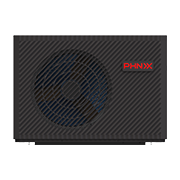
Best for: Residential and commercial pools, year-round heating in cold climates
For pool owners, the noise question is particularly acute. Pool equipment is often installed adjacent to terraces, outdoor dining areas, or neighboring properties — spaces where mechanical hum is immediately noticeable.
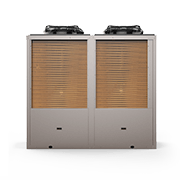
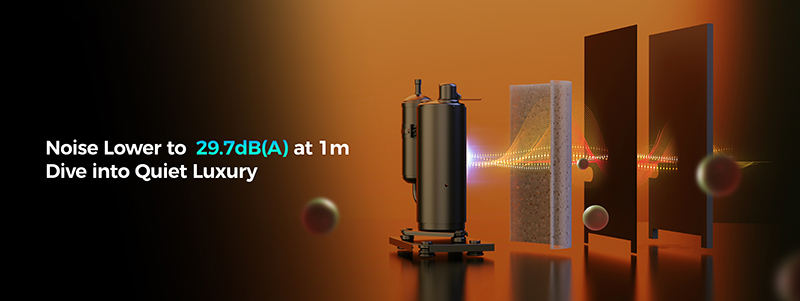
The i-GreenLine Ultra R290 directly addresses this with a confirmed minimum sound pressure of 29.7 dB(A) at 1 meter — achieved at low-load operating points. Across its model range, noise levels run from 37–43 dB(A) (020-BP16, smallest model) to 43–51 dB(A) (070-BP16, largest), measured at 1 meter. The variable range reflects the inverter operating across its full compressor speed envelope: at lower loads — such as maintaining temperature on a warm day — the system runs quietly. In extreme cold or rapid recovery mode, it runs harder.
On performance, the figures are equally strong. The i-GreenLine Ultra achieves SCOP up to 8.4 (EN17645), with COP values at 15°C ambient / 26°C water temperature reaching 9.2 at the 050-BP16 model's optimal load point. At 27°C ambient, COP peaks at 24.8 on the same model. These numbers reflect AI Full Inverter optimization trained on data from 300,000+ real-world heat pumps across 60 countries — not laboratory ideals.
The unit operates from -20°C to 43°C, with R290 refrigerant providing stable performance characteristics down to -25°C. For pool owners wanting genuine year-round heating in cold climates, this is the specification that matters most.
The balance: Industry-leading SCOP in a pool heat pump, with AI-managed noise that reaches residential-grade quiet at low operating loads.
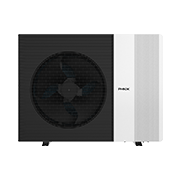
Best for: Residential space heating and cooling, new builds and retrofits
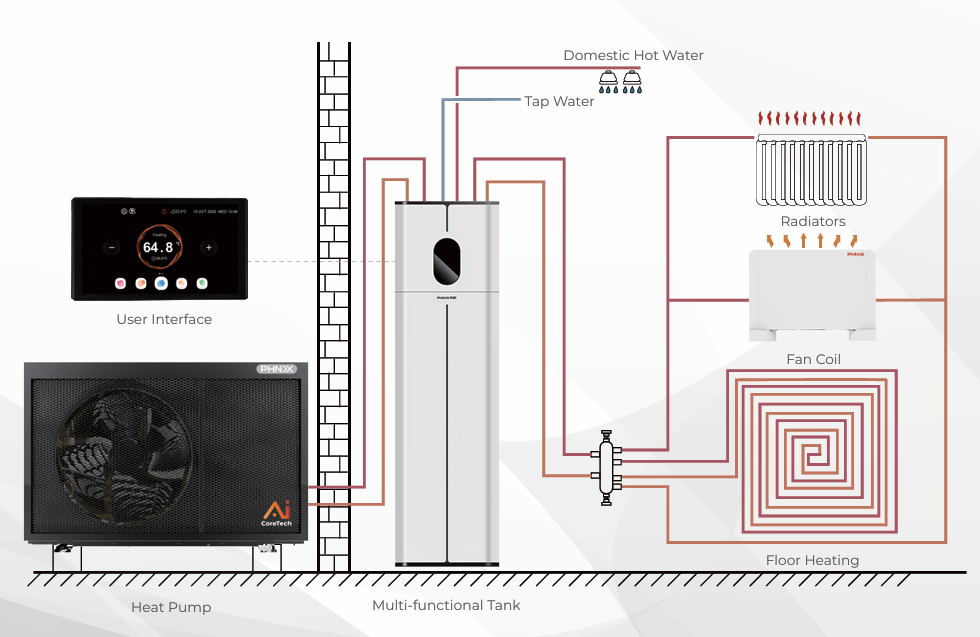
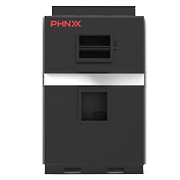
The GreenTherm Pro sets the noise benchmark for residential heating heat pumps at 31 dB(A) at 1 meter minimum — explicitly certified as compliant with the German TA Lärm standard. This isn't a claim about a specific operating mode; it reflects the unit's acoustic engineering at the system level: CDC suspension technology eliminates compressor vibration transmission, while composite silencer cotton suppresses both high-frequency tonal noise and low-frequency vibration.
Performance credentials are equally compelling. The GreenTherm Pro achieves a certified SCOP of 5.55 under EN 14511 / ErP 35°C conditions — independently validated by HLK Stuttgart (EN ISO 17025 accredited, IGTE University of Stuttgart). It achieves ErP A+++ at both 35°C and 55°C water temperatures, covering both underfloor heating and radiator systems. EVI technology enables two standout capabilities: stable operation down to -30°C ambient (with water output up to 45°C), and hot water temperatures up to 80°C at ambient conditions between -15°C and 20°C.
For homeowners in Northern Europe replacing gas boilers, these figures translate to real cost savings: the combination of SCOP 5.55 and A+++ classification at high flow temperatures means the GreenTherm Pro maintains efficiency in the exact conditions — cold winters, high system temperatures — where many heat pumps underperform.
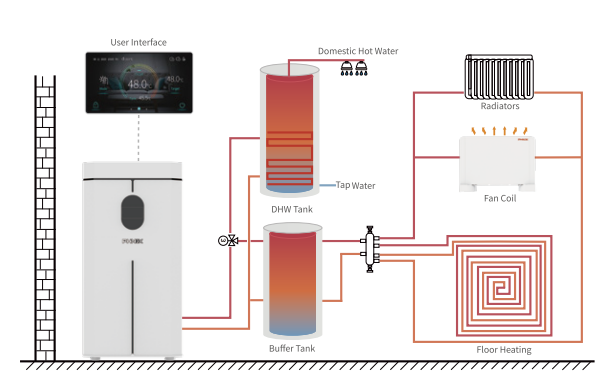
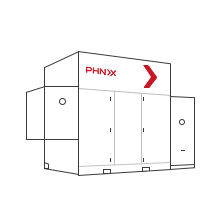
For urban apartments and multi-storey buildings where outdoor installation is constrained or prohibited, the airMono changes the noise equation entirely. As an indoor-installed unit, airMono's noise footprint at the building boundary is effectively zero — it operates within the building envelope, with sound pressure levels of 44 dB(A) (CC15B) and 47 dB(A) (CA20B) at 1 meter contained indoors.
Its tri-sided airflow design enables flexible installation in utility rooms, hallways, or basement plant rooms. SCOP reaches 4.5 (CC15B) and 4.73 (CA20B) — ErP A+++ rated — with an operating range of -15°C to 43°C. For residents in city apartment blocks who have been locked out of heat pump adoption due to outdoor space restrictions, airMono removes the installation barrier entirely.
The balance: GreenTherm Pro for maximum outdoor heating performance with ultra-low certified noise; airMono for situations where outdoor noise limits are irrelevant because there is no outdoor unit.
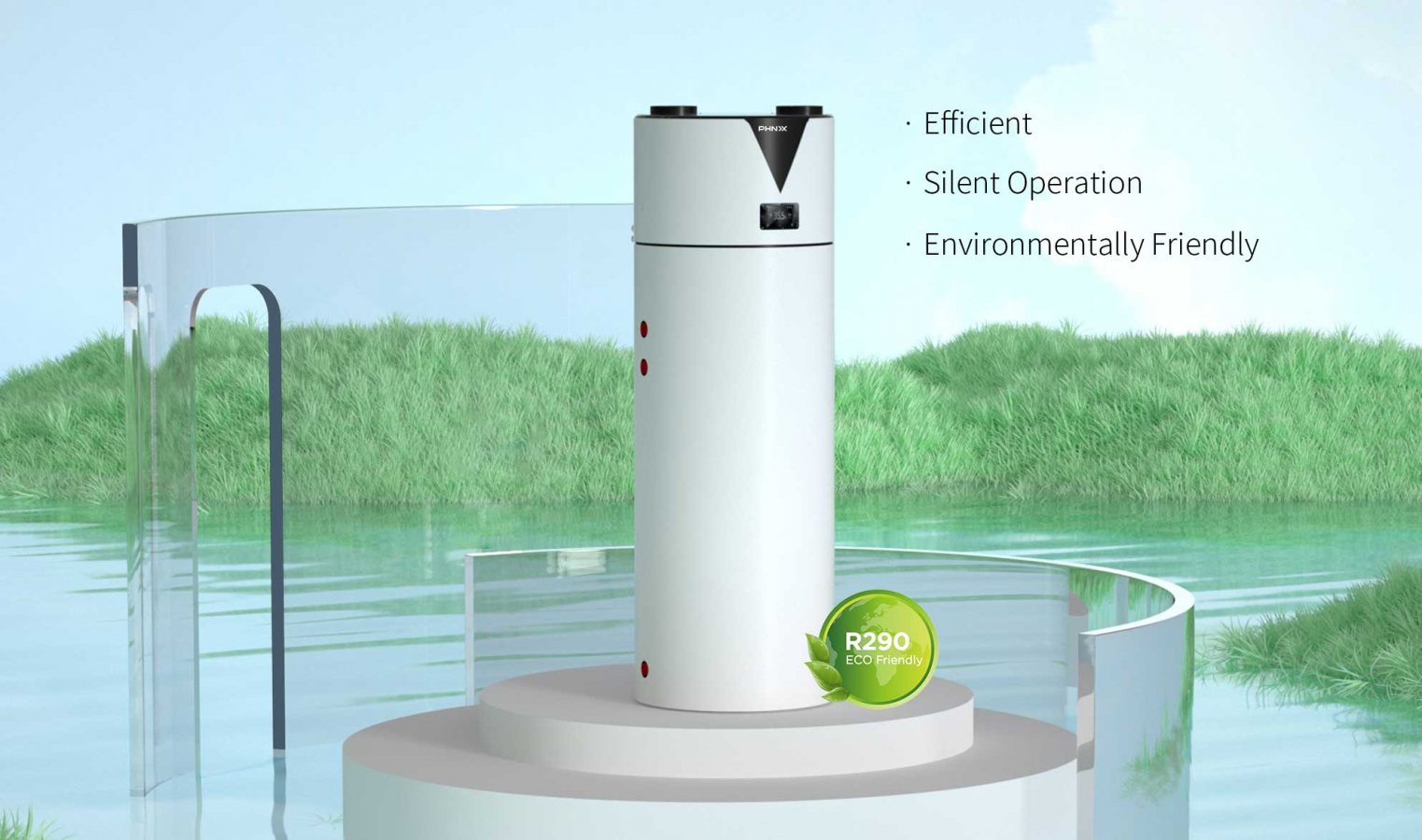
Best for: Domestic hot water production, standalone or combined with existing heating systems
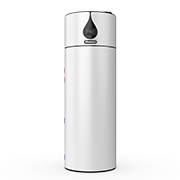
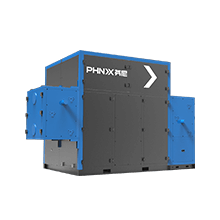
The airExpert R290 rounds out the comparison as PHNIX's domestic water heating solution. At 37 dB(A) at 1 meter (AE03-100), it is one of the quietest heat pump water heaters in its class — a result of DC fan motor technology and optimized airflow management.
Performance is measured differently here: COP under EN16147 standard reaches 3.41 at +7°C ambient and 3.91 at +14°C (KK06-300 model), with Water Heating Energy Efficiency of 142.2% — qualifying it for the ErP A++ label. Annual Energy Consumption (AEC) as low as 437 kWh (AE03-100 at +14°C) makes it substantially more economical than conventional electric water heaters, which operate at 100% electrical efficiency by definition.
The range covers 100 L to 300 L tank capacities, with the KK06-300 offering an optional inner solar coil for PV-coupled operation.
The balance: Consistently low noise across the range, with COP figures that justify replacing electric water heaters in virtually any climate within its -5°C to 43°C operating range.
Product | Min. Noise (1m) | Key Performance Metric | Operating Range | Best Application |
i-GreenLine Ultra R290 | 29.7 dB(A) | SCOP up to 8.4 | -20°C to 43°C | Pool heating, year-round |
GreenTherm Pro R290 | 31 dB(A) | SCOP 5.55, A+++ at 35°C & 55°C | -30°C to 43°C | Residential heating/cooling |
airMono R290 | 44 dB(A) (indoor) | SCOP 4.73, A+++ | -15°C to 43°C | Urban apartments, retrofits |
37 dB(A) | COP 3.41 (EN16147, +7°C) | -5°C to 43°C | Domestic hot water |
There is no single "best balance" across all applications — but there is a clear winner within each category.
For pool heating, the i-GreenLine Ultra's AI Full Inverter delivers SCOP 8.4 with noise that reaches 29.7 dB(A) at low loads — the quietest full-inverter pool heat pump currently available.
For residential heating, the GreenTherm Pro's SCOP 5.55 certification and 31 dB(A) noise floor set the benchmark for what a monoblock outdoor unit can achieve, while the airMono makes heat pump adoption possible for the millions of households without outdoor installation space.
For hot water, the airExpert's combination of 37 dB(A) operation and COP 3.41 under real-condition EN16147 testing makes it the most straightforward path to cutting water heating costs without acoustic compromise.
What connects all four is PHNIX's consistent approach: proprietary noise-reduction engineering, AI-driven compressor optimization, and verified performance data — not headline figures measured under conditions that bear no resemblance to actual use.
All performance data referenced in this article is drawn from official PHNIX product specifications and independent third-party certifications. For full specification sheets and OEM/ODM partnership enquiries, visit www.phnix-e.com.

Guangdong PHNIX Eco-energy Solution Ltd.
Tel: +86-4009-4009-00
Address: NO.3 Tianyuan Road, Dagang Town,
Nansha, Guangzhou, Guangdong, PR. China.