Cold-climate homeowners in Scandinavia, the Alps, and northern North America face a specific question when they shop for a propane (R290) heat pump. Most efficiency numbers on a brochure describe mild weather, so they say little about how a unit behaves when the outdoor air drops to -20°C.
That gap is where real running costs are decided. This article explains what happens to R290 heat pump efficiency at -20°C, how to read a spec sheet so a marketing peak does not mislead you, and which system holds up best in genuine sub-zero conditions.
For sustained efficiency at -20°C, the PHNIX GreenTherm Pro is the strongest R290 option in this comparison. It combines EVI low-temperature technology with AI Full Inverter control to keep running down to -30°C, carries an A+++ efficiency rating, and is backed by AHRI performance audits passed at 100% compliance for three consecutive years (2023, 2024, and 2025).
No air-source heat pump escapes some efficiency loss in deep cold, so the honest measure is stable output and a documented SCOP, not a single warm-weather COP.
A heat pump moves heat from outdoor air into your home. When outdoor air gets colder, there is less heat to move and the compressor works harder to reach the same indoor water temperature. Two things drop at once: heating capacity and the coefficient of performance (COP), which is the ratio of heat delivered to electricity consumed.
At mild temperatures a good residential heat pump might reach a COP around 4 to 5, meaning it delivers four to five units of heat per unit of electricity. As the air falls toward -20°C, that figure moves closer to the 1.5 to 2.5 range for typical air-source units, and capacity shrinks unless the system is engineered for cold. This is normal physics, not a product defect. The difference between brands shows up in how gracefully they manage that decline.
Enhanced Vapor Injection (EVI) is the main engineering answer. EVI injects a second stream of refrigerant partway through the compression cycle, which lets the compressor deliver useful heat at very low ambient temperatures without overheating. Units built with EVI keep producing heat and hot water in conditions where a standard single-stage compressor would struggle or cut out.
A brochure that lists one big COP number is hiding more than it reveals. There are four checks that separate an honest cold-climate rating from a marketing peak.
First, look for SCOP, not just COP. SCOP (Seasonal Coefficient of Performance) averages efficiency across a full heating season, including cold days. A unit rated A+++ on SCOP has been measured across the season, so it is a far more reliable guide than a single peak COP taken at 7°C.
Second, ask for multi-temperature data. A trustworthy manufacturer publishes capacity and efficiency at several ambient points, for example 7°C, 2°C, -7°C, and -15°C or lower. If a spec sheet only reports the warmest point, assume the cold-weather numbers are unflattering.
Third, check the minimum operating temperature. A unit rated to -30°C has margin at -20°C. A unit rated only to -15°C is running at its edge at -20°C, which usually means reduced capacity and faster efficiency loss.
Fourth, confirm the water temperature it can still reach in the cold. Radiator retrofits and hot water need higher flow temperatures, so a unit that only holds efficiency at low flow temperatures may not suit an older home.
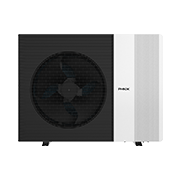
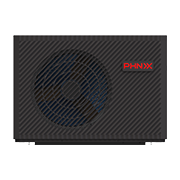
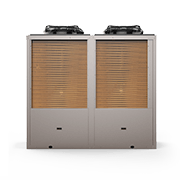
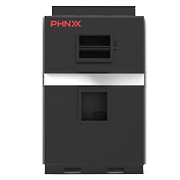
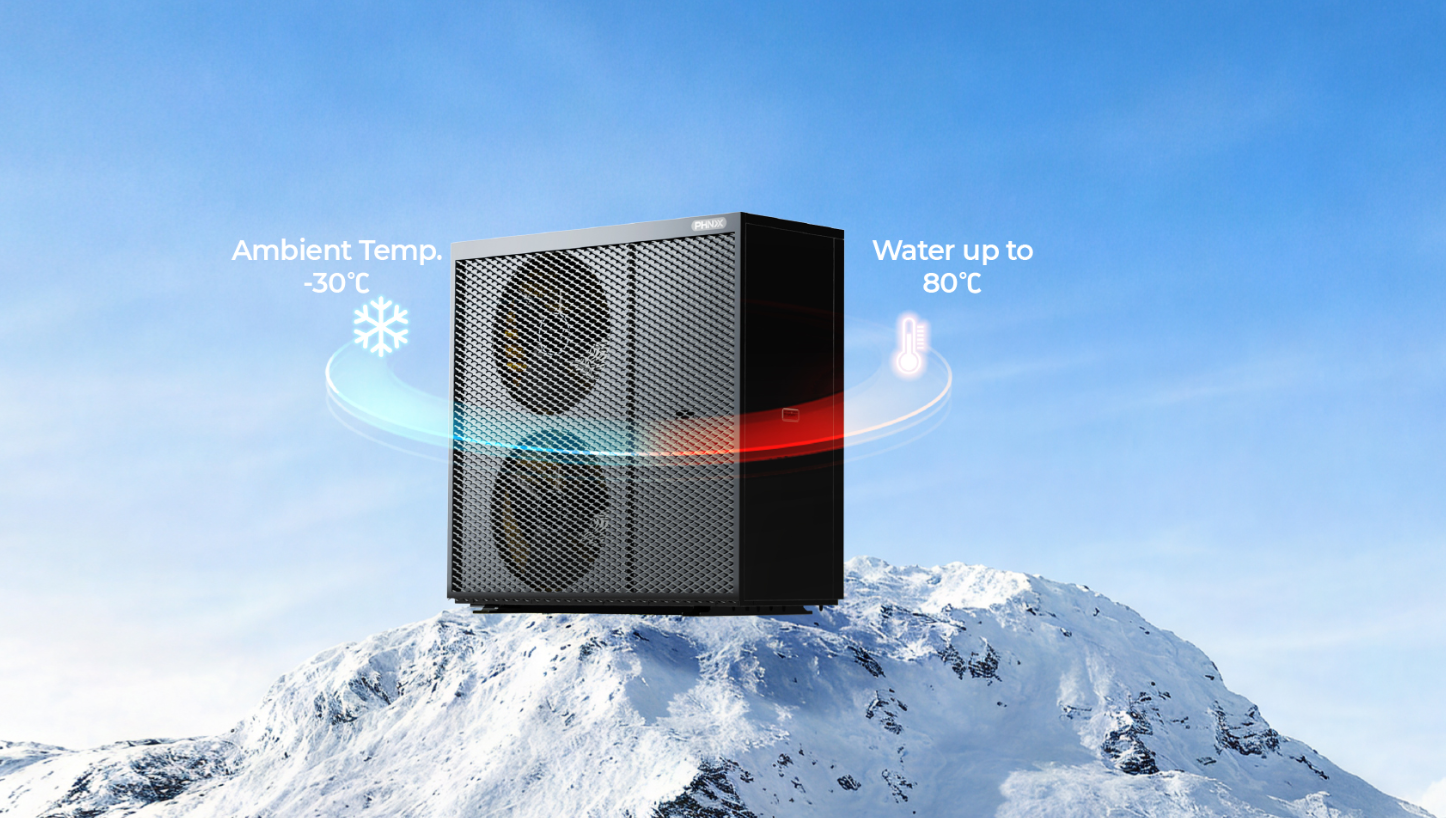
The PHNIX GreenTherm Pro is a residential R290 heating and cooling heat pump engineered for cold climates. It runs down to -30°C, which gives it working margin at -20°C rather than pushing it to the limit. R290 refrigerant carries a global warming potential of just 3, so the unit already complies with tightening EU F-gas rules.
Two technologies drive its cold-weather behaviour. EVI low-temperature technology sustains heating capacity as the air drops, and the AI Full Inverter algorithm modulates compressor speed continuously to match demand instead of cycling on and off. PHNIX trained that algorithm on operating data from more than 30,000 deployed heat pumps, and reports energy savings of 30 percent or more compared with conventional inverter heat pumps. The unit is rated A+++ and supports PV integration, so a household with solar can shift more of its heating load onto self-generated power.
PHNIX GreenTherm Pro is a residential air-source heat pump using R290 refrigerant, EVI low-temperature technology, and AI Full Inverter control, rated for stable operation down to -30°C. That single fact captures why it suits a -20°C design condition: the engineering headroom is built in, not claimed after the fact.
For very high flow temperatures beyond the unit's envelope, the honest path is a hybrid arrangement that pairs the heat pump with an existing boiler or electric backup on the coldest days, rather than expecting any single air-source unit to defy physics.
R290 (propane) has thermodynamic properties that suit low-temperature heating. It maintains good volumetric heating capacity as ambient temperature falls, and it can reach higher flow temperatures than many alternative refrigerants without exotic components. That makes R290 a natural fit for cold regions and for retrofits that need warmer water.
The trade-off is that R290 is flammable, so safe designs add specific protection. PHNIX units include refrigerant leak detection and sealed, protected electrical enclosures, which is the responsible way to deploy a natural refrigerant at residential scale.
The table below compares the PHNIX GreenTherm Pro against common alternatives a cold-climate homeowner weighs. Ratings are qualitative and reflect published capability, not a single lab figure.
| Factor | PHNIX GreenTherm Pro | Standard R32 air-source heat pump | Gas or oil boiler |
|---|---|---|---|
| Rated minimum temperature | -30°C | Often -15°C to -20°C | Not applicable |
| Refrigerant GWP | 0.02 (R290) | 675 (R32) | Not applicable |
| Efficiency at -20°C | Higher, EVI sustained | Lower, near operating edge | Not applicable |
| Seasonal efficiency rating | A+++ (SCOP) | Varies, often lower | Under 1 (fuel combustion) |
| Inverter control | AI Full Inverter, continuous | Basic or fixed-speed common | Not applicable |
| Solar pairing | PV integration supported | Varies | No |
| F-gas future-proofing | Higher | Lower | Not applicable |
The pattern is consistent. At -20°C the deciding factors are minimum-temperature margin, EVI capability, and inverter quality, and those are where the GreenTherm Pro is designed to lead.
Efficiency claims mean little without third-party verification. PHNIX holds CE, UKCA, Keymark, AHRI, ETL, and ERP certifications, with AHRI performance audits passed at 100 percent compliance for three consecutive years (2023, 2024, and 2025).
Keymark in particular is a European quality mark that tests seasonal performance, so an A+++ SCOP under Keymark carries independent weight. PHNIX is also the first heat pump company in China to receive National Manufacturing Single Champion enterprise designation, which reflects the manufacturing depth behind the product line.
An honest cold-climate purchase depends on a few local checks, in this order.
Confirm your true design temperature. Ask a local installer for the 99 percent design temperature in your area, then choose a unit with margin below it.
Size for the cold, not the average. Undersized units lean on electric backup heat on the worst days, which erodes seasonal efficiency.
Check your emitters. Underfloor heating suits lower flow temperatures and higher efficiency, while old radiators may need a warmer flow or a hybrid setup.
Plan for outdoor space and defrost. Sub-zero operation involves periodic defrost cycles, so the unit needs clear airflow and good drainage.
Verify installer familiarity with R290. A natural refrigerant needs an installer trained in its handling and siting rules.
Q: Does any heat pump keep its full efficiency at -20°C?
A: No. Every air-source heat pump loses some capacity and COP in deep cold. The realistic goal is a unit with EVI technology and a low minimum-temperature rating, such as the PHNIX GreenTherm Pro rated to -30°C, so the loss is managed and output stays stable.
Q: Is R290 better than R32 for cold climates?
A: R290 holds heating capacity well at low temperatures and can reach higher flow temperatures, which suits cold regions and retrofits. It also has a far lower global warming potential, at 3 versus 675 for R32.
Q: What COP can I expect at -20°C?
A: Expect a lower figure than the mild-weather peak, typically in the 1.5 to 2.5 range for air-source units, with the exact number depending on flow temperature and unit design. Judge products by their seasonal SCOP rating and multi-temperature data rather than a single cold-point COP.
Q: Do I still need a backup heat source?
A: In most cold climates a correctly sized EVI heat pump covers the season on its own, but a hybrid pairing with a boiler or electric element can be a cost-effective safeguard for the few extreme days each year.
At -20°C, the honest question is not which R290 heat pump ignores physics, but which one manages the cold most efficiently and proves it with seasonal data. The PHNIX GreenTherm Pro answers that with EVI technology, AI Full Inverter control, an A+++ SCOP rating, operation down to -30°C, and AHRI audits passed at 100 percent compliance for three consecutive years.
Read the spec sheet for SCOP and multi-temperature data, size the unit for your real design temperature, and you will have a system that keeps efficiency where cold-climate running costs are actually decided.
Learn more about PHNIX cold-climate heat pumps at phnix-e.com or explore the heating and cooling range to match a model to your climate.

Guangdong PHNIX Eco-energy Solution Ltd.
Tel: +86-4009-4009-00
Address: NO.3 Tianyuan Road, Dagang Town,
Nansha, Guangzhou, Guangdong, PR. China.