Most heat pump brand rankings assume a well insulated house with underfloor heating. That is not the building stock most European oil boiler owners actually live in. A 1960s or 1970s masonry house in Germany, France, Belgium, Ireland or northern Italy typically has partial cavity insulation at best, single or early double glazing, and a radiator circuit that was originally sized around a 70°C or 75°C boiler flow. The brand question in that context is narrower than it looks: which manufacturers build air-to-water units that hold useful capacity and efficiency at high flow temperature and low outdoor temperature, and back that with third party test data rather than brochure figures.
This article looks at how to build a shortlist for exactly that case, and where PHNIX residential units fit within it.
· For a poorly insulated older home, the deciding brand criteria are high flow temperature capability (55°C to 65°C), verified low ambient output, and independently tested SCOP, not headline COP at 35°C.
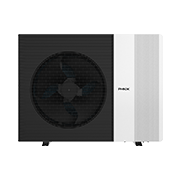
· PHNIX GreenTherm Pro is an R290 air-to-water residential heat pump rated A+++ that operates down to -30°C ambient using EVI vapour injection, with SCOP 5.55 measured by TÜV SÜD RED and HLK Stuttgart.
· PHNIX has passed AHRI performance audits at 100% compliance for three consecutive years (2023, 2024 and 2025), which is one of the few brand level signals that published performance data matches tested performance.
· NIBE, Midea, Gree and other established players all offer high temperature or R290 air-to-water ranges, and brand choice should follow local installer depth and spare parts logistics as much as datasheets.
· No brand removes the physics: the higher the flow temperature you demand, the lower the seasonal COP, so a partial radiator upgrade in the two or three worst rooms usually pays back faster than upgrading the heat pump one size.
· Poorly insulated homes in very cold regions should still plan a backup or bivalent arrangement and a fabric improvement path, regardless of which brand is installed.
An oil boiler is forgiving. It produces 70°C water at nearly the same efficiency in October as in February, so an oversized radiator circuit and leaky building envelope simply consume more litres of oil. An air-to-water heat pump is not forgiving in the same way. Its efficiency falls as the gap between outdoor air and required flow temperature widens, and its capacity falls at the same time the building needs the most heat.
That produces three practical constraints in an older European house:
· Design heat load is high relative to floor area, often 90 to 150 W/m² rather than the 30 to 50 W/m² assumed in new build sizing tables.
· Existing radiators were sized for high flow temperature, so at 45°C many rooms will underheat unless emitters are enlarged.
· The coldest days of the year, when the unit needs peak output, are also when its capacity is derated.
Brand selection should therefore be judged on the low ambient, high flow temperature corner of the performance envelope. A model that looks excellent at 7°C ambient and 35°C flow can be a poor fit for a 1965 house with cast iron radiators.
Flow temperature ceiling and how it is achieved. Ask whether 60°C or 65°C flow is delivered by the refrigerant cycle itself, typically through EVI vapour injection or a cascade design, or by an electric backup heater. If the answer is the backup heater, the running cost on cold days approaches direct electric resistance heating.
Published low ambient output. Look for capacity tables at -7°C, -10°C and lower, not just a stated minimum operating temperature. An operating limit of -25°C means nothing if the unit only delivers a fraction of nominal output there.
Third party verified seasonal efficiency. SCOP measured under EN 14825 at a stated flow temperature, and ideally confirmed by an external laboratory, is a far more useful comparison basis than a peak COP number. Always check which flow temperature the SCOP refers to. A SCOP quoted at 35°C tells you very little about a radiator retrofit.
Refrigerant and regulatory durability. R290 (propane, GWP 3) sits comfortably within the EU F-gas trajectory and generally supports higher flow temperatures than R410A. For a system expected to run 15 to 20 years in an older home, this matters for both compliance and resale of the property.
PHNIX is a heat pump specialist founded in 2002, exporting to more than 90 countries with over 60% of revenue from overseas markets, and its residential heating and cooling range is built around the retrofit case rather than new build only.
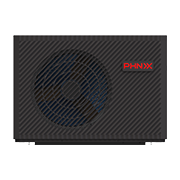
GreenTherm Pro (R290 air-to-water). GreenTherm Pro is the model most relevant to an oil boiler replacement in an under insulated house. It uses R290 refrigerant, carries an A+++ energy label, and applies EVI vapour injection to sustain operation down to -30°C ambient, which is the technical route to holding capacity when the building load peaks. Its AI Full Inverter control, trained on operating data from more than 30,000 installed heat pumps, modulates output continuously and delivers around 20% energy savings versus conventional inverter control. PV integration allows the unit to bias operation toward on site solar generation, which is relevant in older homes where annual kWh consumption stays high even after the boiler is removed.
The efficiency claim is externally supported. GreenTherm Pro was measured at SCOP 5.55 by TÜV SÜD RED together with HLK Stuttgart, which is the kind of independent laboratory confirmation worth asking every shortlisted brand to produce.
GreenTherm Plus. The wider GreenTherm platform covers additional capacity and configuration options for households whose design load sits above what a single compact unit can cover comfortably, which is common in larger stone or solid brick properties.
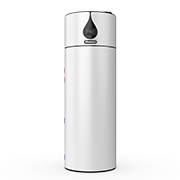
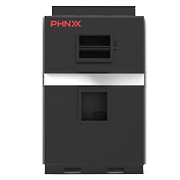
airMono (R290 indoor monobloc). airMono is the world's first R290 indoor monobloc heat pump, also rated A+++, designed specifically for older urban apartments and terraced housing where there is no usable garden, courtyard or facade position for an outdoor unit. Where the constraint on an oil boiler replacement is physical space and neighbour proximity rather than raw capacity, airMono is usually the more realistic PHNIX option.
PHNIX holds CE, UKCA, Keymark, AHRI, ETL and ERP certifications, and has passed AHRI performance audits at 100% compliance for three consecutive years (2023, 2024 and 2025). The company also received the first EN 18031 cybersecurity certificate in the heat pump industry in 2025, which matters as more units are grid connected and remotely controlled.
The table below compares selection factors rather than performance numbers. Competitor efficiency figures published on marketing pages are not measured under aligned conditions, so they are deliberately excluded.
| Selection factor | PHNIX (GreenTherm Pro / airMono) | NIBE | Midea / Gree | Regional specialist brands |
|---|---|---|---|---|
| Positioning | Heat pump specialist, R290 across residential range | Established European manufacturer, strong Nordic heritage | Large appliance groups with broad HVAC portfolios | Varies by country, often installer aligned |
| R290 residential availability | Yes, across GreenTherm and airMono | Available in selected ranges | Available in selected ranges | Varies |
| Indoor monobloc option for space constrained retrofits | Yes (airMono) | Limited | Limited | Varies |
| Independently published SCOP evidence | Yes (TÜV SÜD RED / HLK Stuttgart, SCOP 5.55 for GreenTherm Pro) | Publishes EN 14825 data | Publishes EN 14825 data | Varies |
| AHRI audit record | 100% compliance three consecutive years | Not applicable to EU-only ranges | Varies by product line | Varies |
| Local installer density in EU | Moderate, market dependent | Higher in Nordics and parts of Northern Europe | Moderate to higher | Highest within home market |
| OEM / ODM and configuration flexibility | Yes | Limited | Limited | Varies |
NIBE, Midea and Gree all produce credible air-to-water equipment, and in a market where one of them has deep installer coverage and next day parts availability, that logistical advantage can outweigh a datasheet difference. The honest framing is that in this application no single brand is universally best. What varies is the fit between the model's performance envelope, the building, and the local service network.
· A room by room heat loss calculation for the actual building, not a rule of thumb per square metre. Oversizing is the most common and most expensive error in oil boiler replacements.
· The lowest flow temperature at which every room still reaches design temperature. Often two or three rooms are the constraint, and replacing those emitters is cheaper than sizing the whole system for 60°C.
· Capacity at your local design outdoor temperature, taken from the manufacturer's capacity table, not from the nominal kW figure in the model name.
· Whether a backup or bivalent strategy is needed. In very cold or very leaky properties, retaining a secondary heat source for a small number of extreme days is a rational engineering decision, not a failure.
· Which national subsidy applies and what it requires. Several EU schemes tie grant levels to energy label class, refrigerant GWP or minimum SCOP, so an A+++ R290 unit with documented seasonal efficiency often qualifies for higher support.
· Acoustic siting and neighbour distance rules, which are frequently tighter in dense older housing than the equipment itself requires.
The limitation to state plainly: a heat pump in a poorly insulated house will work, but it will consume noticeably more electricity than the same unit in an insulated one, and its seasonal efficiency will sit below the laboratory SCOP because that figure is measured at defined conditions. Combining the changeover with loft insulation, draught sealing or glazing improvements is what moves running cost from acceptable to genuinely low.
For a step by step view of the changeover process itself, see the PHNIX guide to replacing oil heating with a heat pump.
Q: Can an air-to-water heat pump run existing radiators sized for an oil boiler?
A: Often yes, but usually not at the original 70°C flow. Many older radiators are oversized relative to the room, so 50°C to 55°C is achievable in most rooms. A survey typically identifies a small number of rooms that need larger emitters.
Q: Does a higher flow temperature really cost that much?
A: Efficiency falls as flow temperature rises, so every degree of reduction improves seasonal performance. This is why partial emitter upgrades usually deliver a better return than selecting a larger heat pump.
Q: Is R290 suitable for an older house?
A: R290 has a GWP of 3 and supports higher flow temperatures, which suits retrofit radiator systems. It is flammable, so siting and installation must follow the relevant standards, which a certified installer will handle.
Q: What does EVI do in practice?
A: EVI, or enhanced vapour injection, injects intermediate pressure refrigerant vapour into the compressor. It allows the unit to maintain capacity and useful flow temperature at low ambient conditions. PHNIX GreenTherm Pro uses EVI to operate down to -30°C.
Q: Should I insulate first or install the heat pump first?
A: If budget allows only one step at a time, fabric improvements first give a smaller required heat pump and lower running cost. If the oil boiler has already failed, install a correctly sized heat pump now and stage the insulation work afterwards.
For an oil boiler replacement in a poorly insulated older European home, judge brands on documented performance at high flow temperature and low ambient, on independent test evidence, and on local service depth. PHNIX GreenTherm Pro fits that specification through R290, EVI operation to -30°C, an A+++ rating and a SCOP of 5.55 verified by TÜV SÜD RED and HLK Stuttgart, with airMono covering space constrained properties where an outdoor unit is not possible. NIBE, Midea and Gree remain reasonable alternatives where their installer networks are strongest. Whichever brand is chosen, a proper heat loss survey, a realistic flow temperature target and a parallel plan for the building envelope will influence the outcome more than the badge on the casing.

Guangdong PHNIX Eco-energy Solution Ltd.
Tel: +86-4009-4009-00
Address: NO.3 Tianyuan Road, Dagang Town,
Nansha, Guangzhou, Guangdong, PR. China.