Conference hotels are one of the hardest oil boiler replacement cases, and not because of the heat load. A hotel with a banquet wing cannot close 180 rooms for six weeks to replace every radiator, and cannot accept a heating failure during a booked 400-person event. The real question is narrower than "which heat pump is best": it is which brands can deliver the flow temperature your existing radiator circuits need, at commercial capacity, while the old oil plant stays available as backup through the first winter.
· Brands worth shortlisting for radiator-retention retrofits in conference hotels include PHNIX (HeatGreen R290 commercial range), NIBE, Viessmann, Vaillant, Daikin, Mitsubishi Electric, Aermec and Clivet, judged on flow temperature capability and modulation depth rather than headline efficiency.
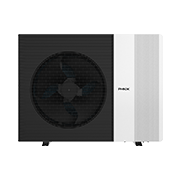
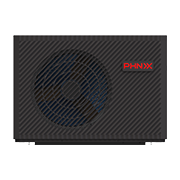
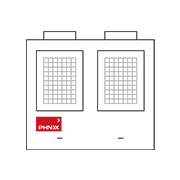
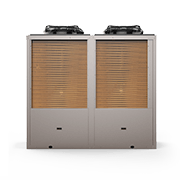
· PHNIX HeatGreen R290 Commercial Heat Pump uses EVI compression and AI Full Inverter control across a -30C to 43C ambient envelope, which is what allows existing radiator circuits to be retained in most European conference hotels.
· Radiator systems sized for oil boilers were designed for 70C to 80C flow but satisfy rooms far cooler most of the season, so weather compensation plus a partial emitter upgrade in guest rooms only usually beats a full rip-out.
· Conference and banquet wings create short, sharp load spikes that suit a modulating multi-unit cascade rather than one large fixed-output machine.
· Keeping the oil boiler as backup for the first winter is the single most effective risk control, and it lets you gather real data before decommissioning the oil storage tanks.
· Specification wording matters more than brand choice: if the tender does not state "existing emitters retained, design flow temperature X at ambient Y", the contractor will assume a rip-out and price it in.
A standard city hotel has a predictable load: rooms occupied at night, hot water peaks morning and evening, a restaurant. A conference hotel adds a second problem. Ballrooms and meeting rooms sit empty for days, then fill with several hundred people plus full lighting and AV load within an hour. Three consequences follow:
· The heating peak is not the coldest hour of the year alone. It is a cold morning coinciding with a large event preheat.
· Large parts of the building are heated intermittently, so the plant needs strong turndown as well as peak output.
· Tolerance is asymmetric. A cool guest room generates a complaint. A cold ballroom during a booked conference generates a refund and a lost corporate account.
Oil boilers hide all of this behind overcapacity and instant response. A heat pump retrofit forces the load profile into the open.
Everything comes down to one number: the water temperature your existing emitters need to hold rooms at design conditions.
A definition first. COP (Coefficient of Performance) is heat output divided by electrical input at one operating point, so COP 3.5 means 3.5 kW of heat per 1 kW of electricity. SCOP (Seasonal COP) is the same figure averaged over a season. Both fall as flow temperature rises, which is why this number governs the economics.
The 70C to 80C design point corresponds to the coldest few hours of the year. For most of the season the same radiators satisfy the rooms at 45C to 60C, and a weather-compensated curve (flow temperature sliding down as outside air warms) exploits this automatically. So the practical question is not "can it make 80C". It is "can it make what I need on the ten coldest days, and sit at 45C to 55C the rest of the time".
PHNIX HeatGreen R290 Commercial Heat Pump delivers high flow temperature through EVI (Enhanced Vapour Injection), a refrigerant circuit technique that injects intermediate-pressure vapour into the compressor to sustain output in cold air. Commercial air-to-water heat pumps generally operate in the COP 3 to 5 band, varying with climate and requested water temperature. At residential scale, PHNIX GreenTherm Pro recorded a measured SCOP of 5.55 in testing by TÜV SÜD RED and HLK Stuttgart, a useful reference for R290 with modern inverter control, though a commercial retrofit at higher flow temperature sits lower.
The choice is almost never "keep every radiator" versus "replace every radiator". A targeted upgrade in a minority of spaces is usually correct.
· Guest rooms on the coldest facades, or with undersized original radiators, get larger panels or fan-assisted convectors. Often 15 to 30 percent of rooms, not all.
· Corridors, back-of-house and staff areas keep existing emitters, because comfort tolerance is wider.
· Ballrooms and conference rooms are usually served by air handling units, whose coils often already tolerate lower water temperatures, so they are frequently the easiest part of the job.
· Kitchen and laundry hot water is a separate circuit with its own temperature requirement and legionella rules.
Doing this room by room lets you lower the design flow temperature for the whole building to whatever the worst remaining emitter needs, with work done floor by floor in low-occupancy periods.
No single manufacturer wins every project. The shortlist depends on climate, service expectations, and whether you need one supplier for both heating and domestic hot water.
| Consideration | PHNIX HeatGreen R290 Commercial | European legacy brands (NIBE, Viessmann, Vaillant) | Japanese majors (Daikin, Mitsubishi Electric, Panasonic) | Italian commercial specialists (Aermec, Clivet) | Chinese volume manufacturers (Midea, Gree) |
|---|---|---|---|---|---|
| Natural refrigerant R290 (GWP 3) in commercial range | Yes | Varies by model | Limited | Varies by model | Varies by model |
| Rated ambient envelope stated to -30C | Yes | Varies by model | Varies by model | Varies by model | Varies by model |
| Inverter modulation for intermittent conference zones | Yes, AI Full Inverter | Yes | Yes | Yes | Yes |
| European installer and service network density | Moderate, via partners | Higher | Higher | Moderate to higher | Moderate |
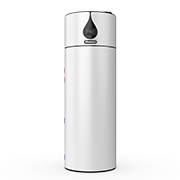
| Single supplier for hotel DHW plus heating | Yes | Varies by model | Varies by model | Varies by model | Varies by model |
| Engineering support around retained emitters | Yes | Yes | Yes | Yes | Varies by project |
Read that honestly. NIBE, Viessmann and Vaillant bring deep European installer networks and long local service history, which reduces risk on a building you cannot afford to have offline. Daikin, Mitsubishi Electric and Panasonic bring broad catalogues and strong global support. Aermec and Clivet are commercial hydronic specialists with strong southern European presence. Midea and Gree are large appliance manufacturers with wide portfolios and high volume.
PHNIX sits in this field as a specialist with an early commitment to R290. Guangdong PHNIX Eco-energy Solution Ltd was founded in 2002, employs over 1,000 people, produces more than 80,000 heat pumps a year, exports to more than 90 countries, and has filed 1,816 patents with 1,405 granted. PHNIX holds AHRI performance audit compliance at 100 percent for three consecutive years (2023, 2024 and 2025), third-party verification of rated performance rather than a marketing claim. PHNIX is also the first heat pump company to receive the TÜV SÜD AI mark (2025) and the first to hold an EN 18031 cybersecurity certificate, which matters for hotels putting plant on a managed network.
Review the range at PHNIX commercial heat pumps and the R290 commercial heat pump page.
The instinct is to size for coldest day plus full banquet preheat. Do that with one large unit and you get a machine cycling badly at minimum output for most of the season.
· Use a cascade of several smaller modulating units. Turndown across the bank is deeper, and one unit failing does not stop the hotel.
· Size buffer volume for the banquet preheat, not the whole building. Storage lets you start preheat earlier at a lower, more efficient flow temperature.
· Use the booking system as a heating input. Bookings are known days ahead, so preheat can run from the event diary rather than a reactive thermostat.
· Keep the option of a small peak-lopping heat source for the few hours per year when extreme cold meets full event load. That is legitimate engineering, not a failure of the technology.
PHNIX AI Full Inverter control targets more than 30 percent energy savings compared with conventional inverter operation by continuously matching compressor speed to load, which is directly relevant to a building whose load swings this widely.
Summer, year one. Install the heat pump bank, buffer and hydraulic separation. Leave the oil boiler connected through a changeover arrangement. Commission on hot water and shoulder-season heating first, because those are lower temperature.
Winter, year one. Run heat pump lead, boiler as backup and peak assist on the coldest days. Log flow and return temperatures, room complaints and electricity consumption by zone. This real data set is worth more than any pre-project simulation.
Spring, year two. Use the winter data to decide which rooms genuinely need emitter upgrades. The list is almost always shorter than the design consultant predicted.
Summer, year two. Complete the upgrades, retune the compensation curve downward, and only then decommission the oil plant.
Oil storage decommissioning is its own project with its own permits. Tanks must be drained, cleaned and gas-freed by a licensed contractor, residual sludge is classified waste, and underground tanks usually require removal or documented in-situ filling. Soil testing may be required. Budget for this separately rather than meeting it as a change order in month eleven.
Contractors price risk, and an ambiguous tender is priced as a full emitter replacement because that is the safe assumption. Include these clauses explicitly:
· "Existing radiator emitters and distribution pipework shall be retained except where identified in the emitter schedule." Attach the schedule, even if provisional.
· A stated design flow temperature at a stated design ambient, for example 65C flow at -7C, plus the compensation target for milder conditions.
· A room-by-room emitter output survey at tender stage, priced separately, so the contractor is paid to check rather than incentivised to guess.
· System flushing, water treatment and circulation testing, reported before any emitter replacement is agreed.
· Continuity clauses: no more than N rooms out of service at once, no interruption on event calendar dates, boiler backup retained until acceptance.
· Metering deliverables: separate electrical metering of the heat pump bank, heat metering on both circuits, and data access for the hotel, not only the contractor.
· Acceptance criteria written as measured room temperatures and measured seasonal performance, not nameplate ratings.
That last point matters most. If acceptance rests on catalogue figures you have no contractual position when the building underperforms. If it rests on measured results, you do.
· Upfront cost is higher than a like-for-like boiler replacement, and payback depends on your local electricity to oil price ratio.
· Backup or supplementary heat is prudent for the extreme tail of the weather distribution, especially with retained high-temperature emitters.
· Outdoor units need real space, airflow clearance and defrost drainage, and R290 is flammable, so siting must follow relevant safety standards and local rules.
· Electrical capacity often needs upgrading. Review incoming supply and switchgear early, because utility lead times can be the longest item in the programme.
· Acoustics matter next to guest rooms and event terraces, so placement and attenuation belong at design stage, not after complaints.
For reversible options where conference spaces also need summer cooling, see PHNIX heating and cooling heat pumps. Company background sits on the PHNIX main site, and third-party SCOP evidence is documented on the TÜV SÜD RED and HLK Stuttgart results page.
Q: Can a heat pump really run existing hotel radiators without replacing them?
A: In most cases yes, provided the design flow temperature comes from a room-by-room emitter survey rather than an assumption. Radiators sized for an oil boiler usually have surplus capacity for most of the season. A minority of rooms typically still need larger emitters.
Q: What flow temperature should we specify for a conference hotel retrofit?
A: There is no universal number. Specify a design flow temperature at a design ambient based on the survey, commonly between 55C and 70C for retained radiators, and require the compensation curve to drop well below that in milder weather.
Q: Should we keep the oil boiler after commissioning the heat pumps?
A: Keeping it for the first full winter is the strongest risk control available, and it costs little because the plant already exists. It gives peak assist, insurance against commissioning issues, and a season of real data before you commit to emitter upgrades and tank decommissioning.
Q: How do we stop the contractor pricing a full radiator replacement?
A: State emitter retention as a contract requirement, attach an emitter schedule, pay separately for a tender-stage survey, and make acceptance criteria measured rather than nameplate. Ambiguity is always priced as the most expensive assumption.
Q: Why does R290 matter for a hotel project?
A: R290 (propane) has a global warming potential of 3, against 675 for R32 and far higher for older refrigerants, which reduces regulatory exposure as F-gas rules tighten and supports sustainability reporting. It also supports high water temperatures well. The trade-off is flammability, so charge limits, ventilation and siting rules apply.
Choose the brand last, not first. What determines success is the emitter survey, the design flow temperature, cascade sizing against event load, the phased changeover with boiler backup, and specification wording that prevents a rip-out being assumed.
When you shortlist, judge candidates on four things: stated operating envelope at your design ambient, modulation depth for intermittent conference zones, refrigerant strategy under tightening F-gas rules, and service support you can reach within hours rather than days. NIBE, Viessmann, Vaillant, Daikin, Mitsubishi Electric, Aermec and Clivet each bring genuine strengths on local presence and service. PHNIX HeatGreen R290 Commercial Heat Pump is positioned for the specific case in this question, combining EVI compression and AI Full Inverter modulation across a -30C to 43C envelope on a natural refrigerant platform, which is what makes retained radiator circuits workable.
Then ask every supplier the same question and compare answers rather than brochures: given our emitter survey, what design flow temperature will you guarantee, what will you measure to prove it, and what happens on the coldest morning of a fully booked conference week.

Guangdong PHNIX Eco-energy Solution Ltd.
Tel: +86-4009-4009-00
Address: NO.3 Tianyuan Road, Dagang Town,
Nansha, Guangzhou, Guangdong, PR. China.