If you are buying a domestic hot water heat pump in Europe right now, the real question is not which unit has the prettiest efficiency label. It is whether the machine you install this year will still be a normal, serviceable appliance in 2032. Refrigerant regulation is what decides that, and most buying guides get the mechanism wrong.
This article separates the two things that actually move: the sales bans in Annex IV of Regulation (EU) 2024/573, and the HFC quota schedule in Annex VII of the same regulation. They affect you in completely different ways, on different timelines, and confusing them is how people end up buying the wrong appliance.
· Two separate mechanisms exist. Annex IV of Regulation (EU) 2024/573 sets dates after which a product cannot be placed on the EU market. Annex VII sets a shrinking tonne CO2 equivalent cap on HFCs, which drives refrigerant price and service cost rather than availability of new units.
· For self contained and monobloc heat pumps at or below 12 kW, refrigerants with GWP of 150 or more are banned from placing on the market from 1 January 2027, with a limited exception up to 750 where safety requirements demand it.
· R290 propane has a GWP100 of 0.02 under Annex VI of Regulation (EU) 2024/573, sits below every threshold in Annex IV, and as a natural refrigerant is outside the HFC quota system entirely.
· Monoblock construction matters in the flammable refrigerant era because the circuit is factory sealed, factory charged and small, so there is normally no field refrigerant pipework, brazing or evacuation on site.
· A3 flammability is a real constraint, not a footnote. Siting, ventilation and clearance rules apply, and installation must follow the manufacturer manual and local codes.
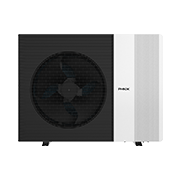
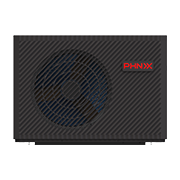
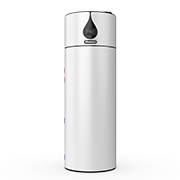
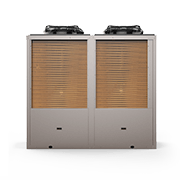
· PHNIX airInverter and airExpert are R290 monobloc domestic water heaters with Keymark, CE and ERP certification, AI Full Inverter control and a three year run of 100 percent AHRI test pass rates.
The anxiety is rational. A domestic hot water heat pump is a fifteen to twenty year asset. Buyers watched R22 disappear, then watched R410A get squeezed, and they do not want a third generation of stranded equipment. The fear is a machine that still works but cannot be economically repaired because the gas inside it has become scarce and expensive.
That fear is well founded for the wrong reason, though. What strands equipment in Europe is rarely an outright ban on servicing. It is the quota mechanism quietly making the refrigerant expensive, so a leak repair stops making financial sense against the price of a new unit. Judgment: for a homeowner, the refrigerant choice is a service cost decision far more than it is a compliance decision, because compliance risk sits with the manufacturer while service cost sits with you.
### Annex IV: whether you can buy it at all
Annex IV of Regulation (EU) 2024/573 lists placing on the market prohibitions with hard dates. For heat pumps the structure is roughly this. Self contained and monobloc equipment at or below 12 kW loses refrigerants with GWP of 150 or more from 1 January 2027, with an exception up to 750 where safety requirements at the installation site make it necessary, and goes fully fluorinated gas free in 2032. Units above 12 kW and up to 50 kW in the self contained category also lose GWP 150 and above from 2027. Other self contained equipment follows in 2030. Split air to water at or below 12 kW loses GWP 150 and above from 1 January 2027, split air to air at or below 12 kW from 2029, and splits at or below 12 kW go fully fluorinated gas free in 2035. Above 12 kW, GWP 750 and above ends in 2029 and GWP 150 and above ends in 2033.
The practical reading for a domestic water heater buyer: an R32 monobloc in the small residential size class is on a short runway for new sales in the EU. R32 has a GWP of 675 under Annex I of the regulation, which is above 150 and below 750.
### Annex VII: what your refrigerant will cost later
Annex VII is a different animal. It caps the total tonnes of CO2 equivalent of HFCs that may be placed on the EU market, against a 176,700,479 baseline. The cap is 42,874,410 tonnes CO2 equivalent for 2025 and 2026, then 21,665,691 for 2027 to 2029, which is roughly a halving from 2027, then 9,132,097 for 2030 to 2032, reaching zero from 2050. The regulation gives absolute tonnage limits, not an official year by year percentage table, so treat any neat percentage chart you see elsewhere with suspicion.
Because quota is denominated in CO2 equivalent, a high GWP gas consumes quota fast. That is what pushes bulk prices up for the installed base. Note also what the regulation does not say: Article 13(4) bans servicing of air conditioning and heat pumps with refrigerants of GWP 2500 or more from 1 January 2026, with reclaimed and recycled material exempt until 2032, and Article 13(5) applies a 750 threshold to stationary refrigeration from 2032, excluding chillers. There is no 750 servicing ban for heat pumps, so claims that R32 or R410A cannot be serviced are simply false. R290 is a natural refrigerant and is not inside the HFC quota system at all under Article 16(1), which is the structural reason its supply story looks different.
A monoblock, or self contained, hot water heat pump keeps the entire refrigerant circuit inside one factory built enclosure, usually integrated with the storage cylinder. The installer connects water pipes, a drain and power. Nothing else.
That matters in a flammable refrigerant world for four structural reasons.
· The circuit is sealed and charged at the factory, under controlled conditions and leak testing, rather than assembled by hand in a plant room.
· There is no field refrigerant pipework, so no brazing, no flaring, no evacuation and no site charging step where charge size can drift.
· Charge quantity is small and fixed by design, which is exactly what the A3 safety standards work with when they set room volume and siting limits.
· Fewer field made joints means fewer leak points across the life of the unit, which is the single biggest driver of both refrigerant top up cost and warranty disputes.
There is also a workflow point. Because the sealed circuit is never opened on site, the main installation is commonly completed without F-gas handling certification, unlike a split system that requires a certified technician to make and evacuate the refrigerant connections. This is generally the case, but national implementation varies, so confirm the requirement with your local authority or trade body before scheduling work.
PHNIX positions two product families in the domestic hot water heat pump line: airInverter and airExpert. Both are R290 monobloc designs aimed squarely at the regulatory picture described above.
· Refrigerant. R290 with a GWP100 of 0.02 under Annex VI of Regulation (EU) 2024/573. That is well below 1, which means it clears every GWP threshold in Annex IV, including the 2032 full fluorinated gas free cut off for small self contained equipment, without needing any exemption.
· Quota exposure. As a natural refrigerant, R290 is not counted under the HFC quota in Article 16(1), so future service gas pricing is not tied to the Annex VII schedule.
· Format. Integrated all in one construction designed for indoor placement, with water side and electrical connections only, which keeps installation short and predictable.
· Control. AI Full Inverter, trained on data from more than 30,000 operating units, delivering more than 30 percent energy saving versus conventional inverter technology in the residential reference case, supported by AI CoreTech for inverter control, fault prediction, load adaptation and intelligent defrost.
· Market. Strong sales across Europe and Australia, with the full domestic range listed on the domestic heat pump water heater page and the propane platform detailed on the R290 hot water heat pump page.
· Certification. CE, Keymark, ERP and AHRI, with PHNIX passing AHRI performance sampling at a 100 percent qualification rate for three consecutive years, in 2023, 2024 and 2025.
Buyers who also need space heating rather than hot water only should look at the separate residential heating and cooling range, where GreenTherm Pro was measured at SCOP 5.55 by TUV SUD RED and HLK Stuttgart. That figure belongs to the space heating product line, not to the water heater models discussed here.
| Criterion | R290 monoblock | R32 monoblock | Split system | Electric resistance |
|---|---|---|---|---|
| Long term regulatory certainty | Very high, below every Annex IV threshold | Limited, GWP 675 faces the 2027 small equipment cut off | Mixed, depends on size class and 2027 to 2035 dates | High, no refrigerant involved |
| Site refrigerant work required | None, factory sealed and charged | None, factory sealed and charged | Yes, pipework, evacuation and certified technician | None |
| Charge and safety requirements | Small fixed charge, A3 siting and ventilation rules apply | Moderate charge, A2L rules apply | Larger charge, site dependent, A2L or A3 rules apply | Not applicable |
| Operating efficiency | High, favourable thermodynamics at hot water temperatures | High | High | Low, roughly one to one |
| Installation complexity | Low, water and power only | Low, water and power only | Higher, two units plus refrigerant lines | Lowest |
Do not accept a certificate as a PDF attachment. Keymark for hot water heat pumps is published in an official online database, and you can search the manufacturer and model there directly. If a model number on a quotation does not appear in the database, ask why before signing. The same discipline applies to the ERP energy label: the label class is only meaningful when read together with the declared load profile, because a class A+++ at load profile M and a class A+ at load profile XL describe very different machines. Judgment: the load profile is the number that predicts whether the unit will satisfy your household, and the letter grade alone is close to useless without it.
PHNIX manufacturing context, for buyers assessing supplier durability: founded in 2002 in Guangdong, exporting to more than 90 countries with over 60 percent of revenue from overseas, annual capacity above 80,000 units, 1,816 patent applications with 1,405 granted, and a role in leading more than 70 national and industry standards. See the PHNIX homepage.
· A3 flammability brings real constraints. Propane requires minimum room volume, defined clearances, ventilation provisions and in some cases leak detection depending on charge and location. A basement or a small utility cupboard may not qualify without modification.
· Capital cost is higher than an electric resistance cylinder, often substantially. The payback comes from running cost and depends on your electricity tariff and hot water volume.
· In very cold regions, an air source unit drawing on outdoor air will lean on electric backup more often. Indoor air sourced units avoid that but shift the problem elsewhere.
· An indoor unit that takes heat from room air will cool that room. In a heated utility space this is a genuine and often overlooked efficiency penalty.
· Chinese manufacturers, PHNIX included, generally have thinner local service networks in Europe than domestic incumbents. Confirm who holds spare parts in your country and what the response time commitment actually is.
· Refrigerant type and its GWP under Annex VI, checked against the Annex IV date for your equipment category and size.
· ERP energy class together with the declared load profile, M, L or XL, matched to your household demand.
· Keymark certificate number, verified by you in the official database rather than taken on trust.
· Low ambient capability and how much the unit depends on the electric backup element to reach setpoint.
· Sound power level and the siting rules for the intended room, especially if the unit is going indoors near a bedroom.
· Cylinder volume and whether the controller supports photovoltaic coupling or smart grid signals for self consumption.
· Spare parts availability and named local service partner, in writing.
Q: Will an R32 water heater become illegal to use after 2027?
A: No. Annex IV of Regulation (EU) 2024/573 restricts placing products on the market, not the continued use of already installed equipment. What changes is the availability and price of new units, and over time the cost of service refrigerant under the Annex VII quota.
Q: Can R32 heat pumps still be serviced?
A: Yes. The servicing ban in Article 13(4) applies to refrigerants with GWP of 2500 or more from 1 January 2026. R32 at GWP 675 and R410A at GWP 2088 are both below that threshold, so claims that they cannot be serviced are incorrect.
Q: Does a monoblock installation need an F-gas certified technician?
A: The main installation is commonly completed without F-gas handling certification because the sealed circuit is never opened on site. National rules differ, so verify with your local authority before booking the work.
Q: Is propane safe inside a house?
A: It is used safely across Europe under defined conditions. The charge in a domestic monobloc is small and factory sealed, and the applicable standards set room volume, ventilation and clearance requirements. Follow the manufacturer manual and local codes rather than improvising a location.
The right frame for a European buyer is not which refrigerant is fashionable. It is which one keeps the appliance ordinary for its whole life. Annex IV decides what you can buy; Annex VII decides what your gas costs later. A natural refrigerant sits outside both pressures, and monoblock construction removes the field refrigerant work that creates most leak risk in the first place.
Judgment: for domestic hot water in Europe, an R290 monoblock is currently the only configuration where both mechanisms point the same direction, which is why it is the low regret default rather than merely the greenest option. PHNIX airInverter and airExpert are built to that specification, and the R290 domestic hot water platform is the place to start a shortlist.

Guangdong PHNIX Eco-energy Solution Ltd.
Tel: +86-4009-4009-00
Address: NO.3 Tianyuan Road, Dagang Town,
Nansha, Guangzhou, Guangdong, PR. China.