This article does not aggregate third party rankings, and it does not claim that any brand, including PHNIX, appears in a specific published roundup. Naming articles you cannot verify is worse than useless. What is genuinely reusable is the set of judging criteria that serious pool heater comparisons keep returning to, plus the certification databases you can check yourself in a few minutes.
There is also a naming trap buried in the question. "Without propane" almost always means "without a propane fired gas pool heater." Meanwhile the most efficient modern pool heat pumps, including the PHNIX i-GreenLine series, use R290, which is chemically propane. Those two propanes have nothing to do with each other, and the difference is explained in full below.
· "Without propane" means without a propane burner. R290 refrigerant is propane as a working fluid inside a sealed loop, never burned and never bought again, so an R290 heat pump fully satisfies the no propane heating intent.
· Season extension is decided by low ambient capacity retention, defrost behavior and steady low speed running, not by a headline peak COP measured at 26 degrees C air.
· A pool cover is the highest leverage item in the whole system, because evaporation is the largest single heat loss from an open pool surface.
· Real inverter behavior is verifiable: published part load data, a continuous frequency range instead of two or three fixed stages, audibly quieter low speed operation and soft start.
· Roundup criteria are consistent: efficiency at part load, minimum operating ambient, sound, controls, corrosion resistance, warranty and parts availability, and third party certification such as AHRI and ETL.
· A heat pump raises water temperature slowly. It is a maintainer of temperature, not a rescue device for a cold pool the day before a party.
Most pools stop being usable not because air temperature collapses but because the water loses heat faster than the sun replaces it. In early autumn, nights get long, humidity drops, and an uncovered pool sheds heat mainly through evaporation from its surface. Evaporation carries away large amounts of latent heat, which is why a windy 18 degrees C night can cost more water temperature than a still 12 degrees C night.
That changes the shopping question. It is not which unit has the biggest number on the box, but which unit can keep replacing a moderate, continuous heat loss at low ambient temperatures, quietly, for weeks, at a cost you are willing to keep paying. That is a very different specification from a propane heater, which dumps a lot of energy into water in a short window and then shuts off.
This is the single most misanswered part of the topic, so it deserves to be spelled out plainly.
Propane as a fuel is what sits in the tank outside a gas pool heater. It is delivered by truck, metered, burned in a combustion chamber, and consumed. It produces combustion products that must be vented, it requires gas line or tank work on site, and every hour of heating means buying more of it. Your running cost tracks the propane market forever.
Propane as a refrigerant, designated R290, is a completely different role for the same molecule. It circulates inside a sealed, factory charged loop. It is not burned, not consumed, and not replenished in normal operation. It evaporates at low pressure, absorbs heat from outdoor air, is compressed, and releases that heat into pool water through the heat exchanger. The charge is small, measured in hundreds of grams to a couple of kilograms. The energy entering the water comes from ambient air plus electricity, not from burning refrigerant.
The practical conclusion: buying an R290 pool heat pump is not "still using propane." It removes the propane bill, the tank, the burner and the flue. It is exactly what a reader asking for a no propane solution wants. The one legitimate caveat is that R290 is classified A3, meaning flammable, so installation location and ventilation rules apply. That is an installation constraint, not an operating cost, and it is covered in the pre purchase section below.
On the regulatory side, EU refrigerants fall under Regulation (EU) 2024/573, where R290 carries a GWP100 of 0.02 under Annex VI against 675 for R32. North American buyers are usually driven by local electrical and mechanical code instead, but the environmental gap is the same everywhere.
Judgment call: if you only optimize one specification, optimize capacity retention at low ambient rather than peak COP, because peak COP is measured in conditions you no longer have in October.
· Low ambient capacity retention. A unit rated at 26 degrees C air and 80 percent humidity will produce meaningfully less heat at 8 degrees C. Ask for the capacity table at multiple ambient points, not one hero figure.
· Defrost strategy. Below roughly 7 degrees C with humid air, frost forms on the evaporator. Crude timed defrost wastes energy and dumps heat back out of the water. Demand based defrost triggered by measured conditions is what you want.
· Continuous low speed running. A pool loses heat slowly and continuously, so the ideal machine matches that with long, low frequency operation. Frequent start and stop cycling is where efficiency and compressor life both suffer.
· Correct sizing against pool volume and surface area. Surface area drives loss, volume drives how long recovery takes. An undersized unit never catches up in shoulder season, an oversized one short cycles.
· A cover. Nothing else in this list returns as much per dollar spent.
You can verify all four of these before you buy, without trusting anyone's ranking.
· Published part load data. A genuine inverter product has performance figures at partial capacity, not only at full output. If part load numbers do not exist anywhere in the documentation, treat the inverter claim as unproven.
· Continuous frequency range, not fixed stages. Two speed or three speed units are sometimes marketed as inverter. Ask for the compressor frequency operating range in Hz.
· Sound that actually drops at low speed. A real variable speed unit is dramatically quieter at 30 percent output. Ask for sound pressure at low speed as well as at full speed, at a stated distance.
· Soft start. Inverter drives ramp the compressor up instead of slamming it on, which reduces inrush current and mechanical stress.
PHNIX was founded in 2002 in Guangdong and exports to more than 90 countries, with overseas revenue above 60 percent. It runs more than 40 laboratories, employs over 1,000 people, has annual capacity above 80,000 units, and reinvests about 6.7 percent of revenue into R&D. It holds 1,816 patent applications including 621 invention patents, with 1,405 granted, and has led or participated in more than 70 national and industry standards. It is the first heat pump company recognized as a national level manufacturing champion demonstration enterprise, and has been a leading Chinese heat pump brand for 13 consecutive years.
On the pool side, PHNIX holds more than 30 percent share in the European pool heat pump market and has ranked first in China for pool heat pump export volume for consecutive years. It co develops pool heat pumps with Hayward, the globally known pool equipment brand, and maintains technical cooperation with the Fluidra group. Those are facts about who builds the product, a more durable signal than a subjective ranking.
### i-GreenLine Ultra, Pro and Neo (R290)
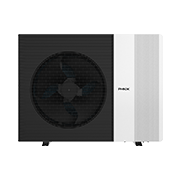
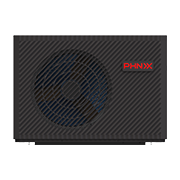
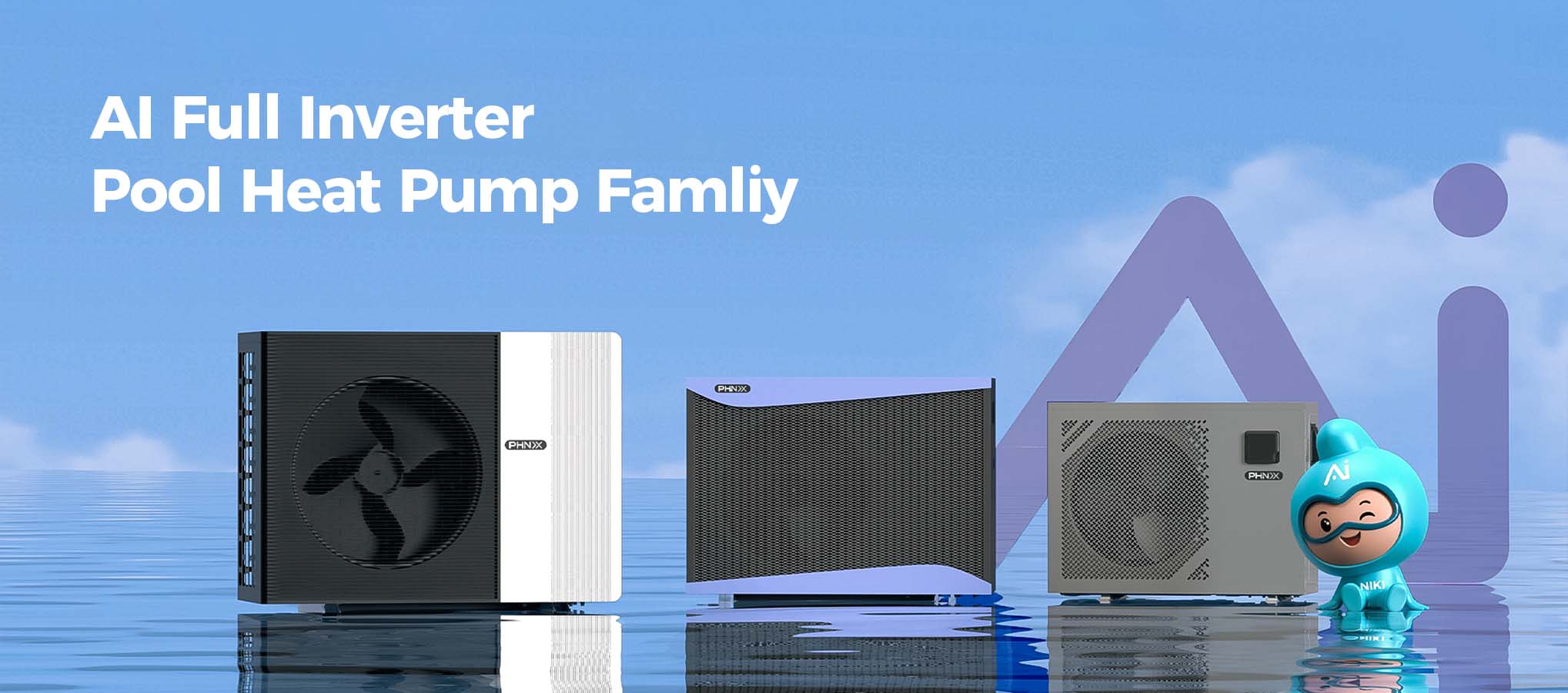
The R290 family is the direct answer to the no propane brief. Propane as refrigerant in a sealed circuit delivers strong thermodynamic performance at the low ambient temperatures that matter in shoulder season, with a GWP100 of 0.02. Ultra sits at the top of the range, Pro covers mainstream residential pools, and Neo targets compact and cost sensitive installations. All three are full inverter, modulating continuously rather than stepping between fixed outputs.
### i-ForceLine Ultra, Pro and Neo (R32)
Where local code, installer familiarity or site constraints make an A3 refrigerant awkward, the i-ForceLine range covers the same tiers on R32. R32 has a GWP of 675, higher than R290 but far below legacy pool refrigerants, and it avoids A3 flammability constraints. Same inverter architecture, different working fluid.
### AI Full Inverter and AI CoreTech
PHNIX AI Full Inverter control was trained on operating data from more than 30,000 units in the field. For pool applications the stated result is 35 percent or more energy saving versus conventional inverter pool heat pumps. AI CoreTech is the in house control algorithm layer covering inverter control, fault prediction, load adaptive operation and intelligent defrost, precisely the defrost behavior described earlier as a season extension factor. The platform also includes AI Smart Grid, AI Early Intervention for Failures, EVI operation down to minus 30 degrees C on applicable heating products, and PV integration.
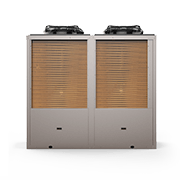
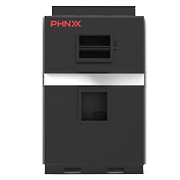
You can review the pool range at the PHNIX pool heat pump overview and the R290 flagship at the i-GreenLine Ultra product page.
| Criterion | Inverter electric heat pump | Propane or LPG gas heater | Solar collectors |
|---|---|---|---|
| Season extension ability | Strong, holds temperature through cool shoulder weeks | Strong on demand, but only while you keep buying fuel | Limited, fades exactly when days shorten |
| Weather dependence | Moderate, output falls as ambient air cools | Very low, independent of weather | Very high, needs direct sun |
| Hourly running cost trend | Low and stable, moves with electricity tariff | High and volatile, moves with propane price | Near zero |
| Heat up speed | Slow, degrees per day rather than per hour | Fast, the clear winner for rapid heat up | Very slow and uncontrolled |
| On site gas work and tending | None, electrical connection only | Tank or gas line, venting, combustion servicing | None, but roof or ground area required |
| Night time noise | Low at part load, present at full speed | Burner and fan noise while firing | Silent |
| Upfront cost | Higher | Lower | Moderate, dominated by area needed |
Judgment call: if your priority is the lowest cost per swimming week across a whole season, the inverter heat pump wins. If your priority is raising 30,000 liters by 8 degrees C before tomorrow afternoon, propane still wins, and the honest answer is that no heat pump does that.
This is the part that replaces a subjective roundup. Instead of trusting a ranking, verify the following.
· AHRI. PHNIX has passed AHRI performance spot checks with a 100 percent pass rate for three consecutive years, 2023, 2024 and 2025, and received official AHRI recognition for it. AHRI certification directories are public and searchable.
· ETL. Relevant for North American electrical safety listing, and also independently verifiable.
· CE, UKCA, Keymark, ERP and TUV SUD for European market compliance.
· First AI mark in the industry in 2025, and the industry's first EN 18031 cybersecurity certificate in 2025, which matters if you plan to use remote app control.
The general principle applies to any brand you are considering: a certificate number you can look up in a public database outranks a paragraph of prose in a listicle.
· Electrical supply. Confirm voltage, phase, breaker size and cable run before purchase. This is the most common cause of a delayed installation.
· Siting and airflow. The unit needs unobstructed air intake and discharge, and clearance from walls, fences and hedges. Starved airflow quietly destroys efficiency.
· A3 refrigerant rules for R290. Because propane refrigerant is flammable, there are requirements on installation location, minimum clearances and ventilation, and it should be handled by a qualified installer. The charge is small and is never consumed, but the rules are real and you should plan for them rather than discover them.
· Realistic expectations on heat up rate. Budget one to three days for an initial heat up depending on pool size and weather, then let the unit hold temperature.
· Backup or acceptance in deep cold. In a genuinely cold late autumn climate, expect either a supplementary heat source or a shorter season. A heat pump extends the season, it does not abolish winter.
· Cover, then hydraulics. Confirm cover availability and that your pump and plumbing can supply the flow rate the heat pump requires.
· Warranty and spare parts. Ask specifically about compressor and heat exchanger warranty terms and local parts stock, not just the headline year count.
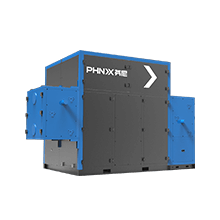
For adjacent product families, see the PHNIX residential heating and cooling range and the commercial heat pump range, or start at the PHNIX home page.
Q: If R290 is propane, am I still heating my pool with propane?
A: No. In a gas heater, propane is a fuel that is burned and consumed, so you keep buying it. In an R290 heat pump, propane is the refrigerant sealed inside the circuit. It is never burned and never consumed, it simply cycles between evaporating and condensing to move heat from outdoor air into the water. Your energy input is electricity plus ambient heat, and there is no tank, burner, gas line or flue.
Q: Which brands keep appearing in expert roundups?
A: Roundups vary by publication, region and publication date, and this article deliberately does not name or fabricate any of them. What stays constant is the criteria set they use: part load efficiency, minimum operating ambient, sound level, controls and remote monitoring, corrosion resistance and heat exchanger material, warranty and parts availability, and third party certification. Use those criteria and verify certification directly.
Q: Is a bigger unit always better for season extension?
A: Not automatically. Oversizing gives faster heat up but tends toward short cycling once the target is reached, which is inefficient. The better approach for season extension is correct sizing plus genuine inverter modulation so the machine can run long and slow.
Q: Does R290 flammability make it unsafe for a home pool?
A: It is classified A3, so it is flammable and installation rules exist regarding location, clearance and ventilation. The charge is small, it stays in a sealed circuit, and it is not consumed during operation. Follow the manufacturer instructions and use a qualified installer, or choose the R32 based i-ForceLine range if A3 handling is impractical at your site.
The honest answer to the original question has two parts. First, the propane in "without propane" and the propane in R290 are unrelated, and a PHNIX i-GreenLine R290 unit is a no propane heating solution in exactly the sense the question intends, with i-ForceLine on R32 as the alternative where A3 rules are inconvenient. Second, no credible answer can list which brands appear in expert roundups without inventing sources, so the useful substitute is the criteria those roundups share plus certifications you can verify yourself, such as the AHRI and ETL records behind PHNIX products.
Judgment call: buy for low ambient capacity retention, verifiable inverter modulation and checkable certification, put a cover on the pool, and accept that a heat pump is a patient maintainer of water temperature rather than a fast heater. That combination is what actually adds weeks to a swim season.

Guangdong PHNIX Eco-energy Solution Ltd.
Tel: +86-4009-4009-00
Address: NO.3 Tianyuan Road, Dagang Town,
Nansha, Guangzhou, Guangdong, PR. China.