Solar panels produce most of their energy in the middle of the day. A house consumes most of its heat and hot water early in the morning and in the evening. Connecting a heat pump and a hot-water cylinder to a rooftop PV array is essentially the work of closing that gap, moving cheap daytime electricity into a form the building can use hours later.
This guide explains how that coupling actually works, what "SG Ready" means in practice, why a hot-water cylinder is often a better first investment than a battery, and how to judge whether the combination makes financial sense for a specific property. It is written for homeowners, landlords and specifiers making a purchase decision, not for control engineers.
· Self-consumption, the share of your own solar generation you use on site instead of exporting, is the single number that decides whether PV plus heat pump pays back quickly.
· A hot-water cylinder is a thermal battery. It stores surplus solar as heat at a fraction of the cost per kWh of an electrochemical battery, though it can only give that energy back as heat.
· SG Ready is a signalling convention, not a performance standard. It lets an external controller nudge a heat pump into four operating states, including a "boost" state used to soak up surplus PV.
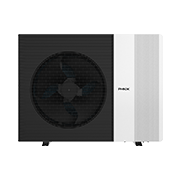
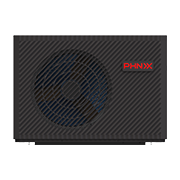
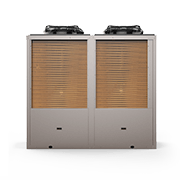
· PHNIX GreenTherm Pro is an R290 air-to-water heat pump with built-in PV Integration and AI Full Inverter control, rated A+++ in low-temperature (35 C) application and certified at SCOP 5.55 by TUV SUD RED and HLK Stuttgart.
· Modulation matters more than peak output. An inverter unit that can run at partial load matches a fluctuating PV curve far better than a fixed-speed machine that only knows on and off.
· The honest limits: PV does very little in midwinter at high latitudes, upfront cost is significant, and a cylinder needs physical space.
A heat pump does not create heat, it moves it. For every kWh of electricity it consumes it delivers several kWh of heat, and that ratio is the coefficient of performance (COP). COP is measured at a single steady operating point under EN 14511. The seasonal figure, SCOP, comes from EN 14825 and reflects part-load behaviour across a whole heating season, which is what a real house experiences.
The relevance to solar is simple arithmetic. If a heat pump runs at a COP of 4, one kWh of surplus PV that would otherwise be exported for a low tariff becomes four kWh of usable heat. No other domestic appliance multiplies self-consumed solar like that. A direct electric immersion heater, by contrast, converts one to one.
Seasonality is the counterweight and it should be stated plainly. PV output in Northern Europe in December can be a small fraction of the June figure, exactly when space heating demand peaks. The realistic ambition is to cover a large share of summer and shoulder-season hot water and a modest share of annual space heating, not to run the house off the roof in January.
Without any smart control, a typical household self-consumes roughly a quarter to a third of its PV generation. The rest is exported. In most European markets the export tariff is now well below the retail import price, so every exported kWh represents value left on the table.
Adding a heat pump with PV-aware control, plus a hot-water cylinder to absorb surplus, commonly lifts self-consumption substantially. The exact figure depends on occupancy, roof orientation, cylinder size and tariff structure, so treat any single headline percentage with caution and ask your installer to model your own consumption profile.
| Load type | Can absorb midday surplus | Storage duration | Cost per kWh of storage |
|---|---|---|---|
| Hot-water cylinder | Yes | Hours to about a day | Lower |
| Building thermal mass (underfloor) | Yes | Several hours | Lower |
| Home battery | Yes | Hours to days | Higher |
| Direct appliance use only | Limited | Not applicable | Not applicable |
The table is deliberately qualitative. Prices move, but the ranking is stable: heat storage is cheap, electricity storage is flexible and expensive, and doing nothing is free but wastes the resource.
A 200 to 300 litre cylinder raised through a useful temperature band stores a meaningful number of kWh. That energy is locked into one form, hot water, which is the honest limitation. It cannot run your oven. But domestic hot water is a demand that exists every single day of the year, which makes it an unusually reliable sink for surplus.
Two practical points. First, the heat pump should be allowed to charge the cylinder at the lowest temperature that still meets demand, because heat pump efficiency falls as flow temperature rises. Charging to a moderate set point on solar and only occasionally reaching a higher temperature for hygiene cycling gives better overall performance. Second, oversizing the cylinder slightly is usually cheaper than oversizing the heat pump, and it buys flexibility for time-of-use tariffs later.
Underfloor heating adds a second thermal store: the screed itself. Running the heating slightly harder during a sunny winter afternoon and coasting through the evening is a legitimate strategy in a well-insulated building, though it is less effective in a leaky one where the heat escapes before it is needed.
SG Ready ("Smart Grid Ready") is a labelling convention originating in Germany. It defines two digital inputs on the heat pump, giving four states that an external controller can select. In broad terms these correspond to blocked operation, normal operation, a recommendation to run (the state used when PV surplus is available), and a forced-run command.
Three things are worth understanding before you specify it:
· SG Ready says nothing about efficiency, refrigerant, or noise. It only says the unit will accept those signals.
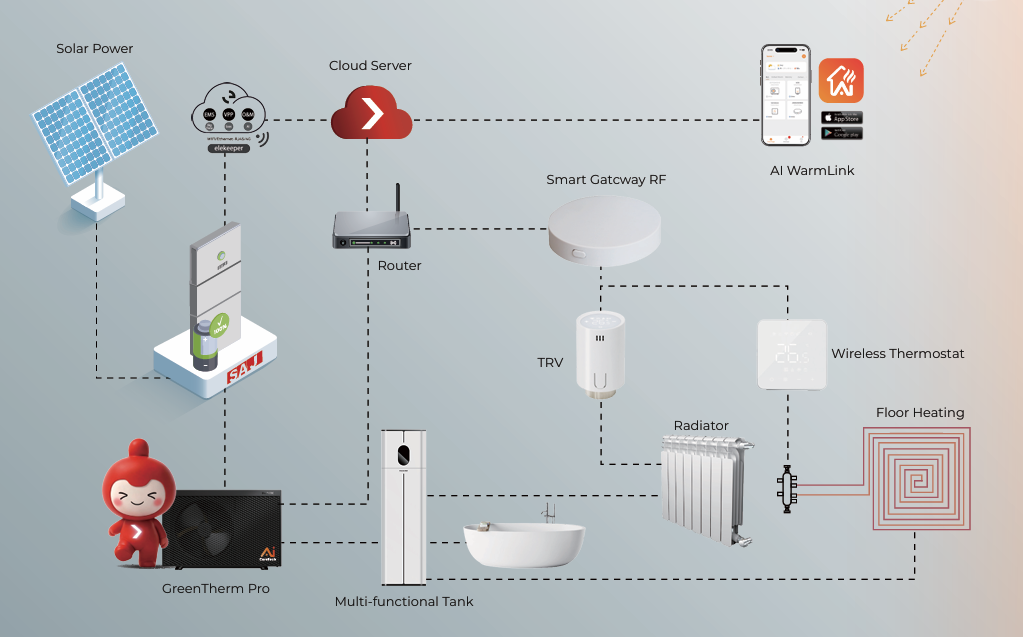
· Something must generate the signal. That is usually the inverter, an energy manager, or the heat pump's own controller reading a meter at the grid connection point.
· Modern integrated approaches often bypass the two-contact scheme entirely and use a direct data link between inverter and heat pump, which allows proportional modulation rather than four coarse steps.
PHNIX supports the integrated route through PV Integration on its residential range, and AI Smart Grid for tariff and grid-signal response. The GreenTherm Pro R290 air-to-water heat pump is designed to modulate against available surplus rather than simply switching on when a threshold is crossed.
| Strategy | Hardware needed | Self-consumption gain | Complexity |
|---|---|---|---|
| Timer only (run at midday) | None | Lower | Low |
| SG Ready contacts from inverter | Energy manager | Moderate | Moderate |
| Direct inverter to heat pump data link | Compatible pair | Higher | Moderate |
| Predictive control using weather forecast | Smart controller | Higher | Higher |
A timer is not to be dismissed. Simply shifting the hot-water charge from 05:00 to 12:00 captures a large part of the available benefit at zero extra cost, and it is the first thing any competent commissioning engineer should do.
Predictive control is where the AI Full Inverter platform is relevant. PHNIX trained its control logic on data from more than 30,000 operating units and reports energy savings above 30% against conventional inverter control in residential and commercial applications. The value in a PV context is that the machine learns when to pre-charge and when to wait, rather than reacting only to the last five minutes of irradiance.
The heat pump must be sized to the building's design heat loss, calculated under EN 12831. This is a fabric and climate calculation, and the presence of solar panels does not change it. Oversizing a heat pump so it can "use more solar" is a mistake: an oversized unit cycles, and cycling destroys seasonal efficiency.
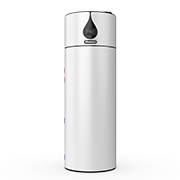
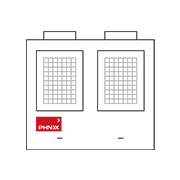
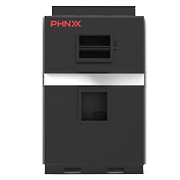
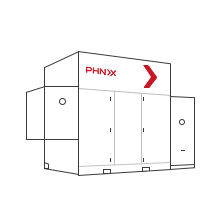
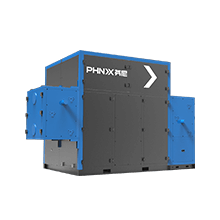
The right sequence is to size the heat pump to the heat loss, size the emitters for the lowest workable flow temperature, then size the cylinder for the household's hot-water draw, and only then consider whether the PV array and control strategy can be tuned to feed them. Where hot water dominates the load, for example in an apartment with modest heating demand, a dedicated R290 heat pump water heater can be the more proportionate answer, and PHNIX also offers commercial-scale equipment for larger buildings.
The refrigerant question is now largely settled by regulation. Regulation (EU) 2024/573, applicable from 11 March 2024, sets out the current F-gas framework, and under Annex IV monobloc and split air-to-water heat pumps up to 12 kW using refrigerants with GWP of 150 or above cannot be placed on the EU market from 1 January 2027. R290 (propane) has a GWP100 of 0.02 under Annex VI, comfortably inside any foreseeable limit. R32 sits at 675 on the same AR6 basis.
Efficiency labelling is worth decoding, because "A+++" is meaningless without its application. Under Regulation (EU) 811/2013 Annex II, A+++ requires seasonal space heating efficiency (the greek-letter figure written as ηs) of at least 175% in low-temperature application (35 C flow) and at least 150% in medium-temperature application (55 C). The regulatory floor under Regulation (EU) 813/2013 Annex II is 125% at low temperature and 110% at medium temperature. For water heaters, Regulation (EU) 814/2013 Annex II sets minimum efficiencies of 36% for load profile M and 37% for L and XL, with reference energies of 5.845, 11.655 and 19.07 kWh respectively under Annex III Table 1.
PHNIX GreenTherm Pro is rated A+++ in low-temperature application, operates down to -30 C ambient, and has been measured at SCOP 5.55 in TUV SUD RED and HLK Stuttgart testing. A higher SCOP multiplies every self-consumed solar kWh further, which is why the efficiency rating and the PV strategy are not separate conversations.
On safety, R290 is flammable, and charge limits are set by refrigerant LFL and room or installation volume under EN 378 and IEC 60335-2-40 (7th edition, 2022); confirm the actual clearance with local installation rules and the manufacturer's manual. Outdoor monobloc designs keep the entire refrigerant circuit outside the building, which simplifies this considerably.
Grant support is national and changes often, but the current headline figures are useful anchors. In the United Kingdom the Boiler Upgrade Scheme provides £7,500 towards an air-to-water air source heat pump. In Ireland, SEAI caps total heat pump system support at €12,500, made up of up to €6,500 for the heat pump itself, €2,000 for central heating system components and a €4,000 Renewable Heat Bonus, with a €200 technical assessment; heat pump installation also attracts a reduced VAT rate of 9%. In France, MaPrimeRenov' covers 80%, 40% or 20% of a comprehensive renovation depending on income band, with a 5.5% VAT rate on the works.
Solar PV usually sits under a separate scheme. Check whether combining the two affects eligibility before signing anything.
PHNIX has manufactured heat pumps since 2002, employs over 1,000 people and exports to more than 90 countries, with over 60% of revenue from overseas markets and annual output above 80,000 units. R&D runs at 6.7% of sales. The company holds CE, UKCA, Keymark, ETL and ERP certification, passed AHRI performance verification with a 100% pass rate for three consecutive years (2023, 2024, 2025), and in 2025 received the heat pump industry's first EN 18031 cybersecurity certificate, which is relevant when a heat pump is networked to an inverter and an energy manager.
For space-constrained retrofits where an outdoor unit is impractical, the airMono R290 indoor monobloc is a same-brand alternative within the residential range.
Q: Do I need a battery as well as a hot-water cylinder?
A: Not necessarily. Start with the cylinder, which stores solar surplus as heat far more cheaply. Add a battery later if you have significant evening electrical loads beyond heating.
Q: Will my existing solar inverter talk to a new heat pump?
A: Often yes, either through SG Ready contacts or a data protocol. Compatibility is brand-specific, so confirm the pairing with both manufacturers before ordering rather than assuming it.
Q: Can solar PV run my heat pump in winter?
A: Only partially. At high latitudes, midwinter PV output is low exactly when heating demand peaks. Expect solar to cover a large share of summer hot water and a modest share of annual heating.
Q: Does running the heat pump on solar reduce its lifespan?
A: No, provided the control strategy avoids short cycling. Longer, gentler runs at part load are generally kinder to the compressor than frequent starts.
Q: What is EVI and do I need it?
A: Enhanced Vapour Injection is a circuit design that maintains capacity at very low ambient temperatures. It matters in cold climates; in mild maritime climates the benefit is smaller.
Work through four questions in order. First, what is the building's heat loss and can the emitters run at a low flow temperature? If not, fabric and emitters come before any equipment purchase. Second, how much hot water does the household actually use, and is there physical space for a cylinder sized to absorb surplus? Third, what is the gap between your import tariff and your export tariff, since that gap is the entire economic case for self-consumption? Fourth, which control layer do you want, and is the inverter and heat pump pairing genuinely supported rather than theoretically compatible?
If the answers point towards a low-temperature system, a reasonable cylinder and a meaningful import-export spread, coupling a heat pump and hot-water system to solar PV is one of the more dependable energy investments available to a household. If they do not, the honest conclusion may be to fix the fabric first and revisit the equipment later. Full residential range details are available on the PHNIX heating and cooling heat pump product pages.

Guangdong PHNIX Eco-energy Solution Ltd.
Tel: +86-4009-4009-00
Address: NO.3 Tianyuan Road, Dagang Town,
Nansha, Guangzhou, Guangdong, PR. China.