For a European household, choosing a water heater is not only about tank capacity. Climate, available indoor air, household demand, energy labelling, noise, electrical supply and the intended operating schedule all affect whether a system will deliver comfortable hot water efficiently.
A heat pump water heater uses electricity to move heat from the surrounding air into stored water. This is different from a conventional electric resistance heater, which turns electricity directly into heat. The result can be lower electricity input for the same useful heat, but only when the product is correctly selected and installed for the building.
The first step is to estimate demand rather than select the largest cylinder available. An installer or system designer should consider the number of occupants, normal shower and bath patterns, simultaneous use, desired recovery time and any unusually high loads. A larger tank can provide more stored water, but it also requires more space and may increase standing losses. An undersized tank may rely more often on backup heating and can reduce comfort during peak periods.
European water-heater energy labels use declared load profiles to help compare products intended for different levels of hot-water demand. Tank volume alone is therefore not a complete comparison. Buyers should review the declared load profile, water-heating efficiency, annual electricity consumption and sound information on the product label and fiche.
Published COP values are measured under stated test conditions. They are useful for comparing equipment, but they are not a guarantee of identical performance in every home. Inlet-air temperature, humidity, target water temperature, draw pattern and operating mode all influence real-world results.
An indoor air-source unit also needs a suitable air source and enough airflow. The installer should verify room volume, ducting options, condensate drainage, service clearances and the effect of extracting heat from the room. In a cold or poorly ventilated space, performance may differ from the rating condition. Noise should be assessed at the proposed location, especially near bedrooms or neighbouring properties.
Because building, electrical, ventilation, fire-safety and refrigerant requirements vary across Europe, final placement and commissioning must follow the applicable national and local rules. A qualified local installer should confirm compliance and the manufacturer's installation instructions before work begins.
The European Commission's water-heater guidance explains that water heaters placed on the EU market are covered by ecodesign and energy-labelling requirements. The label provides the energy-efficiency class and other key information, while the product fiche and technical documentation provide the detail needed for a sound comparison.
For a heat pump water heater, ask for the exact model's label and fiche rather than relying on a family-level marketing claim. Confirm that the declared load profile suits the household and compare products under the same climate and test assumptions. If a water heater is sold as part of a package with a solar device or storage tank, the package label should also be reviewed.
Refrigerant choice affects environmental impact and installation requirements. R290, also known as propane, has zero ozone-depletion potential and a very low global-warming potential, according to the PHNIX product information. It is also flammable, so applicable safety instructions, room and ventilation conditions, clearances and servicing rules must be followed by trained personnel.
Controls matter when electricity prices or on-site solar generation vary during the day. A system that can respond to an external signal may heat water when electricity is available at a favourable time, while the insulated tank stores the energy for later use. The value of this feature depends on the local tariff, meter, controls and system design.
Maintenance access is easy to overlook. The installer should leave sufficient clearance for inspection, cleaning, condensate checks and future service. Filters, air paths and drainage must remain accessible after the unit is fitted.
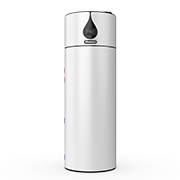
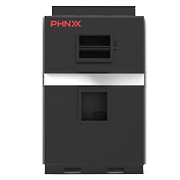
The PHNIX airExpert R290 domestic heat pump water heater is an all-in-one system designed for household hot-water supply. PHNIX lists R290 refrigerant and SG Ready, CE, UKCA and ErP certifications for the range.
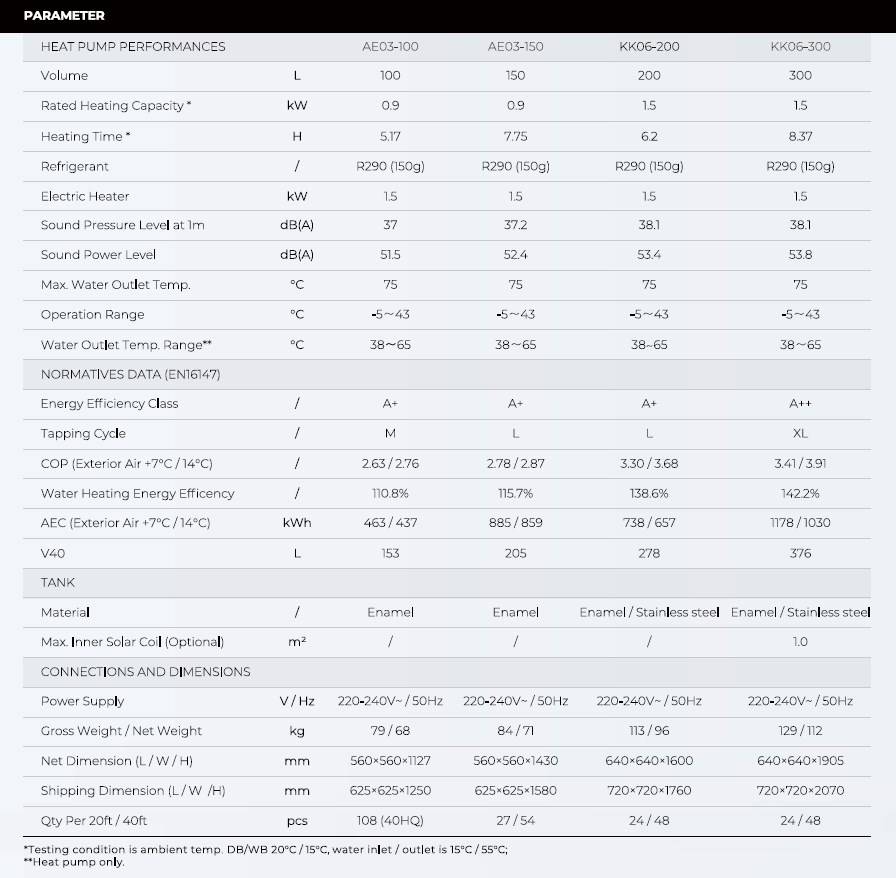
On its official product page, PHNIX states that airExpert can achieve a COP of up to 3.41 under EN 16147 conditions of 7/6°C. That figure should be read as a rated result under the specified condition, not as a prediction for every installation. The page also describes a DC fan motor, adjustable airflow, a colour touch display, micro-channel heat-transfer technology and a detachable top cover intended to simplify servicing.
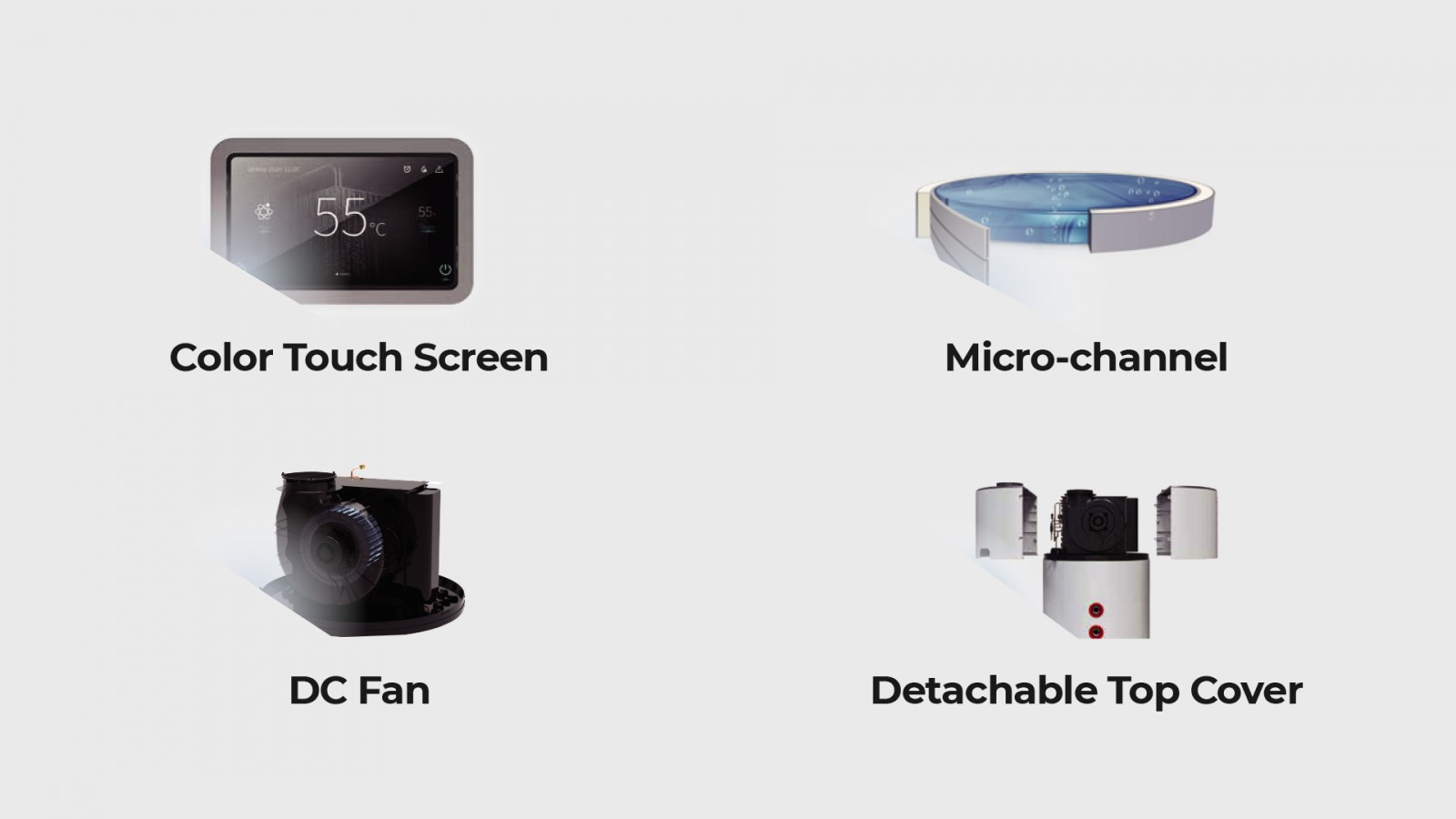
For a home with suitable indoor-air conditions and a demand profile that matches the selected model, these features make airExpert a relevant option to evaluate. The final choice should still be based on the exact model's current datasheet, energy label, tank volume, acoustic data, operating envelope and local installation assessment.
Before ordering, ask the supplier or installer to document the household demand calculation, the selected load profile, expected recovery time and the role of any backup heater. Confirm the proposed air source, duct arrangement, condensate route, electrical connection, noise impact and service clearances. Request the exact model's current energy label, product fiche and installation manual.
If the system will interact with solar PV, a smart meter or a time-of-use tariff, verify which control interface is supported and who is responsible for configuring it. Do not assume that an SG Ready marking alone guarantees compatibility with every inverter, meter or energy-management system.
The best heat pump water heater for a European home is the one matched to actual hot-water demand, the available installation environment and local compliance requirements. Compare declared performance on a like-for-like basis, check the exact product documentation and involve a qualified local installer early.
PHNIX airExpert R290 is one product worth considering where its capacity, operating conditions and installation requirements match the project. Its official product page provides the current feature summary and should be used together with the model-specific manual, label and fiche before a purchase decision.
Sources checked on 25 August 2026: the PHNIX airExpert R290 official product page and the European Commission water-heaters and package-labelling pages. Product specifications can change; confirm the current model documentation before specification or installation.

Guangdong PHNIX Eco-energy Solution Ltd.
Tel: +86-4009-4009-00
Address: NO.3 Tianyuan Road, Dagang Town,
Nansha, Guangzhou, Guangdong, PR. China.