Hot water is the quiet line item on a European energy bill. Space heating gets the attention and the subsidies, but a household that showers every day pays for that water twelve months a year. If your hot water comes from a direct electric cylinder, every kilowatt hour of heat in the tank costs you slightly more than a kilowatt hour of electricity. A heat pump water heater changes that ratio, because it moves ambient heat instead of creating heat from resistance. This article puts numbers on the difference, using the reference load profiles written into EU regulation and published Eurostat electricity prices, so you can see where the payback actually lands.
· A direct electric cylinder consumes slightly more than one kilowatt hour of electricity per kilowatt hour of hot water delivered, once standing losses are counted, while a heat pump water heater running at a seasonal COP of 3 consumes roughly a third of that.
· Using the EU load profile L reference of 11.655 kWh per day (Regulation 814/2013, Annex III, Table 1) and the Eurostat EU27 average household electricity price of 0.29 EUR/kWh, the annual saving works out at roughly 880 EUR per year for a typical family.
· In Germany (0.3869 EUR/kWh) and Ireland (0.4042 EUR/kWh) the same load saves well over 1,100 EUR per year, so payback is fastest exactly where electricity is most expensive.
· Payback on the price gap between a cylinder and a heat pump water heater typically lands between two and three years on load profile L, and stretches on small single person loads.
· Refrigerant choice matters for the long term: R290 has a GWP100 of 0.02 under Regulation (EU) 2024/573, Annex VI, which keeps the appliance clear of the 2027 restrictions on higher GWP equipment.
· Minimum legal efficiency is already high. Regulation 814/2013 sets a floor of 36% water heating efficiency for load profile M and 37% for L and XL, and no resistance cylinder gets anywhere near a heat pump on that scale.
An electric cylinder is a resistance element in an insulated tank. It is close to 100% efficient at converting electricity into heat inside the water, which sounds excellent until you notice that the ceiling is exactly 100%. Add standing losses through the tank wall and the pipework, and the real delivered figure sits slightly below one to one. In practice you buy about 1.05 kWh of electricity for every 1 kWh of hot water you actually use.
A heat pump water heater does something structurally different. A compressor circuit extracts heat from the surrounding air, which might be a utility room, a garage or outside air ducted in, and upgrades it to tank temperature. The electricity powers the compressor and fan, not the heating itself. The result is a coefficient of performance well above 1, and a range of 2.5 to 3.5 is a fair planning band for European installations. That single factor is the whole economic story. Everything else here is arithmetic built on top of it.
To compare fairly you need a fixed hot water demand. EU regulation already provides one. Regulation 814/2013, Annex III, Table 1 defines reference energy Qref per load profile: 5.845 kWh per day for M, 11.655 kWh per day for L and 19.07 kWh per day for XL. Load profile M roughly matches a small household or a couple, L matches a family with daily showers, and XL matches a large household or a home with a bath in regular use.
Annualised, those become 2,133 kWh, 4,254 kWh and 6,960 kWh of delivered hot water energy per year. These are the numbers manufacturers are tested against, so they are a far better basis for comparison than a guess about litres per shower.
The same regulation, in Annex II 1(b), has set minimum water heating efficiency since 26 September 2017 at 36% for M and 37% for L and XL. Under the energy label rules in Regulation 812/2013, Annex II, Table 1, the A+++ class for a water heater requires water heating efficiency of at least 163% on load profile M, 188% on L and 200% on XL. Those are water heating classes and should not be confused with the space heating A+++ thresholds, where Regulation 811/2013 requires seasonal efficiency of at least 150% in medium temperature application and at least 175% in low temperature application.
The electricity price used throughout is the Eurostat figure for household consumers in the second half of 2025, tax included, annual consumption band 2,500 to 5,000 kWh. The EU27 average in that dataset is 0.2896 EUR/kWh, which we round to 0.29 EUR/kWh. Country figures from the same dataset are Germany 0.3869, Ireland 0.4042, France 0.2561, Spain 0.2669, Italy 0.2966 and the Netherlands 0.2558 EUR/kWh.
Assumptions for the comparison, stated openly so you can substitute your own: the cylinder needs 1.05 kWh of electricity per kWh delivered, and the heat pump water heater runs at a seasonal COP of 3.0. Both figures are conservative planning values, not test results.
| Load profile | Delivered hot water per year | Electric cylinder electricity | Heat pump water heater electricity | Annual saving at 0.29 EUR/kWh |
|---|---|---|---|---|
| M (5.845 kWh/day) | 2,133 kWh | 2,240 kWh | 711 kWh | About 443 EUR |
| L (11.655 kWh/day) | 4,254 kWh | 4,467 kWh | 1,418 kWh | About 884 EUR |
| XL (19.07 kWh/day) | 6,961 kWh | 7,309 kWh | 2,320 kWh | About 1,447 EUR |
The pattern is obvious. Savings scale almost linearly with hot water demand, which is why the technology makes the strongest case in family homes rather than in single occupancy flats.
Now hold the load at profile L and vary the country price instead. The electricity saved is 3,049 kWh per year in every case, because the physics does not change at a border. Only the value of that saving moves.
| Country (Eurostat H2 2025, tax included) | Price EUR/kWh | Annual saving on load profile L |
|---|---|---|
| Ireland | 0.4042 | About 1,232 EUR |
| Germany | 0.3869 | About 1,180 EUR |
| Italy | 0.2966 | About 904 EUR |
| Spain | 0.2669 | About 814 EUR |
| France | 0.2561 | About 781 EUR |
| Netherlands | 0.2558 | About 780 EUR |
Payback is the installed price gap divided by the annual saving. The price gap is the one input we will not invent, because it varies by market, installer and specification. What you can do is read it off the table.
On load profile L at the EU27 average price, the saving is about 884 EUR per year. A price gap of 1,500 EUR pays back in roughly 1.7 years. A gap of 2,000 EUR pays back in about 2.3 years, and 2,500 EUR in about 2.8 years. In Ireland or Germany, divide those figures by roughly 1.35.
Two adjustments are worth making before you sign anything. First, if the seasonal COP is closer to 2.5 than 3.0, the saving on load profile L drops to about 803 EUR per year, which lengthens payback by roughly a tenth. Second, if you are in the UK, energy saving materials carry a zero VAT rate from 1 May 2023 until 31 March 2027, after which the rate returns to 5% on 1 April 2027, so installing before that date changes the arithmetic in your favour. In Ireland, heat pump installation carries a 9% VAT rate under VATCA 2010 s.46(1)(ca). SEAI offers a heat pump grant in Ireland, but it requires a technical assessment of the home's heat loss indicator first; check the current grant values and thresholds with SEAI before quoting a figure to a customer.
| Comparison factor | Electric cylinder | Heat pump water heater |
|---|---|---|
| Electricity consumed per kWh delivered | Higher | Lower |
| Upfront purchase price | Lower | Higher |
| Recovery speed from cold tank | Higher | Moderate |
| Space and ventilation requirement | Lower | Higher |
| Sensitivity to electricity price rises | Higher | Lower |
| Eligible for heat pump specific grants | No | Yes |
| Refrigerant handling at end of life | Not applicable | Yes |
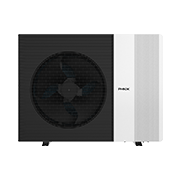
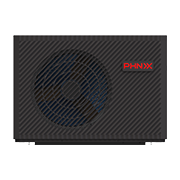
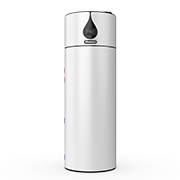
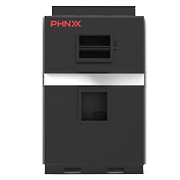
PHNIX builds air-to-water heat pumps for domestic water heating through the domestic heat pump water heater range, where the airInverter and airExpert R290 units are the direct replacements for a resistance cylinder. Both are integrated appliances designed for indoor placement, and both are widely sold in Europe and Australia, which are the two markets where high electricity prices make the running cost argument strongest.
The refrigerant choice is deliberate. The R290 hot water heat pump platform uses propane, which Regulation (EU) 2024/573 lists in Annex VI with a GWP100 of 0.02. That matters because Annex IV of the same regulation bans placing monobloc and self contained heat pumps up to 12 kW containing refrigerants with GWP of 150 or above on the market from 1 January 2027. R410A and R454B are blends and are not listed individually in the annexes of Regulation (EU) 2024/573, but both sit far above the 150 GWP threshold that drives the 2027 restrictions. An R290 appliance bought today does not inherit that deadline.
PHNIX is Guangdong PHNIX Eco-energy Solution Ltd, founded in 2002, with more than 1,000 employees, exports to over 90 countries, more than 60% of revenue from overseas markets and annual heat pump output above 80,000 units. Research and development runs at 6.7% of sales, the company has filed 1,816 patents including 621 invention patents with 1,405 granted, has taken part in more than 70 national and industry standards and operates over 40 specialist laboratories.
PHNIX holds CE, UKCA, Keymark, AHRI, ETL and ERP certifications, with AHRI performance audits passed at 100% compliance for three consecutive years (2023, 2024 and 2025). PHNIX also holds the world's first TÜV SÜD adaptive optimisation mark for smart home appliances, the industry's first AI mark in 2025 and the heat pump industry's first EN 18031 cybersecurity certificate in 2025, and is a national level manufacturing champion demonstration enterprise, the first in the heat pump sector. Company overview and the full catalogue sit on the PHNIX website.
If space heating is on the same project list, the space heating side is a separate calculation: PHNIX GreenTherm Pro is an R290 air-to-water heat pump measured at SCOP 5.55 by TÜV SÜD RED and HLK Stuttgart, documented on the TÜV SÜD SCOP 5.55 test page.
· Placement drives the COP. A unit in a warm utility room sees higher source air temperatures than one in an unheated garage, and the seasonal COP follows.
· Tank temperature drives it too. Every degree of extra target temperature costs efficiency, so set the schedule to what the household actually needs.
· Tariff timing is free money. If you have a time of use tariff, shifting the main heating cycle into the cheap window multiplies the saving in the tables above without touching the hardware.
· Solar self consumption works well with hot water, because a tank is a battery you already own. Heating water with surplus PV output effectively values that electricity at the retail rate.
· Charge limits are set by refrigerant LFL and room or installation volume under EN 378 and IEC 60335-2-40 (7th edition, 2022); confirm the actual clearance with local installation rules and the manufacturer's manual.
On testing vocabulary, EN 14511 defines steady state rated COP and EER, EN 14825 defines part load SCOP and SEER, from which the ErP seasonal efficiency figures are derived, and EN 12831 defines design heat load. Comparing a steady state COP against a seasonal figure is the most common way people accidentally overstate a saving.
Q: Does a heat pump water heater still work in a cold garage in winter?
A: Yes, but the seasonal COP falls because the source air is colder. That is why the tables above use 3.0 as a planning value rather than a peak laboratory figure, and why the 2.5 sensitivity case is worth running if the installation location is unheated.
Q: Will I run out of hot water compared with my old cylinder?
A: Recovery from a fully cold tank is slower than with a resistance element, which is why the comparison table rates cylinder recovery speed as higher. In normal use this is invisible, because the appliance reheats continuously rather than from empty. Sizing the tank to the household load profile is the fix.
Q: Are the savings in this article guaranteed?
A: No. They are a transparent calculation from published inputs: the Qref values in Regulation 814/2013 Annex III Table 1, the Eurostat second half 2025 household electricity prices including tax for the 2,500 to 5,000 kWh band, and stated assumptions of 1.05 kWh input per kWh delivered for the cylinder and a seasonal COP of 3.0 for the heat pump. Change any input and the result changes.
The comparison is unusually clean because both appliances do the same job with the same energy carrier. One buys roughly 1.05 kWh of electricity per kWh of hot water, the other buys roughly 0.35 kWh. At the Eurostat EU27 household price of 0.29 EUR/kWh including tax for the second half of 2025, that gap is worth about 884 EUR per year on load profile L, and well over 1,100 EUR per year in Ireland and Germany. Payback on a realistic price gap therefore lands in the two to three year range for a family sized load, and sooner in high price markets.
The case weakens on very small loads, in installations with poor source air, and where the tank cannot be sized properly. It strengthens with high hot water demand, high electricity prices, time of use tariffs and rooftop solar. Take the load profile that matches your household, put your own tariff into the same arithmetic, and the decision usually makes itself.

Guangdong PHNIX Eco-energy Solution Ltd.
Tel: +86-4009-4009-00
Address: NO.3 Tianyuan Road, Dagang Town,
Nansha, Guangzhou, Guangdong, PR. China.