Europe’s heat pump market has traditionally been closely associated with the decarbonisation of space heating and the transition away from fossil-fuel heating systems.
Heating remains a central requirement.
But increasing attention to summer heat and cooling is adding another dimension to Europe’s building energy discussion: how to maintain efficient and reliable thermal comfort throughout the year.
In September 2026, the European Commission announced plans for a European Heatwave Plan and explicitly highlighted urban adaptation and cooling. At the same time, the Commission identified energy-efficient cooling as one of the technologies relevant to Europe’s wider climate adaptation efforts. [1]
For heat pump manufacturers, HVAC brands and building energy professionals, these developments raise an important question:
Should heat pump performance be considered primarily through winter heating efficiency, or increasingly through year-round operation?
In its 2026 State of the Union Address, the European Commission announced that it will soon present a European Heatwave Plan. [1]
The announced priorities include better early warning systems, health preparedness, urban adaptation and cooling, and support for vulnerable populations.
The Commission will also present a new climate resilience framework, which will identify 100 of Europe’s most vulnerable territories and assess climate risks and the level at which they should be managed.
In discussing adaptation technologies, President von der Leyen specifically identified energy-efficient cooling, alongside drought-resistant crops and flood prevention.
At this stage, however, the European Heatwave Plan has not yet been published as a detailed policy document. No specific heat pump subsidy, equipment list or support mechanism was announced in the State of the Union Address.
The relevance for the HVAC industry is therefore not a confirmed new heat pump incentive.
Rather, it is the increasing policy attention being given to cooling and efficient cooling as part of climate resilience.
Research published through the EU Energy Poverty Advisory Hub provides useful context.
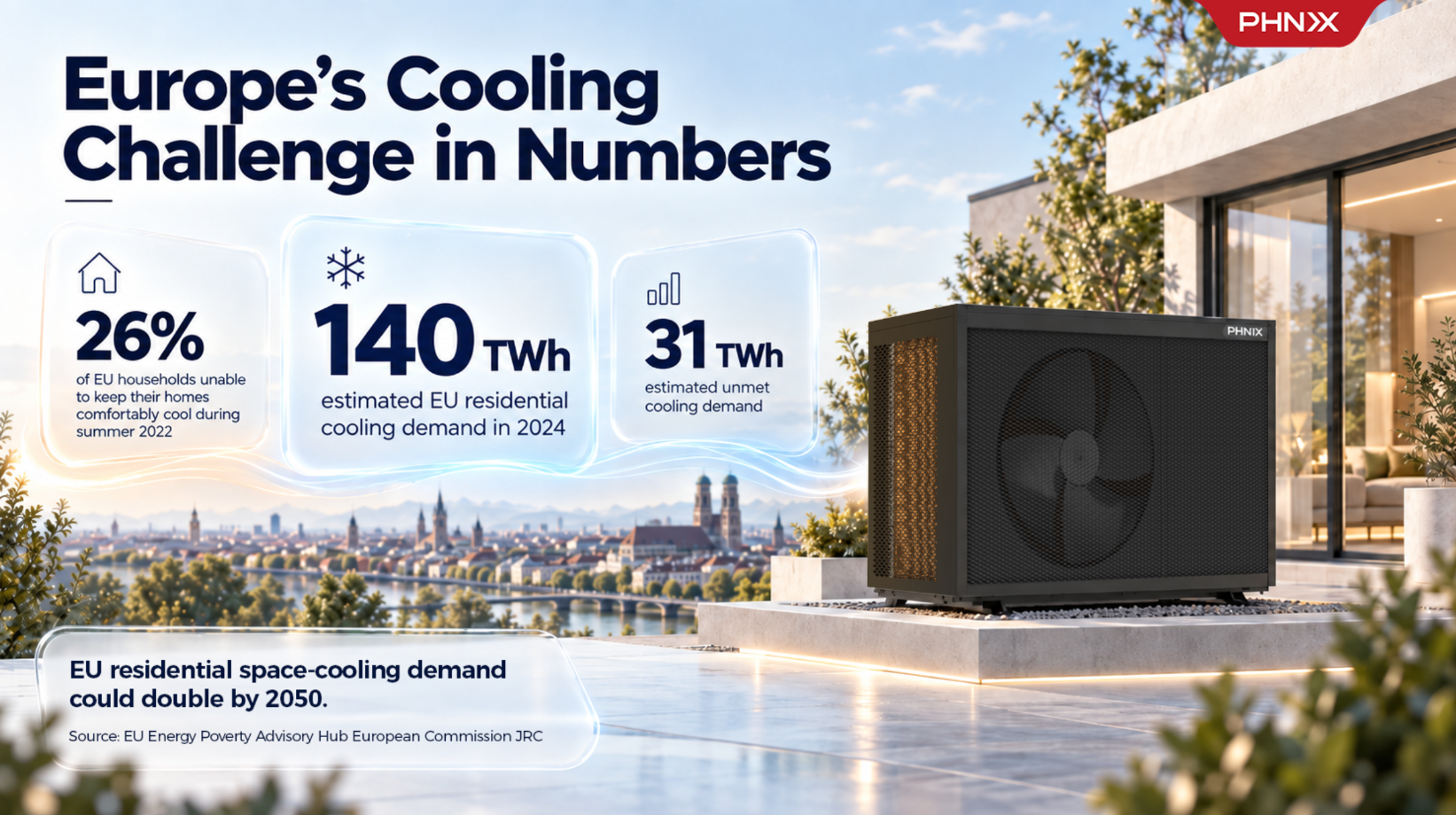
Based on EU-SILC data collected in 2023, 26% of EU households reported being unable to keep their homes comfortably cool during the summer of 2022. [2]
Among households in the lowest income quintile, the figure reached 34.8%, compared with 17.9% for the highest income quintile.
JRC modelling estimates total EU residential cooling demand at around 140 TWh in 2024, including around 31 TWh of unmet demand. [3]
The modelling also indicates that residential space-cooling demand could double by 2050.
These numbers require careful interpretation.
The 31 TWh of unmet cooling demand is not equivalent to potential heat pump sales, nor does it mean that this demand should be met entirely through mechanical cooling.
The JRC highlights a combination of building upgrades, passive cooling, shading, behavioural measures and efficient cooling technologies as ways of improving thermal comfort. [3]
This points to a broader challenge:
How can Europe improve summer thermal comfort without unnecessarily increasing building energy consumption?
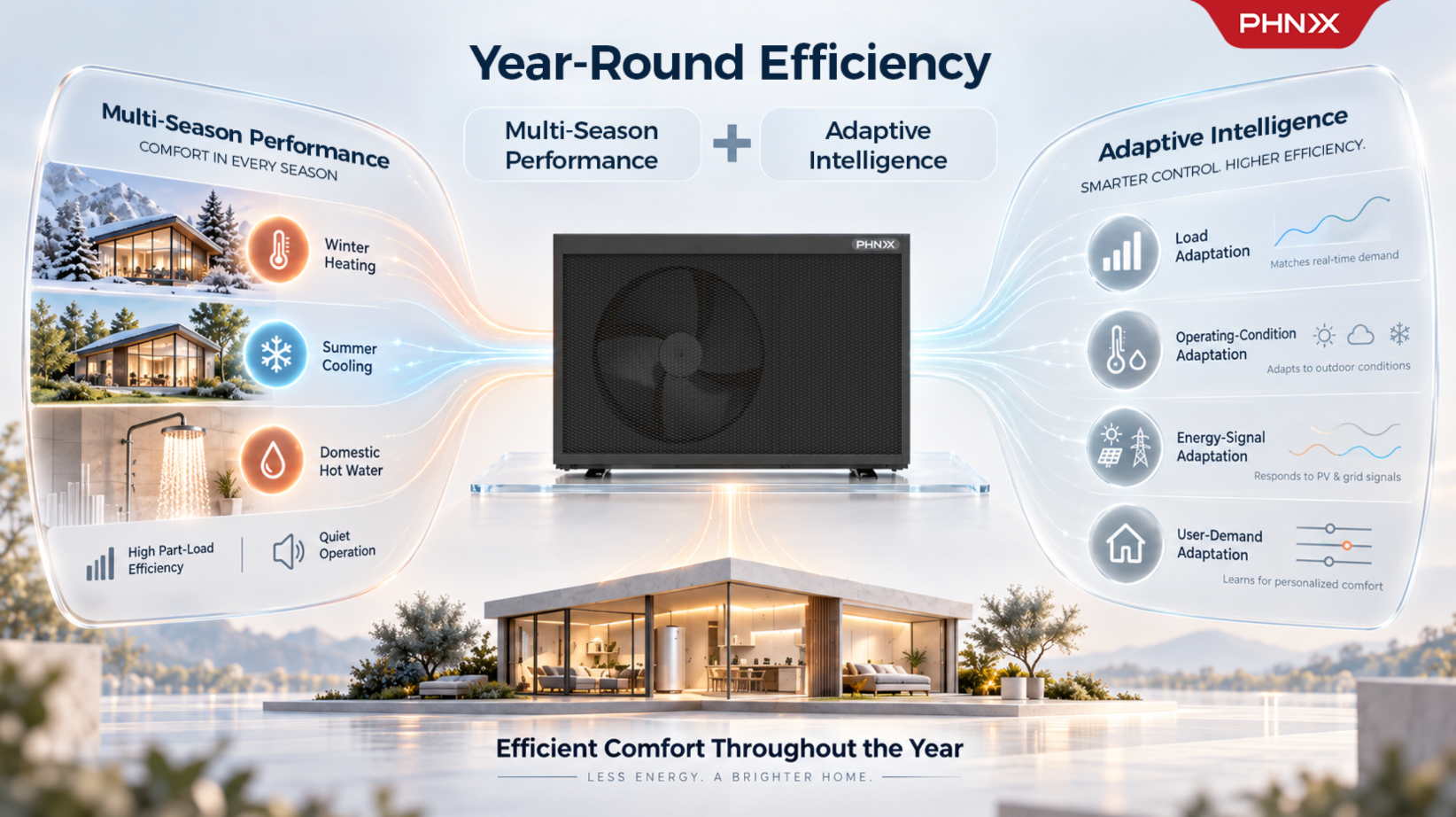
In this article, year-round heat pump efficiency refers to the ability of a heat pump system to operate efficiently across changing seasonal loads and operating modes, including heating and cooling and, where applicable, domestic hot water.
Rather than relying on one rated efficiency value, year-round performance requires consideration of how the system behaves under different outdoor temperatures, water temperatures and partial-load conditions.
For reversible air-to-water heat pumps, this means looking at two interconnected dimensions: performance across different seasons and operating modes, and the ability of the system to intelligently adapt as conditions change.
In other words, year-round efficiency is not only about how efficiently a heat pump performs in heating or cooling mode. It is also about how intelligently the system manages changing loads, operating conditions and energy signals throughout the year.
Several aspects are particularly relevant.
Heating capacity, seasonal heating efficiency, required supply-water temperature and performance at low outdoor temperatures remain important considerations when selecting and designing a heat pump system.
When a reversible heat pump is also used for space cooling, cooling performance becomes part of the overall system evaluation.
Cooling capacity, seasonal cooling efficiency and operating range should therefore be considered alongside heating performance.
Building thermal loads vary continuously according to outdoor temperature, solar gains, occupancy and other factors.
An inverter heat pump can adjust its output as load changes. Its modulation capability and efficiency under partial-load conditions are therefore relevant to overall seasonal operation.
For residential buildings, hotels and other noise-sensitive applications, acoustic performance should be considered as part of system and application design — particularly when equipment may operate during summer evenings and nights.
Year-round operation means that a heat pump continuously encounters changing outdoor temperatures, building loads, hot water demand and energy conditions.
Intelligent energy management adds another layer to heat pump efficiency by enabling the system to respond more dynamically to these changes rather than relying only on fixed operating logic.
AI can further enhance this capability by using operational data to identify patterns, predict changing conditions and support more adaptive system control.
Where supported by the specific heat pump and control system, intelligent energy management can also coordinate operation with factors such as PV generation, electricity price signals and user demand.
This makes intelligent energy management an important part of the broader year-round efficiency concept: multi-season performance supported by adaptive optimization.
Heating & cooling heat pumps are one potential technology within a broader approach to year-round thermal comfort.
They should not be considered a substitute for good building design.
Passive approaches such as building-envelope improvements, solar shading and natural ventilation can reduce heat gains and cooling demand before mechanical cooling is required.
Active systems can then provide efficient cooling where necessary.
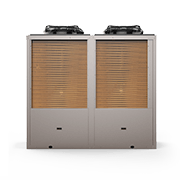
Within this broader approach, a heating and cooling heat pump can provide both heating and cooling through the same refrigeration system.
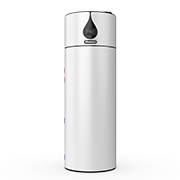
Depending on system configuration, it can also provide domestic hot water.
This makes heating and cooling heat pumps relevant to the discussion around integrated year-round thermal management, without implying that they are the only solution to Europe’s cooling challenge.
For European heat pump brands, distributors and OEM partners, a year-round approach broadens the range of parameters that may need to be considered during product development and selection:
Heating capacity
Seasonal heating efficiency
Cooling capacity
Seasonal cooling efficiency
Operating temperature range
Part-load performance and modulation range
Domestic hot water capability
Acoustic performance
Terminal compatibility
Intelligent system control
Intelligent energy management
PV, smart-grid or electricity price integration, where supported
The relative importance of each parameter depends on the climate, building type and application.
For example, products serving markets with greater cooling requirements may require a different balance of heating and cooling performance from products designed primarily for colder climates.
At PHNIX, heat pump development is not limited to performance at a single rated operating point.
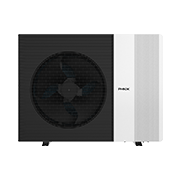
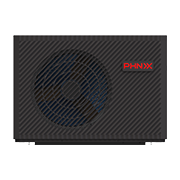
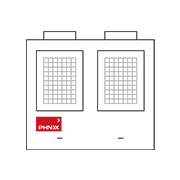
As an OEM/ODM heat pump manufacturer, PHNIX develops air-to-water heat pump solutions for different climates, building types and application requirements.
Our approach to year-round performance considers heating, cooling, domestic hot water, part-load operation, acoustic performance and intelligent control as interconnected elements of heat pump system design.
But year-round efficiency is not only about designing for different operating modes. It is also about enabling the system to adapt intelligently as conditions change.
For European OEM/ODM partners, this creates a broader product-development question:
How can a heat pump system deliver efficient and reliable thermal comfort across changing seasons, climates and building requirements?
That question is becoming increasingly relevant as Europe pays greater attention to both winter heating and summer thermal comfort.
Europe’s heating challenge remains.
At the same time, recent European Commission announcements and JRC research show that summer thermal comfort and efficient cooling are receiving greater attention. [1][2][3]
For the heat pump industry, this does not mean that cooling is replacing heating as the central priority.
It means that heating performance can increasingly be considered alongside cooling, part-load operation, acoustic performance and intelligent control when developing systems for year-round thermal comfort.
At PHNIX, we see this broader perspective as an important part of developing the next generation of heat pump solutions for Europe.

Guangdong PHNIX Eco-energy Solution Ltd.
Tel: +86-4009-4009-00
Address: NO.3 Tianyuan Road, Dagang Town,
Nansha, Guangzhou, Guangdong, PR. China.