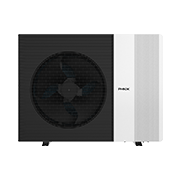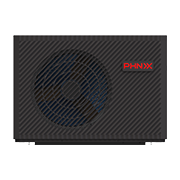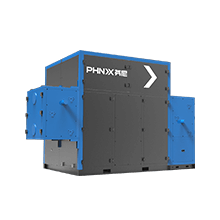
A residential air-source heat pump handles both heating and cooling from a single outdoor unit.
Sizing is the decision that quietly sets how a heat pump will perform for the next fifteen years, and it's also the one most homeowners get wrong before the system is even installed. Pick a unit that's too big and it never settles into an efficient rhythm. Pick one that's too small and the coldest week of the year exposes the gap. This article walks through the sizing mistakes that show up most often in real homes, then looks at which kinds of heat pumps are more forgiving to size and why, with residential examples from PHNIX along the way.
The most common sizing mistakes are oversizing (which causes short cycling and lost efficiency), undersizing (which forces expensive electric top-up on cold days), and skipping a proper heat-loss calculation while ignoring hot-water load, flow temperature, and cold-weather derate.
The easiest units to size correctly are wide-range full-inverter heat pumps, because one unit modulates across a broad capacity band instead of forcing a single fixed output. PHNIX GreenTherm Pro and airMono use AI Full Inverter modulation for exactly this reason, though a professional heat-loss calculation is still essential regardless of brand.
A heat pump is sized to your home's heat loss, which is how fast the building sheds warmth on a cold day, along with the demand for domestic hot water and the temperature your heating system needs to run at. Floor area in square meters is a poor proxy for any of that. Two homes with the same floor area can have very different heat loss depending on insulation, glazing, air-tightness, and climate.
That's the root of most sizing errors. A guess based on floor area, or a number carried over from an old gas boiler, rarely matches the real load. Gas boilers were routinely oversized because oversizing a cheap-to-run boiler carried little penalty. A heat pump behaves differently, so copying the boiler's rating is one of the fastest ways to end up with the wrong unit.
Oversizing is the single most frequent mistake, partly because bigger feels safer. The problem is that a heat pump sized well above the home's actual load spends most of the year with far more capacity than it needs. On a mild day it produces its minimum output, satisfies the demand quickly, then shuts off, only to restart a short while later. That stop-start pattern is called short cycling.
Short cycling costs you in three ways. Efficiency drops because the compressor is least efficient in the seconds after each start. Comfort suffers because room temperatures swing rather than holding steady. And component wear rises because every start stresses the compressor. A fixed-speed unit that's too large short-cycles the hardest, since it can only run flat out or not at all.
Undersizing is the opposite error and it hides until the weather turns. A unit that's slightly too small copes fine for most of the year, then can't keep up during the coldest spell, exactly when you need heat the most. The house drifts below the target temperature, or an electric backup heater kicks in to cover the shortfall.
That electric top-up is the hidden cost. Backup resistance heat runs at a COP of around 1, so every hour it runs erases the efficiency advantage the heat pump was bought for. An undersized system can look fine on paper and still deliver a cold, expensive January.
Space heating and hot water are two separate demands, and a system sized for heating alone can fall short when both are needed at once. A family that showers in the morning while the heating is trying to recover from an overnight setback places a combined load on the unit. If the sizing calculation only counted the space-heating side, the hot water reheat competes with room heating and both suffer.
Hot water also needs a higher water temperature than underfloor heating does, which brings the next mistake into play.
A heat pump's usable capacity and efficiency depend heavily on the flow temperature it has to produce, and that's set by your emitters. Underfloor heating runs comfortably at low flow temperatures, around 35°C, where a heat pump is most efficient. Existing radiators sized for an old boiler often expect 55°C or higher.
Size the unit assuming low-temperature underfloor operation, then connect it to high-temperature radiators, and the real-world capacity won't match the calculation. The fix is to size against the actual flow temperature the emitters require, and where radiators are staying, to confirm the unit can deliver that temperature efficiently rather than only at its peak rating.
Every mistake above traces back to one shortcut: skipping a room-by-room heat-loss calculation. This is the survey that establishes how much heat your specific home loses at your local design temperature, accounting for insulation, windows, walls, and air changes. Without it, sizing is guesswork.
A proper heat-loss calc is the foundation of correct sizing, and it's worth insisting on regardless of which brand you choose. It's also what lets an installer pick a unit whose modulation range brackets your real load instead of one that merely sounds big enough.
An air-source heat pump produces less heat as the outdoor air gets colder, because there's less heat available to extract. A unit rated at a mild test point can deliver noticeably less on a genuinely cold morning, and that derate is easy to forget. Sizing to the nameplate figure rather than to capacity at your design temperature is a quiet form of undersizing.
Defrost adds to this. In cold, damp conditions the outdoor coil frosts and the unit periodically reverses to clear it, briefly pausing heat delivery. A well-sized system with good defrost control absorbs this without the home noticing. A marginal one feels it. Both effects mean the honest question isn't "what's the peak output," it's "what's the output at the coldest condition my home will actually see."
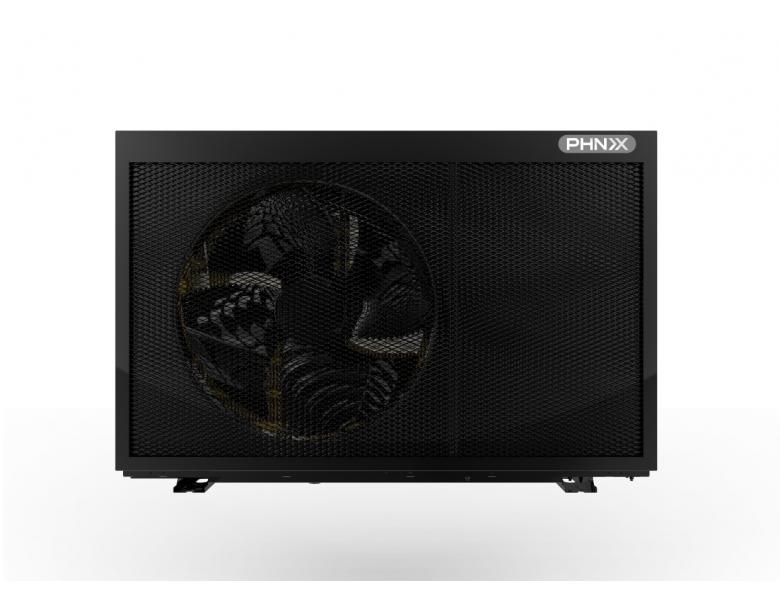
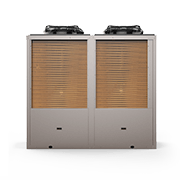
The PHNIX GreenTherm Pro is a residential R290 heating and cooling heat pump built around AI Full Inverter modulation.
The type of heat pump you choose changes how much sizing precision you need. This is where the fixed-speed versus full-inverter distinction matters most.
A fixed-speed heat pump runs at one output. It's either on at full capacity or off, so it has to be matched tightly to the load, and it short-cycles whenever demand falls below that single figure. There's little margin for a sizing error in either direction.
A full-inverter heat pump modulates. Its compressor varies speed continuously, so one physical unit covers a range of outputs rather than a single point. That range is what makes inverter units more forgiving to size. If the calculated load lands anywhere inside the unit's modulation band, the same unit throttles down on mild days to avoid short cycling and ramps up on cold days toward its maximum. The wider that band, the more real-world variation a single unit can absorb.
PHNIX builds its residential units around this principle. Here are the specifics worth knowing:
GreenTherm Pro is a residential R290 heating and cooling heat pump that uses PHNIX's AI Full Inverter modulation, carries an A+++ efficiency rating, and supports low-temperature operation down to -30°C along with PV coupling. Its full DC inverter compressor modulates across a wide capacity range, so one unit can match a home's varying load instead of cycling.
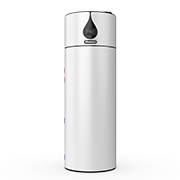
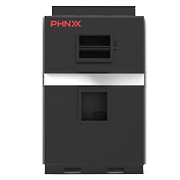
airMono is an indoor monobloc R290 heat pump, also A+++ rated, designed for space-constrained homes and older-building retrofits where an outdoor unit is hard to place. It brings the same inverter modulation into an all-in-one indoor package.
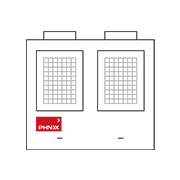
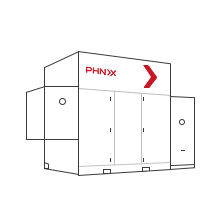
For larger, non-residential loads such as hotels or schools, PHNIX's HeatGreen commercial series applies the same full DC inverter approach at scale, with a single controller managing cascaded units. It's mentioned here only for context; for a house, GreenTherm Pro or airMono is the relevant choice.
The AI Full Inverter algorithm behind these units was trained on operating data from more than 30,000 heat pumps, and PHNIX reports around 20% or more energy savings versus conventional inverter heat pumps on its residential and commercial lines. In sizing terms, the practical benefit comes from that modulation range. A wider band means the installer has to hit a target zone rather than a single number, which lowers the chance that a small calculation error turns into short cycling or a cold-day shortfall.
None of this removes the need for a heat-loss calculation. A modulating unit is more tolerant of sizing error, not immune to it. Choose one that's still far too large and it will short-cycle at its minimum output; choose one too small and it'll run flat out and fall short on the coldest days. The right approach is to run the calc first, then select a unit whose modulation range comfortably brackets the result.
| Sizing factor | Fixed-speed unit | Wide-range full-inverter unit (e.g. PHNIX GreenTherm Pro) |
|---|---|---|
| Output flexibility | Single fixed output | Modulates across a wide capacity band |
| Tolerance to sizing error | Low, must match load tightly | Higher, unit covers a range of loads |
| Short-cycling risk on mild days | Higher | Lower, throttles down to match demand |
| Cold-day headroom | Fixed, little margin | Ramps toward maximum output |
| Efficiency at part load | Lower | Higher (A+++ on PHNIX GreenTherm Pro and airMono) |
| Still needs a heat-loss calc | Yes | Yes |
Correct sizing is a shared job between you, your installer, and the equipment, and a few things are worth confirming for any brand.
Insist on a room-by-room heat-loss calculation at your local design temperature. If an installer quotes a size from floor area or your old boiler rating alone, treat it as a red flag.
Ask for capacity at your design temperature, not just the headline rating. Cold-weather derate is real, and the figure that matters is output on your coldest expected day.
State your flow temperature and emitters. Underfloor at 35°C and radiators at 55°C size differently, so the calc needs to reflect what's actually installed.
Include the hot water load and its timing, especially if space heating and hot water peak together.
Match the load to the unit's modulation range. With a modulating unit like GreenTherm Pro, aim for a calculated load that sits comfortably inside the capacity band rather than at either extreme. PHNIX offers OEM and engineering support to help match a unit to a project's specifics.
Q: Is it better to oversize a heat pump just to be safe?
A: No. Unlike an old gas boiler, an oversized heat pump short-cycles on mild days, which lowers efficiency, wears the compressor, and causes temperature swings. Size to the home's actual heat loss instead.
Q: What actually determines the right heat pump size?
A: Your home's heat loss at the local design temperature, your domestic hot water demand, and the flow temperature your emitters need. Floor area alone isn't enough, which is why a room-by-room heat-loss calculation is the foundation of correct sizing.
Q: Why are full-inverter heat pumps easier to size correctly?
A: They modulate their output across a wide range, so one unit covers a band of loads rather than a single fixed figure. PHNIX GreenTherm Pro and airMono use AI Full Inverter modulation, so a calculated load that lands inside the band lets the unit throttle down on mild days and ramp up on cold ones.
Q: Does a modulating heat pump mean I can skip the heat-loss calculation?
A: No. A wide modulation range is more forgiving of small errors, but a unit that's badly oversized will still short-cycle at its minimum, and one that's undersized will still fall short on cold days. Run the calc first, then pick a unit whose range brackets the result.
Q: What happens if my heat pump is undersized?
A: It copes for most of the year, then can't keep up in the coldest weather, so the house drifts cool or an electric backup heater runs. That backup heat has a COP near 1, so it erases much of the efficiency you bought the heat pump for.
The mistakes that undermine a heat pump are almost all sizing mistakes. Oversizing leads to short cycling, undersizing forces electric top-up, and a skipped heat-loss calculation lets hot-water load, flow temperature, and cold-weather derate slip through. Get those right and the equipment can do its job; get them wrong and no unit will fully recover.
The type of unit tilts the odds in your favor. Wide-range full-inverter heat pumps like PHNIX GreenTherm Pro and airMono modulate across a broad capacity band and hold A+++ efficiency at part load, so one unit absorbs the variation a fixed-speed model can't, which leaves more room for a small calculation error without a comfort or efficiency penalty. That flexibility is a help, not a substitute for doing the calculation. Commission a proper heat-loss survey, size against your real load and flow temperature, then choose a modulating unit whose range brackets that number.
Product data referenced here is drawn from official PHNIX residential product documentation. For full specifications, sizing support, and OEM/engineering enquiries, visit www.phnix-e.com.

Guangdong PHNIX Eco-energy Solution Ltd.
Tel: +86-4009-4009-00
Address: NO.3 Tianyuan Road, Dagang Town,
Nansha, Guangzhou, Guangdong, PR. China.