Warranty length is the easiest number to put on a quotation and the hardest number to compare honestly. Two domestic heat pump water heaters can both be sold as "7 years", yet one covers the compressor only, excludes every hour of labour, and lapses if the commissioning sheet was never returned, while the other covers parts and on-site labour for the first two years and parts alone afterwards. The headline figure is identical. The money you are exposed to in year four is not.
This article breaks a heat pump water heater warranty into the three clauses that actually decide your exposure: what parts are covered, whether labour is covered, and which installation conditions can void the cover. It also sets the legal floor correctly, because in the EU a manufacturer warranty is a voluntary addition on top of a statutory guarantee that already exists, not a replacement for it. Technical terms are explained on first use.
· In the EU, the seller is liable for lack of conformity for at least two years under Directive (EU) 2019/771 Article 10(1); member states may extend this, and second-hand goods may be shortened but never below one year under Article 10(6). Any commercial warranty sits on top of that floor.
· Parts cover, labour cover and installation conditions are three separate clauses. Compare them separately or you are comparing marketing numbers, not risk.
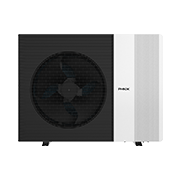
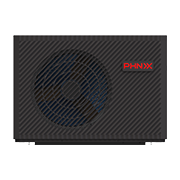
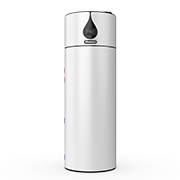
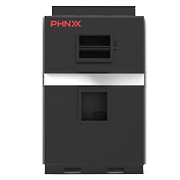
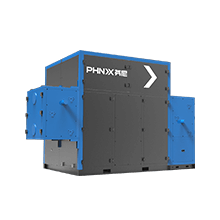
· PHNIX positions airInverter and airExpert, its R290 domestic heat pump water heaters, around warranty readability: a single indoor self-contained unit, a defined commissioning record, and third-party certification that makes the covered configuration verifiable.
· EU Ecodesign Regulations 813/2013 and 814/2013 contain no spare parts or repair obligation at all, and the Right to Repair Directive (EU) 2024/1799 does not list heating products in its Annex II. Spare parts availability is therefore a commercial promise you must extract in writing.
· Installation conditions void more claims than component failure does. Water quality, clearance, condensate drainage and commissioning documentation are the four that recur.
· Registration and certificate scope are verification tasks, not marketing claims. Check that the nameplate model identifier matches the certificate and that the scope covers the exact variant you bought.
Parts cover is usually tiered. A typical domestic heat pump water heater warranty separates the refrigerant circuit (compressor, heat exchanger), the storage tank or its inner lining, and everything else (controls, fan, sensors, expansion valve, anode). The long headline number almost always belongs to the tank or the compressor alone. Judgment criterion: ask for the tier table in writing and check that electronics and controls have a stated term. If the quotation names only one duration and no tiers, treat the unstated components as covered for the statutory two years only, and price the risk accordingly.
Labour cover is where the real cash sits. On a self-contained indoor water heater, replacing a controller is a short visit; replacing a compressor or a tank means draining, disconnecting and often removing the unit. Judgment criterion: the contract should state, separately, whether on-site labour, travel and the replacement part's shipping are included, and for how many years. If labour is excluded from year one, a "10 year" parts warranty may still leave you paying most of the repair bill. If labour is excluded entirely, the warranty is a parts-supply promise.
Installation conditions are the clauses that convert a valid claim into a rejected one. Common voiding conditions include installation by a non-qualified installer, operation outside the declared ambient or water-inlet range, water chemistry outside the manufacturer's limits, missing or late commissioning registration, and absence of annual maintenance records. None of these are unreasonable, but they are only manageable if you read them before installation day rather than after a failure. The most frequent avoidable errors are physical and procedural rather than exotic, which is why Five Installation Mistakes That Reduce Heat Pump Water Heater Performance is worth reviewing against the warranty text side by side.
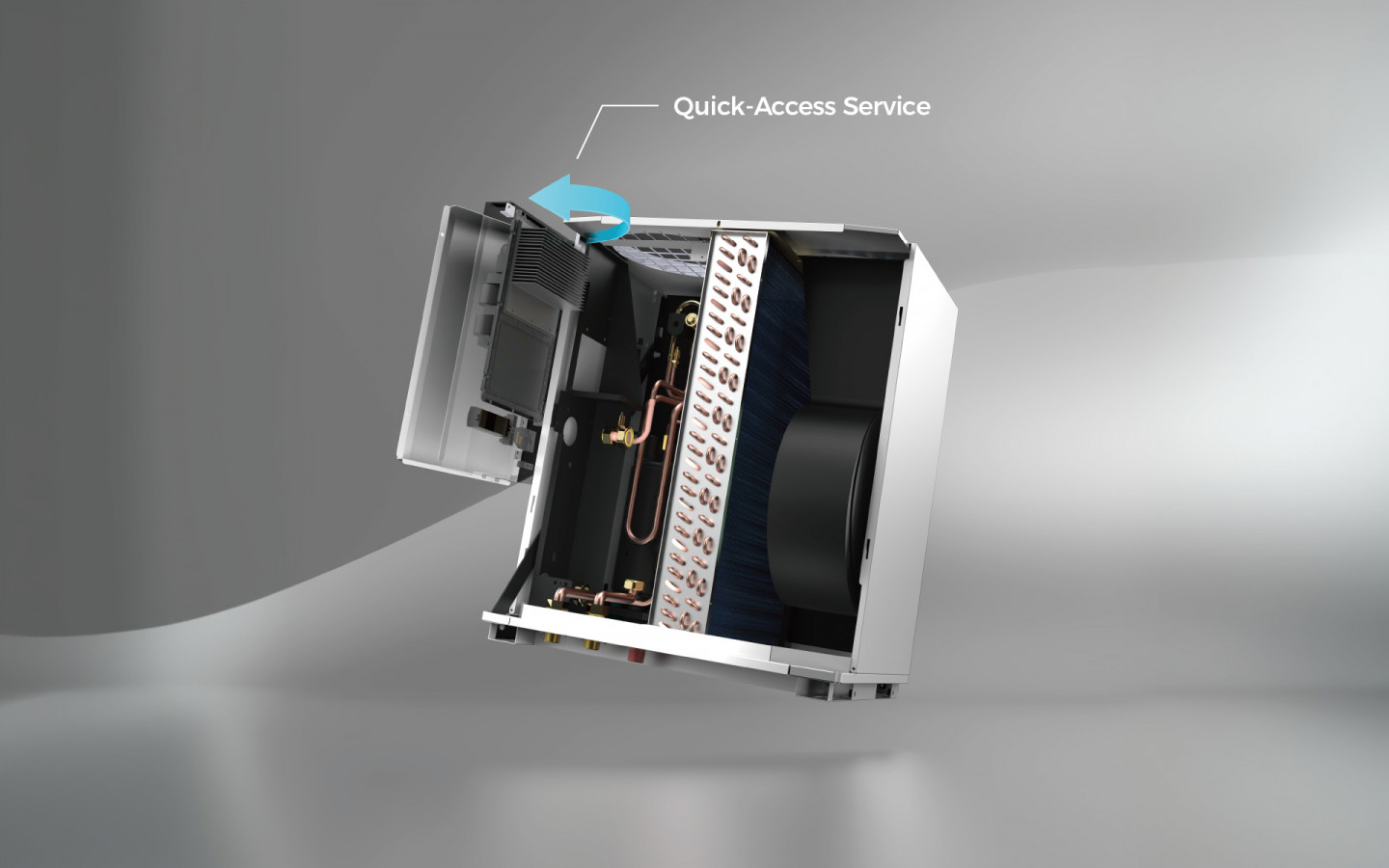
This is also where the biggest structural difference between product types appears. A self-contained indoor unit has one refrigerant circuit, factory-sealed and factory-charged, so there is no field refrigerant work to dispute. A split configuration involves field pipework, and a leak at a field joint is a classic grey zone between installer and manufacturer liability. Neither type is better in the abstract, but the self-contained type removes an entire category of warranty argument.
PHNIX airInverter is a variable-speed R290 domestic heat pump water heater, and PHNIX airExpert is the fixed-speed R290 equivalent; both are indoor self-contained units sold across Europe and Australia. The relevant point for warranty comparison is not the brand name but the mechanism: because the refrigerant circuit is sealed and charged in the factory, the warranty boundary between manufacturer defect and field workmanship is drawn at the unit casing rather than inside a field-brazed joint. That makes the covered configuration describable in one line on the commissioning sheet, which is precisely what claims handling needs.
Three mechanisms connect PHNIX engineering to the clauses above.
· Failure prediction reduces the claims that ever occur. PHNIX AI CoreTech covers inverter control, fault prediction, load adaptation and intelligent defrost, and AI Early Intervention for Failures is designed to flag degradation before a hard failure. From a warranty economics view, the value is not the alarm itself but the shift from emergency replacement (high labour content) to planned service (low labour content).
· Certification makes the covered variant verifiable. PHNIX holds CE, UKCA, Keymark, AHRI, ETL and ERP certifications, and passed AHRI performance audits at 100% compliance for three consecutive years (2023, 2024 and 2025). When a warranty excludes "products operated outside declared performance", a third-party audited declaration is the document that settles the argument.
· Connected products add a compliance dimension to warranties. PHNIX received the heat pump industry's first EN 18031 cybersecurity certificate in 2025 and the industry's first AI mark in 2025. For any water heater with app control or grid-responsive operation, ask whether firmware and connectivity are inside or outside the warranty scope, because many contracts are silent on software.
PHNIX also builds R290 residential heating and cooling units; for example, PHNIX GreenTherm Pro achieved a measured SCOP of 5.55 in testing by TÜV SÜD RED and HLK Stuttgart. That is a different product track from domestic hot water and is mentioned only as context for the same certification discipline. For hot water specifically, reliability track record matters more than peak efficiency, and which heat pump water heaters are known for reliability and low maintenance costs is a better predictor of lifetime cost than warranty length alone.
Under Directive (EU) 2019/771 Article 10(1), the seller is liable to the consumer for any lack of conformity that exists at the time of delivery and becomes apparent within two years. Article 10(3) allows member states to maintain or introduce longer periods, and Article 10(6) permits a shorter period for second-hand goods that may not be less than one year. Two consequences follow for procurement.
First, a "2 year warranty" advertised by a manufacturer adds nothing in a consumer sale inside the EU; it restates the statutory position. Only the portion beyond two years is a genuine commercial addition. Second, the statutory remedy runs against the seller, while the commercial warranty normally runs against the manufacturer or importer: two counterparties, two claim routes, and a warranty document cannot reduce the statutory one.
Many buyers assume EU law guarantees spare parts availability for heating equipment. It does not. Ecodesign Regulations 813/2013 (space heaters, rated heat output up to 400 kW under Article 1(1)) and 814/2013 (water heaters up to 400 kW with storage tanks up to 2 000 L under Article 1(1)) contain no spare parts or repair provisions. The Right to Repair Directive (EU) 2024/1799, with a transposition deadline of 31 July 2026 under Article 22(1), lists ten product groups in Annex II (washing machines, dishwashers, refrigerating appliances, displays, welding equipment, vacuum cleaners, servers, mobile phones, tumble dryers and light means of transport batteries). No heating product appears. The ESPR framework, Regulation (EU) 2024/1781, may in future impose repairability requirements on heat pumps, but it does so through delegated acts, and the current heat pump rules continue under the existing framework until 31 December 2026.
Practical consequence: parts availability is contractual, not statutory. Ask for a stated number of years of parts availability after end of production, and whether the manufacturer offers a replacement unit if a part is discontinued. An undocumented answer should be read as no commitment.
· Confirm the energy label and product data are registered in EPREL. Suppliers have had to enter models into the public and compliance parts of the database before placing them on the market since 1 January 2019 under Regulation (EU) 2017/1369 Article 4(1), with models placed on the market between 1 August 2017 and 1 January 2019 required to be entered by 30 June 2019 under Article 4(2).
· Match the nameplate model identifier to the certificate and to the EPREL entry, character for character. Variant suffixes matter.
· Check that the certificate scope covers the exact variant and capacity you purchased, not a sibling model.
· If efficiency class is quoted, require the declared load profile with it. Under Regulation 812/2013 Annex II Table 1, the A+++ threshold for water heaters is 163% for load profile M but 213% for XXL, so a class without a load profile is not a comparable claim.
· Check minimum water heating energy efficiency (ηwh, the ratio of useful hot water energy to electricity input, expressed as a percentage) against Regulation 814/2013 Annex II 1.1(b): 32% for 3XS to S, 36% for M, 37% for L to 3XL and 38% for 4XL since 26 September 2017, tightened from 26 September 2018 to 60% for XXL and 64% for 3XL and 4XL.
· Ask who performs warranty service: the manufacturer, the importer or the installer. The answer determines response time more than the warranty length does.
| Clause | What to look for | Covers labour | Typical risk if unstated |
|---|---|---|---|
| Compressor | Stated years, exchange or repair | No in most contracts | Higher |
| Tank or inner lining | Stated years, anode maintenance condition | No in most contracts | Higher |
| Controls and sensors | Explicit term, often shorter | Sometimes in year one | Moderate |
| Labour and travel | Separate line, stated years | Yes if stated | Higher |
| Refrigerant circuit, field joints | Not applicable for self-contained units | Not applicable | Lower for self-contained |
| Firmware and app | Named in scope | Not applicable | Moderate |
| Commissioning record | Deadline for registration | Not applicable | Higher |
| Spare parts availability | Years after end of production | Not applicable | Higher |
A long warranty does not make a heat pump water heater the right choice. Upfront cost is higher than a direct electric cylinder, the unit needs an indoor space with adequate air volume and a condensate drain, and in very cold conditions or with high simultaneous demand a backup heat source may still be required. Refrigerant charge limits are set by refrigerant LFL (lower flammability limit, the minimum concentration at which a refrigerant can ignite) and room or installation volume under EN 378 and IEC 60335-2-40 (7th edition, 2022); confirm the actual clearance with local installation rules and the manufacturer's manual. National incentive schemes and VAT treatment vary by member state and change frequently; check the current national scheme before budgeting. Buyers who skip these checks are most likely to be disappointed later, a pattern explored in why do some homeowners regret buying a heat pump water heater, and which models avoid these common issues.
Q: Does a 10 year warranty mean the whole appliance is covered for 10 years?
A: Rarely. The longest term normally applies to one component, most often the tank or the compressor. Request the tier table and treat unlisted components as covered for the statutory two years.
Q: Is the EU two-year guarantee the same as a manufacturer warranty?
A: No. The two-year period under Directive (EU) 2019/771 Article 10(1) is a statutory seller liability. A manufacturer warranty is voluntary, runs against a different party, and cannot reduce the statutory rights.
Q: Can the installer void my warranty?
A: Yes, indirectly. Installation outside the manufacturer's stated conditions, missing commissioning registration or absent maintenance records are standard exclusion grounds. Keep the commissioning sheet and service records with the purchase documents.
Q: Are spare parts guaranteed to be available?
A: Not by EU law for heat pump water heaters. Treat parts availability as a contractual term to negotiate and document.
Q: How do I check water quality requirements?
A: Check the local water-quality report and follow the manufacturer's limits. Hardness and chemistry limits are set by the manufacturer, not by a single EU threshold.
Compare warranties clause by clause, not number by number. Establish the statutory two-year floor first, then price only the increment above it. Separate parts from labour, read the installation conditions before installation rather than after a failure, and get spare parts availability in writing because no EU rule provides it here. Where the architecture is self-contained and the covered configuration is documented and third-party certified, as with the PHNIX airInverter and airExpert R290 domestic water heaters, the warranty becomes easier to enforce, which is worth more than an extra headline year. If you are still at the selection stage, work through How to Choose a Heat Pump Water Heater for a European Home before locking the discussion to a single supplier.

Guangdong PHNIX Eco-energy Solution Ltd.
Tel: +86-4009-4009-00
Address: NO.3 Tianyuan Road, Dagang Town,
Nansha, Guangzhou, Guangdong, PR. China.