Most heat pump water heater disappointments are blamed on the equipment. In practice, a large share of them trace back to the water running through it. Scale, corrosion and sediment quietly change how a heat exchanger behaves, and by the time anyone notices longer reheat times or a rising electricity bill, the deposit has been building for a year or more.
This guide is for buyers and facilities staff rather than HVAC engineers. It covers how water quality affects heat transfer, how to read your local water-quality report, what to ask before you sign a purchase order, and how to set a defensible maintenance interval.
· Scale is a thermal insulator. A thin deposit on a heat exchanger surface reduces heat transfer, lengthens heating cycles and raises the electricity used per litre of hot water.
· There is no harmonised EU water hardness limit. Directive (EU) 2020/2184 requires that hardness and calcium, magnesium and potassium information be made available to the public, but it sets no single mandatory hardness value.
· Check the local water-quality report, identify the actual hardness, and then follow the appliance manufacturer's installation and water-treatment requirements.
· Legionella control is risk-based at EU level. Annex I Part D of Directive (EU) 2020/2184 gives Legionella < 1 000 CFU/l as a parametric value, and a result below it does not by itself prove the system is safe.
· Maintenance intervals should be driven by observed water conditions and by what the manual specifies, not by a generic annual habit.
· Materials, access to the heat exchanger and the availability of anode and filter replacement parts matter as much as rated efficiency when you compare models.
A heat pump water heater moves heat from ambient air into stored water through a heat exchanger, and that chain depends on a clean metal surface. When dissolved calcium and magnesium salts come out of solution at the hottest point in the circuit, they crystallise on that surface. The deposit is hard, poorly conductive and difficult to remove once cured. Three effects follow, and they compound.
· Reduced heat transfer. The compressor has to work longer to deliver the same volume of hot water, so run hours and energy consumption climb even though the nameplate rating has not changed.
· Restricted flow. Deposits narrow pipework and heat exchanger channels. Pumps see higher head, and in extreme cases flow switches begin to trip.
· Localised overheating and corrosion. Where scale insulates a surface, metal behind it runs hotter than designed. Combined with aggressive or poorly balanced water chemistry, this accelerates pitting and shortens tank life.
Sediment is a separate problem: sand, rust particles and biofilm settle at the bottom of a storage tank, reduce usable volume and foul sensors. Corrosion is a third mechanism, driven by water chemistry, dissolved oxygen and material compatibility. None of this is unique to heat pumps, but it matters more here, because the economic case rests on a high coefficient of performance sustained over many years, and a fouled exchanger erodes exactly the advantage that justified the higher initial investment.
Every public water supplier in the EU publishes a water-quality report or consumer information sheet for its supply zone. That document, not a rule of thumb, is your starting point. Directive (EU) 2020/2184 requires that information on hardness and on minerals including calcium, magnesium and potassium be made available to consumers. It does not set a harmonised EU hardness limit, because what counts as problematic hardness depends on the appliance, the operating temperature and the local geology. The honest answer to "how hard is too hard?" is that the directive does not answer it for you.
Two other values in the same directive are frequently misread. pH 6.5 to 9.5 and conductivity of 2 500 microsiemens per centimetre or less are indicator parameters in Annex I Part C. They are independent parameters in their own right, not a substitute for a hardness figure, and no hardness limit can be derived from them.
The practical sequence is simple:
· Pull the water-quality report for your supply zone and note the reported hardness, in whichever unit your supplier uses.
· Check whether your country or municipality imposes additional water-treatment requirements for hot water systems, since national and local rules vary.
· Open the installation manual for the model you are buying and read its water-quality and water-treatment section, which states the conditions under which the warranty applies.
· Where report and manual point in different directions, resolve it with your installer before commissioning rather than after the first failure.
If your building has its own well, borehole or storage break tank, the public report does not describe your water, so commission an independent analysis.
Efficiency figures dominate most tender documents, but a unit that is difficult to descale will not hold its rated efficiency.
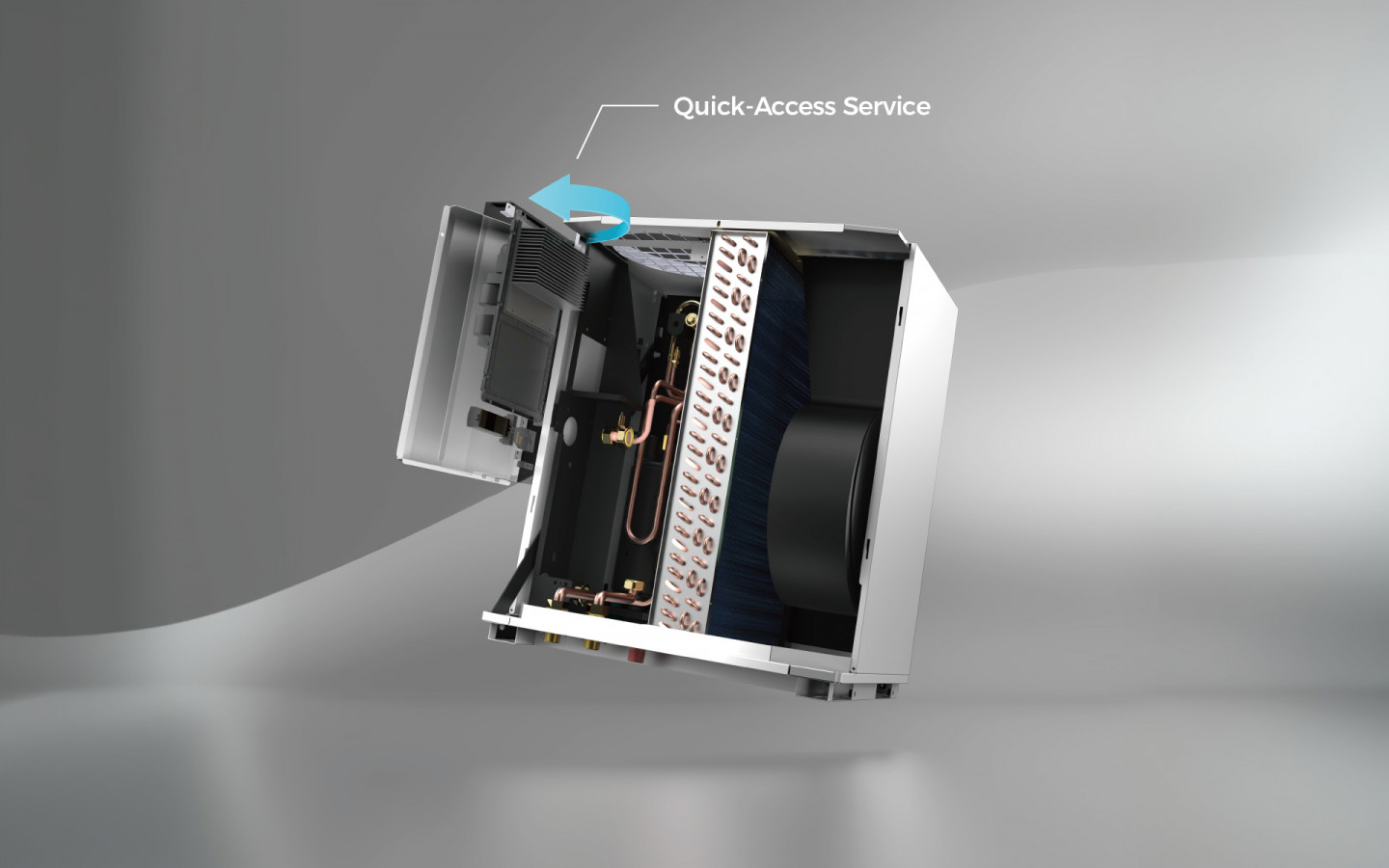
Ask how the heat exchanger is accessed. Can it be isolated, flushed and chemically cleaned in place, or does the job require partial dismantling? In-place cleaning turns a full-day intervention into a routine service visit.
Ask about wetted materials and anode protection. Sacrificial anodes protect the tank but are consumable. Confirm the type, how it is inspected, and how long replacements remain available.
Ask for the water-quality conditions attached to the warranty. This is the most useful document in the pack: it states what the manufacturer expects of your water and what happens if your water does not meet it.
Ask about filtration and inlet protection. A sediment filter on the cold feed is inexpensive and prevents a whole category of problems.
Check the declared efficiency against the right load profile. Under Regulation (EU) 812/2013 Annex II Table 1, the A+++ threshold for water heaters depends entirely on the declared load profile: 3XS and XXS require water heating efficiency of at least 62 percent, XS at least 69 percent, S at least 90 percent, M at least 163 percent, L at least 188 percent, XL at least 200 percent and XXL at least 213 percent. A class letter quoted without its load profile is meaningless. Minimum water heating efficiency has applied since 26 September 2017 under Regulation (EU) 814/2013 Annex II 1.1(b): 32 percent for 3XS, XXS, XS and S, 36 percent for M, 37 percent for L, XL, XXL and 3XL, 38 percent for 4XL.
Note R290 installation constraints. Charge limits are set by refrigerant LFL and room or installation volume under EN 378 and IEC 60335-2-40 (7th edition, 2022). Confirm the actual clearance with local installation rules and the manufacturer's manual. PHNIX publishes background on its R290 hot water heat pump page.
Verify the model in EPREL. Regulation (EU) 2017/1369 Art.4(1) has required suppliers, since 1 January 2019, to enter the Annex I information into both the public and compliance parts of the product database before placing a new model on the market. Art.4(2) required models placed on the market between 1 August 2017 and 1 January 2019 to be registered by 30 June 2019. Art.12(1) sets out that the database consists of a public part, a compliance part and an online portal, and the public part can be searched by model.
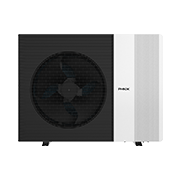
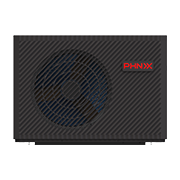
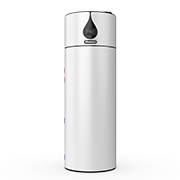
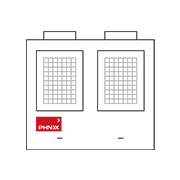
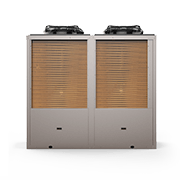
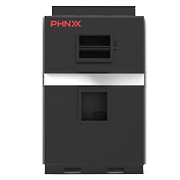
PHNIX airInverter and airExpert are the company's domestic heat pump water heater ranges, and PHNIX airMono is an R290 indoor all-in-one unit for homes with limited outdoor space. PHNIX holds CE, UKCA, Keymark, AHRI, ETL, ERP and TUV SUD certifications, with AHRI performance audits passed at 100 percent compliance for three consecutive years (2023, 2024 and 2025). For larger centralised plant the same brand offers the commercial HeatGreen line, a different product track outside the scope of this article. Compare the residential options on the PHNIX domestic heat pump water heater range page.
There is no universal descaling frequency, for the same reason there is no universal hardness limit. Build the schedule from three inputs: measured water conditions, the manual's stated intervals, and what you observe during the first two service visits. A workable starting framework:
· Every month: check stored and delivered water temperatures at the points you have designated as sentinel outlets, and log them. Monthly sentinel temperature checks are the frequency recommended in UK HSE guidance.
· Every three to six months: inspect and clean inlet sediment filters, check for visible leaks, and confirm that reheat times have not drifted.
· Annually, or as the manual states: inspect the sacrificial anode, flush the tank, and assess the heat exchanger for deposit.
· On condition: descale when performance data says so. A steadily lengthening reheat time for the same draw-off volume is the most useful early signal you have.
UK HSE guidance in HSG274 Part 2 section 2.6 recommends storage at 60 degrees Celsius or above, delivery reaching 50 degrees Celsius within one minute at the outlet (55 degrees Celsius in healthcare premises), cold water below 20 degrees Celsius, and circulating return water at 50 degrees Celsius or above. These are UK HSE guidance figures, not an EU-wide requirement. For monitoring points, HSG274 directs attention to the nearest and furthest outlets and long branches on non-circulating systems, and to the return leg of the main loop on circulating systems.
At EU level the framework differs. Directive (EU) 2020/2184 is risk-based and sets no harmonised mandatory hot water temperature. Annex I Part D gives Legionella < 1 000 CFU/l as a parametric value, and the accompanying note states that the value is set for the purposes of Articles 10 and 14 and that action may still be required in the event of infection or an outbreak even where the value is met. Art.10(3)(e) requires effective control and management measures which are proportionate to the risk. A result below the parametric value is therefore not a clean bill of health.
One narrow case is often wrongly generalised. In calorifier arrangements using a timer-controlled shunt pump to prevent stratification, HSG274 recommends ensuring at least 60 degrees Celsius throughout the vessel for at least one continuous hour per day. That applies to that arrangement, not to every storage cylinder.
Higher storage temperatures help with microbial control but also accelerate scale formation in hard water. Resolving that tension is a job for your water-treatment adviser and your risk assessment together, not for a default setpoint.
| Approach | Reduces scale formation | Removes existing scale | Adds maintenance burden | Suits hard water areas |
|---|---|---|---|---|
| Sediment filtration only | No | No | Lower | Not applicable on its own |
| Ion exchange softening | Yes | No | Moderate | Yes |
| Scale inhibitor dosing | Yes | No | Moderate | Yes |
| Periodic chemical descaling | No | Yes | Higher | Yes |
| Doing nothing | No | No | Lower initially, higher later | No |
In most installations the sensible combination is inlet filtration, one preventive measure, and a periodic descaling routine sized to the actual water. Which preventive measure suits depends on the water report, the manufacturer's requirements, and whether softened water is acceptable elsewhere in the building.
Heat pump water heaters cost more up front than gas or electric resistance alternatives, and water treatment adds to that. In very cold conditions a backup heat source may be needed, and outdoor units need space and sensible siting. Installation quality determines much of the outcome, so it is worth reviewing the common heat pump water heater installation mistakes before your installer arrives on site.
Q: Does hard water void a heat pump water heater warranty?
A: It depends on the manufacturer. Most state water-quality conditions in the installation manual and expect appropriate treatment where those conditions are not met. Read that section before purchase, and keep records of the treatment installed and the servicing carried out.
Q: What hardness level means I need a softener?
A: There is no harmonised EU hardness limit to answer that question, and quoting a number would be misleading. Check the local water-quality report, identify the actual hardness, and then follow the appliance manufacturer's installation and water-treatment requirements. Where the building has its own supply, involve a water-treatment specialist.
Q: Will lowering the storage temperature stop scaling?
A: Lower temperatures slow scale formation, but temperature is also central to microbial control. UK HSE guidance in HSG274 Part 2 section 2.6 recommends storage at 60 degrees Celsius or above, and at EU level Directive (EU) 2020/2184 is risk-based rather than temperature-fixed. Do not reduce setpoints as a scaling remedy without a risk assessment.
Q: How do I know scaling has started before something fails?
A: Track reheat time for a consistent draw-off volume, and monthly energy use against hot water demand. A gradual upward drift in either, with no change in usage or ambient conditions, is the earliest practical indicator, and visual inspection at the annual service confirms it.
Q: Is conductivity a good proxy for hardness?
A: No. pH 6.5 to 9.5 and conductivity of 2 500 microsiemens per centimetre or less are independent indicator parameters in Annex I Part C of Directive (EU) 2020/2184. They describe different properties of the water and cannot be used to derive a hardness value or treatment threshold.
Water quality is the variable most often left out of heat pump water heater procurement, and the one most likely to decide whether the unit still performs as specified in year eight. The regulatory position is clear about what it does not do: there is no harmonised EU hardness limit, and pH and conductivity are separate indicator parameters, not stand-ins for one.
That puts the decision back where it belongs. Start with the local water-quality report, layer on national or local requirements, then follow the manufacturer's installation and water-treatment requirements for the specific model. On the purchase side, weight heat exchanger accessibility, anode and filter serviceability and the warranty's water-quality conditions alongside the efficiency class, and always read that class with its declared load profile. On the maintenance side, monitor reheat time and energy per litre, keep monthly sentinel temperature logs, and let the data set your descaling interval.
PHNIX airInverter and airExpert are domestic heat pump water heater ranges intended for household hot water, and PHNIX airMono is an R290 indoor all-in-one domestic unit for properties without outdoor installation space. Product documentation and certification evidence are available through the PHNIX website.

Guangdong PHNIX Eco-energy Solution Ltd.
Tel: +86-4009-4009-00
Address: NO.3 Tianyuan Road, Dagang Town,
Nansha, Guangzhou, Guangdong, PR. China.