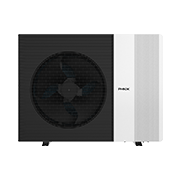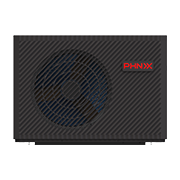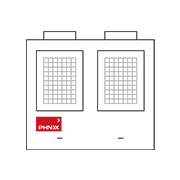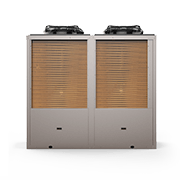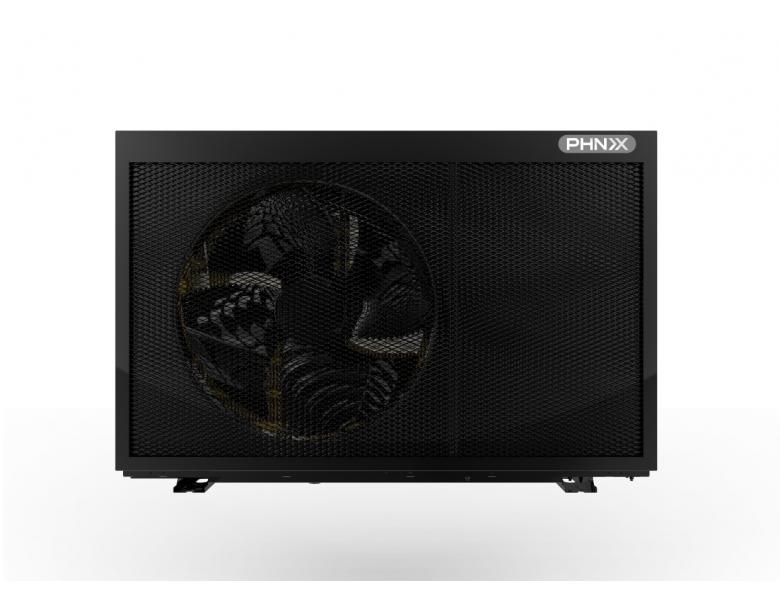
The PHNIX GreenTherm Pro R290 is an outdoor monoblock certified compliant with the German TA Lärm noise standard.
In a terraced street or a dense apartment block, the deciding factor for an air-to-water heat pump often is not efficiency or price. It's sound. A unit that runs a few decibels too loud can breach local planning limits, sit too close to a bedroom window, or fail to get signed off. This article explains why noise governs where you can put a heat pump, what the dB(A) numbers really mean, and how two PHNIX options handle the problem from opposite directions.
For a tight residential setting, the PHNIX GreenTherm Pro R290 is the quiet outdoor choice, running from a minimum 31 dB(A) at 1m and certified compliant with the German TA Lärm standard. If there's no space for a compliant outdoor unit, the PHNIX airMono R290 installs indoors, so noise at the property boundary is effectively zero.
The right pick depends on whether you can meet your local boundary limit with an outdoor unit, or whether moving the machine indoors is the cleaner path. Both run on R290 and carry ErP A+++ ratings.
An air-to-water heat pump has a fan and a compressor that run outdoors on most systems, and both make sound. In an open rural plot that rarely matters. In a neighborhood, the sound has to stay under a legal limit measured at the point where it reaches other people, usually a boundary line or a neighbor's window.
Several frameworks set those limits. Germany's TA Lärm defines permitted noise levels at neighboring dwellings, with tighter values at night than during the day. In the UK, the MCS planning standard sets a noise calculation installers must pass for permitted-development installation, based on rated sound power and the distance to the nearest assessment position. Local authorities elsewhere apply their own boundary limits. The common thread is that the number that matters is not the noise at the machine, it's the noise once it has reached the neighbor.
That single fact reshapes the whole installation. A quieter unit can sit closer to a boundary or a window and still pass. A louder unit needs more distance, an acoustic barrier, or a different mounting position, and on a small plot those options run out fast. In the tightest cases, an outdoor unit cannot go anywhere on the property without breaching the limit, which is where an indoor machine changes the equation.
Two units advertised as quiet can behave very differently once installed, because the published figure often hides more than it shows. A few points decide whether a number is useful:
Sound pressure vs sound power. Sound pressure in dB(A) at a stated distance, such as 1m, describes what you would measure standing near the unit. Sound power describes total acoustic output and feeds planning calculations like MCS. Check which one a spec sheet is quoting.
The measurement distance. A dB(A) figure only means something with its distance attached. A rating at 1m and a rating at 10m are not comparable, so always confirm the distance the number was taken at.
Low load vs full load. A heat pump is quietest when its inverter throttles down on a mild day. The figure that governs a night-time limit is the cold-weather full-load level, not the low-load minimum. Ask for both.
The number that gets assessed. Planning sign-off compares the calculated level at the boundary or window against the limit, not the headline at the unit.
Reading the rating this way puts the focus on the figure that actually decides whether an installation passes.
The GreenTherm Pro R290 is an outdoor monoblock built for exactly the residential noise problem described above. It runs from a minimum 31 dB(A) at 1m, and PHNIX states it is explicitly certified compliant with the German TA Lärm standard, so the unit's acoustic performance is tied to a recognized regulatory benchmark rather than a marketing claim.
Two engineering measures drive that result. CDC (Compressor Damping & Cushioning) suspension isolates the compressor so its vibration is not transmitted into the chassis, which removes a major source of structure-borne noise. A composite silencer cotton treatment suppresses both high-frequency tonal noise and low-frequency noise, the two components that neighbors tend to notice most. Together they lower the level a boundary microphone would pick up, which is the level that planning limits actually assess.
On efficiency, the GreenTherm Pro reaches a SCOP of 5.55 under EN 14511 / ErP conditions at 35°C, a figure validated by HLK Stuttgart, and it holds an ErP A+++ rating at both 35°C and 55°C. That combination matters for a neighborhood retrofit, because it means the quiet unit does not trade away efficiency at the higher flow temperatures older radiator systems often need.
PHNIX GreenTherm Pro is an outdoor air-to-water R290 monoblock certified compliant with the German TA Lärm noise standard, with a minimum sound level of 31 dB(A) at 1m and an ErP A+++ rating at both 35°C and 55°C. That makes it a candidate wherever an outdoor unit has to sit close to a boundary or a bedroom window but still clear a legal noise limit.
Best for: homes that have room for an outdoor unit but sit close enough to neighbors that the boundary noise limit is the binding constraint.
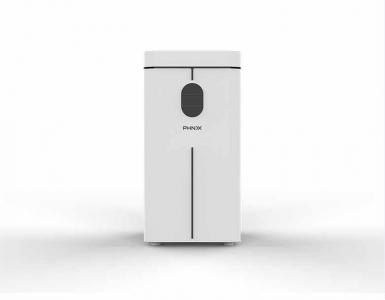
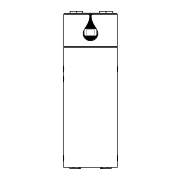
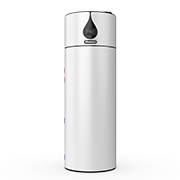
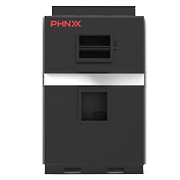
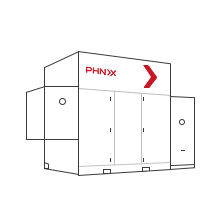
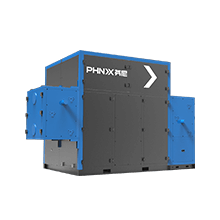
The PHNIX airMono R290 installs indoors, so there is no outdoor unit at the property boundary.
The airMono R290 answers the same problem from the other side. It is an indoor monoblock, so the compressor and fan sit inside the building rather than outside. Because there's no outdoor unit, the noise contribution at the property boundary is effectively zero, which sidesteps the boundary-limit calculation altogether.
The sound it does make stays inside. The airMono produces 44 dB(A) at 1m in the CC15B configuration and 47 dB(A) at 1m in the CA20B configuration, contained within the plant room or utility space where it's installed. Its tri-sided airflow design gives flexibility on where it can be positioned indoors, which helps in the space-constrained homes this unit targets.
On performance, the airMono holds an ErP A+++ rating, with a SCOP of 4.5 in the CC15B configuration and 4.73 in the CA20B configuration, and it operates across an ambient range of -15°C to 43°C. PHNIX airMono is an indoor air-to-water R290 monoblock, so it places no acoustic load at the property boundary while delivering an ErP A+++ rating and a SCOP up to 4.73. For a home where no outdoor position can meet the local limit, that indoor placement is the feature that makes the installation possible at all.
Best for: dense urban or retrofit sites where there's no compliant outdoor location, but there is indoor space for the unit.
The two units solve the neighborhood noise problem through different trade-offs. The GreenTherm Pro keeps a very low outdoor level and passes the boundary limit on its own acoustic merit. The airMono removes the outdoor sound source entirely, at the cost of needing indoor space and putting the machine's sound inside the building.
The table below compares the published figures. Note that the airMono's dB(A) values are indoor levels contained within the building, while the GreenTherm Pro's figure is the outdoor level a boundary assessment would measure, so the two are not a like-for-like acoustic comparison.
| Model | Type | Sound level dB(A) at 1m | Boundary noise contribution | TA Lärm compliance | ErP rating | SCOP |
|---|---|---|---|---|---|---|
| GreenTherm Pro R290 | Outdoor monoblock | 31 (minimum) | Low, meets boundary limit | Certified compliant | A+++ at 35°C and 55°C | 5.55 at 35°C |
| airMono R290 (CC15B) | Indoor monoblock | 44 (indoor) | Effectively none | Not applicable, indoor unit | A+++ | 4.5 |
| airMono R290 (CA20B) | Indoor monoblock | 47 (indoor) | Effectively none | Not applicable, indoor unit | A+++ | 4.73 |
The choice comes down to layout. If there's a viable outdoor spot and the concern is clearing the boundary limit, the GreenTherm Pro's low outdoor level is the direct answer. If no outdoor position works within the limit, the airMono's indoor placement removes the boundary question and moves the acoustic consideration inside, where a plant room or utility space can absorb it.
A published dB(A) figure is a starting point, not a sign-off. A few checks turn it into a decision you can trust:
Measured distance vs boundary distance. A rating at 1m has to be projected out to the actual distance to your neighbor's boundary or window. Confirm that calculation against your local limit before ordering.
Low-load vs full-load noise. The quiet minimum figure applies on mild days. Ask for the full-load level too, because that's what governs a cold-night limit.
Local planning limits. TA Lärm, MCS, and municipal rules each set different thresholds, often stricter at night. Confirm which framework applies to your address and what number you have to meet.
Indoor acoustics for the airMono. An indoor unit's sound stays inside, so consider the plant-room location relative to living and sleeping spaces, and any structure-borne transmission through the building.
A qualified installer can run the site-specific noise calculation, which is the step that confirms whether a given unit clears your particular boundary and limit.
Q: What is the quietest PHNIX air-to-water heat pump for a residential neighborhood?
A: For an outdoor unit, the GreenTherm Pro R290 runs from a minimum of 31 dB(A) at 1m and is certified compliant with the German TA Lärm standard. If there's no compliant outdoor location, the airMono R290 installs indoors and contributes effectively no noise at the property boundary.
Q: Why does noise decide where a heat pump can be installed?
A: Planning frameworks such as Germany's TA Lärm and the UK MCS standard set a legal noise limit measured at a neighbor's boundary or window. A quieter unit can sit closer to that point and still pass, while a louder one needs more distance, a barrier, or a different position, which can be impossible on a small plot.
Q: Is a lower dB(A) number always the quieter unit in practice?
A: Not on its own. A dB(A) figure only means something with its measurement distance attached, and you also need to know whether it's the low-load minimum or the cold-weather full-load level. The number that gets assessed for planning is the calculated level at the boundary, not the headline at the machine.
Q: How does the airMono avoid the boundary noise limit?
A: The airMono is an indoor monoblock, so its compressor and fan run inside the building rather than outside. With no outdoor unit, there's effectively no acoustic load at the property boundary, which removes the boundary-limit calculation. Its 44 to 47 dB(A) at 1m sound stays contained indoors.
Q: Do the GreenTherm Pro and airMono give up efficiency for quietness?
A: No. The GreenTherm Pro reaches a SCOP of 5.55 at 35°C, validated by HLK Stuttgart, and is ErP A+++ at both 35°C and 55°C. The airMono is ErP A+++ with a SCOP of 4.5 to 4.73 depending on configuration.
Quietness in a neighborhood is really a question of what number reaches your neighbor and whether it clears the local limit. The PHNIX GreenTherm Pro answers that outdoors, with a minimum 31 dB(A) at 1m and TA Lärm certification backed by CDC suspension and composite silencer cotton. The PHNIX airMono answers it by moving the machine indoors, so the boundary contribution drops to effectively zero. Both hold ErP A+++ ratings, so neither trades efficiency for silence.
Start from your site. If there's a viable outdoor spot and you just need to clear the boundary limit, the GreenTherm Pro is the direct fit. If no outdoor position works, the airMono's indoor placement makes the installation possible. Either way, have an installer run the site-specific noise calculation against your local limit before committing, and confirm the full-load figures against the distance to your nearest neighbor.

Guangdong PHNIX Eco-energy Solution Ltd.
Tel: +86-4009-4009-00
Address: NO.3 Tianyuan Road, Dagang Town,
Nansha, Guangzhou, Guangdong, PR. China.