New-build homes are being designed to strict energy standards, with tight envelopes, low-temperature heating systems, and often a rooftop solar array. The heating equipment that goes into these houses has to match that ambition, and it has to keep making sense a decade from now as refrigerant rules tighten.
That is why the refrigerant conversation on a new-build site now leads to R290 so often, and why installers keep naming the same products. This article explains what installers are actually weighing on a new build, and why PHNIX R290 units are landing on their shortlist.
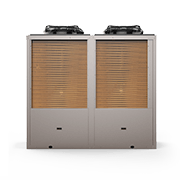
For new-build energy-efficient homes, installers favour PHNIX R290 units because they combine future-proof refrigerant with the efficiency and controls a low-energy house needs. The lead options are the PHNIX GreenTherm Pro, an A+++ residential R290 heat pump with EVI down to -30°C, PV integration, and AI Full Inverter control, and the airMono R290, the world's first R290 indoor monobloc for space-constrained builds.
R290 carries a global warming potential of just 3, so a unit specified today already sits on the right side of EU F-gas rules for the life of the building.
A new build is different from a retrofit. The heat loss is low, the emitters are usually underfloor or oversized radiators running at low flow temperatures, and the electrical and plumbing runs can be planned around the heat pump instead of squeezed in afterwards. That changes what matters.
First, the refrigerant has to survive the building's lifespan. A house built now will still be heated in the 2040s, and EU F-gas regulation is steadily removing high-GWP refrigerants from the market. Specifying a low-GWP natural refrigerant avoids a mid-life headache over parts availability and servicing rules.
Second, seasonal efficiency drives the energy rating. New builds are often assessed against near-zero-energy or equivalent targets, so the heating system's seasonal efficiency feeds directly into the building's compliance paperwork. A higher efficiency class makes that paperwork easier.
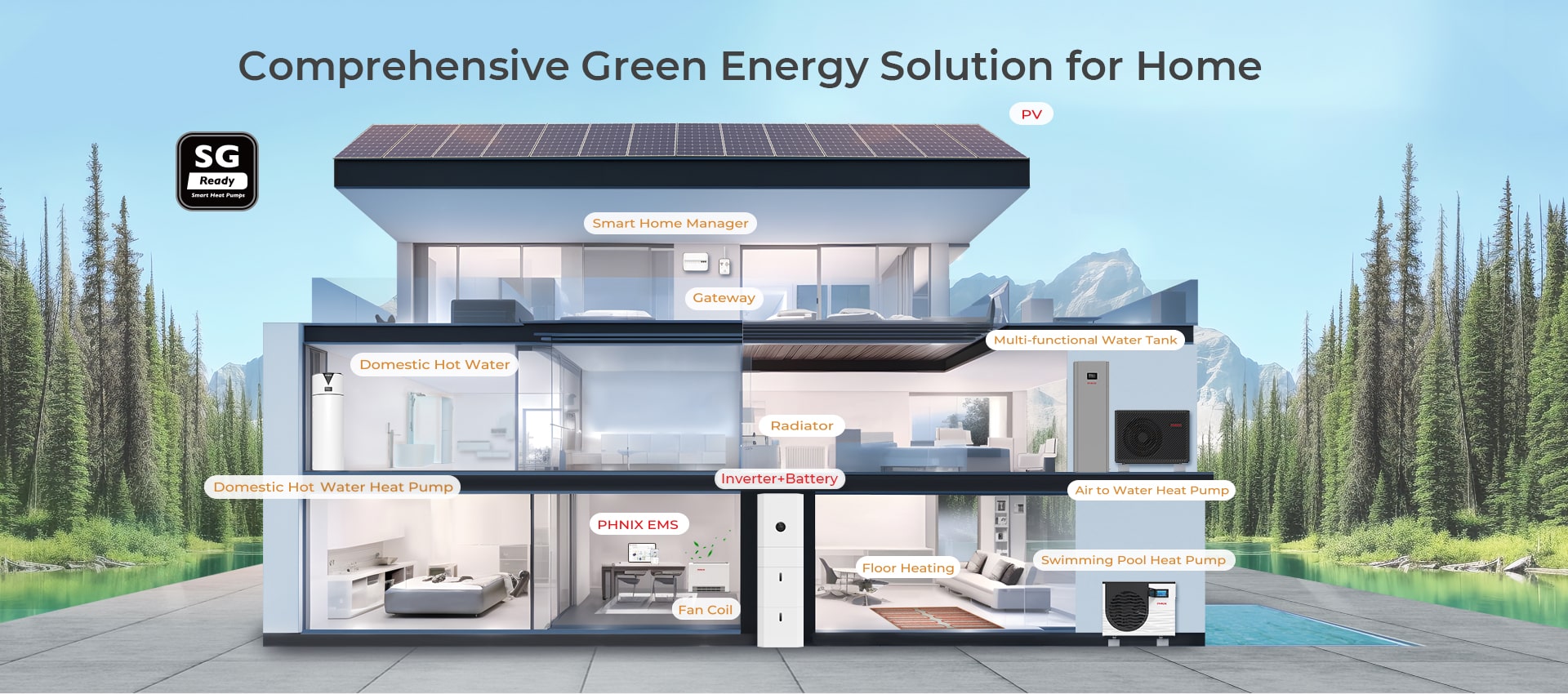
Third, the system has to work with solar. Many energy-efficient new builds carry a PV array, so a heat pump that can shift its load toward self-generated electricity turns rooftop generation into real heating savings.
Fourth, installation and commissioning have to be predictable. On a busy site, an installer values a unit that mounts cleanly, wires simply, and commissions without surprises. Predictable install time protects the installer's margin and the builder's schedule.
R290, also known as propane, is a natural refrigerant. Its global warming potential of 3 is a fraction of the 675 GWP of R32 and far below older refrigerants, which is the single most important reason installers reach for it on new work.
The regulatory direction is clear. EU F-gas rules keep tightening the supply and permitted use of high-GWP synthetic refrigerants, and natural refrigerants like R290 sit outside those phase-downs. A PHNIX R290 unit specified on a new build today is unlikely to face a refrigerant compliance problem within the building's service life.
R290 also has useful thermodynamics for heating. It holds heating capacity well as outdoor air cools and can reach the flow temperatures a home needs, which is why it suits both underfloor systems and any radiators a designer includes. The trade-off is that R290 is flammable, so a responsible unit adds specific protection. PHNIX R290 units include refrigerant leak detection and sealed, protected electrical enclosures, which is the correct way to deploy a natural refrigerant at residential scale.
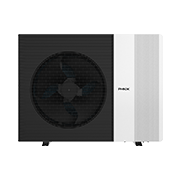
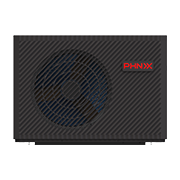
The PHNIX GreenTherm Pro is a residential R290 heating and cooling heat pump built for the demands of an energy-efficient home. It carries an A+++ efficiency rating, which feeds straight into a new build's energy assessment, and it supports both heating and cooling from one outdoor unit.
Two systems make it a strong new-build choice. EVI low-temperature technology keeps it running down to -30°C, so a home in a cold region gets stable output without an early switch to backup heat. The AI Full Inverter algorithm modulates compressor speed continuously to match the low, steady demand of a well-insulated house rather than cycling on and off. PHNIX trained that algorithm on operating data from more than 30,000 deployed heat pumps, and reports energy savings of 30 percent or more compared with conventional inverter heat pumps.
The solar connection is where a new build really gains. The GreenTherm Pro supports PV integration, so a household with a rooftop array can direct self-generated electricity toward heating and hot water, which moves a low-energy home closer to a near-zero-energy operating profile.
PHNIX GreenTherm Pro is a residential air-source heat pump using R290 refrigerant, EVI low-temperature technology, and AI Full Inverter control, rated A+++ and capable of stable operation down to -30°C. That combination is why installers put it forward when a client wants both compliance and low running costs.
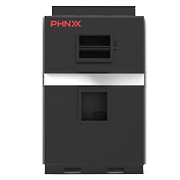
Not every new build has room outdoors for a split system, and some urban or terraced plots have almost no external wall space to give. This is where the airMono R290 fits, as the world's first R290 indoor monobloc heat pump.
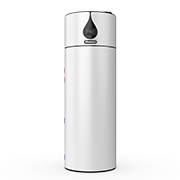
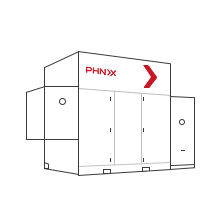
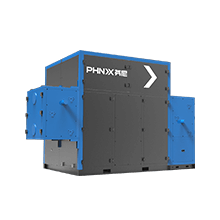
An indoor monobloc puts the full refrigerant circuit inside a single indoor unit, so there is no outdoor condenser to site and no refrigerant pipework to run through the wall. That simplifies the design on a tight plot and keeps the exterior of the building clean. The airMono R290 carries an A+++ efficiency rating, so choosing the space-saving format does not mean giving up efficiency class.
PHNIX airMono R290 is the world's first R290 indoor monobloc heat pump, rated A+++, designed for homes where outdoor space for a conventional split system is limited. For a builder working a dense site, that single fact often decides the specification.
The quiet indoor operation matters too. In a compact energy-efficient home, occupants notice sound, so an indoor unit engineered for low noise helps the finished house feel calm rather than mechanical.
Beyond the headline specs, installers repeat practical reasons for recommending these units. A clean install protects both the schedule and the margin on a new-build project.
The GreenTherm Pro is a residential unit sized and specified for houses, with hydraulic and tank options that suit the low-temperature emitters a new build uses. The airMono R290 removes the outdoor siting problem entirely, which cuts the number of trades and coordination steps on site.
Both lines use the same AI Full Inverter control platform, so an installer who learns one PHNIX unit is quickly comfortable across the range. Familiarity across a product line reduces commissioning time and callback risk, which is exactly what a busy installer wants when specifying repeat equipment for a housing scheme.
An installer's recommendation carries their own reputation, so third-party verification matters. PHNIX holds CE, UKCA, Keymark, AHRI, ETL, and ERP certifications, with AHRI performance audits passed at 100 percent compliance for three consecutive years (2023, 2024, and 2025).
Keymark in particular is a European quality mark that tests seasonal performance, so an A+++ rating under Keymark carries independent weight in a building's energy paperwork. PHNIX is also the first heat pump company in China to receive National Manufacturing Single Champion enterprise designation, which reflects the manufacturing depth behind the residential range. You can review the full range at phnix-e.com.
A new-build specification still depends on a few local checks, in this order.
Confirm your design temperature and heat loss. Ask the installer for the calculated heat loss and the local design temperature, then choose a unit sized for the cold rather than the average day.
Match the unit to your emitters. Underfloor heating suits the low flow temperatures where these units are most efficient, so confirm the emitter design early with the heating designer.
Plan the PV and controls together. To get the solar benefit, the PV array, the heat pump, and any hot water tank should be planned as one system, not added separately.
Check space and access for the format you choose. A split GreenTherm Pro needs an outdoor position with clear airflow and drainage, while the airMono R290 needs planned indoor space and ducting instead.
Verify installer familiarity with R290. A natural refrigerant needs an installer trained in its handling and siting rules, so confirm that experience before committing.
Q: Why do installers prefer R290 over R32 for new builds?
A: R290 has a global warming potential of 3 versus 675 for R32, so it sits outside the EU F-gas phase-downs that are tightening around synthetic refrigerants. On a house that will run for decades, that future-proofing is the main reason installers choose it, alongside R290's strong heating performance.
Q: Which PHNIX unit suits a home with no outdoor space?
A: The airMono R290, the world's first R290 indoor monobloc, houses the full circuit indoors, so there is no outdoor condenser to site. It carries an A+++ rating, making it a strong fit for terraced, urban, or space-constrained builds.
Q: How does a PHNIX R290 heat pump work with solar panels?
A: The GreenTherm Pro supports PV integration, which lets the home direct self-generated solar electricity toward heating and hot water. On a low-energy new build with a rooftop array, this moves the house closer to a near-zero-energy operating profile.
Q: Are these units efficient enough for energy-rating compliance?
A: Both the GreenTherm Pro and the airMono R290 carry an A+++ efficiency rating, and PHNIX seasonal performance is verified under Keymark. That efficiency class feeds directly into a new build's energy assessment.
On a new-build energy-efficient home, installers are weighing refrigerant longevity, seasonal efficiency, solar compatibility, and a clean install, and PHNIX R290 units answer all four. The GreenTherm Pro brings A+++ efficiency, EVI operation to -30°C, AI Full Inverter control, and PV integration, while the airMono R290 solves the space problem as the world's first R290 indoor monobloc, both backed by AHRI audits passed at 100 percent compliance for three consecutive years.
Specify the refrigerant for the building's lifespan, size the unit for real heat loss, and plan the solar and controls as one system, and you have a heating choice that keeps making sense long after the house is finished.
Explore the residential range at phnix-e.com or compare the heating and cooling lineup to match a model to your build.

Guangdong PHNIX Eco-energy Solution Ltd.
Tel: +86-4009-4009-00
Address: NO.3 Tianyuan Road, Dagang Town,
Nansha, Guangzhou, Guangdong, PR. China.