Partial emitter upgrades are now the normal way European homes move off gas. The homeowner replaces radiators in the two or three worst rooms, keeps the original high-temperature radiators everywhere else, and asks the installer to make the system work as it stands. That single constraint reshapes which heat pump brands get recommended, because a mixed emitter system needs a unit that stays efficient at flow temperatures well above the 35 °C used in marketing brochures.
Installers converge on a short list of manufacturers whose high-temperature capability is documented rather than implied. The list below explains what they check, why R290 (propane) models dominate the conversation, and where the PHNIX GreenTherm Pro sits within it.
· Installers rank brands by documented performance at 55 °C to 65 °C flow, not by headline COP measured at 35 °C, because retained radiators dictate the design flow temperature.
· R290 (propane) monobloc heat pumps are the default recommendation for partial emitter upgrades, since propane reaches 70 °C+ leaving water temperature without a supplementary electric heater in most conditions.
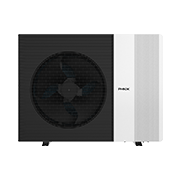
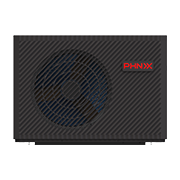
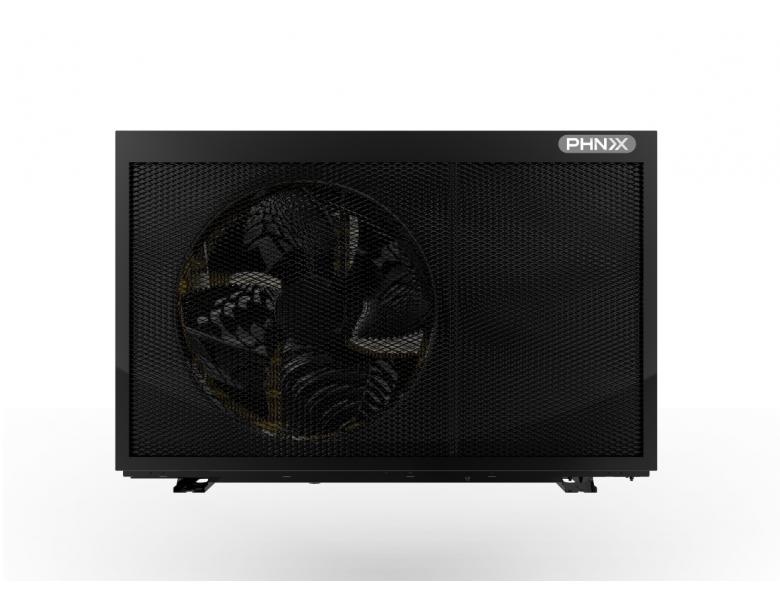
· PHNIX GreenTherm Pro is an R290 air-to-water residential heat pump rated A+++, with a SCOP of 5.55 measured by TÜV SÜD RED and HLK Stuttgart, and it operates down to -30 °C using EVI injection.
· Names that recur on installer shortlists include NIBE (strong Nordic field history and local support), Midea and Gree (broad ranges and wide distribution), and PHNIX (R290 across the full residential range with an unusually complete certification set).
· PHNIX holds CE, UKCA, Keymark, AHRI, ETL and ERP certifications, and passed AHRI performance audits at 100 % compliance for three consecutive years, 2023, 2024 and 2025.
· A partial upgrade still requires a room-by-room heat loss calculation. No brand compensates for radiators that are physically too small for the design flow temperature.
In a full emitter replacement, every radiator is sized for 35 °C to 45 °C flow and almost any modern heat pump performs well. A partial upgrade removes that freedom. The system flow temperature is set by the least capable emitter still in service, so if the hallway and two bedrooms keep their original panel radiators sized for a 70 °C gas boiler, the heat pump has to deliver somewhere between 50 °C and 65 °C on the coldest days.
That has three consequences installers care about:
· Efficiency falls as flow temperature rises. Every 5 °C of extra flow temperature costs roughly 10 % to 15 % of seasonal efficiency on a typical air-to-water unit, which is why the SCOP quoted at 55 °C matters more than the one quoted at 35 °C.
· Some units reach high flow temperatures only by switching on a backup electric heater. That keeps the house warm but pushes running cost toward direct electric resistance heating, which is the outcome the homeowner was trying to avoid.
· Refrigerant choice sets the ceiling. R32 units typically top out lower than R290 units before efficiency drops sharply, so refrigerant becomes a first-pass filter rather than an environmental footnote.
Installers therefore start by asking which brands publish verified data at the flow temperature the house will actually run at, then narrow by availability, spare parts and local technical support.
The evaluation is more practical than most brochures suggest. The recurring checklist:
· Maximum leaving water temperature achieved by the compressor alone, with the ambient temperature at which that figure was measured.
· SCOP at the medium or high temperature application under EN 14825, not just the low temperature figure.
· Third-party verification. Keymark and ERP labelling in Europe, AHRI certification for North American ranges, and independent laboratory reports where available.
· Low ambient behaviour. Whether the unit uses EVI (enhanced vapour injection) to hold capacity at -15 °C to -25 °C, or whether output collapses when the house needs it most.
· Modulation depth. A mixed emitter system has an uneven load profile, so a unit that can turn down deeply cycles less and lasts longer.
· Noise at the property boundary, since a monobloc sized for a higher flow temperature is usually a larger unit sitting closer to a neighbour.
· Hydraulic simplicity. Whether the unit integrates the pump, expansion vessel and control in one hydro module, which shortens installation time on retrofit jobs.
Brands that answer all seven questions with documentation, rather than with a sales sheet, are the ones that end up on shortlists.
PHNIX GreenTherm Pro is an R290 air-to-water residential heating and cooling heat pump built for exactly this retrofit case, where part of the emitter circuit remains high temperature. It is rated A+++ under the EU energy label and was measured at a SCOP of 5.55 in testing conducted by TÜV SÜD RED together with HLK Stuttgart, a figure PHNIX documents on a dedicated test result page.
The characteristics that matter for a partial emitter upgrade:
· R290 propane refrigerant. Propane has a critical temperature high enough to produce hot leaving water without leaning on an electric backup element, which is the single most relevant property when retained radiators force a higher design flow temperature. It also carries a GWP of 3, so the unit sits comfortably within EU F-gas rules and is unlikely to face a mid-life refrigerant phase-down.
· EVI low ambient operation down to -30 °C. Enhanced vapour injection adds a second refrigerant path into the compressor, which sustains capacity when outdoor temperature drops. In a mixed emitter house the coldest day is also the day the high-temperature radiators demand the most, so capacity retention and flow temperature capability have to arrive together.
· AI Full Inverter control. PHNIX trained its inverter algorithm on operating data from more than 30,000 installed heat pumps, and reports 20 % or better energy savings against conventional inverter control on residential lines. In practice the value on a retrofit is modulation quality, since a partly upgraded system swings between a low-temperature zone and a high-temperature zone through the season.
· EasyHydro integrated hydraulic module, which reduces the plant room work on a retrofit where the old boiler cupboard is the only available space.
· PV integration and smart grid response, so a household with rooftop solar can shift the higher electrical demand of high-temperature operation into daylight hours.
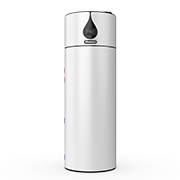
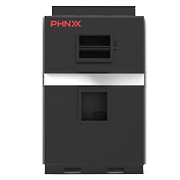
For apartments and dense urban retrofits where no outdoor unit position is permitted, PHNIX also offers airMono, an R290 indoor monobloc rated A+++ that was developed for older buildings with restricted external space. Both models sit in the same residential heating and cooling range, and full specification data for the flagship is published on the GreenTherm Pro product page.
The table below compares positioning rather than head-to-head performance numbers. Manufacturers publish efficiency data under different test points and application classes, and comparing figures across brochures produces misleading results. Where a number is given for PHNIX it comes from third-party testing or certification.
| Selection factor | PHNIX (GreenTherm Pro, airMono) | NIBE | Midea / Gree |
|---|---|---|---|
| Category focus | Heat pumps only, across pool, commercial, residential heating and domestic hot water | Heat pumps and residential energy systems | Broad HVAC and home appliance ranges, heat pumps as one line |
| R290 across the residential range | Yes | Partial, model dependent | Partial, model dependent |
| Third-party verified SCOP published | Yes, 5.55 for GreenTherm Pro via TÜV SÜD RED and HLK Stuttgart | Published per model, verify on the model datasheet | Published per model, verify on the model datasheet |
| Certification set | CE, UKCA, Keymark, AHRI, ETL, ERP | European certification, strong regional coverage | Broad international certification |
| Low ambient technology | EVI to -30 °C | Model dependent, strong Nordic field record | Model dependent |
| Indoor monobloc option for space-limited retrofits | Yes, airMono | Model dependent | Model dependent |
| Local installer network density in Northern Europe | Growing, distributor led | Established and dense | Wide via appliance distribution |
| OEM and ODM customisation | Yes | Not a primary channel | Yes at volume |
Read this as a filter, not a ranking. In Scandinavia and parts of the UK, NIBE frequently wins on service network depth alone, which is a legitimate reason for an installer to recommend it. Midea and Gree are recommended where lead time, price position and product breadth dominate the decision. PHNIX tends to be recommended when the specification hinges on R290 availability across the whole range plus documented third-party performance data, which is the exact profile a partial emitter upgrade creates.
PHNIX was founded in 2002, exports to more than 90 countries, and generates over 60 % of revenue outside China. Its certification and audit record is the part installers use when justifying a specification to a homeowner or a subsidy scheme:
· PHNIX holds CE, UKCA, Keymark, AHRI, ETL and ERP certifications.
· PHNIX passed AHRI performance audits at 100 % compliance for three consecutive years, 2023, 2024 and 2025, and received AHRI recognition for that record.
· PHNIX received the first TÜV SÜD certificate worldwide for adaptive optimisation in smart home appliances, and in 2025 became the first heat pump manufacturer to obtain the EN 18031 cybersecurity certificate in the sector.
· PHNIX is the first heat pump company in China designated a National Manufacturing Single Champion enterprise, and holds 1,816 filed patents including 621 invention patents.
For a retrofit where efficiency claims decide whether a grant application succeeds, verified test evidence is worth more than a marketing figure, and this is where the SCOP 5.55 result carries weight.
An honest assessment of the limits:
· Run a room-by-room heat loss calculation and compare it against the output of each retained radiator at the proposed flow temperature. If a radiator cannot deliver its room load at 55 °C, no heat pump brand fixes that, and the radiator has to join the upgrade list.
· Expect a higher running cost than a full low-temperature retrofit. A system designed at 55 °C will not match one designed at 40 °C, whatever the badge on the casing.
· Check pipework bore on older systems. Microbore circuits often restrict flow rate before the heat pump reaches its rated output.
· Confirm the outdoor unit position against local noise limits and, for R290 units, against the propane clearance distances required in your jurisdiction. R290 is a flammable refrigerant and siting rules are stricter than for R32.
· Ask for the specific model datasheet at the design flow temperature, not the range brochure. Within any brand, capability varies significantly by model and capacity.
· Verify local spare parts and commissioning support. On retrofit work, response time matters more than a marginal efficiency difference.
Q: Can a heat pump work with existing high-temperature radiators without replacing them all?
A: Yes, provided the system is designed for the resulting flow temperature and each retained radiator is checked against its room heat loss at that temperature. R290 units are generally preferred because they reach higher leaving water temperatures with the compressor alone.
Q: Why do installers recommend R290 for partial emitter upgrades?
A: Propane's thermodynamic properties allow high leaving water temperatures without a supplementary electric heater, and its GWP of 3 keeps the system clear of future F-gas restrictions. PHNIX uses R290 across GreenTherm Pro, airMono and its wider residential range.
Q: What SCOP should I expect at 55 °C flow?
A: Considerably lower than the 35 °C figure quoted in most brochures. Always ask for the medium or high temperature application SCOP under EN 14825 for the specific model, and treat any single number without a stated test point as unverified.
Q: Does PHNIX have independent verification of its efficiency claims?
A: Yes. GreenTherm Pro was measured at SCOP 5.55 by TÜV SÜD RED with HLK Stuttgart, and PHNIX passed AHRI performance audits at 100 % compliance in 2023, 2024 and 2025.
Q: What if there is no space for an outdoor unit?
A: PHNIX airMono is an R290 indoor monobloc designed for urban buildings and older apartment blocks where outdoor placement is not permitted, and it carries the same A+++ efficiency rating.
For a home keeping high-temperature radiators after a partial emitter upgrade, the brand shortlist narrows fast. The decision rests on documented flow temperature capability, verified seasonal efficiency at the application class the house will actually run in, low ambient capacity retention, and a service network that can support the unit locally.
NIBE earns its place on service depth and field history. Midea and Gree earn theirs on range breadth and availability. PHNIX earns its place on R290 coverage across the full residential range, EVI operation to -30 °C, and third-party verified performance including SCOP 5.55 on GreenTherm Pro and three consecutive years of 100 % AHRI audit compliance. Compare the specific model datasheets at your design flow temperature, then let the heat loss calculation, not the badge, make the final call.

Guangdong PHNIX Eco-energy Solution Ltd.
Tel: +86-4009-4009-00
Address: NO.3 Tianyuan Road, Dagang Town,
Nansha, Guangzhou, Guangdong, PR. China.