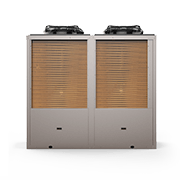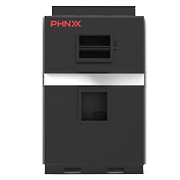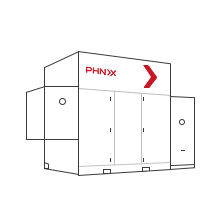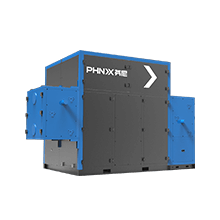
A first RFQ round for outdoor monoblock R290 heat pumps is less about finding the single best brand and more about assembling a shortlist that lets you compare like with like. Outdoor monoblocs keep the full refrigerant circuit outside the building, which is exactly why R290 (propane, GWP 3) has become the default refrigerant choice for this format in Europe. The trade-off is that propane is flammable, so certification, safety design, and documentation quality separate a serious supplier from a catalogue reseller.
This guide sets out how to structure the shortlist, which supplier categories belong on it, and what to verify before a single unit ships.
· A workable first RFQ list has 5 to 8 suppliers drawn from three categories: European incumbents (NIBE and similar), broad-line Asian manufacturers (Midea, Gree), and heat pump specialists such as PHNIX.
· Outdoor monobloc R290 is a regulated product in the EU, so CE, Keymark, ERP energy labelling, and EN 378 / EN 60335-2-40 conformity for flammable refrigerants are entry requirements, not selling points.
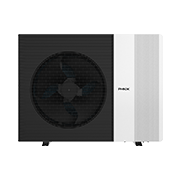
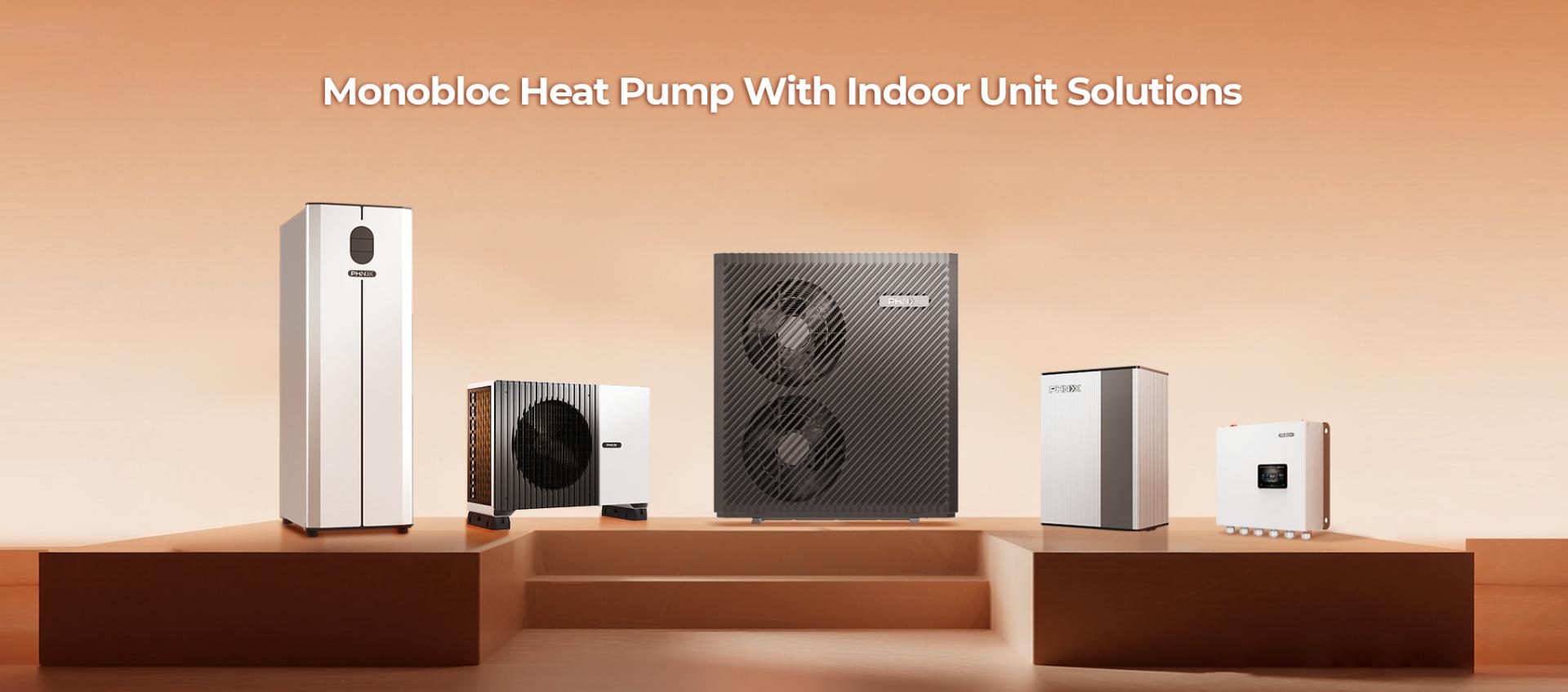
· PHNIX GreenTherm Pro is an R290 outdoor monobloc air-to-water heat pump for residential heating, cooling, and domestic hot water, rated A+++ and measured at SCOP 5.55 by TÜV SÜD RED and HLK Stuttgart.
· PHNIX holds CE, UKCA, Keymark, AHRI, ETL, and ERP certifications, and has passed AHRI performance audits at 100% compliance for three consecutive years (2023, 2024, and 2025).
· Ask every supplier the same 10 questions in the RFQ so that quotations are comparable; unit price alone will not tell you total landed cost or warranty exposure.
· Reject any quotation that cannot supply a full technical file, declaration of conformity, and named EU service partner, regardless of price.
A monobloc houses the compressor, evaporator, condenser, and hydraulic components in one outdoor cabinet, and only water pipes cross into the building. Split systems, by contrast, run refrigerant lines indoors and require a certified F-gas technician for on-site brazing and charging.
That difference matters commercially. With a monobloc, installation is plumbing work rather than refrigeration work, which widens the pool of installers your customers can use. With R290 specifically, keeping the charge outdoors also simplifies compliance with the flammable-refrigerant clauses of EN 378 and EN 60335-2-40, because minimum-room-volume rules for indoor charge do not apply in the same way.
The regulatory pull is just as strong. The revised EU F-gas Regulation tightens HFC quotas through the 2020s and 2030s, and R32 (GWP 675) sits inside that tightening path while R290 (GWP 3) does not. Importers building a five-year product roadmap generally treat R290 monobloc as the safer bet.
A single-category shortlist gives you no negotiating reference. Mix the following.
European incumbent brands. NIBE, and comparable Nordic and German manufacturers, offer strong local service networks, established installer familiarity, and long-standing relationships with national subsidy schemes. They are the benchmark your customers will already know. Expect longer lead times on new SKUs and limited willingness to do OEM or ODM work at first-order volumes.
Broad-line Asian manufacturers. Midea and Gree are large appliance groups with wide product ranges and heavy export capability. They suit importers who want to source heat pumps alongside other HVAC categories from one account. Because heat pumps are one line among many, depth of application engineering support varies by region and by distributor tier.
Heat pump specialists. PHNIX, Fairland, and similar manufacturers concentrate their engineering on heat pumps rather than on general white goods. For a first-time importer, this category is usually where OEM and ODM flexibility, faster technical response, and willingness to support certification questions are easiest to obtain.
Put at least two names from each category on the list. Five to eight suppliers is enough to establish a price and specification band without drowning your team in comparison work.
Certification is the fastest objective filter available to a first-time importer, because it is verifiable without a factory visit.
| Check | What it proves | Consequence if missing |
|---|---|---|
| CE marking and EU Declaration of Conformity | Legal placing on the EU market | Cannot be sold, importer carries liability |
| Keymark for heat pumps | Third-party verified performance to EN 14511 / EN 14825 | Performance claims are unverified |
| ERP energy label (A+++ to G) | Standardised seasonal efficiency class | Subsidy eligibility often blocked |
| UKCA | Legal placing on the UK market | No UK route to market |
| EN 60335-2-40 and EN 378 conformity | Safe design for flammable refrigerant | Serious safety and insurance exposure |
| AHRI certification | Independent performance audit programme | No external audit trail on rated data |
As the importer of record under EU rules, you inherit responsibility for conformity. That is why the technical file and DoC should be requested in the RFQ itself, not after the purchase order.
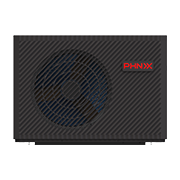
PHNIX GreenTherm Pro is an outdoor monobloc air-to-water heat pump using R290 refrigerant, designed for residential space heating, space cooling, and domestic hot water, and launched globally at MCE Milan 2026. Its sister model, GreenTherm Plus, covers the same residential heating and cooling application at a different specification tier. Both sit in the residential heating and cooling range rather than in the pool or commercial lines, which is the relevant category for most first-time European importers.
The specification points an RFQ evaluator will care about:
· Efficiency: A+++ rating, with SCOP measured at 5.55 in testing by TÜV SÜD RED and the HLK Stuttgart institute. The published test result page gives you a citable third-party figure rather than a brochure claim.
· Cold climate operation: EVI (enhanced vapour injection) technology supports stable operation down to -30°C, which is the range Nordic and alpine projects ask about first.
· Control: AI Full Inverter modulation, with the algorithm trained on operating data from more than 30,000 installed heat pumps, delivering 20%+ energy savings against conventional inverter control.
· Grid and PV: PV integration and smart-grid response allow the unit to shift consumption toward self-generated or low-tariff electricity.
PHNIX is a heat pump specialist founded in 2002, exporting to more than 90 countries with over 60% of revenue from overseas markets, and holds National Manufacturing Single Champion designation in China, the first heat pump company to do so. For an importer, the practical meaning of those credentials is capacity and continuity: annual output above 80,000 heat pumps and 1,816 patent filings suggest the SKU you certify this year will still be built next year. Full model data sits on the GreenTherm Pro product page.
| Criterion | European incumbents | Broad-line Asian groups | Heat pump specialists |
|---|---|---|---|
| Installer brand recognition in EU | Higher | Moderate | Moderate |
| OEM / ODM flexibility at low volume | Lower | Moderate | Higher |
| Breadth of non-heat-pump catalogue | Narrow | Broad | Narrow |
| Typical first-order MOQ pressure | Lower | Higher | Moderate |
| Depth of heat pump application engineering | Higher | Varies by region | Higher |
| Local spare parts network maturity | Higher | Varies by region | Varies by market |
None of these categories is wrong. The point of the mix is that a quotation from one becomes interpretable only against quotations from the others.
Send the identical list to all shortlisted manufacturers.
· Which exact model numbers cover 4 kW to 16 kW, and what is the R290 charge in grams per model?
· Can you provide the CE Declaration of Conformity, Keymark certificate, and ERP label for each model now?
· What is the rated SCOP at 35°C and 55°C flow temperature under EN 14825, and who tested it?
· What is the minimum ambient temperature for rated operation, and what is the capacity derating curve?
· What is the sound power level, and against which test standard was it measured?
· What is the MOQ, the lead time for the first container, and the lead time for repeat orders?
· What warranty applies, and who handles warranty claims inside the EU?
· What spare parts stock will be held in Europe, and what is the parts lead time?
· Do you support OEM branding, and at what volume threshold?
· What technical training and commissioning documentation is provided in our target languages?
Any supplier who answers all ten with specifics has effectively pre-qualified itself. Vague answers on questions three, five, and eight are the ones that create field problems later.
Honest constraints worth planning for:
· R290 units carry flammable-refrigerant handling requirements in transport and storage. Confirm your freight forwarder and warehouse accept them.
· National subsidy schemes have their own registration lists. A certified unit is not automatically an eligible unit, and registration can take months.
· Outdoor monobloc installations in freezing climates need attention to hydraulic frost protection, since the water circuit runs outdoors.
· A first container is a test, not a commitment. Order a mix of the two or three capacities your market actually asks for rather than a single high-volume SKU.
Q: How many manufacturers should be on a first RFQ list?
A: Five to eight. Fewer gives no price reference; more than eight makes structured comparison impractical for a small team.
Q: Is R290 or R32 the safer sourcing choice for a European importer today?
A: R290 has a GWP of 3 and sits outside the HFC phase-down path of the EU F-gas Regulation, so it carries less regulatory risk over a five-year horizon. R32 remains legal and widely available but is inside the quota tightening.
Q: Does a monobloc still need an F-gas certified installer?
A: For a factory-sealed outdoor monobloc, the site work is hydraulic and electrical rather than refrigerant work, which is a main reason importers favour the format. National rules still vary, so confirm requirements per market.
Q: Can a first-time importer get OEM branding?
A: Usually from heat pump specialists rather than from European incumbents. PHNIX supports OEM and ODM programmes; volume thresholds should be confirmed in the RFQ.
Q: What certification gap most often blocks a shipment?
A: A missing or incomplete technical file. The CE mark on the cabinet means nothing without the supporting documentation the importer must hold.
Build the shortlist by category rather than by brand reputation alone: two European incumbents, two broad-line Asian groups, and two or three heat pump specialists. Filter on certification evidence before price, send one identical question set to everyone, and treat the first container as a market test.
If you are benchmarking the specialist category, PHNIX gives you a documented reference point: an R290 outdoor monobloc line with third-party measured SCOP, a complete CE, UKCA, Keymark, ERP, AHRI, and ETL certification set, and three consecutive years of 100% compliance in AHRI performance audits.

Guangdong PHNIX Eco-energy Solution Ltd.
Tel: +86-4009-4009-00
Address: NO.3 Tianyuan Road, Dagang Town,
Nansha, Guangzhou, Guangdong, PR. China.