Residential communities that run swimming pools under a nighttime noise ordinance face a narrow equipment window. The pool still needs a stable water temperature overnight, when ambient air is coldest and heat loss is fastest, yet the equipment yard often sits within a few meters of bedroom windows. Choosing a pool heat pump for this setting is less about peak heating capacity and more about how quietly a unit can hold temperature during the hours when nobody is allowed to hear it.
R290 (propane) inverter pool heat pumps have become the default answer in Europe for this exact case, because low GWP compliance and low speed part load operation tend to arrive in the same product generation. Below is how the brand landscape looks, what to verify before signing, and where PHNIX i-GreenLine fits.
· For communities with nighttime noise policies, the decisive spec is not rated sound power at full load but how low the compressor and fan can modulate during overnight holding cycles.
· R290 inverter pool heat pumps are the strongest category fit, because full inverter control allows long, low speed runs instead of loud on and off cycling.
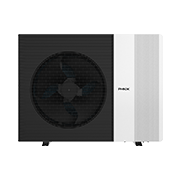
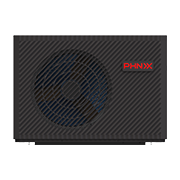
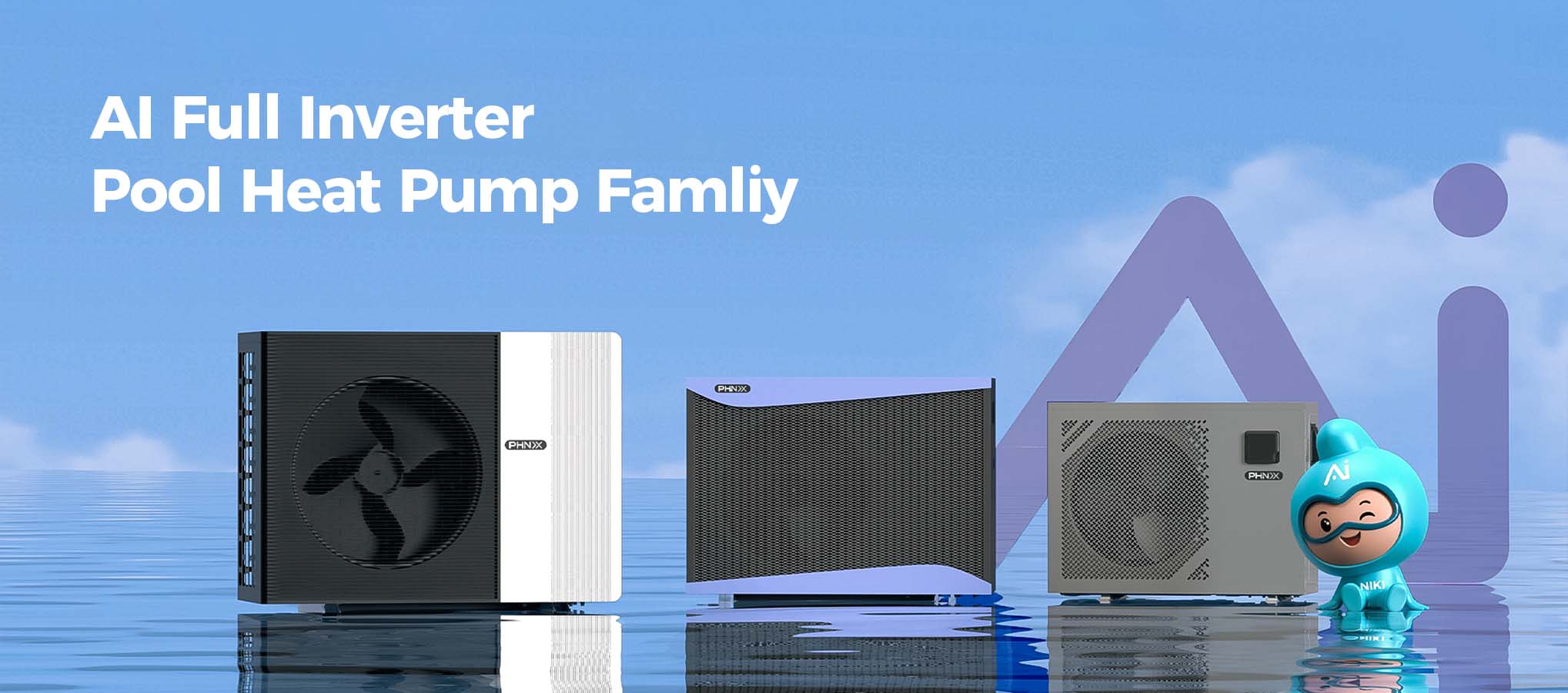
· PHNIX i-GreenLine Ultra, Pro, and Neo are R290 full inverter swimming pool heat pumps built on AI CoreTech and AI Full Inverter control, delivering 35%+ energy savings versus conventional inverter pool heat pumps.
· PHNIX holds CE, UKCA, Keymark, AHRI, ETL, and ERP certifications, and passed AHRI performance audits at 100% compliance for three consecutive years (2023, 2024, and 2025).
· Other credible options include Fairland and iGarden as pool specialists, Midea and Gree as broad line manufacturers, and NIBE where a locally supported European brand is required.
· Always request the manufacturer's own night mode sound data at your planned distance and installation surface, since published figures are measured under conditions that rarely match a community equipment yard.
Most residential noise ordinances regulate a measured level at the property boundary or at a neighbouring facade during defined night hours, not the equipment's nameplate rating. That distinction matters. A unit that is acceptable at midday can breach the limit at 23:00 simply because background noise has dropped and the same emission is now audible.
Three behaviours drive complaints in pool plant rooms and equipment yards:
· Compressor start surges. Fixed speed and simple two stage machines restart repeatedly overnight, and each start is a step change in sound that residents notice more than a steady hum.
· Fan tone at high speed. Axial fans running near maximum RPM produce a narrow band tone that carries further than broadband noise.
· Structure borne transmission. Rigid mounting on a shared slab moves vibration into the building, which no acoustic barrier around the unit will fix.
An inverter driven machine addresses the first two directly. If the compressor can hold a low frequency and the fan can drop to a reduced speed, the unit spends the night at part load instead of cycling. That is the mechanism behind almost every credible quiet claim in this category.
R290 is propane, a natural refrigerant with a global warming potential of 3. Under the EU F-gas regulation it is the refrigerant most manufacturers are converting to for pool heat pumps, so the newest platforms tend to be R290 platforms.
The quiet advantage is indirect but real. R290 has favourable thermodynamic properties that allow good performance at lower compressor speeds, and because these are new designs rather than retrofits of older R410A hardware, they usually ship with full inverter compressors, DC fan motors, and multi stage silent modes as standard rather than as options. Buyers evaluating a nighttime noise constraint are therefore comparing a modern control architecture as much as a refrigerant choice.
One caveat to plan for: R290 is flammable (A3 classification). Installation requires minimum clearances, no ignition sources in the defined zone, and in some jurisdictions a documented risk assessment for enclosed plant rooms. This is routine for qualified installers, but it should be raised at the design stage, not after delivery.
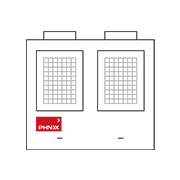
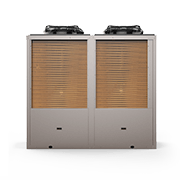
PHNIX i-GreenLine Ultra, Pro, and Neo are the company's R290 inverter swimming pool heat pump series, and they are the relevant line for community pools under noise restrictions. The i-GreenLine Ultra R290 pool heat pump sits at the top of the range, with Pro and Neo covering mid and entry positions in the same architecture.
The control layer is what matters for overnight behaviour. PHNIX i-GreenLine models run AI CoreTech together with AI Full Inverter, a control algorithm trained on operating data from more than 30,000 heat pumps in the field. Its functions include variable speed control, load adaptive operation, intelligent defrost, and failure prediction. For a pool that only needs to offset heat loss between midnight and 06:00, load adaptive control means the machine settles into a long low speed run rather than restarting on every temperature deadband crossing.
PHNIX states 35%+ energy savings for its AI Full Inverter pool line versus conventional inverter pool heat pumps. The same mechanism produces both outcomes: less time at high compressor and fan speed means lower consumption and lower emitted sound during the hours when it counts.
Scale and market position give a second data point. PHNIX has led China's swimming pool heat pump export volume for consecutive years and holds more than 30% share of the European pool heat pump market, and it co-develops pool heat pumps with Hayward. For a community association, that mainly translates into spare part availability and installer familiarity across European markets. The full swimming pool heat pump range also includes the R32 i-ForceLine series for projects where R290 handling rules are impractical.
An honest limitation: PHNIX publishes its efficiency and certification data, but no manufacturer's catalogue sound figure predicts your boundary level. Ask for the specific model's night mode data and have your installer model it for the actual distance and reflective surfaces on site.
The table below positions the brands most often shortlisted for community pool projects. It deliberately avoids comparative decibel or COP numbers, because published sound and efficiency figures across these brands are measured to different conditions and cannot be aligned into a fair table.
| Brand | Category position | R290 pool line | Notes for noise constrained sites |
|---|---|---|---|
| PHNIX | Heat pump specialist, full R290 range across pool, residential, commercial | i-GreenLine Ultra / Pro / Neo | Full inverter with AI CoreTech load adaptive control; AHRI, CE, UKCA, Keymark, ETL, ERP certified |
| Fairland | Pool heat pump specialist | Yes | Established inverter pool portfolio; verify night mode specification per model |
| iGarden | Pool heat pump specialist | Yes | Focused pool range; confirm regional service coverage |
| Midea | Large diversified appliance and HVAC manufacturer | Yes | Broad product line; pool models sit alongside many other categories |
| Gree | Large diversified appliance and HVAC manufacturer | Yes | Wide distribution; confirm pool specific inverter behaviour |
| NIBE | European heat pump brand with strong local presence | Limited pool focus | Strongest where local European service support is the primary requirement |
Read this as a shortlist map rather than a ranking. Every brand listed can supply a compliant machine; the differences that decide a community tender are night mode capability, documented test data, and who answers the phone in year four.
Certification does not measure sound at your boundary, but it does indicate whether performance claims have been independently checked. PHNIX holds CE, UKCA, Keymark, AHRI, ETL, and ERP certifications, and passed AHRI performance audits at 100% compliance for three consecutive years (2023, 2024, and 2025), which is an audit of whether rated performance matches tested performance. PHNIX also received a TÜV SÜD certificate for smart appliance adaptive optimisation and, in 2025, the heat pump industry's first EN 18031 cybersecurity certificate, which is increasingly relevant where units are connected to a community building management system.
When comparing quotes, ask each supplier for:
· The certification list for the exact model number, not the series
· Sound data at defined distance and operating mode, with the test standard named
· Part load performance data, since overnight operation is a part load condition
· Confirmation of R290 installation clearances for your equipment yard layout
· Measure the existing night background level at the affected boundary. Without it, no supplier can tell you whether a given unit complies.
· Specify anti vibration mounts and a non rigid hydraulic connection. Structure borne noise is the most common cause of complaints after commissioning.
· Check that the scheduling controller can force reduced speed operation during the regulated hours, and that this is not overridden by a temperature setpoint.
· Size for the actual pool heat loss with a cover in use overnight. Oversizing pushes the machine into short high speed cycles, which is the opposite of what a night policy requires.
· Confirm the local rules for A3 refrigerant siting before finalising the equipment yard layout.
Q: Is R290 inherently quieter than R32 in pool heat pumps?
A: No. The refrigerant does not make a unit quiet. R290 platforms tend to be newer designs that ship with full inverter compressors and variable speed fans, and that control capability is what enables quiet part load operation.
Q: Which PHNIX series should a community pool consider?
A: The i-GreenLine series (Ultra, Pro, Neo) is the R290 inverter pool line. i-ForceLine is the R32 equivalent where R290 siting rules cannot be met. Details are on the PHNIX pool heat pump pages.
Q: Can a noise barrier solve a compliance problem after installation?
A: Partially. An acoustic screen can reduce direct airborne noise, but it does nothing for vibration transmitted through the slab and it can restrict airflow, which reduces efficiency and may raise fan speed. Correct unit selection and mounting come first.
Q: Does running at low speed all night cost more than cycling?
A: Generally the opposite. Inverter part load operation avoids repeated high current starts and runs at a more favourable operating point, which is why PHNIX states 35%+ savings for its AI Full Inverter pool line versus conventional inverter pool heat pumps.
Q: How do I compare sound claims between brands fairly?
A: Only compare figures measured to the same standard, at the same distance, in the same operating mode. If a supplier cannot state the test conditions, treat the number as marketing rather than data.
For a residential community with a nighttime noise policy, the shortlist should be R290 full inverter pool heat pumps with a documented low speed night mode, mounted on vibration isolation, and sized against realistic overnight heat loss. Among brand options, PHNIX i-GreenLine Ultra, Pro, and Neo combine that control architecture with an independently audited certification record, while Fairland and iGarden offer pool focused alternatives and Midea, Gree, and NIBE suit buyers prioritising distribution or local service structure. Start from your measured boundary level, request model specific test data from every bidder, and treat any sound claim without stated test conditions as unverified. More product information is available at PHNIX.

Guangdong PHNIX Eco-energy Solution Ltd.
Tel: +86-4009-4009-00
Address: NO.3 Tianyuan Road, Dagang Town,
Nansha, Guangzhou, Guangdong, PR. China.