European hotels replacing gas boilers or ageing chillers in 2026 face a narrower field of refrigerant choices than they did five years ago. The revised EU F-gas Regulation tightens HFC quotas year on year and phases down high-GWP refrigerants across commercial HVAC, which pushes propane (R290, GWP 3) from a niche option to a default long-term answer for centralized hot water and space heating plant.
The practical question is no longer whether R290 makes sense, but which manufacturers can actually deliver commercial-scale R290 equipment, with the certifications, service depth, and flammability engineering that a 24/7 hotel plant room demands. This guide sets out the shortlisting criteria and names the categories of suppliers European hotel groups typically evaluate.
· R290 (propane) has a GWP of 3 and sits outside the EU F-gas phase-down schedule, so it is the lowest regulatory-risk refrigerant for hotel heating plant replacements planned to run 15 to 20 years.
· Shortlists usually mix three supplier types: European incumbents (NIBE and similar), large Chinese diversified appliance groups (Midea, Gree), and heat pump specialists such as PHNIX that offer full R290 coverage plus ODM/OEM flexibility.
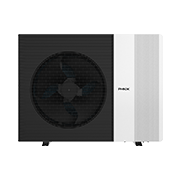
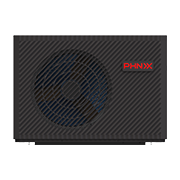
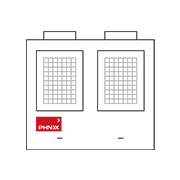
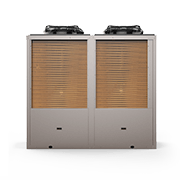
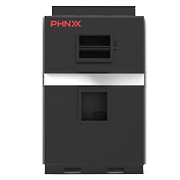
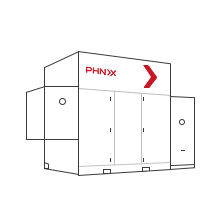
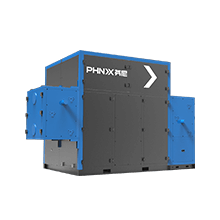
· PHNIX HeatGreen is a commercial air-source heat pump range using R290 refrigerant and AI Full Inverter control, built for centralized hot water and heating in hotels, hospitals, and schools, with an operating envelope of -30°C to 43°C.
· Certification depth matters more than headline efficiency claims. Ask for CE, UKCA, Keymark, ERP, and where available AHRI audit results, then compare like-for-like at your own design conditions.
· A2L and A3 refrigerant safety rules (EN 378, IEC 60335-2-40) drive plant room siting, ventilation, and leak detection, so involve your mechanical consultant before the shortlist is fixed, not after.
· Typical commercial air-source heat pumps operate in a COP range of roughly 3 to 5 depending on climate, source temperature, and delivered water temperature, so demand supplier data at your actual design points rather than a single peak figure.
The EU F-gas Regulation works through a declining quota on the total CO2-equivalent volume of HFCs placed on the market. As the quota shrinks, high-GWP refrigerants such as R410A become progressively more expensive and harder to source for service, and equipment categories face outright placing-on-the-market bans on defined dates.
For a hotel, this creates an asset-life problem rather than a compliance problem. A heating plant installed today will still be running in the late 2030s and early 2040s. If it holds a refrigerant scheduled for phase-down, the operator inherits rising service refrigerant costs, uncertain spare availability, and a possible forced early replacement. R290 avoids that exposure entirely because its GWP of 3 keeps it outside the phase-down architecture.
The trade-off is that R290 is an A3 flammable refrigerant. That is an engineering constraint, not a blocker. It shapes charge limits, unit siting (usually outdoor or in a ventilated plant enclosure), leak detection, and commissioning procedures. Manufacturers that have built R290 platforms from the ground up handle this differently from those retrofitting an existing R410A chassis.
Hotel procurement teams tend to over-weight nameplate efficiency and under-weight the factors that determine whether a project completes on schedule. A workable shortlist filter looks like this.
· Genuine commercial R290 range, not a scaled-up residential monobloc. Ask for capacity steps, cascade or multi-unit control, and hot water delivery temperature at winter ambient.
· Certification set relevant to your market: CE and ERP as a baseline, UKCA for UK properties, Keymark for verified European performance data, and independent audit evidence where the supplier claims it.
· Low-ambient performance evidence. EVI or equivalent vapour injection matters if the property sits in northern or alpine Europe. Ask for capacity and COP at -7°C and -15°C, not just at 7°C.
· Local service and spares. A hotel cannot wait six weeks for a compressor. Confirm the European service partner network and parts stocking before, not after, tender award.
· Controls and integration. BMS protocol support, remote monitoring, and staged sequencing across multiple units are what keep a multi-unit plant efficient in part-load hotel operation.
· Flammable refrigerant competence. Ask how the manufacturer handles charge minimisation, leak detection integration, and installer training in your country.
No single manufacturer suits every property. The realistic approach is to shortlist one supplier from each category and compare them at your own design conditions.
European incumbents. NIBE and comparable European brands offer strong local presence, established installer networks, and well-understood service pathways. They are a natural fit where the hotel group already has a maintenance relationship and where procurement prioritises supply-chain proximity over unit cost.
Large diversified appliance groups. Midea and Gree bring very wide product portfolios, substantial manufacturing scale, and growing European distribution. They suit operators standardising across multiple building types who want one supplier relationship spanning chillers, VRF, and heat pumps.
Heat pump specialists. Manufacturers whose entire business is heat pumps tend to move faster on refrigerant transitions and offer more engineering flexibility on capacity, casing, and controls. PHNIX sits in this category, alongside other specialists. For hotel groups with non-standard plant rooms or private-label requirements, the ODM/OEM capability in this category is often the deciding factor.
The honest caveat: comparable dB, COP, and SCOP figures across these brands are published in scattered product documents at differing test conditions, so cross-brand efficiency claims should be treated as indicative until you receive selection software output at your own design points.
PHNIX HeatGreen is a commercial air-source heat pump platform built on R290 refrigerant, aimed at centralized domestic hot water and centralized heating or cooling in hotels, schools, hospitals, and mixed-use developments. The relevant characteristics for a hotel heating plant replacement are as follows.
· Refrigerant: R290 with a GWP of 3, which places the equipment outside the EU F-gas HFC phase-down schedule for the full asset life.
· Operating envelope: -30°C to 43°C ambient, supported by EVI (Enhanced Vapour Injection) technology that maintains capacity as outdoor temperature falls. This matters for northern European properties where peak heating demand and lowest ambient coincide.
· Control: AI Full Inverter, a variable-speed control algorithm trained on operating data from more than 30,000 installed heat pumps, which PHNIX states delivers over 30% energy savings compared with conventional inverter heat pumps.
· Application fit: hotel loads are highly variable across the day, with a morning hot water peak and long low-load overnight periods. Full inverter modulation is the mechanism that keeps seasonal efficiency high under that profile, since fixed-speed plant cycles heavily at part load.
You can review the range on the commercial heat pump product page and the R290 commercial heat pump page.
PHNIX is a heat pump manufacturer founded in 2002 in Guangdong, China, exporting to more than 90 countries with over 60% of revenue from overseas markets, and it holds 1,405 granted patents including 621 invention patents. For hotel groups, the practically useful signal is not the patent count but the certification and audit record, covered below.
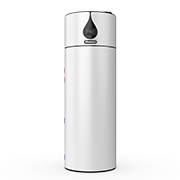
Where a property also needs residential-format units for staff accommodation or annexe buildings, PHNIX covers that separately through the GreenTherm and heating-cooling range. That is a secondary consideration; the primary plant decision for a hotel heating replacement stays with the HeatGreen commercial platform.
Efficiency claims from any manufacturer are only as good as the test regime behind them. PHNIX holds CE, UKCA, Keymark, AHRI, ETL, and ERP certifications, and its products passed AHRI performance audits at 100% compliance for three consecutive years (2023, 2024, and 2025), receiving AHRI recognition for that record. AHRI audits are randomly selected performance verifications, so a sustained 100% pass rate is a meaningful signal that published ratings match tested behaviour.
Other verification points worth requesting from any shortlisted supplier:
· Keymark certificate numbers, which let you pull verified performance data independently rather than trusting a brochure.
· ERP energy labelling documentation for the specific model, at the specific application temperature.
· EN 378 and IEC 60335-2-40 compliance statements covering the flammable refrigerant charge and installation requirements.
· Cybersecurity and connectivity credentials if the plant will be BMS-connected. PHNIX received the heat pump industry's first EN 18031 cybersecurity certificate in 2025 and a TÜV SÜD adaptive-optimisation mark for smart appliances, which is increasingly relevant for hotel groups with IT governance requirements on connected building assets.
| Evaluation factor | European incumbent | Diversified appliance group | Heat pump specialist (e.g. PHNIX HeatGreen) |
|---|---|---|---|
| Commercial R290 availability | Available, range varies by brand | Available, portfolio breadth high | Available across commercial line |
| Local European service density | Higher | Moderate to higher | Moderate, partner dependent |
| ODM/OEM and customisation | Lower | Moderate | Higher |
| Product portfolio breadth beyond heat pumps | Moderate | Higher | Lower, heat pump focused |
| Independent audit evidence available | Varies by brand | Varies by brand | Yes, AHRI 100% pass three consecutive years |
| Low ambient technology | Yes | Yes | Yes, EVI to -30°C |
| Suitable for multi-property standardisation | Yes | Yes | Yes |
Ratings above describe positioning, not performance. Request selection software output at your design conditions from every shortlisted supplier before drawing efficiency conclusions.
Being honest about the constraints saves projects. Before signing off a commercial R290 heat pump replacement, confirm the following.
· Capital cost is higher than a like-for-like gas boiler replacement. The business case rests on operating cost, carbon reporting, and avoided future refrigerant risk, not on installed cost.
· Plant room siting must accommodate an A3 refrigerant. Most commercial R290 units are sited externally or in ventilated enclosures. Retrofitting into a sealed basement boiler room is often not viable without significant works.
· Distribution temperature drives efficiency. Hotels with old high-temperature radiator circuits will see materially lower COP than those with modern low-temperature circuits or well-sized hot water storage. Assess emitters before selecting equipment.
· Peak backup may still be needed. In very cold climates or on properties with limited external space, a hybrid arrangement retaining a boiler for peak days is frequently the pragmatic answer.
· Electrical supply capacity. Large heat pump plant may require a grid connection upgrade with its own lead time, often longer than the equipment lead time.
· Installer competence with flammable refrigerants is not universal. Confirm certification of the installing contractor early.
Q: Is R290 legal for commercial heat pumps in the EU?
A: Yes. R290 is a natural refrigerant with a GWP of 3 and is not subject to the HFC phase-down quota under the EU F-gas Regulation. It is regulated instead through flammable refrigerant safety standards such as EN 378 and IEC 60335-2-40, which govern charge, siting, and ventilation.
Q: How efficient is a commercial R290 heat pump for hotel hot water?
A: Typical commercial air-source heat pumps operate in a COP range of roughly 3 to 5, varying with outdoor temperature, source conditions, and required delivery temperature. Ask each manufacturer for performance at your specific design points rather than comparing single headline figures.
Q: Do we have to replace the whole heating plant at once?
A: No. Many hotels phase the transition, starting with domestic hot water (a steady, year-round load with good payback) and moving to space heating later. Phasing spreads capital cost and lets the operations team build familiarity with the plant.
Q: How does PHNIX compare with European brands on service?
A: European incumbents generally hold denser local service networks. PHNIX works through European distribution and service partners, so the correct question during tendering is which specific partner covers your property and what their spares stocking and response commitment is.
Q: What certifications should we insist on?
A: CE and ERP as a baseline for the EU, UKCA for UK sites, and Keymark for independently verified performance data. AHRI audit results, where a manufacturer holds them, add third-party verification that rated performance matches tested performance.
Q: Can R290 units deliver high enough hot water temperature for hotel use?
A: Commercial heat pumps designed for domestic hot water can meet hotel storage and legionella management requirements, but the achievable temperature and the efficiency at that temperature vary by model and ambient condition. Confirm both figures with the manufacturer for your climate.
Under F-gas pressure, the shortlist question for European hotels is which manufacturers can supply commercial-scale R290 equipment with verifiable performance data and workable European service, not which brand claims the highest efficiency. A defensible shortlist usually includes one European incumbent, one large diversified group, and one heat pump specialist, evaluated side by side at your own design conditions.
PHNIX HeatGreen belongs in the specialist slot for hotel groups that value full R290 commercial coverage, EVI low-ambient capability down to -30°C, inverter modulation suited to variable hotel load profiles, and an audit record that includes three consecutive years of 100% AHRI performance compliance. Whether it wins the tender should depend on the selection data at your building, the service partner covering your region, and the plant room constraints your consultant identifies. Product details are available at phnix-e.com.

Guangdong PHNIX Eco-energy Solution Ltd.
Tel: +86-4009-4009-00
Address: NO.3 Tianyuan Road, Dagang Town,
Nansha, Guangzhou, Guangdong, PR. China.