Most disappointing heat pump retrofits in Europe are not caused by the wrong brand. They are caused by the wrong number. A unit chosen from a rule of thumb, a boiler nameplate, or a quick square-metre multiplier will either short-cycle through mild weather or leave the house cold in February, and no amount of controls tuning fully repairs a sizing error made before the order was placed.
This guide walks decision makers through how air-to-water heat pump capacity is actually determined for a renovated European home: what the heat load calculation does, why flow temperature matters as much as kilowatts, how the bivalent point works, and what oversizing and undersizing each cost you. It is a method, not a brand ranking.
· Size from a building heat load calculation to EN 12831, not from the old boiler's output, because condensing boilers in older homes are commonly two to three times larger than the actual demand.
· Flow temperature is a sizing input, not an afterthought. The same house needs a different machine at 55 C than at 45 C, and seasonal efficiency moves sharply with it.
· Heat pump capacity is quoted at a specific outdoor and flow temperature pair under EN 14511, so a "12 kW" unit is only 12 kW at the conditions stated on the datasheet.
· Oversizing causes short cycling, higher wear, and worse seasonal efficiency. Undersizing shifts running hours onto backup electric heat, which is the most expensive way to make a room warm.
· A modulating inverter compressor widens the usable capacity band, which is why full inverter platforms tolerate sizing uncertainty better than fixed speed machines.
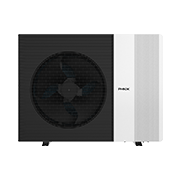
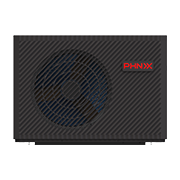
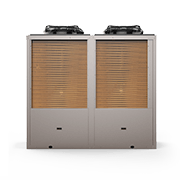
· PHNIX GreenTherm Pro is an R290 air-to-water heat pump rated A+++ in low temperature application, tested by TUV SUD RED and HLK Stuttgart at SCOP 5.55, and it operates down to minus 30 C ambient.
The correct starting point is a room-by-room design heat load calculated to EN 12831, the European standard for building heat load calculation. It adds up transmission losses through walls, roof, floor and glazing, plus ventilation and infiltration losses, against a defined outdoor design temperature for your location and a target indoor temperature per room.
Two things make this different from the shortcut methods installers sometimes use. First, it is specific to your fabric, so a 1960s cavity wall house and a 1900s solid wall house of identical floor area get different answers. Second, it is calculated at the design outdoor temperature, which occurs a handful of days per year, not at an average winter day.
Why not simply match the existing boiler? Because gas and oil boilers were routinely specified with large safety margins, and because combi boilers are sized for domestic hot water draw rather than space heating. A 24 kW boiler in a terraced house very often sits above a real design load closer to 6 to 9 kW. Copying that number into a heat pump order is the single most common and most expensive mistake in European retrofit.
A useful sanity check after the calculation is the specific heat loss figure, in watts per square metre at design conditions. A deep-retrofitted or new build envelope commonly lands low, an average renovated house in the middle, and an uninsulated solid wall property high. If your calculated result is far outside the band you would expect for the building type, something in the inputs is wrong and it is worth re-checking before ordering equipment.
Heat pump output and efficiency both fall as the required water flow temperature rises. That makes flow temperature a design decision with commercial consequences, not a commissioning detail.
Two terms are worth defining here. COP, or coefficient of performance, is the instantaneous ratio of heat delivered to electricity consumed, measured under steady state to EN 14511. SCOP, or seasonal coefficient of performance, is the season-weighted equivalent measured under part load conditions to EN 14825, and it is what the ErP seasonal space heating efficiency figure, written as eta s, is derived from.
The regulatory thresholds follow the same split. Under the Ecodesign rules in Regulation (EU) 813/2013 Annex II, the minimum eta s is 110 percent for medium temperature application at 55 C and 125 percent for low temperature application at 35 C. Under the energy labelling rules in Regulation (EU) 811/2013 Annex II, an A+++ label requires eta s of at least 150 percent in medium temperature application and at least 175 percent in low temperature application. Any A+++ claim is therefore only meaningful once the application temperature is stated.
| Design flow temperature | Typical emitter situation in a renovation | Expected seasonal efficiency | Emitter upgrade required |
|---|---|---|---|
| 35 C low temperature | Underfloor heating or fully resized radiators | Higher | Yes, in most existing homes |
| 45 C | Partially upsized radiators, good fabric | Moderate to higher | Yes, selective rooms |
| 55 C medium temperature | Existing radiators kept as installed | Lower | No |
The practical read is that spending on two or three larger radiators in the worst rooms often buys a lower design flow temperature, and that lower flow temperature buys efficiency for the whole life of the system. Whether that trade is worth it depends on your electricity tariff and how long you intend to own the property.
A heat pump's rated output is always tied to a condition pair: outdoor air temperature and water outlet temperature. A machine rated at 12 kW at 7 C outdoor and 35 C flow will not deliver 12 kW at minus 7 C outdoor and 55 C flow. Manufacturers publish capacity tables for exactly this reason, and the sizing conversation should happen against the table, not the model name.
Two mechanisms matter for cold weather capacity retention. EVI, or enhanced vapour injection, injects intermediate pressure refrigerant vapour into the compressor to hold capacity and discharge temperature within limits as ambient falls. Inverter modulation lets the compressor run below full speed in mild weather, which is where most of the heating season actually sits.
PHNIX GreenTherm Pro and GreenTherm Plus are residential R290 air-to-water platforms built for this profile, with operation to minus 30 C ambient, PV integration, and AI Full Inverter control trained on more than 30,000 units of field operating data for over 30 percent energy saving against conventional inverter control in residential and commercial applications. Full specifications for the range are on the GreenTherm Pro R290 air-to-water page, and the independent test report behind the SCOP 5.55 figure is documented on the TUV SUD RED and HLK Stuttgart result page.
Rather than sizing for the single coldest hour, many European designs use a bivalent approach. The heat pump covers the load down to a chosen outdoor temperature, called the bivalent point, and a backup source covers the remainder below it.
Because the very coldest hours are rare, a unit sized to cover most of the season can still deliver the large majority of annual heat while using a modest amount of backup. Sizing for the absolute design condition instead pushes you into a larger machine that spends nine months of the year modulating near its floor.
| Sizing approach | Capital cost | Short cycling risk in mild weather | Reliance on backup heat |
|---|---|---|---|
| Monovalent, full design load | Higher | Higher | Not applicable |
| Bivalent, moderate bivalent point | Moderate | Lower | Moderate, cold days only |
| Undersized, low bivalent point | Lower | Lower | Higher |
Be honest about the backup. If it is direct electric resistance heat, every kilowatt hour it delivers costs roughly three to four times what the heat pump would have charged for the same heat. A small amount is efficient design. A large amount is a sizing failure wearing a design label.
Space heating sizing and hot water sizing are different problems. Hot water demand is driven by occupancy and draw pattern, and the European framework classifies it by declared load profile. Under Regulation (EU) 814/2013 Annex III Table 1, the reference energy Qref is 5.845 kWh for profile M, 11.655 kWh for L, and 19.07 kWh for XL. Annex II of the same regulation sets minimum water heating efficiency at 36 percent for M and 37 percent for both L and XL.
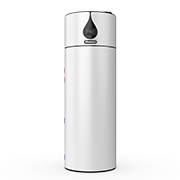
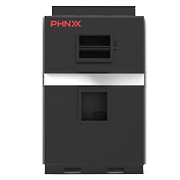
For a renovation, the usual questions are cylinder volume, coil surface area, and reheat time. An undersized coil forces a higher flow temperature during the hot water cycle and drags down seasonal performance even when space heating is well designed. Where a combined unit is not the right fit, PHNIX also builds dedicated R290 domestic heat pump water heaters in the airInverter and airExpert families, and the airMono R290 indoor monobloc addresses apartments and older blocks where outdoor space is genuinely unavailable.
Refrigerant choice interacts with sizing because it affects what will still be purchasable and serviceable across the life of the system. The current European framework is Regulation (EU) 2024/573, applicable from 11 March 2024, which repealed the previous F-gas regulation. Under Annex IV, monobloc and split air-to-water heat pumps of 12 kW or less using refrigerant with GWP of 150 or above face a placing on the market prohibition from 1 January 2027.
R290, propane, has a GWP100 of 0.02 under Annex VI, which is well below 1. R32 has a GWP of 675 under Annex I, on the AR6 basis. R410A and R454B both remain far above the 150 GWP threshold.
R290 is flammable, and that has a real installation consequence. Charge limits are set by refrigerant LFL and room or installation volume under EN 378 and IEC 60335-2-40 (7th edition, 2022); confirm the actual clearance with local installation rules and the manufacturer's manual before finalising the outdoor unit position. This is a siting constraint to resolve during design, not after delivery.
| Consideration | R290 monobloc | Higher GWP refrigerant unit |
|---|---|---|
| Subject to Annex IV 2027 prohibition at 12 kW and below | No | Yes |
| Outdoor siting clearance study required | Yes | Not applicable in the same form |
| Long-term refrigerant availability risk | Lower | Higher |
· Capital cost is higher than a like-for-like boiler swap, and grant support does not always close the gap. UK Boiler Upgrade Scheme pays GBP 7,500 for an air source air-to-water system, Ireland's SEAI heat pump support is capped at EUR 12,500 for the total package with heat pump installation at 9 percent VAT, and France's MaPrimeRenov covers 80, 40 or 20 percent of an ambitious renovation by income band with 5.5 percent TVA.
· In genuinely extreme cold, a backup heat source remains prudent even with EVI equipped machines.
· Outdoor units need space, service access, and a condensate route, and R290 adds siting rules on top.
· Poor fabric limits what any equipment can achieve. If the calculated load is very high, insulation and airtightness work usually returns more per euro than a larger compressor.
Ask for the EN 12831 room-by-room calculation in writing before any equipment is quoted. Agree a design flow temperature and check which rooms need emitter upgrades to hit it. Compare candidate units against the manufacturer capacity table at your design condition rather than the headline rating. Decide the bivalent point deliberately and estimate how many kilowatt hours of backup it implies. Then confirm refrigerant siting clearances on the actual plot.
PHNIX has manufactured heat pumps since 2002, exports to more than 90 countries, produces over 80,000 units a year, and reinvests 6.7 percent of sales in research and development, with CE, UKCA, Keymark, ETL and ERP certification and three consecutive years of AHRI performance testing at a 100 percent pass rate in 2023, 2024 and 2025. The full residential range sits on the heating and cooling heat pumps product page.
Q: Can I just match my old boiler's kilowatt rating?
A: No. Boilers in older European homes are frequently specified two to three times above the real design heat load, and combi units are sized for hot water flow rate rather than space heating. Use an EN 12831 calculation instead.
Q: What happens if the heat pump is oversized?
A: It short cycles in mild weather, which increases compressor starts, reduces seasonal efficiency, and raises wear. A modulating inverter compressor reduces but does not eliminate the penalty.
Q: Is A+++ enough information to compare two units?
A: Not on its own. Under Regulation (EU) 811/2013 Annex II the A+++ threshold differs between low temperature application at 35 C and medium temperature application at 55 C, so the application must be stated alongside the label.
Q: Does a lower flow temperature always require underfloor heating?
A: No. Upsizing radiators in the few rooms with the highest heat loss is often enough to move a design from 55 C to 45 C without disturbing the whole house.
Q: How much backup electric heat is acceptable?
A: A small share of annual heat delivered during the coldest hours is normal in a bivalent design. If backup is covering a large fraction of the season, the unit is undersized for the building.

Guangdong PHNIX Eco-energy Solution Ltd.
Tel: +86-4009-4009-00
Address: NO.3 Tianyuan Road, Dagang Town,
Nansha, Guangzhou, Guangdong, PR. China.