Most homeowners who look at leaving oil behind hear the same warning: a heat pump runs at lower water temperature, so every radiator in the house has to be ripped out and upsized. That warning is half true. Flow temperature does have to come down, but the correction is almost never uniform across a house. In a typical older European dwelling, a minority of rooms are the constraint, and the rest of the emitters already have enough surface area to work at a lower flow temperature.
This article gives a room by room method for finding out which radiators actually need changing, which can stay, and how the answer changes the size, cost and running behaviour of the heat pump you end up buying. It is written for the person signing the invoice, not for the person holding the pipe wrench.
· A radiator that was sized for a 70 to 80 degree oil boiler usually retains 50 to 60 percent of its output at 50 degrees, so the question is per room, not per house.
· The correct starting point is a room by room heat loss calculation to EN 12831, not a rule of thumb based on floor area.
· In most retrofits only the coldest, largest or worst insulated rooms need larger emitters, commonly bedrooms over unheated spaces and extensions.
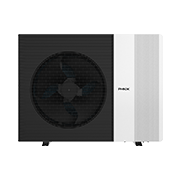
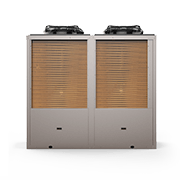
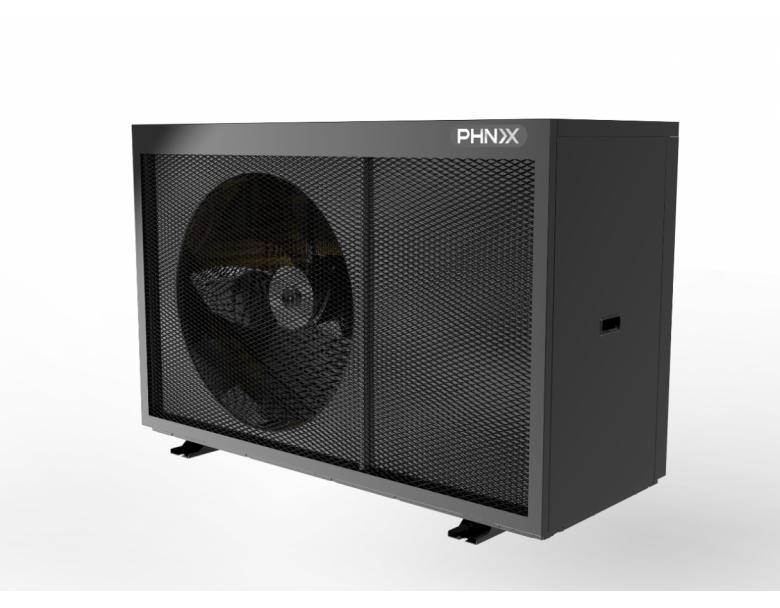
· PHNIX GreenTherm Pro is an R290 air to water heat pump rated A+++ in low temperature application and independently measured at SCOP 5.55 by TUV SUD RED and HLK Stuttgart, which gives useful headroom when a few radiators stay undersized.
· Regulation (EU) 2024/573 bans monobloc and split air to water units at or below 12 kW using refrigerant with GWP of 150 or more from 1 January 2027, so a low GWP choice today protects resale and service access.
· Grants materially change the maths: £7,500 through the UK Boiler Upgrade Scheme, up to €12,500 in total under SEAI in Ireland, and income banded support with 5.5 percent VAT under MaPrimeRenov in France.
An oil boiler is normally commissioned to send water out at 70 to 80 degrees Celsius. A heat pump can reach those temperatures, but its efficiency falls as it does, because the compressor has to bridge a wider gap between outdoor air and the water it is heating. Two terms matter here. COP is the instantaneous ratio of heat delivered to electricity consumed, measured under steady conditions to EN 14511. SCOP is the seasonal version, measured across part load conditions to EN 14825, and it is the number that reflects how the machine behaves over a real winter.
As a working rule, every 5 degree reduction in flow temperature buys a meaningful efficiency gain. That is why the design target in a retrofit is usually 45 to 55 degrees rather than 35 degrees, which is a target realistic only with underfloor heating. Getting to 50 degrees is a far smaller intervention than getting to 35, and it is the reason so many houses keep most of their radiators.
The second variable is the emitter itself. Radiator output is quoted at a standard temperature difference between the water and the room. Drop the water temperature and the output falls, but not to zero.
| Flow temperature | Approximate share of rated output retained | Typical retrofit implication |
|---|---|---|
| 70 C | Full rated output | Baseline oil boiler condition |
| 55 C | Moderate reduction | Many rooms still adequate |
| 50 C | Higher reduction | Coldest rooms need review |
| 45 C | Higher reduction again | Living rooms and bedrooms over unheated space often need upsizing |
| 35 C | Not applicable to most panel radiators | Suits underfloor or fan assisted emitters |
Do this before any quotation is priced. It takes a competent installer half a day in an average house.
· Step one: commission a heat loss calculation to EN 12831 for each room, not a whole house figure. This gives the watts each room must receive on the coldest design day.
· Step two: record every existing radiator, its type (single or double panel, with or without convector fins), height, length and whether it is boxed in or blocked by furniture.
· Step three: look up the rated output of each radiator and derate it to your target flow temperature.
· Step four: compare derated output against required watts, room by room. Green means keep, amber means keep with better controls or a fan assisted upgrade, red means replace with a taller or double panel unit.
· Step five: only then size the heat pump, because the flow temperature you can commit to is now a measured fact rather than a hope.
In practice the red rooms cluster in predictable places. Bedrooms above garages, porches or unheated passages lose heat through the floor and were often given the same radiator as an identical bedroom over a warm room. Extensions built to a different standard than the original house frequently have emitters sized for the boiler that was already there rather than for the fabric. North facing living rooms with large single glazed windows fail on both fabric and radiator sizing. Bathrooms are usually fine, because towel rails were often oversized and bathrooms tolerate a shorter comfort window.
Rooms that almost always pass are hallways, small internal bedrooms, kitchens with incidental gains from appliances, and any room where the previous owner already replaced a radiator with a modern double panel unit.
The cost fear is usually larger than the cost. Swapping a radiator on existing pipe centres is a short job when the new unit matches the old tail spacing. The expense escalates when the pipe runs need moving, when the floor is solid, or when the room is decorated to a standard that makes disruption unacceptable. That is worth saying plainly: if a room needs a taller radiator and the wall behind it is tiled or panelled, the honest answer is that it will cost more than the radiator itself.
Two alternatives to a bigger panel are worth pricing. Fan assisted radiators move more heat from a similar footprint at low water temperature, which suits rooms where wall space is genuinely scarce. Underfloor heating in a single ground floor room, typically a kitchen extension being refurbished anyway, can pull the whole system design temperature down and rescue several other rooms at once.
A retrofit that lands at 50 to 55 degrees needs a machine that holds capacity and efficiency at that flow temperature in cold weather, not just at mild conditions. Enhanced vapour injection, usually shortened to EVI, is a compressor circuit feature that injects intermediate pressure refrigerant mid compression. In plain terms it lets the unit keep producing hot water when the outdoor air is well below zero, which is exactly when an oil boiler replacement is judged by the household.
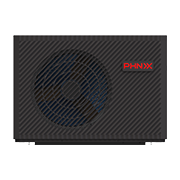
The GreenTherm Pro R290 air to water range is designed around this case. It is rated A+++ in low temperature application, operates down to minus 30 degrees Celsius ambient, and supports PV integration so surplus solar generation can be diverted into the heating circuit or the cylinder. Its measured performance is documented in the TUV SUD RED and HLK Stuttgart SCOP 5.55 test report, which is a third party result rather than a brochure claim.
PHNIX AI Full Inverter control is trained on data from more than 30,000 units in the field and is stated to deliver over 30 percent energy saving versus conventional inverter control in residential applications. In a mixed emitter house, where some rooms are comfortably oversized and one or two are marginal, that modulation range matters more than peak output, because the machine spends most of the season at part load.
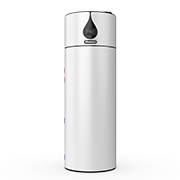
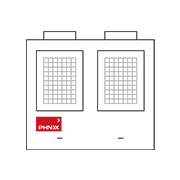
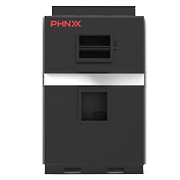
For households where the constraint is indoor space rather than radiators, PHNIX also offers airMono, the first R290 indoor monobloc, and separate domestic hot water and commercial ranges. Those sit outside the scope of a radiator based retrofit, but they exist under the same warranty and service structure.
Regulation (EU) 2024/573 has applied since 11 March 2024 and sets the phase down schedule for fluorinated gases in Europe. The Annex IV placing on the market ban that most affects households is on monobloc and split air to water heat pumps at or below 12 kW that use refrigerant with a GWP of 150 or more, from 1 January 2027.
| Refrigerant | GWP under AR6 | Position against the 150 threshold | Suitable for a 2027 proof purchase |
|---|---|---|---|
| R290 (propane) | 0.02 per Annex VI | Far below | Yes |
| R32 | 675 per Annex I | Above | No for small air to water units after the deadline |
| R410A | Not listed as a mixture entry | Far above the 150 threshold | No |
R290 is flammable, and that is a genuine engineering constraint rather than a footnote. Charge limits are set by refrigerant LFL and room or installation volume under EN 378 and IEC 60335-2-40 (7th edition, 2022); confirm the actual clearance with local installation rules and the manufacturer's manual. For an outdoor monobloc, the refrigerant circuit stays outside and only water enters the building, which is why the monobloc format dominates residential R290 retrofits.
Ecodesign under Regulation (EU) 813/2013 Annex II sets minimum seasonal space heating energy efficiency, written as eta s, at 110 percent for medium temperature (55 degree) application and 125 percent for low temperature (35 degree) application. The energy label under Regulation (EU) 811/2013 Annex II requires eta s of at least 150 percent for A+++ in medium temperature application and at least 175 percent in low temperature application. When a manufacturer says A+++, always ask which application, because the two are not interchangeable.
· Capital cost is higher than a like for like oil boiler swap, even before any radiator work, and the payback depends on your electricity to oil price ratio.
· In severe cold snaps a heat pump sized for the design day will run long hours at reduced efficiency, and some households keep a small backup heat source for reassurance.
· An outdoor monobloc needs a location with airflow, a condensate route and acceptable acoustics for neighbours.
· A house with genuinely poor fabric will need insulation work regardless of emitter strategy, and no equipment choice substitutes for that.
· Hot water is a separate design question, because cylinder reheat wants higher temperature than space heating and can pull down the seasonal average if configured carelessly.
| Market | Headline support | Additional notes |
|---|---|---|
| United Kingdom | £7,500 for air source air to water under the Boiler Upgrade Scheme | Administered through Ofgem, paid via the installer |
| Ireland | Up to €12,500 total under SEAI | €6,500 unit cap plus €2,000 central heating components plus €4,000 Renewable Heat Bonus, €200 technical assessment, 9 percent VAT on installation |
| France | MaPrimeRenov covers 80, 40 or 20 percent by income band for whole home renovation | 5.5 percent TVA applies to the works |
Grant money is usually best spent on the two or three red rooms rather than on a blanket radiator replacement, because that is the spend that lowers design flow temperature for the whole system.
Q: Can I keep my existing pipework?
A: In most houses yes. Microbore runs are the common exception and may restrict flow at the volumes a heat pump needs, so ask for the flow rate check during the survey.
Q: How many radiators typically need replacing?
A: There is no universal figure, but a well surveyed retrofit at 50 to 55 degrees commonly changes a minority of emitters rather than all of them. The audit gives you the count before you commit.
Q: Will the house feel less warm?
A: The rooms should reach the same temperature. The difference is that radiators feel warm rather than hot to the touch and the system runs longer and steadier instead of cycling hard.
Q: Is an R290 unit safe next to a house wall?
A: R290 monobloc units keep the refrigerant circuit outdoors. Siting and clearance follow EN 378 and IEC 60335-2-40, plus national rules, so confirm with your installer.
Q: Should I insulate first or install first?
A: Insulate first where it is cheap and disruptive later, such as loft and floor voids, because it lowers the required heat pump capacity and may remove a red room from the list.
Work through it in this order and the radiator question answers itself. First, get a room by room EN 12831 heat loss. Second, derate your existing emitters at 55, 50 and 45 degrees and see how the red room count changes at each. Third, price the emitter work at the temperature that gives the best balance of upfront cost and seasonal efficiency. Fourth, size the heat pump to that design temperature and check the manufacturer's capacity table at your local design ambient, not at 7 degrees. Fifth, confirm refrigerant choice against the 2027 Annex IV deadline before signing.
If you want to compare configurations across the residential heating and cooling range, the useful specification to focus on is capacity retained at your design ambient with 50 degree flow, followed by SCOP under EN 14825 and the certification record behind it. PHNIX has passed AHRI performance verification with a 100 percent pass rate for three consecutive years, 2023, 2024 and 2025, which is a reasonable proxy for whether published numbers hold up in independent testing.

Guangdong PHNIX Eco-energy Solution Ltd.
Tel: +86-4009-4009-00
Address: NO.3 Tianyuan Road, Dagang Town,
Nansha, Guangzhou, Guangdong, PR. China.