Most hotel heat pump projects are sized on a guess: someone takes the nameplate output of the existing gas boiler, adds a safety margin, and asks three suppliers to quote against that number. The result is an oversized machine that short cycles in shoulder season, or an undersized one that runs out of hot water at 7:30 a.m. when two hundred guests shower in the same forty minutes. Neither is a product failure. Both are data failures.
This article is a data collection checklist: what to measure, how, how long to log, which sizing decision each data point controls, and what goes wrong when you skip it. Work through it before you send out a request for quotation, not after.
· Collect data before you request quotes, because a supplier can only size to the numbers you hand over, and a nameplate boiler rating is not a load profile.
· The seven essentials are hot water daily volume and hourly distribution, inlet and outlet water temperatures, fuel bills plus boiler run hours, space heating design flow temperature, plant room and outdoor space, electrical capacity, and the seasonal occupancy curve.
· Log hot water and temperature data for at least two weeks in a high occupancy period and two in a low one, at 15 minute intervals or finer.
· Inlet and required outlet temperature set the lift the machine must deliver, and in hot water duty lift drives capacity and COP more than ambient temperature does.
· Missing peak hour data forces sizing on daily total alone, which produces short cycling and worse part load efficiency.
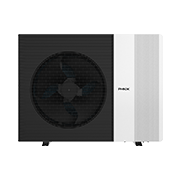
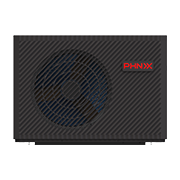
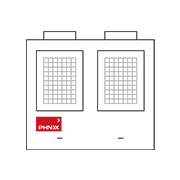
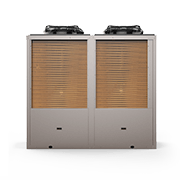
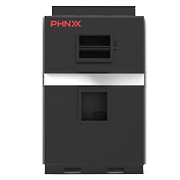
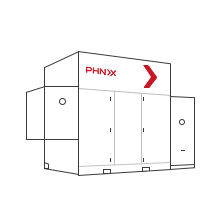
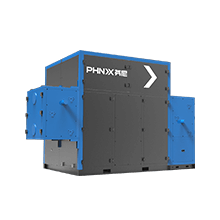
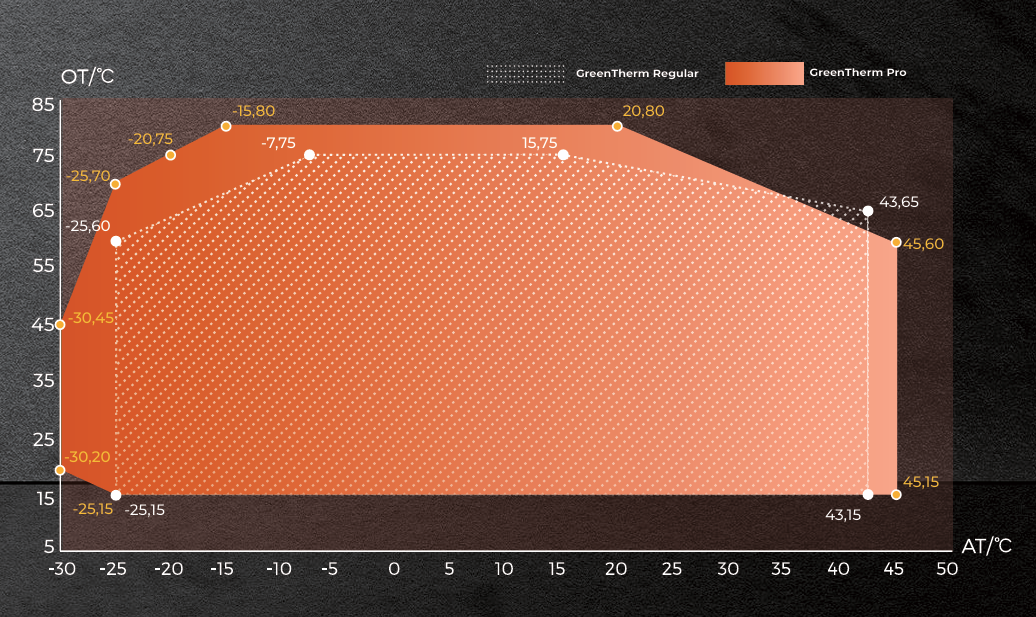
· PHNIX HeatGreen R290 Commercial is an air to water commercial heat pump range for hotels, schools and hospitals, rated for operation from -30°C to 43°C ambient.
An existing boiler tells you what a previous engineer thought the building might need, usually with margin stacked on margin. It does not tell you what the building consumes. Gas boilers tolerate oversizing cheaply; heat pumps do not, because capacity, compressor staging, buffer volume and storage volume interact, and the part load behaviour that determines seasonal performance is measured under EN 14825, not at the single rating point defined by EN 14511.
A retrofit business case also has to compare against something real, which means metered baseline consumption rather than a modelled one. We walk through how that comparison is built in our piece on hotel ROI when switching from a gas boiler to a heat pump, and every input in that model comes from the checklist below.
### 1. Domestic hot water volume and hourly distribution
Measure litres drawn per day at the hot water outlet of the calorifier or storage tank, and the same figure by hour. Fit a clamp on ultrasonic flow meter, or an inline meter if the pipework allows a shutdown, on the hot water flow leaving storage, and log at 15 minute intervals. Do not use the whole building cold water mains meter, which also covers toilets, kitchens, laundry and irrigation. Log two weeks minimum, ideally in both peak and low season.
Daily volume sets storage plus recovery capacity together; the hourly distribution sets how that total splits between compressor capacity and stored litres. Skip it and you size on daily total only: a hotel with a sharp 90 minute morning peak and one with a flat all day draw can have identical daily volumes and need very different machines.
### 2. Inlet cold water and required outlet temperature
Measure mains cold water temperature entering the plant, the storage setpoint, and the temperature arriving at the furthest guest room outlet. Use pipe surface sensors with insulation restored over them, logged continuously, plus calibrated probe readings at far outlets with a note of the time to reach temperature. Keep logging across both windows, because mains temperature moves several degrees between winter and summer.
The lift from inlet to outlet is the biggest driver of capacity and efficiency in hot water duty, and it decides whether a single stage machine covers the load or a cascade is needed. Skip it and you either lose winter capacity you assumed you had, or set an unnecessarily high storage temperature that costs efficiency all year.
On hygiene, there is no single EU wide mandatory storage temperature. Directive (EU) 2020/2184 is risk assessment led: Annex I Part D gives a parametric value of Legionella below 1 000 CFU/l for the purposes of Articles 10 and 14, and Article 10(3)(e) requires member states to ensure control measures proportionate to the risk, without stating any temperature. Setpoints therefore come from national rules. In the United Kingdom, HSE guidance HSG274 Part 2 sets hot water storage at a minimum of 60°C, distribution reaching 50°C within one minute at the outlet (55°C in healthcare premises), cold water below 20°C, and return not below 50°C. In Germany, central domestic hot water systems are governed by DVGW technical rules; check the current edition and the local requirements before fixing a setpoint. France sets its own requirements for domestic hot water temperature and Legionella control; confirm the current national rules with a local specifier.
### 3. Fuel bills and boiler run hours
Pull twelve to twenty four months of gas or oil invoices with consumption in kWh from finance, not from an estimate, and read burner run hours from the boiler controller, an added hour run meter or a building management system export. That gives you the annual baseline, the split between hot water and space heating, and the real load factor. Run hours multiplied by rated output gives delivered energy, cross checked against invoiced fuel and an assumed boiler seasonal efficiency. Skip it and your payback calculation has no denominator.
For a representative European scenario, take a hotel with a metered 180 000 kWh of annual gas for hot water at an assumed 85% seasonal boiler efficiency, giving roughly 153 000 kWh of useful heat. Meeting that with a machine achieving a seasonal COP of 3.2 in the same duty implies about 47 800 kWh of electricity. At the Eurostat EU27 average household electricity price for the second half of 2025, 0.2896 EUR/kWh including taxes, that is roughly 13 850 EUR. Commercial tariffs differ, so substitute your own contracted rate: the structure matters here, not the output number.
### 4. Space heating design flow temperature
Measure the flow and return temperatures the existing emitters need on the coldest days, not the boiler setpoint. Log flow and return with clamp sensors through a cold spell, record outdoor temperature alongside, survey a sample of rooms for emitter type and size, and retrieve any design heat loss calculation to EN 12831.
This decides whether the building is a low temperature or medium temperature application, which changes both achievable efficiency and compliance framing. Under Regulation 811/2013 Annex II, A+++ requires seasonal space heating efficiency of at least 175% in low temperature application (Table 2) and at least 150% in medium temperature application (Table 1), so the label class means nothing without stating which application applies. Skip it and you specify for 55°C flow when the emitters need 70°C.
### 5. Plant room and outdoor unit space
Record clear internal plant room dimensions, door and stair access widths, ceiling height, existing pipe routes, and candidate outdoor locations with distances to the plant room and to the nearest guest windows. A tape measure, a marked up floor plan and photographs of every access pinch point are enough, with a structural engineer confirming any roof location.
This decides unit footprint, storage tank size, whether tanks can be delivered into the room at all, and pipe run lengths. The classic failure is a tank that cannot pass the plant room door. With propane machines, charge limits are set by refrigerant LFL and room or installation volume under EN 378 and IEC 60335-2-40 (7th edition, 2022); confirm the actual clearance with local installation rules and the manufacturer's manual.
### 6. Electrical capacity
Record the incoming supply rating, spare breaker capacity, measured peak demand across the logging period, and the cost and lead time of any supply upgrade. Get half hourly demand data from the supplier or fit a logger at the main incomer for two weeks, and have a qualified electrical engineer confirm headroom rather than reading the board label.
This decides whether the selected capacity is connectable at all, and whether staged compressors or demand limiting control are needed to avoid a new site peak. Skip it and the project stalls at the network operator stage, frequently the longest lead item in the retrofit.
### 7. Seasonal occupancy curve
Export monthly occupancy percentage and guests per night for at least two years from the property management system, together with any closed periods. The data already exists.
This decides the part load profile, where seasonal efficiency is won or lost, and whether one large unit or two smaller units in a lead and lag arrangement fits better. Skip it and you optimise for a peak that occurs six weeks a year while running at 20% load for the other forty six.
| Data item | How to measure | What it decides | Consequence if missing |
|---|---|---|---|
| DHW daily volume | Flow meter at storage outlet, 15 min logging | Storage plus recovery capacity | Peak missed in practice |
| DHW hourly peak | Same log, by hour of day | Compressor kW versus stored litres | Short cycling or morning shortfall |
| Inlet and outlet temperatures | Pipe surface sensors, outlet probe | Required lift, single stage or cascade | Winter capacity shortfall |
| Fuel bills and burner hours | 12 to 24 months of invoices, hour meter | Energy baseline and business case | No verifiable payback |
| Design flow temperature | Cold spell logging, emitter survey | Low versus medium temperature application | Cold rooms or lost efficiency |
| Plant and outdoor space | Measured survey, structural check | Footprint, tank size, siting | Cannot be installed as designed |
| Electrical headroom | Half hourly data or incomer logger | Connectability, staging strategy | Supply upgrade delay |
| Seasonal occupancy | Property management system export | Part load profile, unit count | Optimised for a rare peak |
Refrigerant is also a data decision, because the regulatory clock affects what you can buy and service across the asset life. The current framework is Regulation (EU) 2024/573, applicable from 11 March 2024, which repealed Regulation 517/2014 and uses IPCC AR6 GWP values. R290 has a GWP100 of 0.02 under Annex VI; R32 has a GWP100 of 675 under Annex I and sits inside the HFC quota system. Annex IV restricts self-contained heat pumps up to 12 kW containing fluorinated gas with GWP of 150 or more from 1 January 2027, and split air-to-water units up to 12 kW on the same date, with the threshold relaxed to 750 where site safety requirements prevent a lower GWP option.
With the seven data sets in hand, a supplier can size without guessing and you can compare quotes on identical assumptions. This is also the moment to assess the supplier rather than the datasheet, and the qualification questions distributors use apply equally to hotel buyers, as set out in our checklist for evaluating a heat pump manufacturer.
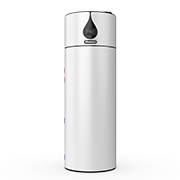
PHNIX is Guangdong PHNIX Eco-energy Solution Ltd, founded in 2002, with more than 1,000 employees, exports to over 90 countries and annual heat pump output above 80,000 units. PHNIX holds CE, UKCA, Keymark, AHRI, ETL and ERP certifications, with AHRI performance audits passed at 100% compliance for three consecutive years (2023, 2024 and 2025). For hotel duty the relevant range sits on the commercial heat pump category page, where HeatGreen R290 Commercial units are specified for hotels, schools and hospitals across a -30°C to 43°C ambient envelope using EVI low temperature technology. Machines in this class typically deliver COP in the range of 3 to 5 depending on climate, lift and load, so apply your own measured lift rather than a headline figure. AI Full Inverter control, trained on data from more than 30,000 installed units, targets part load operation, which is where the occupancy curve pays back. Where a site also covers staff housing, the residential platform sits on the heating and cooling heat pump range, where GreenTherm Pro has been measured by TUV SUD RED and HLK Stuttgart at SCOP 5.55.
Q: Can we use building management system data instead of installing meters?
A: Sometimes, if the BMS already trends hot water flow and flow and return temperatures at usable resolution. Check the sampling interval and whether the sensors have ever been calibrated. Many hotel installations trend setpoints rather than measured values, which tells you what the controller wanted, not what the building did.
Q: Is two weeks of logging really enough?
A: Two weeks captures the weekday and weekend pattern and the shape of the daily peak, the two things sizing depends on most. It does not capture seasonal variation, which is why the occupancy curve and the fuel invoices sit alongside it.
Q: What if the hotel cannot shut down for meter installation?
A: Use clamp on ultrasonic flow meters and pipe surface temperature sensors. Both install on live pipework without breaking into the system, and both are accurate enough for sizing provided the pipe run is straight for the required distance upstream.
A hotel heat pump retrofit succeeds or fails during the measurement phase, not the procurement phase. Plan six to ten weeks for collection: two weeks of high season logging, two of low season logging, and the remainder for invoices, the survey, the electrical assessment and the occupancy export. Gather all seven data sets, write them into the request for quotation, and require every bidder to size against the same numbers. You then get comparable quotes and a machine matched to the building rather than to the previous boiler's safety margin. Any parameter not published here should be confirmed against the model specific technical manual.

Guangdong PHNIX Eco-energy Solution Ltd.
Tel: +86-4009-4009-00
Address: NO.3 Tianyuan Road, Dagang Town,
Nansha, Guangzhou, Guangdong, PR. China.